Key takeaways
- Winter rye is reliable down to USDA zone 3 and hairy vetch to about zone 4; crimson clover is reliable only in zone 6 and warmer, or zone 5 with good snow cover, so north of that treat it as a winterkill cover instead of an overwintering crop.
- These cover crops significantly improve soil health by adding organic matter, fixing atmospheric nitrogen, and suppressing weeds, leading to better yields for subsequent cash crops.
- Integrating cover crops into permaculture designs (such as food forests, plant guilds, and swales) improves system resilience and reduces external inputs.
- Proper timing for planting (late summer to early fall) and termination (spring, before cash crop planting) is necessary to maximize benefits and prevent volunteer growth.
- Cover crops can reduce the need for synthetic fertilizers by providing 30-100 pounds of nitrogen per acre, depending on the species and conditions.
- Selecting the right cover crop depends on your specific climate, soil type, and the goals for your permaculture system, whether it’s biomass, nitrogen, or weed control.
Quick answer: Winter cover crops like rye, hairy vetch, and crimson clover are excellent for cold US climates (USDA zones 3-7), improving soil health by adding organic matter, fixing nitrogen, and suppressing weeds. They enhance permaculture designs by increasing system resilience and reducing external inputs.
From the frosty plains of North Dakota in USDA zone 3 to the milder winters of Pennsylvania in zone 6, winter cover crops offer a powerful strategy for building soil health and resilience. Cover cropping protects bare ground and adds organic matter to the soil. Beyond preventing erosion, it supplies nitrogen, supports soil biology, and fits directly into a permaculture design.
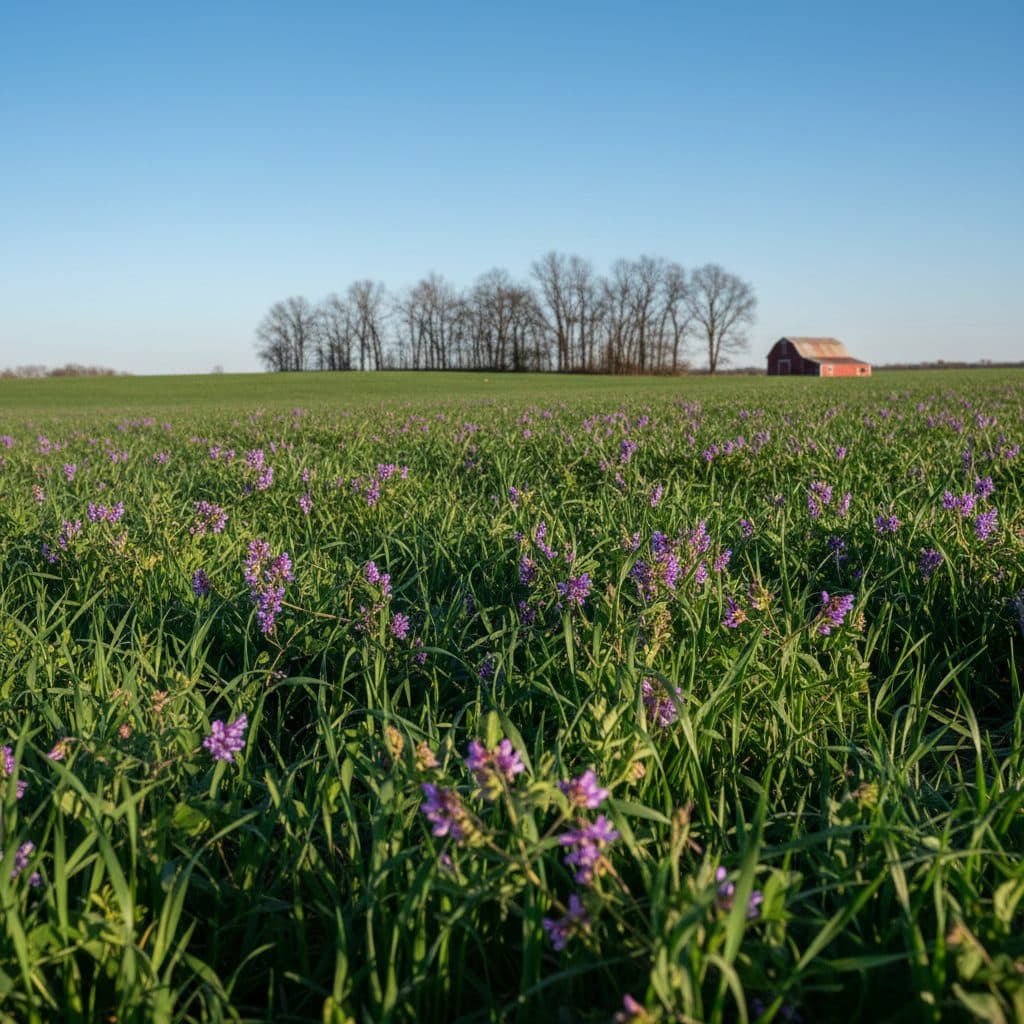
Winter rye, hairy vetch, and crimson clover (three hardy species for cold climates) fit into permaculture designs like food forests, plant guilds, and swales. These plants contribute to the long-term fertility of garden beds and orchards, surviving temperatures below 20°F.
The permaculture approach to cover cropping
In permaculture, every element serves multiple functions, and cover crops are no exception. They serve as foundational components of a resilient system. For instance, in a newly established food forest in USDA zone 5, planting a mix of winter rye and hairy vetch between young fruit trees can provide several benefits. The rye’s extensive root system, which can reach 3-6 feet deep, helps break up compacted soil and scavenge nutrients, while the vetch fixes atmospheric nitrogen, enriching the soil for the growing trees. This approach aligns with the permaculture principle of ‘stacking functions,’ where one action yields multiple positive outcomes.
Enhancing zones and guilds
Consider your permaculture zones: cover crops are particularly useful in Zone 1 (annual vegetable beds) and Zone 2 (orchards, perennial beds). In Zone 1, a winter cover of crimson clover can protect soil from winter rains and provide 50-100 pounds of nitrogen per acre for spring vegetables. In Zone 2, a mix of vetch and rye can be part of a larger plant guild around fruit trees, suppressing weeds and attracting beneficial insects. For example, a young apple tree in upstate New York might be surrounded by a guild including sterile Bocking 14 comfrey (use that cultivar instead of seed-setting common comfrey, Symphytum officinale, which self-sows freely and regrows from root fragments), daffodils, and a winter cover crop that provides fertility and ground cover on slopes with a 5-10% grade. Comfrey is mulch, not food or fodder: its pyrrolizidine alkaloids are hepatotoxic. This thoughtful integration reduces the need for external inputs, a core tenet of permaculture design.
- Soil building: Adds organic matter and improves soil structure.
- Weed suppression: Outcompetes unwanted plants, reducing labor.
- Nitrogen fixation: Legumes like vetch and clover provide essential nitrogen.
- Erosion control: Protects bare soil from wind and water.
- Biodiversity support: Provides habitat and food for beneficial organisms.
Winter rye: the cold-hardy workhorse
Winter rye (Secale cereale) is arguably the most cold-tolerant cereal grain, making it an excellent choice for northern climates down to USDA zone 3. Rye planted in late October in Michigan can still establish a robust stand before the ground freezes solid, surviving temperatures well below 0°F. Its primary strength lies in producing substantial biomass, often yielding 4,000-8,000 pounds of dry matter per acre to build soil organic matter. This biomass, when incorporated, improves soil structure, water infiltration, and nutrient retention. Research shows that winter wheat, a close relative, can significantly suppress weeds in subsequent crops, reducing weed density by 50-70% (Reference [2]).
Timing and termination for maximum benefit
For best results, sow winter rye in late summer or early fall, typically from late August to late October, at a rate of 90-120 pounds per acre. This allows it to establish a good root system before winter. Spring termination must be timed carefully. If allowed to go to seed, rye can become a weed. Rye is typically terminated when it’s 12-18 inches tall, before it sets seed, either by mowing, rolling, or light tillage. In no-till systems, a roller-crimper can effectively terminate rye when it’s in its flowering stage, typically around May in USDA zone 5. This method lays down a thick mulch that suppresses weeds for the following cash crop, like corn or soybeans, and can reduce how much herbicide a conventional grower needs. For more on this, consider reading about cover crops for the home garden.
- Exceptional cold hardiness: Thrives in USDA zones 3 and warmer.
- High biomass production: Adds significant organic matter to soil.
- Excellent weed suppression: Outcompetes many common weeds.
- Nutrient scavenging: Captures leftover nutrients, preventing leaching.
- Erosion control: Dense root system stabilizes soil through winter.
Hairy vetch: the nitrogen powerhouse
Hairy vetch (Vicia villosa) is a legume renowned for its nitrogen-fixing capabilities, making it an invaluable asset for any permaculture system, especially in USDA zones 4-8. This plant forms a symbiotic relationship with rhizobia bacteria, converting atmospheric nitrogen into a form usable by plants. In regions like Missouri, vetch stands can contribute 70-100 pounds of nitrogen per acre, a significant amount that can drastically reduce the need for synthetic fertilizers for a subsequent corn or brassica crop. Its deep taproot also helps to break up compacted soil layers, improving drainage and aeration, which is particularly beneficial in clay-heavy soils. You can learn more about this species on its dedicated page: Hairy Vetch.
Integrating vetch into food forests and guilds
Hairy vetch excels when used in plant guilds around fruit trees or in developing food forests. Its vining growth habit means it can climb, but when planted as a cover crop, it forms a dense mat that smothers weeds. In a young orchard in USDA zone 6, planting vetch alongside a mix of clovers provides a living mulch that continuously feeds the soil. When it’s time to terminate, the nitrogen becomes available to the fruit trees, supporting their growth without heavy external inputs. Planting typically occurs from late August to early October, at a rate of 20-30 pounds per acre, often mixed with a cereal grain like rye to provide a trellis and prevent the vetch from lodging too heavily. This combination also offers a more balanced carbon-to-nitrogen ratio when incorporated into the soil, which is ideal for microbial activity and nutrient release.
- High nitrogen fixation: Provides 70-100 pounds of N per acre.
- Deep taproot: Improves soil structure and water infiltration.
- Weed suppression: Forms a dense mat, outcompeting weeds.
- Pollinator attraction: Flowers provide nectar for beneficial insects.
- Good for no-till: Can be roller-crimped for effective termination.
Crimson clover: the quick-growing legume
Crimson clover (Trifolium incarnatum) is a visually striking and highly effective winter annual legume, particularly well-suited for USDA zones 6-9, though some varieties can tolerate zone 5 with good snow cover. It’s known for its rapid establishment and beautiful crimson flowers in spring, which are a magnet for pollinators. While not as cold-hardy as winter rye, it offers substantial nitrogen fixation, typically providing 50-90 pounds of nitrogen per acre. Crimson clover works well in annual vegetable beds in regions like North Carolina, where it quickly establishes after a summer crop and provides excellent winter ground cover, preventing soil erosion from heavy winter rains that can exceed 4 inches per month.
Versatility in annual beds and swales
Crimson clover is particularly versatile for smaller-scale permaculture applications, such as annual vegetable beds in Zone 1. Its relatively shallow root system (typically 1-2 feet deep) makes it easier to incorporate into the soil in spring compared to deep-rooted rye or vetch. It’s also an excellent choice for stabilizing the berms of swales, especially in areas with a moderate slope of 5-15%. The clover’s dense growth helps hold soil in place, preventing washouts and adding fertility to the water-harvesting system. Planting usually occurs from September to October at a rate of 15-20 pounds per acre. It often winter-kills in zone 5 without snow, but even then, the residual biomass and fixed nitrogen are valuable. For additional options, see cold-hardy nitrogen fixers for zones 2-6.
- Moderate cold hardiness: Best in USDA zones 6-9, some zone 5 tolerance.
- Nitrogen fixation: Contributes 50-90 pounds of N per acre.
- Rapid establishment: Quick growth provides early ground cover.
- Pollinator magnet: Attracts bees and other beneficial insects.
- Good for annual rotations: Easy to terminate and incorporate.
Integrating cover crops into permaculture design
Successful integration of winter cover crops into a permaculture design requires thoughtful planning, considering your specific site’s climate, soil, and long-term goals. For a new permaculture garden plan in USDA zone 4, you might start by establishing swales on contour lines to manage water, then plant a mix of winter rye and hairy vetch on the berms to stabilize the soil and build fertility. This dual function of water management and soil improvement is a hallmark of effective permaculture. As your system matures, these cover crops can be rotated through annual beds, or used as living mulches in perennial zones, such as around newly planted cold-hardy fruit and nut trees. For example, a young pawpaw tree in Ohio (USDA zone 6) could benefit from a surrounding guild that includes crimson clover for nitrogen and ground cover, reducing competition from weeds and enriching the soil over a 2-3 year establishment period.
Long-term soil health and resilience
The consistent use of winter cover crops contributes significantly to long-term soil health, which is the bedrock of a resilient permaculture system. Over several years, you’ll observe a slow but real rise in organic matter content, improved water holding capacity, and a thriving soil food web. Research in Mediterranean irrigated systems has shown that winter cover crops can improve soil biochemical properties, including enzyme activity and microbial biomass, compared to bare fallow (Reference [5]). This translates to less reliance on external inputs, healthier plants, and greater yields. By understanding your site’s specific needs and selecting appropriate cover crops, you’re not just planting seeds; you’re investing in the future productivity and resilience of your land. For comprehensive site planning methods, see permaculture design: how to read a site before you plant it.
- Site assessment: Understand your USDA zone, soil type, and microclimates.
- Species selection: Choose cover crops suited to your climate and goals.
- Timing: Plant in late summer/early fall for optimal establishment.
- Termination strategy: Plan for spring termination to avoid volunteer issues.
- Rotation: Integrate cover crops into your annual and perennial rotations.
Comparison of winter cover crops for cold zones
Feature | Winter Rye | Hairy Vetch | Crimson Clover |
|---|---|---|---|
Cold Hardiness | Excellent (USDA Zone 3) | Good (USDA Zone 4) | Moderate (USDA Zone 6, some Zone 5) |
Nitrogen Fixation (lbs/acre) | Minimal (0-10) | High (70-100) | Moderate (50-90) |
Biomass Production | Very High (4,000-8,000 lbs/acre) | Moderate (2,000-4,000 lbs/acre) | Moderate (1,500-3,000 lbs/acre) |
Weed Suppression | Excellent | Good | Good |
Rooting Depth | Deep (3-6 ft) | Deep (2-4 ft) | Shallow (1-2 ft) |
Termination Ease | Moderate (can be tough if mature) | Moderate (crimp at full bloom; regrowth is common if crimped too early) | Easy (winter-kills in colder zones) |
Nitrogen Boost: Hairy vetch can provide up to 100 pounds of nitrogen per acre, significantly reducing the need for synthetic fertilizers in your garden or farm.
Weed Control: A dense winter rye stand suppresses weeds strongly enough to cut spring weeding substantially, through both shading and the allelopathic compounds rye releases.
Soil Organic Matter: Consistent use of cover crops builds soil organic matter gradually over years, improving soil structure and water retention in areas like the Midwest.
Frequently asked questions
What are the best winter cover crops for USDA zone 4?
For USDA zone 4, winter rye is an excellent choice due to its extreme cold hardiness, tolerating temperatures down to -30°F. Hairy vetch can also thrive in zone 4, especially with reliable snow cover, providing substantial nitrogen for spring crops.
When should I plant winter cover crops in the US?
The ideal planting window for winter cover crops in the US is generally late summer to early fall, from late August to late October. This allows the plants to establish a robust root system before the ground freezes, ensuring survival through winter.
How do cover crops help with permaculture food forests?
Cover crops enhance food forests by building soil organic matter, fixing nitrogen (up to 100 pounds per acre with vetch), suppressing weeds, and improving water infiltration. They act as a living mulch, supporting the long-term health and productivity of perennial trees and shrubs in zones 3-7.
Can I use cover crops in a no-till system?
Yes, winter cover crops are highly compatible with no-till systems. Species like winter rye and hairy vetch can be terminated with a roller-crimper when they reach the flowering stage, creating a thick mulch that suppresses weeds and protects the soil, reducing the need for herbicide in conventional systems.
What is the primary benefit of hairy vetch?
The primary benefit of hairy vetch is its exceptional ability to fix atmospheric nitrogen, contributing 70-100 pounds of nitrogen per acre to the soil. This significantly reduces the need for synthetic nitrogen fertilizers for subsequent crops, especially in USDA zones 4-8.
How much biomass does winter rye produce?
Winter rye is a prolific biomass producer, often yielding 4,000-8,000 pounds of dry matter per acre. This substantial organic matter improves soil structure, water retention, and nutrient cycling, making it a valuable addition to cold-zone gardens in USDA zone 3 and up.
References
- Winter Wheat Response to Winter Pea Cover Crop Under Dryland Cropping (2024). Winter Wheat Response to Winter Pea Cover Crop Under Dryland Cropping.
- Managing Farmland Weeds with Winter Wheat Cover Crops (2023). Managing Farmland Weeds with Winter Wheat Cover Crops.
- Supplemental Information 3: Soil biochemical properties after cultivation of winter cover crops or bare fallow. (2023). Supplemental Information 3: Soil biochemical properties after cultivation of winter cover crops or bare fallow..
- Management of self-seeding winter cereal cover crops in a soybean-corn rotation (2023). Management of self-seeding winter cereal cover crops in a soybean-corn rotation.
- Biological and other soil parameters response to winter cover crops in a mediterranean irrigated system (2023). Biological and other soil parameters response to winter cover crops in a mediterranean irrigated system.
- USDA Natural Resources Conservation Service (2024). USDA Natural Resources Conservation Service.