Key takeaways
- Roller-crimping cereal rye at 50% flowering effectively terminates the crop, leaving a protective mulch layer.
- Tarping with a 6 mil black silage tarp for three to six weeks suppresses weeds and warms soil for planting.
- Chop-and-drop methods build soil organic matter and cycle nutrients in place.
- No-till termination practices build soil organic matter steadily over multiple years instead of single seasons.
- Integrating these methods into permaculture design supports long-term soil fertility and reduced labor over time.
- Choosing the right termination method depends on crop type, scale, and specific garden zone objectives.
Quick answer: No-till cover crop termination methods like roller-crimping, tarping, and chop-and-drop effectively suppress weeds and build soil organic matter. These practices build soil organic matter steadily over years, improving soil fertility and reducing labor.
In many US growing regions, from the humid subtropics of Florida (USDA zone 9) to the colder plains of Nebraska (USDA zone 5), cover crops form the basis of biological soil health. They protect bare ground, suppress weeds, and add organic matter. However, the question of how to terminate these beneficial plants without resorting to damaging tillage is central to permaculture principles. Traditional plowing can decrease soil organic carbon by 20% to 50% in the top 6 inches of soil over 50 years, releasing stored carbon and damaging soil structure, as noted in research from 2013 [3].
Moving away from the plow relies on biological soil management. Three primary no-till termination methods (roller-crimping, tarping, and chop-and-drop) offer distinct advantages for building productive garden beds. These techniques suit sites ranging from small plots in Ohio (USDA zone 6a) to larger market gardens in California (USDA zone 9b), maintaining soil fungal networks and long-term fertility without tillage.
Roller-crimping for cover crop termination
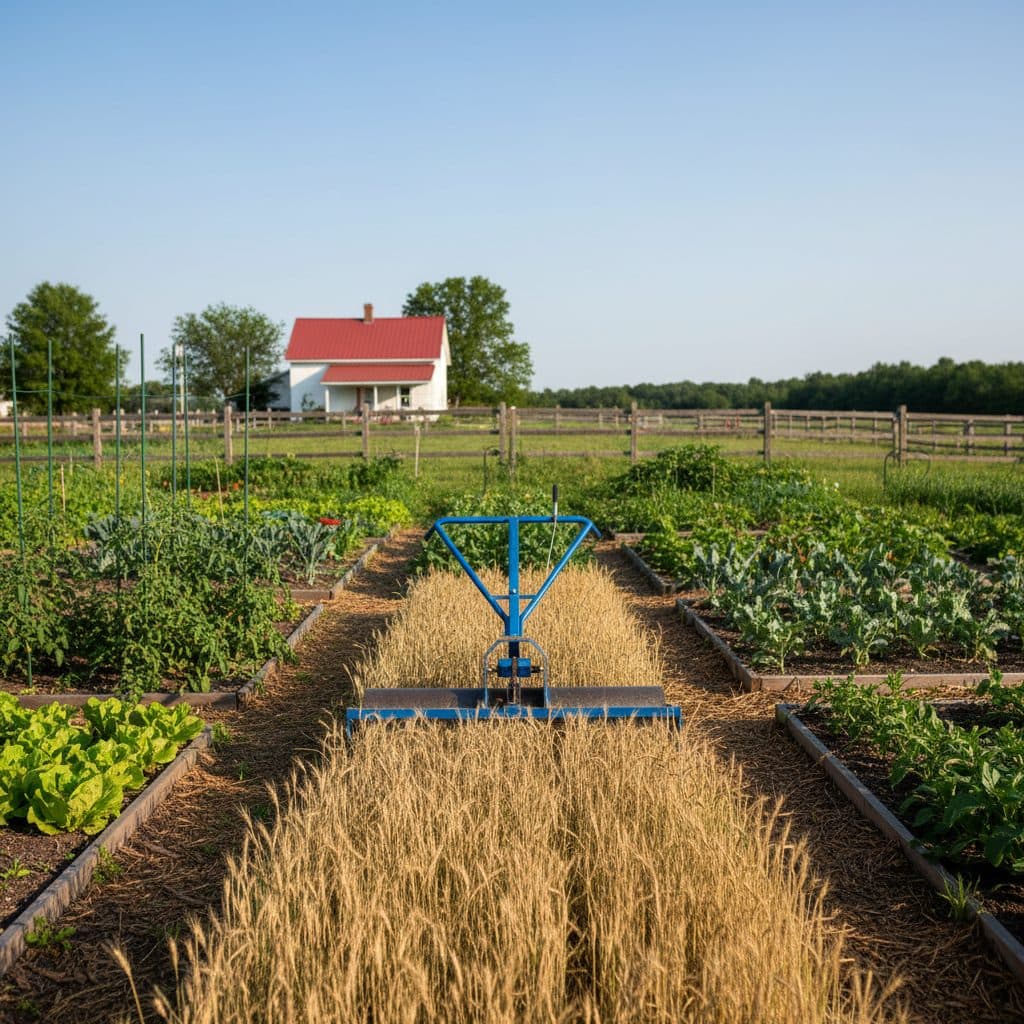
Roller-crimping is a mechanical method that flattens and crimps cover crop stems, effectively terminating them while leaving a protective mulch layer on the soil surface. This technique works best with specific cover crop species, such as cereal rye, hairy vetch, or crimson clover, when they reach a particular growth stage (typically 50% to 100% flowering for grasses and full bloom for legumes). For instance, cereal rye in USDA zone 6 is often ready for crimping in late May or early June, when its pollen is visible and abundant.
The mechanics of effective crimping
The effectiveness of a roller-crimper hinges on its design and the timing of its application. A typical roller-crimper uses a drum with chevron-patterned blades that bend and crimp the stems every 6 to 8 inches, interrupting sap flow and preventing regrowth [1]. Smaller walk-behind models cover a 30-inch width, while larger tractor-mounted units run 10 to 20 feet wide and weigh several thousand pounds; in every case the drum must carry enough ballast to crimp the stems instead of merely flattening them. Research in 2004 investigated ways to reduce vibration in these tools while maintaining efficacy, which showed the importance of balanced roller design [4]. This method leaves behind a thick mat of organic matter, which can suppress weeds by 80% to 90% and conserve soil moisture by reducing evaporation by up to 30% during dry periods in regions like the Midwest.
- Timing matters: Cereal rye should be at 50% to 100% anthesis (flowering) for successful termination.
- Species selection: Hairy vetch, crimson clover, and oats are also suitable for crimping.
- Equipment weight: Sufficient weight, often 200 pounds per linear foot, is needed to effectively crimp stems.
- Crimper design: Chevron blades spaced 6 to 8 inches apart ensure stem damage without cutting.
- Subsequent planting: Cash crops like tomatoes or squash can be planted directly into the crimped mulch within one to two weeks.
Tarping: a low-tech approach
Tarping offers a straightforward, low-labor method for terminating cover crops and preparing beds for planting, particularly useful for smaller-scale operations or in permaculture garden plans. This technique involves covering a section of the garden with an opaque tarp, typically a 6 mil black silage tarp, for a period of several weeks. The lack of light and increased temperature beneath the tarp effectively kills vegetation, including many weeds, creating a clean planting bed. In a New England garden (USDA zone 5b), a tarp can raise soil temperatures by 10 to 15 degrees Fahrenheit on a sunny day, speeding up decomposition.
Effective tarping strategies
For successful tarping, duration matters: three to six weeks is a common timeframe, varying with ambient temperature, sunlight, and the type of vegetation being suppressed. A longer duration, up to eight weeks, might be necessary for tough perennial weeds or very dense cover crops. Secure the tarp tightly around the edges with rocks, sandbags, or soil to prevent light from entering and to trap heat and moisture. This method can also help to germinate and then kill weed seeds in the top inch of soil, reducing weed pressure by 70% or more for the subsequent cash crop. After removal, the soil is often warm, moist, and ready for immediate planting, requiring minimal soil disturbance.
- Material choice: Use a durable, opaque material like a 6 mil black silage tarp.
- Duration: Leave tarps in place for three to six weeks, adjusting for climate and vegetation density.
- Secure edges: Anchor all edges firmly to block light and retain heat.
- Soil moisture: Ensure soil is moist before tarping to promote decomposition.
- Weed suppression: Expect a significant reduction in weed germination, often 70% or more.
Chop-and-drop: building soil in place
The chop-and-drop method is common in permaculture gardening, especially in food forests and perennial systems. You cut down plants (often fast-growing nitrogen fixers or dynamic accumulators) and leave cuttings directly on the soil surface as mulch instead of hauling biomass away. This mimics natural forest processes, where falling leaves and branches continually feed the soil. In a tropical climate like Hawaii (USDA zone 11), Leucaena leucocephala produces large amounts of chop-and-drop biomass; however, it is an aggressive woody invader and already a serious weed in Hawaii, Florida, and south Texas, so plant it only where naturalized and legally permitted, never where it can seed into wild land. Its foliage and seed contain mimosine, which causes hair loss and thyroid damage in horses, pigs and poultry, so keep stock away from the cuttings.
Optimizing biomass for soil fertility
The success of chop-and-drop relies on selecting appropriate species and timing the cuts. Plants with a high carbon-to-nitrogen (C:N) ratio, like mature woody stems, break down slowly, providing long-term soil cover. Plants with a lower C:N ratio, such as young legumes or comfrey, decompose faster, releasing nutrients more quickly for nearby cash crops. For example, comfrey leaves have a C:N ratio of about 10:1 to 15:1, making them excellent nutrient providers. Regular chopping (every four to six weeks during the growing season for vigorous species) encourages root turnover and exudates, supporting soil biology. This practice builds soil organic matter steadily, most visibly in degraded soils over several years. For more details on specific species, consult a Syntropic Chop-and-Drop Guide tailored to your USDA zone.
- Species selection: Choose fast-growing, nutrient-accumulating plants like sterile Bocking 14 comfrey (never the seed-setting common comfrey, Symphytum officinale, which self-sows and regrows from any root fragment), borage, or nitrogen-fixing legumes. Comfrey is mulch, not food or fodder: its pyrrolizidine alkaloids are hepatotoxic.
- Timing: Cut plants before they go to seed to prevent unwanted spread, typically every four to six weeks.
- Placement: Distribute chopped material evenly around desired plants, especially in plant guilds.
- C:N ratio: Balance high-carbon materials (slow release) with high-nitrogen materials (fast release).
- Root benefits: Leaving roots in the ground supports soil structure and microbial life.
Integrating into permaculture design
These no-till termination methods fit seamlessly into a holistic permaculture design, enhancing the functionality of food forests, plant guilds, and zoned systems. In Zone one, a highly managed area close to the home, tarping can quickly prepare beds for intensive annual vegetable production. In contrast, Zone two, which includes orchards and perennial beds, benefits greatly from chop-and-drop systems, where biomass plants are integrated into guilds to feed fruit trees and shrubs. For example, a fruit tree guild might include comfrey and borage, which are chopped every six weeks, providing nutrients directly to the fruit tree roots within a 3-foot radius.
Long-term soil health and system resilience
The goal is to create self-sustaining systems that require less external input over time. By eliminating tillage, which degrades soil structure and slows water infiltration in compacted soils, these methods help maintain the soil’s intricate fungal networks and microbial populations. Roller-crimping, for instance, leaves a residue that protects the soil from erosion on slopes up to 15 degrees and moderates soil temperature for healthy root development. All three methods contribute to increased soil organic matter, which can hold up to 20 times its weight in water, improving drought resilience in dry regions like parts of Texas (USDA zone 8). This focus on soil biology and continuous cover is fundamental to building resilient agricultural systems that can adapt to changing conditions.
- Zone integration: Use tarping in Zone one for annuals, chop-and-drop in Zone two for perennials.
- Guild support: Biomass from chop-and-drop feeds nutrient needs within plant guilds.
- Erosion control: Crimped cover crop residue protects soil on slopes up to 15 degrees.
- Water retention: Soil organic matter holds many times its own weight in water, so building it raises how much water the soil can hold.
- Microbial health: No-till practices preserve fungal networks and diverse soil biology.
Choosing the right termination method
Selecting the most appropriate cover crop termination method depends on several factors, including the type of cover crop, the scale of your operation, your climate, and your specific goals for the subsequent cash crop. For a small market garden in Vermont (USDA zone 4b) preparing for early spring greens, a quick tarping might be ideal to warm the soil and suppress weeds. In contrast, a larger farm in Iowa (USDA zone 5a) growing corn after cereal rye would likely benefit most from roller-crimping due to its efficiency over broad acres and the lasting mulch it provides.
Matching method to objective
Consider the biomass produced by your cover crop. A dense stand of cereal rye, yielding 5,000 to 8,000 pounds of dry matter per acre, is well-suited for crimping. Lighter cover crops or areas with persistent perennial weeds might respond better to tarping, which can achieve 95% weed suppression in some cases. Chop-and-drop is generally reserved for perennial systems or specific biomass crops within a home garden, where continuous nutrient cycling is the primary aim. For example, a comfrey patch can be chopped five to six times a season, yielding hundreds of pounds of nutrient-rich mulch for nearby plants. The choice often comes down to balancing labor, equipment availability, and the desired outcome for soil health and crop production, with all methods aiming to avoid the long-term organic carbon loss associated with tillage.
- Crop type: Match method to cover crop species (e.g., crimp rye, tarp light mixes, chop perennials).
- Scale: Tarping for small beds, crimping for larger fields, chop-and-drop for perennial zones.
- Climate: Tarping can warm soil in cooler climates; crimping provides mulch in hot, dry areas.
- Weed pressure: Tarping is highly effective for severe weed issues, often suppressing 95% of weeds.
- Nutrient cycling: Chop-and-drop excels in providing continuous, in-situ nutrient release for perennial systems.
Comparison of no-till cover crop termination methods
Method | Best for | Primary benefit | Typical duration/timing | Weed suppression |
|---|---|---|---|---|
Roller-Crimping | Large areas, high biomass cover crops (e.g., cereal rye) | Long-lasting mulch, soil moisture retention | One-time event at 50-100% flowering | 80-90% |
Tarping | Small to medium beds, quick bed prep, weed suppression | Clean, warm planting bed, weed seed kill | Three to six weeks | 90-95% |
Chop-and-Drop | Perennial systems, food forests, plant guilds | Continuous nutrient cycling, soil organic matter building | Ongoing, every four to six weeks | 50-70% (mulch) |
Soil organic matter: No-till practices build soil organic matter steadily over years, significantly improving soil health.
Weed control: Three to six weeks under a 6 mil black silage tarp kills the standing cover crop and sharply reduces weed germination in the bed beneath.
Water retention: Soil organic matter holds many times its own weight in water, so the organic matter these methods build raises how much water the soil can hold.
Frequently asked questions
What is the best cover crop to use with a roller-crimper?
Cereal rye is widely considered one of the best cover crops for roller-crimping due to its stiff stems and high biomass production, often yielding 5,000 to 8,000 pounds of dry matter per acre. It should be crimped when 50% to 100% of its anthers are visible, typically in late spring in USDA zone 6.
How long should I leave a tarp on my garden bed?
The ideal duration for tarping is typically three to six weeks, depending on your climate and the type of vegetation you are trying to suppress. In warmer conditions or with less vigorous weeds, three weeks might be sufficient, while tougher perennial weeds might require up to eight weeks for 95% suppression.
Can chop-and-drop be used in a small vegetable garden?
Yes, chop-and-drop is highly effective in small vegetable gardens, especially when integrated into plant guilds. You can grow sterile Bocking 14 comfrey or borage in designated spots and chop them every four to six weeks to mulch nearby vegetables, providing continuous nutrient release and reducing what you need to bring in as fertilizer.
What are the main benefits of not tilling my soil?
Not tilling your soil preserves its structure, improves water infiltration in compacted areas, and protects the delicate soil food web. It also significantly increases soil organic matter, which can hold 20 times its weight in water, improving drought resilience and overall soil fertility over several growing seasons.
Do I need special equipment for these no-till methods?
For roller-crimping, a specialized roller-crimper is needed, ranging from walk-behind models for 30-inch beds to tractor-mounted units for larger areas. Tarping primarily requires a durable, opaque tarp, such as a 6 mil black silage tarp. Chop-and-drop can be done with basic hand tools like pruning shears or a machete, making it accessible for most growers.
How do these methods support permaculture principles?
These methods align with permaculture by building soil fertility in place, reducing external inputs, and mimicking natural processes. They help create self-sustaining systems, enhance biodiversity, and improve resource efficiency, such as conserving 30% more soil moisture, which are all core tenets of permaculture design.
References
- A Powered Roller/Crimper for Walk-Behind Tractors to Terminate Cover Crops in Conservation Agriculture (2014). A Powered Roller/Crimper for Walk-Behind Tractors to Terminate Cover Crops in Conservation Agriculture.
- Towards the Development of Climate-Resilient Crops (2023). Towards the Development of Climate-Resilient Crops.
- TILLING AND CROPS (2013). TILLING AND CROPS.
- REDUCING VIBRATION WHILE MAINTAINING EFFICACY OF ROLLERS TO TERMINATE COVER CROPS (2004). REDUCING VIBRATION WHILE MAINTAINING EFFICACY OF ROLLERS TO TERMINATE COVER CROPS.
- USDA Natural Resources Conservation Service (2024). USDA Natural Resources Conservation Service.