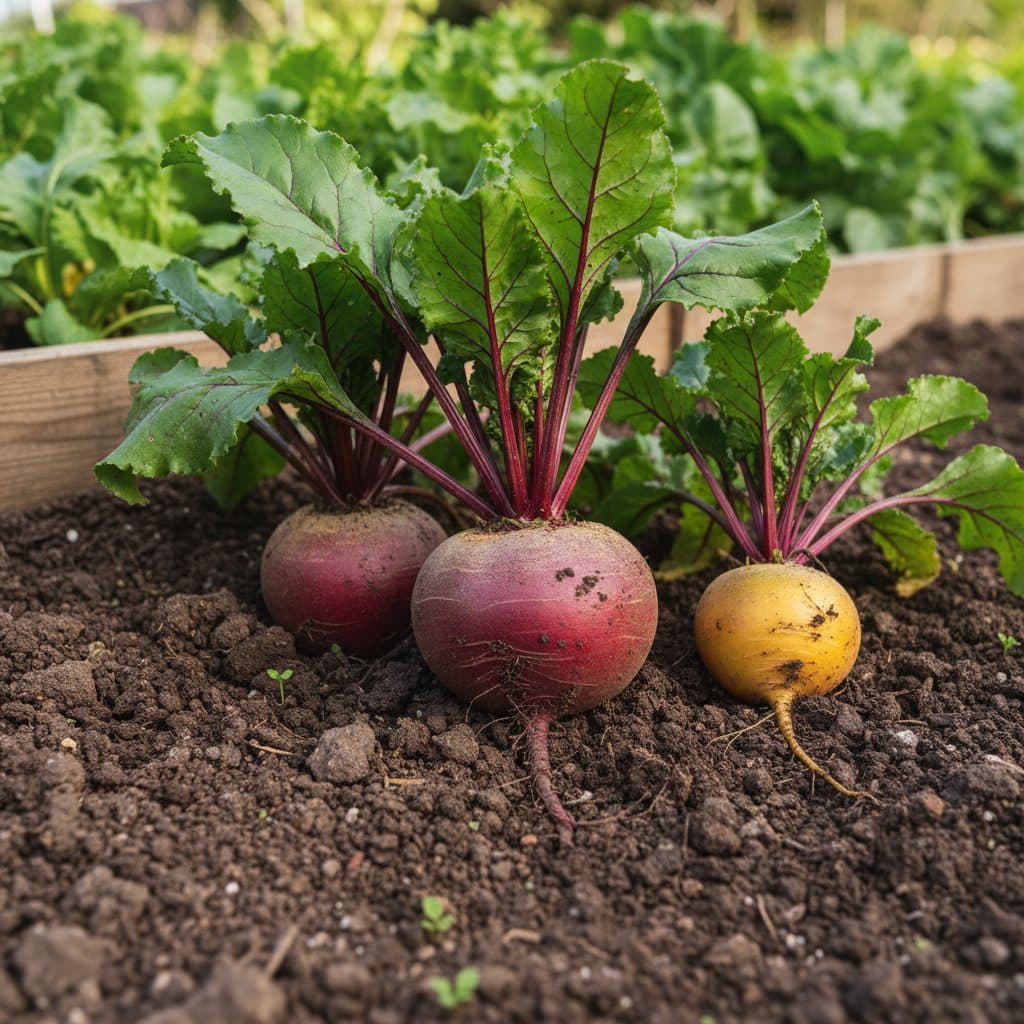
Key takeaways
- Sow bolt-resistant cultivars like Boltardy from late March under cloches, or outdoors from mid-April through July for continuous cropping.
- Most beetroot seeds are multi-germ clusters containing two to four embryos, requiring careful thinning or intentional multi-sowing in module cells.
- Prepare stone-free, fertile soil with well-rotted compost applied the previous autumn, avoiding fresh manure that causes roots to fork.
- Multi-sow two to three seed clusters per module cell, thinning to four seedlings per cell to plant out clumps at 25 cm spacing for high-yield harvests without root disturbance.
- Harvest baby beets at golf-ball size (4 cm to 5 cm) for tender salads, or allow maincrops to reach 5 cm to 8 cm for winter sand storage.
Quick answer: Growing beetroot (Beta vulgaris) on UK allotments and kitchen gardens requires stone-free, free-draining soil with a slightly acidic to neutral pH (6.5 to 7.0) and consistent moisture. Sow seeds outdoors from April to July at a depth of 2.5 cm in rows 30 cm apart, or start multi-sown modules in an unheated greenhouse from late March. Harvest baby beets at 4 cm to 5 cm or maincrop roots when they reach 5 cm to 8 cm in diameter, and lift late-autumn crops before hard frosts for storage in boxes of damp sand.
Beetroot is one of the most dependable root vegetables for British allotment holders and home gardeners. Valued for its sweet earthy roots and nutritious young salad leaves, it tolerates maritime cool-temperate weather and performs well in both raised beds and ground plots.
Because UK spring conditions are prone to sudden cold snaps, premature bolting (flowering before root swelling) can occur if sensitive varieties experience prolonged cold. Selecting the right cultivars, preparing the soil tilth properly, and understanding multi-sowing techniques ensure tender, succulent roots from early June through winter.
Whether you cultivate classic deep crimson globes, golden cylindrical types, or striped Chioggia heirlooms, following a structured seasonal schedule produces tender roots without woody centres.
UK sowing calendar and cultivar selection
Beetroot cultivars vary in their resistance to cold-induced bolting, maturity speed, and root shape. Choosing appropriate varieties for early, maincrop, and storage harvests extends the picking window.
+--------------------+-----------------------+-----------------------+------------------------------+
| Cultivar           | Type & Shape          | Sowing Window (UK)    | Key Attributes               |
+--------------------+-----------------------+-----------------------+------------------------------+
| Boltardy           | Red Globe             | Late March to July    | High bolt resistance         |
| Cylindra           | Red Long / Cylindrical| May to June           | Easy uniform slicing         |
| Burpee's Golden    | Golden Globe          | April to July         | Sweet flavour; does not bleed|
| Chioggia           | Red/White Rings       | April to June         | Mild candy-striped flesh     |
| Pablo F1           | Deep Red Globe        | April to July         | Smooth skin, uniform roots   |
+--------------------+-----------------------+-----------------------+------------------------------+
+-------------------------------------------------------------------+
| UK BEETROOT SOWING & HARVEST TIMELINE |
+-------------------------------------------------------------------+
| [Late Mar - Apr] Early sowings in module trays or under cloches |
| [May - June] Direct drill maincrop successions every 3 weeks |
| [July] Final sowing for late autumn & winter storage |
| [Jun - Aug] Harvest tender summer baby beets |
| [Oct - Nov] Lift maincrops before severe ground freezing |
+-------------------------------------------------------------------+Soil preparation and fertility requirements
Beetroot prefers a light, friable, stone-free loam that allows smooth, unhindered root expansion. Heavy, compacted clay restricts root swelling, while stony ground causes roots to split or fork.
+------------------------+-------------------------------------------------------------+
| Soil Parameter         | Ideal Target for UK Allotments                              |
+------------------------+-------------------------------------------------------------+
| Soil pH                | 6.5 to 7.0 (slightly acidic to neutral)                     |
| Organic Matter         | Well-rotted compost applied the previous autumn             |
| Nutrient Balance       | Moderate nitrogen, high potassium and phosphorus            |
| Soil Structure         | Fine, crumbly seedbed tilth; free of large stones           |
+------------------------+-------------------------------------------------------------+
Avoiding fresh manure
Never apply unrotted farmyard manure directly before sowing beetroot. Fresh organic manure contains excess raw nitrogen that stimulates rank, lush leafy tops while causing roots to split, fork, and develop an unpleasantly fibrous texture. Instead, sow beetroot on land manured for a previous crop like leeks or brassicas.
If your soil tends toward heavy acidity, test the pH and apply garden lime to lift the level to about 6.5, which improves nutrient availability. Do not lime past neutral: high pH and dry soil both increase common scab on beetroot. For seedbed preparation strategies, consult our guide on weed smart sowing stale seedbed.
Sowing methods: direct drilling vs multi-sown modules
Most commercial beetroot seeds are botanically "multigerm" seed clusters, consisting of a dried fruit casing enclosing two to four separate viable seeds. Understanding this helps you choose the best sowing approach.
+-------------------------------------------------------------------+
|                 MODULE MULTI-SOWING vs DIRECT DRILLING            |
|                                                                   |
| [Multi-Sown Module]                 [Direct Drilled Row]          |
| 3-4 seeds per cell                  1 cluster every 3 cm in drill |
| Plant out as intact clump           Thin to 10 cm apart by hand   |
| Zero root disturbance               Roots push against each other |
| 25 cm grid spacing                  30 cm between drill rows      |
+-------------------------------------------------------------------+
Method 1: multi-sown modules (recommended for allotments)
- Fill standard 24 or 40-cell module trays with fine seed compost in late March or April.
- Press two or three beetroot seed clusters into each cell to a depth of 1.5 cm. (If using monogerm seed such as 'Moneta' or 'Solo', place one seed per cell.)
- Keep trays in an unheated greenhouse, polytunnel, or sunny windowsill at 12°C to 18°C.
- Once seedlings emerge, thin clusters to leave three or four strong seedlings per cell.
- Once seedlings develop their first true leaves (around four weeks), plant each module clump out into the garden intact at 25 cm spacing in each direction. As the cluster grows, the roots naturally push each other apart in the soil, yielding a harvest of three to four medium-sized beets per station.
Method 2: direct sowing in drills
Create shallow drills 2.5 cm deep with a draw hoe, spacing rows 30 cm apart. Water the base of the drill before dropping seed clusters 3 cm to 5 cm apart. Cover with fine soil and firm gently with the back of a rake. When seedlings reach 3 cm tall, carefully thin them with small scissors to 10 cm apart for single large roots.
Compare root crop development dynamics with our overview on carrot root crop stages thinning watering and explore container growing in growing carrots root vegetables containers.
Watering, weeding and ongoing bed care
Beetroot is a relatively low-maintenance crop, but inconsistent moisture causes common quality issues.
+------------------------+------------------------------------+---------------------------------------------------+
| Cultural Issue         | Primary Cause                      | Prevention / Remedy                               |
+------------------------+------------------------------------+---------------------------------------------------+
| Woody, Tough Roots     | Drought stress                     | Consistent weekly watering during dry spells      |
| Brown/Black Corky Heart| Boron deficiency (worse on limed)  | Keep pH near 6.5; do not over-lime; seaweed meal  |
| Beet Leaf Miner        | Blistered mined leaves (Pegomya)   | Squash mines / pick off leaves; cover with mesh   |
| Premature Bolting      | Cold shock < 10°C                  | Use Boltardy; sow under fleece early              |
| Leaf Spot (Cercospora) | High humidity                      | Adequate plant spacing; avoid wet leaves          |
+------------------------+------------------------------------+---------------------------------------------------+
Note: Concentric pale rings in red beet are varietal or temperature-related traits (and are deliberate in 'Chioggia'), not boron deficiency.
Water plants evenly during prolonged dry spells. Alternating between severe drought and sudden heavy watering causes rapid root expansion that splits the outer skin. Hoe shallowly between rows to keep weed competition down without nicking the expanding root shoulders.
Harvesting, curing and winter storage
Beetroot can be harvested continuously across summer and autumn depending on your culinary requirements.
+--------------------+-------------------+--------------------+------------------------+
| Stage              | Diameter          | Harvest Season     | Best Kitchen Use       |
+--------------------+-------------------+--------------------+------------------------+
| Baby Beets         | 4 cm to 5 cm      | June to July       | Raw grating, salads    |
| Prime Table Size   | 5 cm to 7 cm      | July to September  | Roasting, boiling      |
| Winter Storage Crop| 7 cm to 8 cm      | October to November| Pickling, sand storage |
+--------------------+-------------------+--------------------+------------------------+
+-------------------------------------------------------------------+
| WINTER SAND STORAGE BOX CONFIGURATION |
| |
| +-----------------------------------------------------------+ |
| | [Layer of Slightly Damp Sharp Sand / Coarse Coir (3 cm)] | |
| | (Beet) (Beet) (Beet) (Beet) (Beet) | |
| | [Layer of Sand (5 cm) - Roots Not Touching Each Other] | |
| | (Beet) (Beet) (Beet) (Beet) (Beet) | |
| | [Base Sand Layer (5 cm)] | |
| +-----------------------------------------------------------+ |
| Store in a frost-free, dark, rodent-proof shed at 2°C to 5°C |
+-------------------------------------------------------------------+Harvesting technique
To harvest, grasp the leaf stems close to the crown and pull smoothly with a slight twist. In heavy ground, loosen the soil beside the root with a hand fork to prevent snapping the taproot.
When preparing maincrop beets for winter storage, twist off the leafy tops 3 cm above the root crown rather than cutting with a knife. Twisting prevents the root from bleeding sap and inviting rot. Brush off loose soil, allow the skin to dry for four hours, and pack the undamaged roots into wooden boxes filled with damp sand.
For traditional non-electric preservation strategies, explore root cellaring no power storage and expand your allotment rotation with how to grow beets.