Key takeaways
- Pollen sterility in common garden vegetables like tomatoes, peppers, and beans is primarily caused by high temperatures, significantly reducing fruit set and yield.
- Tomatoes experience severe pollen viability drops when daytime temperatures exceed 85°F and nighttime temperatures stay above 72°F.
- Peppers are similarly sensitive, with pollen damage occurring above 90°F during the day and poor fruit set if nights remain above 75°F.
- Beans, including common bush and pole varieties, can suffer from pollen issues when temperatures consistently climb above 85°F, especially with warm nights.
- Proactive strategies such as shade cloths, adequate irrigation, and selecting heat-tolerant varieties help maintain productivity in USDA zones experiencing hotter summers.
- Monitoring soil moisture with tools like a soil moisture meter and ensuring proper nutrient balance can help plants withstand heat stress more effectively.
Quick answer: Pollen sterility, primarily caused by high temperatures, significantly reduces fruit set and yield in common garden vegetables like tomatoes, peppers, and beans by preventing pollen from developing or functioning correctly.
In many parts of the US, from USDA zone 7b in the Southeast to zone 9a in California’s Central Valley, growers are increasingly facing hotter summers. These rising temperatures, often exceeding 90°F for extended periods, pose a significant challenge to vegetable production, particularly for heat-sensitive crops like tomatoes, peppers, and beans. One of the most critical issues is heat-induced pollen sterility, a condition where high temperatures prevent pollen from developing or functioning correctly, leading to poor or no fruit set and substantially reduced yields.
Understanding the specific temperature thresholds for these plants and recognizing the symptoms of pollen sterility can help growers implement timely interventions. For instance, a single day above 95°F can impact a week’s worth of flowering, while sustained nighttime temperatures above 70°F can be equally damaging. This article will explore the mechanisms behind heat-induced pollen sterility, outline the critical temperature ranges for your favorite summer vegetables, and offer practical, data-backed strategies to protect your harvest.
The silent threat: understanding heat-induced pollen sterility
Heat-induced pollen sterility is a widespread problem that can decimate crop yields without obvious signs of disease or pest infestation. When temperatures climb above a plant’s optimal range, the delicate process of pollen development and function is interrupted. For example, research indicates that heat stress can cause oxidative stress within plant tissues, leading to the production of reactive oxygen species (ROS) that damage pollen and inhibit pollen tube growth, as seen in maize at temperatures above 95°F [2]. This means that even if a flower appears healthy, its pollen might be non-viable, resulting in no fruit.
mechanisms of pollen failure under heat stress
The primary mechanisms behind pollen sterility under heat stress include the failure of anthers to dehisce (release pollen), reduced pollen viability, and impaired pollen tube growth. In some cases, high temperatures can trigger abnormalities during meiosis, the cell division process that produces pollen, leading to deformed or non-functional pollen grains [4]. For instance, a study on linseed showed that heat could induce microcyte formation, resulting in sterile pollen [5]. This complex biological response means that simply seeing flowers does not guarantee a harvest; the environmental conditions during the plant’s reproductive phase are paramount. Growers in regions like Arizona, where summer temperatures routinely exceed 100°F, must contend with these challenges annually.
- Reduced anther dehiscence, preventing pollen release.
- Lowered pollen viability, with fewer living pollen grains.
- Impaired pollen tube growth, preventing fertilization.
- Abnormal meiosis during pollen development.
- Increased reactive oxygen species (ROS) damaging pollen [2].
Tomatoes: critical thresholds for fruit set
Tomatoes (Solanum lycopersicum) are arguably the most popular garden vegetable in the US, but they are highly susceptible to heat stress during flowering. The optimal temperature range for tomato pollen viability and fruit set is between 65°F and 85°F. When daytime temperatures consistently exceed 85°F, pollen viability can drop sharply, sometimes by as much as 75%. Even more critically, sustained nighttime temperatures above 72°F can be detrimental, leading to poor pollen development and reduced fruit set, even if daytime temperatures are within an acceptable range. In USDA zone 8a, growers often see a significant decline in fruit production during July and August due to these factors.
recognizing symptoms and mitigating damage
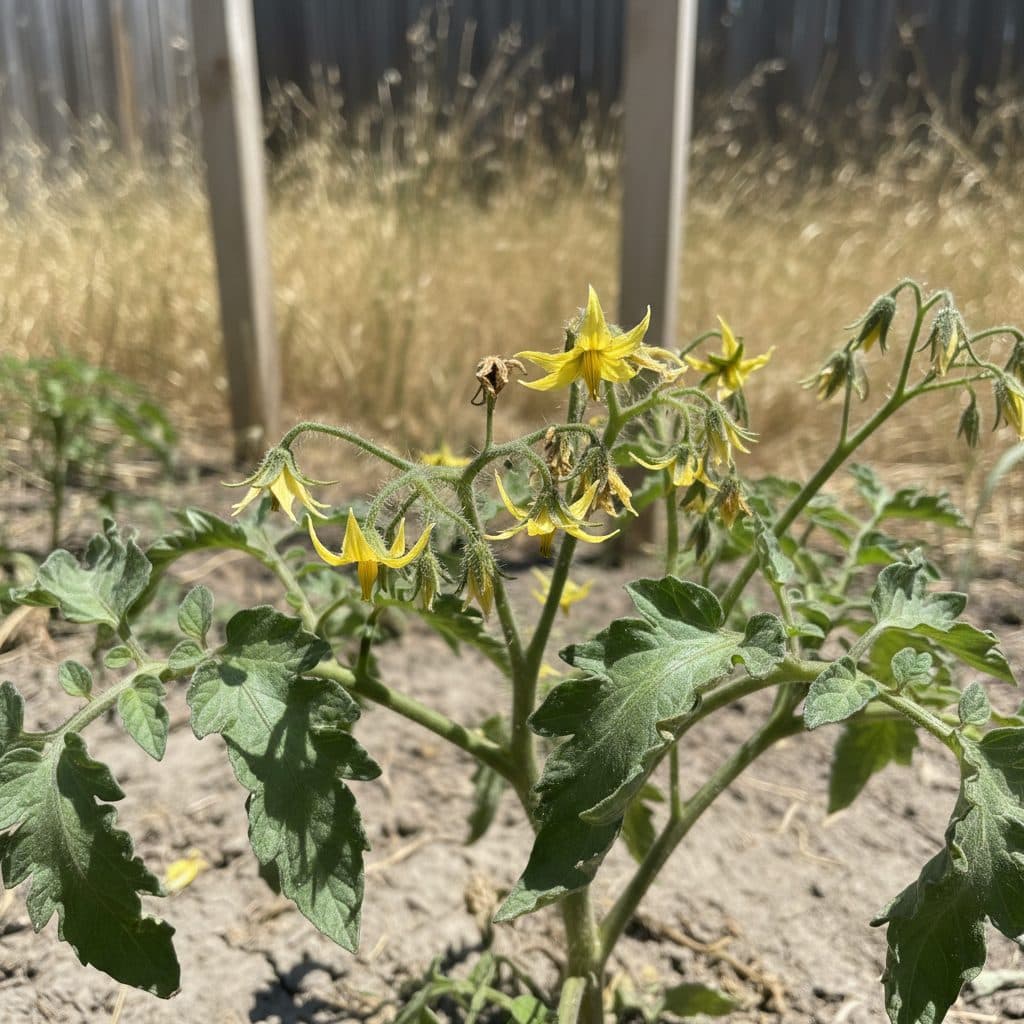
Symptoms of heat-induced sterility in tomatoes include flowers that bloom but never develop into fruit, flowers that drop prematurely, or misshapen fruits with few seeds. For instance, if you observe 50% or more of your tomato flowers dropping without setting fruit after a week of temperatures above 88°F, heat stress is a likely culprit. Providing adequate soil moisture matters; a soil moisture meter can help ensure plants receive the 1-2 inches of water they need weekly, especially during hot spells. Consider companion planting strategies, as discussed in what not to plant with tomatoes, to improve microclimates and overall plant health.
- Daytime temperatures consistently above 85°F.
- Nighttime temperatures sustained above 72°F.
- Flower drop or failure to set fruit.
- Misshapen or seedless fruits.
- Reduced overall yield by 30-50% in hot periods.
Peppers: sensitive to both day and night heat
Peppers, including both sweet and hot varieties, share a similar sensitivity to high temperatures as tomatoes. Their optimal fruit set occurs when daytime temperatures are between 70°F and 85°F. Pollen viability begins to decline sharply when daytime temperatures rise above 90°F, and fruit set can be severely inhibited if nighttime temperatures remain above 75°F. In the arid regions of USDA zone 9b, such as parts of Arizona and Southern California, pepper plants often enter a ‘heat-induced dormancy’ during peak summer, ceasing flower production and fruit set until cooler weather returns in late August or September.
managing heat stress for pepper production
To combat this, growers can employ several strategies. Providing 30-50% shade cloth during the hottest parts of the day can lower leaf temperatures by 10-15°F, significantly improving pollen viability. Ensuring consistent watering, aiming for 1.5 inches of water per week, is also critical, as water stress exacerbates heat damage. Consider using a reflective indoor grow tent for starting seedlings or for particularly valuable plants to maintain precise temperature control, especially in extreme climates. Some growers in Texas have found that applying a nutrient booster like fermented soybean meal can help plants develop stronger cell walls, improving resilience to environmental stressors.
- Daytime temperatures above 90°F reduce pollen viability.
- Nighttime temperatures above 75°F inhibit fruit set.
- Plants may cease flowering during extreme heat.
- Shade cloth can reduce temperatures by 10-15°F.
- Consistent watering is essential, about 1.5 inches weekly.
Beans: an often-overlooked heat casualty
While tomatoes and peppers often get the spotlight for heat sensitivity, common beans (Phaseolus vulgaris), including bush and pole varieties, are also highly susceptible to heat-induced pollen sterility. Their optimal temperature range for flowering and pod set is generally between 60°F and 80°F. When temperatures consistently exceed 85°F, especially if accompanied by high humidity, bean pollen can become sterile. Nighttime temperatures above 70°F are particularly damaging, as they interfere with the plant’s ability to recover from daytime stress, leading to flower abortion and poor pod development. In the Midwest’s USDA zone 6a, a week-long heatwave in July can cut bean yields by 40% or more.
strategies for successful bean harvests in heat
To maximize bean yields in warmer climates, consider planting early-maturing varieties that can complete most of their flowering and pod set before the peak summer heat arrives. For later plantings or during unexpected heatwaves, overhead irrigation during the early morning can help cool the plants and increase humidity around the flowers, which can temporarily improve pollen viability. Ensuring strong soil health through practices like incorporating cover crops, as discussed in why your Punjab field needs twelve weeks of sesbania, can also improve water retention and nutrient availability, making plants more resilient. Some growers report a 20% improvement in pod set by consistently mulching around bean plants to keep soil temperatures stable.
- Optimal temperature for beans: 60-80°F.
- Pollen sterility occurs above 85°F, especially with humidity.
- Nighttime temperatures above 70°F are detrimental.
- Early-maturing varieties can avoid peak summer heat.
- Overhead irrigation can provide temporary cooling.
Proactive strategies for heat-stressed gardens
Managing heat-induced pollen sterility requires a multi-faceted approach, focusing on both prevention and mitigation. One of the most effective tools is shade cloth, which can reduce ambient air temperatures by 10-20°F and significantly lower leaf surface temperatures. For instance, a 30% shade cloth can be deployed over tomatoes, peppers, and beans when temperatures are forecast to exceed 88°F for more than three days. Proper irrigation is equally critical; plants under heat stress transpire more water, so ensuring 1-2 inches of water per week, delivered deeply to the root zone, is essential. A soil moisture meter can help prevent both under and overwatering.
long-term resilience and variety selection
Beyond immediate interventions, consider long-term strategies. Selecting heat-tolerant varieties specifically bred for warmer climates can make a significant difference. Many seed companies now offer varieties of tomatoes, peppers, and beans that perform better when temperatures exceed 90°F. Improving soil health with organic matter, such as compost or fermented soybean meal, enhances water retention and provides a steady supply of nutrients, bolstering plant resilience. For small-scale operations or valuable plants, a reflective indoor grow tent can offer a controlled environment, protecting plants from extreme heat during critical flowering stages, maintaining temperatures below 80°F.
- Use 30-50% shade cloth for temperatures above 88°F.
- Ensure 1-2 inches of deep watering weekly.
- Select heat-tolerant varieties adapted to your USDA zone.
- Improve soil organic matter for better water retention.
- Consider controlled environments like grow tents for sensitive plants.
Temperature thresholds for pollen sterility
Crop | Daytime Threshold (°F) | Nighttime Threshold (°F) | Impact on Fruit Set |
|---|---|---|---|
Tomato | 85°F (reduced viability) | 72°F (poor development) | Severe reduction, flower drop |
Pepper | 90°F (pollen damage) | 75°F (fruit inhibition) | Significant reduction, dormancy |
Bean | 85°F (pollen sterile) | 70°F (poor pod set) | Major reduction, flower abortion |
Tomato pollen drop: Tomato pollen viability can decrease by up to 75% when daytime temperatures consistently exceed 85°F for several days.
Pepper yield loss: Pepper yields can be reduced by 30-50% during periods where nighttime temperatures remain above 75°F.
Frequently asked questions
What temperature causes tomato flowers to drop?
Tomato flowers often drop when daytime temperatures consistently exceed 85°F, or when nighttime temperatures stay above 72°F for several consecutive nights, leading to pollen sterility and failed fertilization.
Can pepper plants recover from heat stress?
Yes, pepper plants can often recover from heat stress once temperatures return to their optimal range of 70-85°F. However, flowers and fruit that developed during the extreme heat period may still drop or be malformed, potentially reducing the overall yield by 20-40%.
How can I tell if my beans are suffering from heat-induced pollen sterility?
You can identify heat-induced pollen sterility in beans if flowers bloom but then shrivel and drop without forming pods, especially after temperatures have been consistently above 85°F. You might also notice a significant reduction in the number of pods set compared to previous weeks.
Does shade cloth really help with pollen sterility?
Yes, using a 30-50% shade cloth can significantly help by reducing ambient temperatures around plants by 10-20°F, which can improve pollen viability and fruit set by up to 30% during heatwaves, especially for tomatoes and peppers in USDA zones 7 and higher.
Are there heat-tolerant varieties for these vegetables?
Absolutely. Many seed companies offer heat-tolerant varieties of tomatoes, peppers, and beans that are specifically bred to set fruit better in temperatures exceeding 90°F. Look for varieties labeled as ‘heat-set’ or ‘tropical’ for improved performance in warmer climates, potentially increasing yields by 15-25%.
What role does watering play in preventing heat sterility?
Proper watering is crucial. Plants under heat stress transpire more, requiring 1-2 inches of water per week to stay hydrated. Consistent, deep watering helps cool the root zone and ensures the plant has enough moisture to support pollen development, reducing the severity of heat damage by up to 20%.
References
- Pollen Sterility (2019). Pollen Sterility.
- Heat-stress-induced ROS in maize silks cause late pollen tube growth arrest and sterility (2024). Heat-stress-induced ROS in maize silks cause late pollen tube growth arrest and sterility.
- Figure 3: Pollen sterility in promising TGMS lines. (2023). Figure 3: Pollen sterility in promising TGMS lines..
- Clethodim induced pollen sterility and meiotic abnormalities in vegetable crop Pisum sativum L. (2020). Clethodim induced pollen sterility and meiotic abnormalities in vegetable crop Pisum sativum L..
- Induced pollen sterility via microcyte formation in linseed (Linum usitatissimum L.) (2011). Induced pollen sterility via microcyte formation in linseed (Linum usitatissimum L.).
- USDA Natural Resources Conservation Service (2024). USDA Natural Resources Conservation Service.