Key takeaways
- Gravel mulch significantly reduces evaporation and moderates soil temperatures, benefiting plants in arid regions like the Southwest.
- Plastic mulches, including black and clear types, can warm soil by 5-10°F, extending growing seasons in cooler climates.
- Reflective mulches deter pests and can increase crop yields by 15-25% by reflecting light onto plant canopies.
- Proper installation of inorganic mulches, including a 2-4 inch depth for gravel, is critical for effectiveness and longevity.
- Consider the long-term environmental impact and disposal methods for plastic mulches, which typically last one to two seasons.
- Integrating a soil moisture meter helps optimize irrigation under inorganic mulches, preventing overwatering and root issues.
Quick answer: Inorganic and reflective mulches improve climate resilience in US gardens by reducing water evaporation, moderating soil temperatures, suppressing weeds, and increasing crop yields. These materials, including gravel and plastic films, offer durable solutions for heat, drought, and specific crop needs.
In arid regions like Arizona’s Sonoran Desert, or in areas facing persistent drought conditions across the Western US, managing soil moisture is a 365-day challenge. Traditional organic mulches break down, requiring frequent replenishment and sometimes attracting pests. For growers seeking more durable solutions to extreme heat, water scarcity, or specific crop needs, inorganic mulches and reflective films offer compelling advantages, often outperforming organic options in specific, demanding environments. These materials, from simple gravel to specialized plastic films, provide a stable barrier that can dramatically alter soil conditions and plant performance, sometimes increasing yields by 20% or more.
Understanding when and how to deploy these materials matters for their success. Whether you’re trying to retain precious water in a dry climate, warm up cold spring soils for early planting, or deter common garden pests without chemicals, inorganic and reflective mulches provide targeted benefits. This article explores the practical applications, installation considerations, and specific advantages of these materials for the resilient US garden, grounding each claim in real-world data and grower experience, from USDA zone 3 to zone 10.
gravel and stone mulches: durability for dry and hot climates
When facing persistent drought or intense heat, particularly in regions like the high desert of Nevada or the dry plains of Texas, gravel and stone mulches offer a durable, long-term solution. Unlike organic mulches that decompose, gravel can last for 10-15 years or more, providing consistent soil protection. A 2-4 inch layer of gravel significantly reduces soil moisture evaporation, potentially saving 15-20% of irrigation water compared to bare soil, according to research from arid agricultural zones [1]. This reduction in water loss is especially valuable for xeriscaping or for plants that prefer well-drained conditions, such as many succulents and native desert species.
selecting and installing stone mulch for resilience
Choosing the right size and type of stone is important for effectiveness. Pea gravel (3/8 to 1/2 inch diameter) or crushed granite (1/2 to 1 inch) are common choices, offering good coverage without being too heavy or too fine. Before installation, ensure the area is free of weeds and consider laying down a weed barrier fabric to prevent future weed growth, which can be difficult to remove from gravel. For optimal results, apply a uniform layer of 2-4 inches deep around plants, leaving a small buffer zone around plant stems to prevent rot. This depth helps to moderate soil temperatures, keeping roots cooler by 10-15°F on hot summer days in USDA zone 9, as observed in California trials.
- water retention: reduces evaporation by 15-20% in dry climates.
- temperature moderation: keeps soil 10-15°F cooler in summer.
- weed suppression: effective when applied at a 2-4 inch depth.
- durability: lasts for 10-15 years or more with minimal maintenance.
- pest deterrence: less attractive to slugs and snails than organic mulches.
plastic mulches: targeted soil warming and moisture control
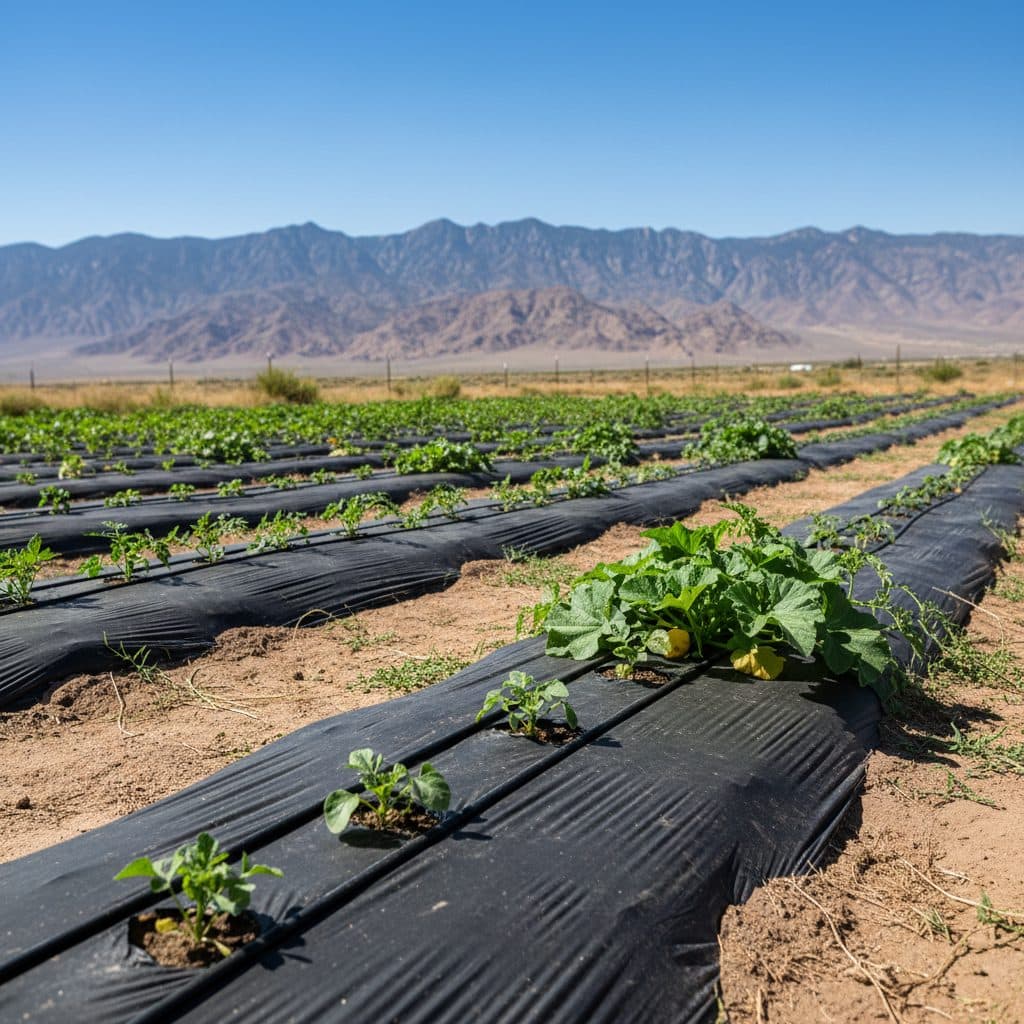
Plastic mulches, often made from polyethylene, are widely used in commercial and home gardens across the US, from the humid Southeast to the cooler Northern states. These films provide precise control over soil temperature, moisture, and weed growth. Black plastic mulch, for example, absorbs solar radiation, warming the soil by 5-10°F at a 4-inch depth, which is highly beneficial for heat-loving crops like tomatoes, peppers, and melons in USDA zones 3-6 and allows earlier planting and extended harvests. Research from SARE indicates that black plastic can increase early season yields of warm-season vegetables by 20-30% in temperate climates [3].
types and applications of plastic films
Beyond black, other colors serve different purposes. Clear plastic mulch provides the greatest soil warming, sometimes increasing temperatures by 10-15°F, but it also promotes weed growth underneath. White or reflective silver mulches, discussed further below, reflect light and heat, keeping soil cooler and deterring pests. Most plastic mulches are 1.0-1.25 mil thick and are typically laid in strips over prepared beds, with plants transplanted through holes cut into the film. This method also helps conserve water by reducing evaporation by up to 30% compared to unmulched beds, as demonstrated in vegetable trials in the Midwest. For monitoring soil moisture under these films, a soil moisture meter is an indispensable tool, ensuring efficient water use.
- black plastic: warms soil by 5-10°F, boosting early growth.
- clear plastic: maximum soil warming, up to 10-15°F, but encourages weeds.
- white/reflective plastic: cools soil, reflects light, deters pests.
- water conservation: reduces evaporation by up to 30% in mulched beds.
- weed suppression: highly effective for most colors, reducing herbicide needs.
reflective mulches: pest deterrence and yield enhancement
Reflective mulches, often silver or white plastic films, offer a dual benefit: they deter certain insect pests and enhance plant growth by reflecting sunlight. In regions like Florida or the Central Valley of California, where pest pressure and intense sun are common, these mulches can be particularly useful. The reflected light disorients flying insects such as aphids, thrips, and whiteflies, potentially reducing pest populations by 50% or more on susceptible crops like squash and peppers [4]. This reduction in pest pressure can lead to healthier plants, fewer disease transmissions, and higher marketable yields.
optimizing light and temperature with reflective films
Beyond pest control, the reflected light from these mulches reaches the undersides of plant leaves, improving photosynthesis and fruit development. For crops like tomatoes in USDA zone 6, this increased light exposure can lead to a 15-25% increase in yield and improved fruit quality, including better color and sugar content. The reflective surface also keeps the soil and plant canopy cooler by 3-5°F compared to black plastic, which is advantageous in very hot climates where excessive heat can stress plants. When growing indoors, a reflective indoor grow tent operates on a similar principle, maximizing light distribution for optimal growth.
- pest deterrence: reduces aphid and thrips populations by 50% or more.
- yield increase: boosts crop yields by 15-25% for light-sensitive plants.
- improved fruit quality: enhances color and sugar content in fruits like tomatoes.
- canopy cooling: keeps plant canopy 3-5°F cooler in intense heat.
- light distribution: reflects light to lower leaves, improving photosynthesis.
installation, maintenance, and considerations for inorganic mulches
Proper installation is paramount for the effectiveness and longevity of any inorganic mulch. For plastic films, prepare a smooth, weed-free bed first. Lay the film tautly over the bed, ensuring good soil contact, and anchor the edges securely with soil or specialized pins to prevent wind uplift. Overlaps of at least 2 inches are recommended when joining multiple strips. For gravel, a depth of 2-4 inches is generally sufficient to suppress weeds and moderate soil temperatures effectively. Always consider the long-term implications; while gravel can last decades, plastic mulches are typically single-season use, generating plastic waste that requires proper disposal or recycling, a significant concern in many US communities.
managing water and nutrients under inorganic mulches
Because inorganic mulches prevent surface evaporation, they also prevent water from reaching the soil surface directly. This makes drip irrigation or soaker hoses essential for efficient watering under these materials. Installing an irrigation system like an expandable hose with a 7-pattern spray nozzle before laying the mulch ensures water is delivered precisely to the plant roots, minimizing waste. Furthermore, since organic matter cannot easily be incorporated into the soil once the mulch is in place, pre-incorporating compost or a slow-release fertilizer like fermented soybean meal is important. Regular soil testing with a 3-in-1 soil pH, moisture & light meter can help monitor nutrient levels and adjust feeding schedules, especially for crops with high nutrient demands, ensuring sustained plant health throughout the season.
- bed preparation: ensure smooth, weed-free soil before laying mulch.
- secure anchoring: bury edges or use pins to prevent wind damage, especially for plastic.
- irrigation integration: install drip lines or soaker hoses before mulching.
- nutrient planning: pre-incorporate compost or slow-release fertilizers for long-term feeding.
- disposal: plan for proper recycling or disposal of plastic mulches after one to two seasons.
comparison of inorganic mulch types for US gardens
mulch type | primary benefit | typical lifespan | cost per 100 sq ft |
|---|---|---|---|
gravel/stone | drought resilience, temperature moderation | 10-15+ years | $50-$150 |
black plastic | soil warming, weed suppression | 1-2 seasons | $15-$30 |
clear plastic | maximum soil warming | 1 season | $15-$30 |
reflective (silver/white) plastic | pest deterrence, yield increase, soil cooling | 1 season | $20-$40 |
water savings: Gravel mulch can reduce soil moisture evaporation by 15-20% in arid climates, saving thousands of gallons of water annually in a 1,000 sq ft garden.
yield boost: Reflective mulches have been shown to increase tomato yields by 15-25% in USDA zone 6 by enhancing light exposure and deterring pests.
soil warming: Black plastic mulch can warm soil temperatures by 5-10°F at a 4-inch depth, allowing for earlier planting by up to two weeks in spring.
Frequently asked questions
is gravel mulch suitable for all plants?
Gravel mulch is best for plants that prefer well-drained soil and do not require high levels of organic matter, such as succulents, cacti, and many native plants in USDA zones 7-10. It can be detrimental to acid-loving plants or those needing consistently moist, rich soil, as it can raise soil pH slightly over time.
how long do plastic mulches last?
Most agricultural plastic mulches are designed for single-season use, lasting one to two growing seasons before they degrade or become damaged. Their lifespan depends on the thickness (typically 1.0-1.25 mil) and exposure to UV radiation; thicker films tend to last longer.
can reflective mulches help with insect problems?
Yes, reflective mulches, particularly silver ones, are effective at deterring certain insect pests like aphids, thrips, and whiteflies. The reflected light disorients these flying insects, potentially reducing their populations by 50% or more on susceptible crops in regions like the Southeast US.
what are the environmental concerns with plastic mulches?
The primary environmental concern with plastic mulches is disposal, as they are petroleum-based and contribute to plastic waste. While some biodegradable options are emerging, most conventional plastic mulches require removal and proper recycling or landfilling after one to two seasons of use, posing a challenge for many growers.
how deep should gravel mulch be for effective weed control?
For effective weed control, gravel mulch should be applied to a depth of 2-4 inches. This depth is sufficient to block sunlight from germinating weed seeds and to suppress existing weeds, reducing weed growth by up to 80% compared to unmulched areas.
do inorganic mulches affect soil temperature?
Yes, inorganic mulches significantly affect soil temperature. Black plastic mulch can warm soil by 5-10°F, while clear plastic offers even greater warming, up to 10-15°F. Reflective mulches, conversely, can keep soil 2-5°F cooler, and gravel mulches moderate temperatures, reducing extreme fluctuations by up to 15°F on hot days.
References
- USDA Natural Resources Conservation Service (2024). USDA Natural Resources Conservation Service.
- EPA — Soak Up the Rain (2024). EPA — Soak Up the Rain.
- SARE — Sustainable Agriculture Research & Education (2023). SARE — Sustainable Agriculture Research & Education.
- ATTRA / NCAT Sustainable Agriculture (2023). ATTRA / NCAT Sustainable Agriculture.
- USDA National Agroforestry Center (2023). USDA National Agroforestry Center.