Key takeaways
- Late blight thrives in the Pacific Northwest with temperatures between 50-70°F and high humidity, requiring vigilant prevention.
- Implement cultural controls like wide plant spacing (3 feet), proper pruning, and drip irrigation to minimize leaf wetness.
- Monitor local weather and disease forecasting tools, inspecting plants daily for early signs of infection.
- Consider resistant tomato varieties such as ‘Defiant PHR’ or ‘Mountain Magic’ to reduce disease susceptibility.
- Apply protective fungicides proactively, especially during periods of sustained leaf wetness exceeding 10 hours.
- Focus on soil health and drainage, using amendments like compost to support robust plant growth and resilience.
Quick answer: To protect Pacific Northwest tomatoes from late blight, implement cultural controls like wide spacing and drip irrigation, monitor weather, use resistant varieties, and apply proactive fungicides. Focus on soil health and prune lower leaves to improve air circulation and reduce leaf wetness.
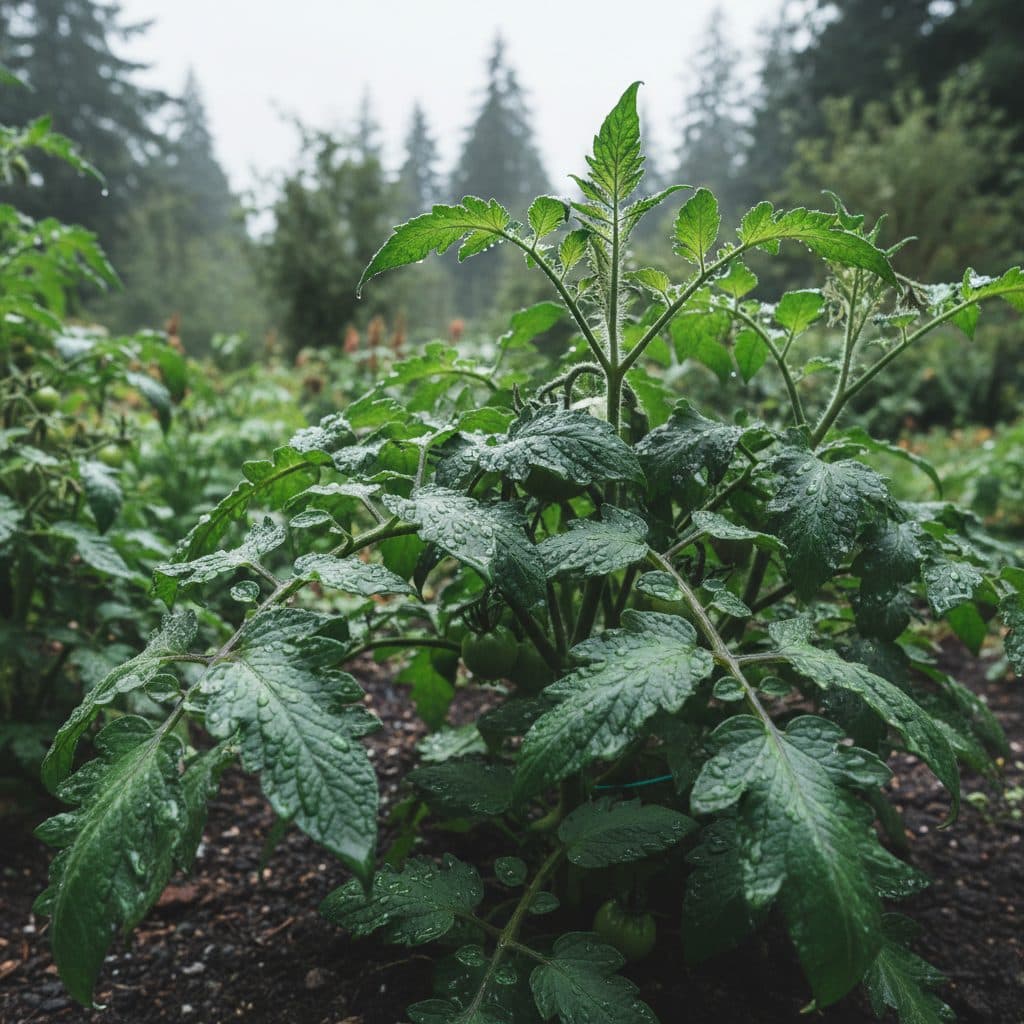
Growing tomatoes and other susceptible crops in the Pacific Northwest presents unique challenges, particularly when cool, wet weather persists into summer. Our region, encompassing USDA zones 6 through 9 along the coast, often experiences conditions that are ideal for certain plant diseases. One of the most destructive is late blight, caused by the oomycete Phytophthora infestans, which can decimate a tomato patch in just a few days if left unchecked. This pathogen thrives when temperatures hover between 50 and 70°F, coupled with relative humidity above 90% for several hours, a common scenario from June through August in many parts of Oregon and Washington.
As growers, we know that prevention is far more effective than treatment once late blight takes hold. A proactive approach, grounded in understanding the pathogen’s life cycle and our local climate patterns, is essential for a successful harvest. This article will outline practical strategies, from cultural practices to timely interventions, to safeguard your plants against this persistent threat this season.
Understanding late blight in the Pacific Northwest climate
Late blight is a formidable foe for tomato and potato growers, especially in the Pacific Northwest. The disease flourishes in specific environmental conditions: sustained leaf wetness for at least 6 to 8 hours, often combined with cool temperatures ranging from 50 to 70°F. In coastal areas of Washington and Oregon, summer fogs and consistent rainfall patterns can create these conditions for 10 or more hours daily, making our region a hotspot for outbreaks. The pathogen spreads rapidly through wind and splashing water, with spores traveling several miles from an infected source. Once established, lesions can appear within 3 to 5 days, quickly turning entire plants into a blighted mess.
identifying early symptoms on tomatoes
Recognizing late blight early matters for any chance of control. Initial symptoms on tomato plants often appear as irregular, water-soaked spots on older leaves, usually starting at the leaf tips or margins. These spots quickly enlarge, turning brown or black, and may develop a fuzzy, white fungal growth on the underside of the leaves, especially during periods of high humidity. Stems can also show dark, sunken lesions, and fruit develops large, firm, dark brown blotches. If you observe these signs, particularly after a week of cool, damp weather, immediate action is warranted to protect your entire crop from significant yield loss, which can exceed 75% in severe cases.
- Water-soaked spots on leaves, 0.5 to 1 inch in diameter.
- Fuzzy white growth on undersides of infected leaves.
- Dark, sunken lesions on stems and petioles.
- Firm, dark brown blotches on green or ripe fruit.
- Rapid wilting and collapse of entire plant within 5 days.
Cultural practices for prevention and resilience
Effective late blight prevention starts with sound cultural practices that create an environment less hospitable to the pathogen. Proper site selection is paramount; choose a location with at least 6 hours of direct sunlight daily and good air circulation. In many USDA zones 7-9 in the PNW, this means avoiding low-lying areas where cool, moist air can settle. When planting, ensure adequate spacing between plants—a minimum of 3 feet between tomato plants allows for better airflow, which helps leaves dry quickly after rain or dew. This simple step can reduce leaf wetness duration by up to 30%, significantly hindering spore germination.
optimizing watering and pruning for airflow
Watering techniques play a critical role in managing leaf wetness. Overhead irrigation, common in many gardens, can splash spores and keep foliage wet for extended periods. Switching to drip irrigation or soaker hoses, like those found in a Garden PE Irrigation Hose system, delivers water directly to the root zone, keeping leaves dry. Water early in the morning so any incidental wetting can dry before evening. Pruning the lower leaves and suckers from tomato plants improves air circulation within the canopy, further reducing humidity and drying time. Aim to remove foliage up to 12 inches from the soil surface. Incorporating organic matter, such as compost, into your soil also improves drainage and supports healthy plants, making them more resilient to disease pressures, as promoted by the USDA Natural Resources Conservation Service [6].
- Space plants 3 feet apart for optimal air circulation.
- Use drip irrigation or soaker hoses to keep foliage dry.
- Prune lower leaves and suckers up to 12 inches from the ground.
- Ensure at least 6 hours of direct sunlight daily for planting sites.
- Improve soil drainage with compost and raised beds in wet areas.
Monitoring and early detection strategies
Vigilant monitoring is your first line of defense against late blight, especially in the variable climate of the Pacific Northwest. Regularly checking local weather forecasts for extended periods of cool, wet weather is essential. Many agricultural extension services in states like Oregon and Washington provide disease forecasting models, such as BlightCast, which predict late blight risk based on temperature and humidity data. These models often indicate high-risk periods when temperatures are consistently below 75°F and relative humidity exceeds 90% for 48 consecutive hours. Knowing when conditions are favorable allows you to be extra diligent in your inspections and apply protective measures proactively.
daily plant inspections and tool usage
Inspect your tomato and potato plants daily, paying close attention to the lower leaves and stems. Look for any of the tell-tale symptoms: water-soaked spots, fuzzy white growth, or dark lesions. A Soil Moisture Meter can help you avoid overwatering, which contributes to high humidity around plants. Early detection means you can remove infected plant parts before the disease spreads throughout your garden. If you find infected leaves, carefully remove them and dispose of them in the trash, not your compost pile, to prevent further spread. Sanitize your pruning tools with a 10% bleach solution or 70% rubbing alcohol after each use to avoid transmitting spores. This daily vigilance can make the difference between a minor issue and a total crop failure, potentially saving 80% or more of your harvest.
- Check local agricultural extension services for late blight risk forecasts.
- Inspect plants daily for any signs of disease, especially after wet periods.
- Use a soil moisture meter to prevent overwatering and maintain optimal soil conditions.
- Remove and dispose of infected plant material immediately and carefully.
- Sanitize gardening tools with a 70% alcohol solution after handling diseased plants.
Protective treatments and resistant varieties
Even with excellent cultural practices and diligent monitoring, the cool, wet summers of the Pacific Northwest can still present a high risk for late blight. This is where protective treatments and the strategic use of resistant varieties come into play. Fungicides, both organic and conventional, can provide a protective barrier on plant surfaces, preventing spores from germinating and infecting tissue. Copper-based sprays, for example, are approved for organic gardening and can be effective if applied proactively, typically every 7 to 10 days, or immediately before a predicted period of high disease pressure (e.g., 48 hours of high humidity). Always follow label instructions carefully for mixing ratios and application timing to ensure effectiveness and safety, particularly for crops like tomatoes.
selecting resistant varieties and managing fungicide resistance
One of the most effective long-term strategies is to choose tomato varieties bred for late blight resistance. Varieties like ‘Defiant PHR’, ‘Mountain Magic’, ‘Plum Regal’, and ‘Celebrity’ offer varying degrees of resistance, significantly reducing your risk of infection. While no variety is 100% immune, these options can dramatically decrease the need for chemical interventions and improve your chances of a successful harvest in challenging climates. It is also important to be aware of fungicide resistance, a growing concern in the PNW for various blights, as documented in studies on pathogens like Ascochyta rabiei [2]. To mitigate this, rotate different types of fungicides if you use them, and always prioritize cultural controls. A combined approach, leveraging both resistant genetics and timely, targeted treatments, can reduce late blight incidence by over 90% in high-pressure years.
- Apply copper-based fungicides proactively every 7-10 days during high-risk periods.
- Choose late blight resistant tomato varieties like ‘Defiant PHR’ or ‘Mountain Magic’.
- Rotate fungicide types to prevent the development of pathogen resistance.
- Ensure thorough spray coverage on all leaf surfaces, tops and bottoms.
- Always follow product label instructions for application rates and pre-harvest intervals.
Managing cucurbits and fruit set in wet conditions
While late blight primarily targets solanaceous crops like tomatoes and potatoes, the cool, wet summers of the Pacific Northwest also pose threats to other garden favorites, including cucurbits (squash, cucumbers, melons) and the general process of fruit set. Cucurbits are susceptible to downy mildew and powdery mildew, both of which thrive in humid environments. Downy mildew, caused by a different oomycete, can rapidly defoliate plants, especially cucumbers, when leaf wetness persists for 4 to 6 hours and temperatures are between 55 and 75°F. Powdery mildew, while preferring drier conditions, can still be problematic in areas with poor air circulation, reducing photosynthesis and fruit quality by up to 20%.
supporting fruit set under cool, wet stress
Beyond specific diseases, persistent cool and wet weather can directly impact fruit set. Tomatoes, for instance, often struggle to set fruit when night temperatures consistently drop below 55°F or daytime temperatures remain below 60°F, as pollen can become inviable. Cucurbits rely on pollinators, and bees are less active during rainy, cool periods, potentially leading to poor pollination and reduced yields. To mitigate these issues, ensure excellent soil health by incorporating amendments like Fermented Soybean Meal Organic Fertilizer, which provides slow-release nutrients to support plant vigor. Consider hand-pollinating cucurbits during cool spells, and protect plants from excessive rain with temporary covers if possible. Maintaining good air circulation and consistent soil moisture (not saturation) are key to reducing general disease pressure and encouraging robust fruit development in our challenging PNW climate.
- Ensure good air circulation for cucurbits to deter powdery and downy mildew.
- Monitor cucurbit leaves for yellow spots or fuzzy growth on undersides.
- Consider hand-pollinating squash and cucumbers during cool, rainy periods.
- Use row covers or temporary shelters to protect plants from excessive rain.
- Maintain consistent soil moisture with good drainage to reduce plant stress.
Late blight vs. early blight symptoms on tomatoes
Symptom characteristic | Late blight (Phytophthora infestans) | Early blight (Alternaria solani) |
|---|---|---|
Lesion appearance | Large, irregular, water-soaked, dark brown/black spots, often with fuzzy white mold on underside. | Smaller, concentric rings (bullseye pattern), dark brown spots, usually without fuzzy mold. |
Location on plant | Starts on upper leaves, stems, and fruit; rapid spread. | Starts on older, lower leaves; progresses upwards more slowly. |
Speed of spread | Extremely rapid; can kill plant in 3-5 days. | Slower progression; plant may survive for weeks with infection. |
Optimal conditions | Cool (50-70°F), wet (>90% humidity, 6-8 hrs leaf wetness). | Warm (75-85°F), humid, but also needs leaf wetness. |
Affected parts | Leaves, stems, fruit (large, firm, dark blotches). | Leaves, stems (small, sunken lesions), fruit (dark spots near stem end). |
Humidity threshold: Late blight thrives when relative humidity exceeds 90% for several hours, a common occurrence in the Pacific Northwest during summer.
Temperature range: Optimal temperatures for late blight development are between 50 and 70°F, facilitating rapid disease progression within 3 to 5 days.
Frequently asked questions
What are the earliest signs of late blight on tomatoes?
The earliest signs of late blight are typically irregular, water-soaked spots on the upper leaves, often starting at the tips or margins. These spots quickly turn dark brown or black, and during humid conditions, a fuzzy white mold may be visible on the underside of the infected leaves. This can occur within 3 days of infection.
Can late blight survive in the soil over winter in the Pacific Northwest?
Late blight generally does not survive well in the soil in the Pacific Northwest. It primarily overwinters in infected potato tubers left in the ground or in cull piles. Removing all plant debris and volunteer potatoes after harvest is crucial to reduce the inoculum for the following season, cutting down potential sources by over 95%.
Are there any organic sprays effective against late blight?
Yes, copper-based fungicides are approved for organic gardening and can be effective against late blight. They act as a protective barrier on plant surfaces. For best results, these sprays should be applied proactively, typically every 7 to 10 days, especially during periods when late blight risk is high, such as when temperatures are between 50-70°F and humidity is above 90%.
How does plant spacing help prevent late blight?
Proper plant spacing, such as planting tomatoes 3 feet apart, significantly improves air circulation around the foliage. This helps leaves dry more quickly after rain or morning dew, reducing the duration of leaf wetness. Since late blight spores require several hours of continuous leaf wetness to germinate and infect, reducing this period by even 2 hours can dramatically lower disease risk.
What temperature range is most favorable for late blight development?
Late blight thrives in cool to moderate temperatures, with optimal development occurring when temperatures are consistently between 50 and 70°F. Combined with high humidity (above 90%) and prolonged leaf wetness (6-8 hours), these conditions can lead to rapid disease spread and significant crop damage within a week.
Can cucurbits get late blight?
No, cucurbits (like squash, cucumbers, and melons) do not get late blight, as it specifically affects solanaceous plants such as tomatoes and potatoes. However, cucurbits are susceptible to other fungal diseases like downy mildew and powdery mildew, which also thrive in humid conditions and can cause significant yield losses of 20% or more in the Pacific Northwest.
References
- Late Northwest Coast (2001). Late Northwest Coast.
- Emergence of QoI Fungicide Resistance in the Chickpea Blight Pathogen Ascochyta rabiei in the Pacific Northwest (2024). Emergence of QoI Fungicide Resistance in the Chickpea Blight Pathogen Ascochyta rabiei in the Pacific Northwest.
- Occurrence of Root Pressure Exudation in Pacific Northwest Conifer Seedlings (1980). Occurrence of Root Pressure Exudation in Pacific Northwest Conifer Seedlings.
- Late Blight Forecasting (2013). Late Blight Forecasting.
- LATE PLEISTOCENE GLACIATIONS OF THE NORTH PACIFIC COAST (2023). LATE PLEISTOCENE GLACIATIONS OF THE NORTH PACIFIC COAST.
- USDA Natural Resources Conservation Service (2024). USDA Natural Resources Conservation Service.