Key takeaways
- Design monsoon-ready beds with 6-12 inch depressions and 4-8 inch berms to capture over 600 gallons per 1,000 square feet from a one-inch rain [1].
- Construct sunken beds 6-18 inches deep to reduce irrigation needs by 30-50% and lower soil temperatures by 5-10°F.
- Implement waffle beds with 4-6 inch high soil walls in 12-18 inch grids to improve water retention by 20-30% [1].
- Amend desert soils with 2-4 inches of compost annually to increase organic matter from 0.5% to 3% over 3-5 years [3].
- Apply a 3-6 inch layer of organic mulch to reduce evaporation by up to 70% and lower soil temperatures by 10-20°F [2].
- Choose drought-tolerant plants suited for USDA zones 7-10, which can use 75% less water once established.
Quick answer: To improve moisture retention in US desert gardens, build monsoon-ready beds with depressions and berms to capture rainfall, construct sunken beds 6-18 inches deep, and implement waffle beds with 4-6 inch high soil walls to reduce irrigation and evaporation.
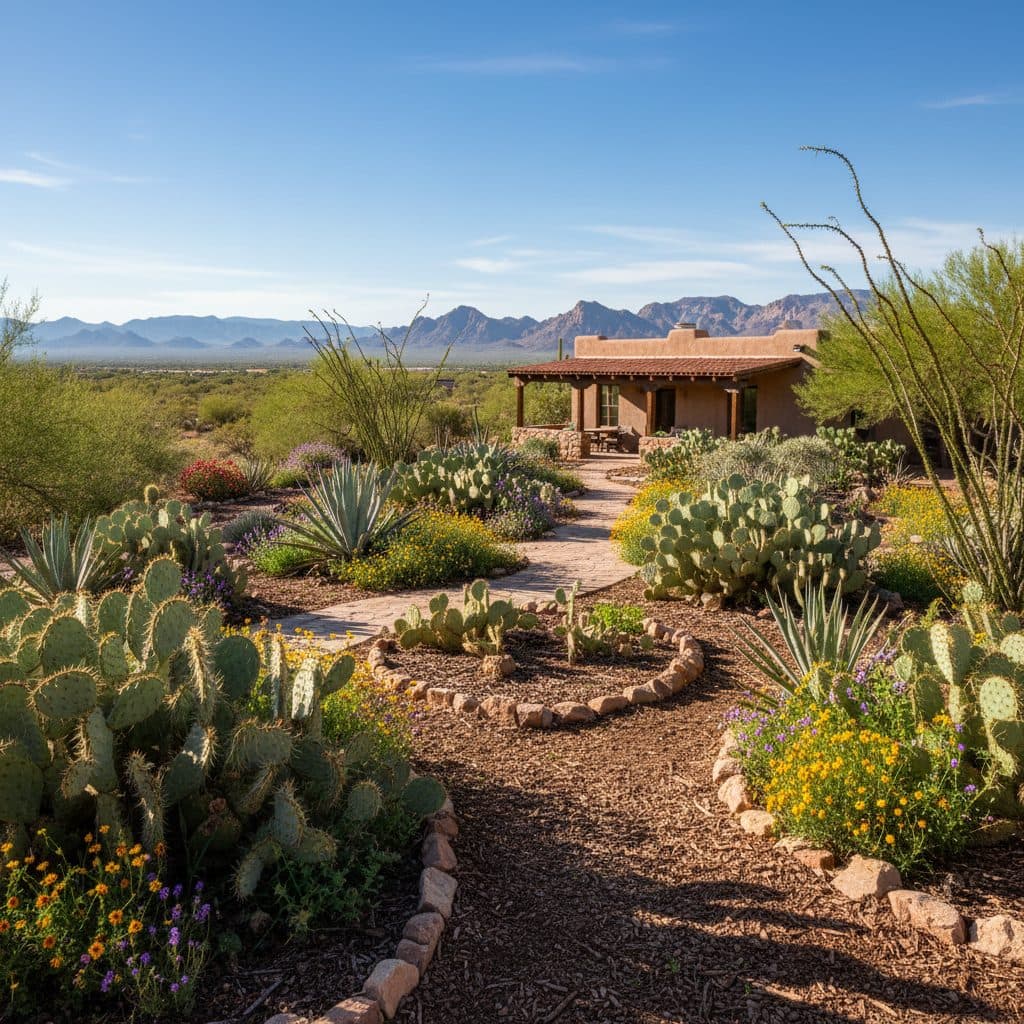
In the arid landscapes of the American Southwest, particularly in states like Arizona and New Mexico, gardeners face significant challenges: intense heat, minimal rainfall, and often nutrient-poor soils. Average annual rainfall in parts of the Sonoran Desert, for instance, can be as low as three to fifteen inches, with summer temperatures regularly exceeding 100°F for weeks on end. This harsh environment demands thoughtful approaches to water management and soil health to sustain productive gardens.
To combat these conditions, experienced growers are turning to time-tested strategies that capture and conserve every precious drop of water. Building monsoon-ready beds, along with sunken and waffle beds, offers practical solutions for desert moisture retention, helping plants thrive even when water is scarce. These methods create resilient growing spaces that can withstand the climate extremes common in USDA zones 8 to 10, while also saving water.
Understanding desert challenges and water scarcity
The desert environment presents a unique set of hurdles for gardeners, primarily centered around water availability and soil quality. In regions like the Mojave Desert, approximately 80% of rainfall can be lost to evaporation before it has a chance to penetrate the soil deeply enough for plant roots [2]. This rapid water loss is exacerbated by high daytime temperatures, which can reach 120°F in summer, and low humidity levels, often below 10%. Furthermore, desert soils frequently contain less than one percent organic matter, which severely limits their capacity to hold moisture and nutrients [3]. Without sufficient organic material, water tends to run off compacted surfaces rather than soaking in, especially during intense, short-duration monsoon storms that can deliver an inch or more of rain in less than an hour.
Putting it into practice
Addressing these fundamental issues requires a shift from conventional gardening practices to strategies that actively manage water and build soil health. The goal is to maximize infiltration and minimize evaporation, so that plants receive adequate hydration even with limited precipitation. For instance, increasing soil organic matter from 0.5% to 3% can dramatically improve water retention, allowing soil to hold up to 10 times its weight in water [3]. This improvement means that a garden bed with improved soil can effectively store several additional gallons of water per square foot after a rain event, sustaining plants for longer periods. Monitoring soil moisture levels is also critical; tools like a soil moisture meter can help growers understand when and how much to water, preventing both underwatering and overwatering.
- High evaporation rates, often exceeding 80% of rainfall, due to intense heat and low humidity [2].
- Soils typically poor in organic matter, frequently below one percent, reducing water holding capacity [3].
- Intense, short monsoon storms lead to significant runoff on unprepared surfaces.
- Compacted soils hinder water penetration, preventing deep root access.
- Sustaining plant life requires strategies that prioritize water infiltration and retention.
Monsoon-ready beds: capturing seasonal rains
Monsoon-ready beds are designed to capture and slowly release the substantial, albeit infrequent, rainfall characteristic of summer monsoon seasons in regions like the Chihuahuan Desert. These systems, often referred to as rain gardens or swales, utilize passive water harvesting techniques to direct runoff from roofs, driveways, or sloped landscapes into planted areas. A typical monsoon bed might feature a shallow depression, approximately 6 to 12 inches deep, bordered by a low earthen berm that is 4 to 8 inches high. This design allows water to collect and slowly infiltrate the soil over several hours, rather than running off immediately. For every 1,000 square feet of catchment area, a well-designed monsoon bed can capture and infiltrate over 600 gallons of water from a one-inch rain event [1].
Putting it into practice
The key to an effective monsoon-ready bed lies in its ability to slow down, spread out, and sink in water. Berms should have a gentle slope, around one to two percent, to prevent erosion while still guiding water effectively. Within the bed, incorporating a significant amount of organic material—such as three to six inches of compost—can dramatically increase the soil’s water holding capacity, potentially by 20% to 30% [3]. This improved soil structure not only retains more water but also supports a healthier microbial community, which further aids nutrient cycling. Selecting appropriate plant species, such as Desert Teak (Tecomella undulata) or Desert Cotton (Aerva javanica), which are adapted to periodic inundation followed by dry spells, also matters for success in USDA zones 7 to 9.
- Utilize shallow depressions, typically 6-12 inches deep, to collect water.
- Construct low earthen berms, 4-8 inches high, to contain runoff [1].
- Aim for a gentle slope of one to two percent to guide water without causing erosion.
- Incorporate three to six inches of compost to boost soil water retention by 20-30% [3].
- Select native or adapted plants that thrive in USDA zones 7-9, tolerating both wet and dry conditions.
Sunken beds: maximizing moisture retention
Sunken beds, sometimes called “waffle gardens” in a broader sense, are a traditional method employed by indigenous peoples in arid regions for centuries, notably in the American Southwest by groups like the Zuni and Hopi. These beds are essentially planting areas dug below ground level, typically 6 to 18 inches deep, which allows them to capture and concentrate rainfall directly where plants are growing. The surrounding soil is a natural berm, preventing runoff and reducing evaporation by shielding the soil surface from direct wind and sun. This design can reduce irrigation needs by 30% to 50% compared to raised beds or flat-ground planting in USDA zone 9. For example, in a 4-foot by 8-foot sunken bed, an 8-inch depth can hold approximately 160 gallons of water from a 6-inch rain event.
Putting it into practice
The benefits of sunken beds extend beyond simple water collection. The cooler soil temperatures at depth, often 5°F to 10°F lower than surface soil during peak summer, minimize water evaporation from the soil surface. This microclimate also protects young plants from intense solar radiation and high winds, which can desiccate foliage rapidly. When constructing a sunken bed, consider dimensions of three to four feet wide for easy access, with lengths varying based on your garden’s layout. Filling the bottom 6 to 12 inches with a mixture of native soil and 20% to 30% compost will create a rich, water-retentive growing medium [4]. Regular monitoring with a 3-in-1 soil pH, moisture, and light meter can help optimize watering schedules and soil conditions.
- Dig beds 6 to 18 inches below ground level to capture and hold rainfall.
- Benefit from 30% to 50% reduction in irrigation needs compared to surface beds [4].
- Experience cooler soil temperatures, often 5°F to 10°F lower, reducing evaporation.
- Protect young plants from harsh winds and intense solar radiation.
- Incorporate 20% to 30% compost into the bottom 6-12 inches of soil for improved water retention [4].
Waffle beds: an ancient technique for modern gardens
Waffle beds are a specific type of sunken bed, characterized by a grid-like pattern of raised soil walls that create individual planting pockets. This method, also originating from indigenous agricultural practices in the American Southwest, is particularly effective in areas with sandy or rapidly draining soils, such as those found in parts of Southern California. The walls, typically 4 to 6 inches high, form squares or rectangles, usually 12 to 18 inches on each side. Each pocket acts as a mini-catchment basin, concentrating water directly around the plant’s root zone and preventing it from spreading out or running off. This design can improve water retention by an estimated 20% to 30% over simple sunken beds, especially during heavy monsoon downpours [1].
Putting it into practice
The small, contained cells of a waffle bed create a microclimate that is highly beneficial for plant growth in arid conditions. The walls provide shade to the soil surface, reducing evaporation by up to 15% on hot days when temperatures can exceed 105°F. Furthermore, the concentrated water and nutrients within each pocket lead to more efficient plant uptake, allowing for denser planting and higher yields per square foot. When building waffle beds, ensure the walls are firm and stable, and consider incorporating a layer of fine gravel or small stones at the bottom of each pocket to aid drainage and prevent waterlogging, especially in clay-heavy desert soils. Common beans (Phaseolus vulgaris) are a historically successful crop in these systems, thriving in USDA zones 4 to 10.
- Create a grid pattern with soil walls 4-6 inches high, forming 12-18 inch squares.
- Each pocket functions as a mini-catchment basin, improving water retention by 20-30% [1].
- The walls provide shade, reducing evaporation from the soil surface by up to 15% on hot days.
- Allows for denser planting and more efficient nutrient uptake within each cell.
- Historically used for crops like common beans, suitable for USDA zones 4-10.
Soil amendments for desert resilience
Regardless of the bed type—monsoon-ready, sunken, or waffle—improving soil health is the cornerstone of successful desert gardening. Desert soils are often low in organic matter, typically less than one percent, which severely limits their ability to hold water and provide nutrients [3]. Amending these soils with high-quality organic materials can dramatically transform their structure and function. Incorporating two to four inches of well-rotted compost annually can increase soil organic matter content from a meager 0.5% to a healthier 3% over three to five years [3]. This increase translates to a significant boost in water holding capacity, allowing the soil to retain an additional 10 to 20 gallons of water per 100 square feet after a one-inch rain.
Putting it into practice
Beyond compost, mulching is another critical practice for desert resilience. A three to six-inch layer of organic mulch, such as wood chips, straw, or shredded leaves, can reduce soil surface temperatures by 10°F to 20°F and cut evaporation rates by up to 70% [2]. Mulch also suppresses weeds, which compete with garden plants for precious water and nutrients, and slowly breaks down to contribute organic matter to the soil. For sandy soils common in parts of the Great Basin Desert, adding bentonite clay or biochar can further improve water retention. Bentonite, for example, can absorb up to 10 times its weight in water, and applying it at a rate of five to ten pounds per 100 square feet can significantly improve moisture availability for plants in USDA zones 6 to 9.
- Incorporate two to four inches of well-rotted compost annually to increase soil organic matter [3].
- Aim to boost organic matter from 0.5% to 3% over three to five years for significant benefits.
- Apply a three to six-inch layer of organic mulch to reduce evaporation by up to 70% [2].
- Mulch also lowers soil surface temperatures by 10°F to 20°F and suppresses weeds.
- Consider adding bentonite clay at five to ten pounds per 100 square feet in sandy soils to improve water absorption.
Plant selection for water-wise beds
Choosing the right plants is as crucial as bed construction and soil amendments for successful desert gardening. Focusing on drought-tolerant, native or adapted species ensures that plants can thrive with minimal supplemental irrigation, even in the driest periods. For example, in USDA zones 8 and 9, species like Desert Teak (Tecomella undulata) and Desert Cotton (Aerva javanica) are excellent choices for larger spaces, requiring significantly less water than conventional landscape plants—sometimes 75% less once established. For groundcover or smaller areas within sunken or waffle beds, native grasses like Desert Bunch Grass (Panicum turgidum) or Sewan Grass (Lasiurus scindicus) can provide soil stabilization and further reduce evaporation.
When planning your plantings, consider the mature size of each species and its water needs. Grouping plants with similar water requirements together, a practice known as hydrozoning, can optimize irrigation efficiency. For instance, a bed might have a central area for plants needing occasional deep watering, surrounded by zones for plants that are more self-sufficient. Many desert-adapted vegetables, such as certain varieties of common beans, squash, and corn, have been successfully grown in waffle beds for centuries, producing viable yields with minimal water input in regions like the high desert of Arizona (USDA zone 7). These plants often have deep taproots or efficient water-use mechanisms, allowing them to extract moisture from deeper soil layers that conventional plants cannot reach. Always research specific plant needs for your local USDA zone and microclimate.
- Prioritize drought-tolerant, native, or well-adapted plant species for your USDA zone.
- Select plants like Desert Teak or Desert Cotton for larger spaces, which can use 75% less water.
- Utilize native grasses such as Desert Bunch Grass or Sewan Grass for groundcover and soil stabilization.
- Practice hydrozoning by grouping plants with similar water requirements to optimize irrigation.
- Consider traditional desert crops like common beans, squash, and corn for waffle beds in USDA zone 7.
Monsoon Capture: A monsoon-ready bed can capture over 600 gallons of water per 1,000 square feet from a one-inch rain [1].
Sunken Bed Savings: Sunken beds reduce irrigation by 30-50% and lower soil temperatures by 5-10°F in USDA zone 9 [4].
Mulch Efficiency: A 3-6 inch mulch layer cuts evaporation by up to 70% and soil temperatures by 10-20°F [2].
Frequently asked questions
How much water can a monsoon-ready bed actually save?
A well-designed monsoon-ready bed can capture and infiltrate over 600 gallons of water per 1,000 square feet from a one-inch rain event, significantly reducing the need for supplemental irrigation [1]. This can lead to substantial water savings over a growing season, especially in regions with distinct wet and dry periods.
What depth is most effective for sunken beds?
Sunken beds are typically most effective when dug 6 to 18 inches deep. This depth allows for optimal water collection and concentration around plant roots, while also providing cooler soil temperatures, often 5°F to 10°F lower than surface soil, which minimizes evaporation.
Can waffle beds be used for growing vegetables in arid zones?
Yes, waffle beds are highly effective for growing vegetables in arid zones, such as the high desert of Arizona (USDA zone 7). The individual pockets concentrate water and nutrients, supporting crops like common beans, squash, and corn, which have been successfully grown using this method for centuries.
How much compost should I add to my desert garden beds?
For desert soils, incorporating two to four inches of well-rotted compost annually is recommended. This practice can increase soil organic matter from less than one percent to a healthier three percent over three to five years, dramatically improving water retention [3].
What are the best mulching materials for desert gardens?
Organic mulches like wood chips, straw, or shredded leaves are excellent for desert gardens. A three to six-inch layer can reduce soil surface temperatures by 10°F to 20°F and cut evaporation rates by up to 70%, conserving precious moisture [2].
Are there specific plants that perform best in these water-wise beds?
Yes, drought-tolerant native or adapted species are ideal. For example, Desert Teak and Desert Cotton thrive in USDA zones 8-9, using 75% less water once established. Native grasses like Sewan Grass also perform well, stabilizing soil and reducing evaporation.
References
- USDA Natural Resources Conservation Service (2024). USDA Natural Resources Conservation Service.
- EPA — Soak Up the Rain (2024). EPA — Soak Up the Rain.
- SARE — Sustainable Agriculture Research & Education (2023). SARE — Sustainable Agriculture Research & Education.
- ATTRA / NCAT Sustainable Agriculture (2023). ATTRA / NCAT Sustainable Agriculture.
- USDA National Agroforestry Center (2023). USDA National Agroforestry Center.