Key takeaways
- 50% shade cloth can reduce ambient temperatures by 10-15°F, protecting plants from direct solar radiation.
- Orienting garden beds to face east maximizes beneficial morning sun exposure while shielding plants from harsh afternoon rays.
- Implementing passive cooling strategies, such as planting deciduous trees or using existing structures, provides afternoon shade.
- Improving soil health with 2-4 inches of organic mulch significantly reduces soil temperature and conserves up to 30% more moisture.
- Selecting heat-tolerant, drought-resistant plant varieties is fundamental for success in USDA zones 8-10 desert climates.
- Consistent monitoring of soil moisture levels, especially during summer months, prevents plant stress and optimizes water use.
Quick answer: To protect gardens in intense desert heat, use 50% shade cloth to reduce temperatures by 10-15°F, orient beds east for morning sun, and improve soil health with mulch to conserve moisture.
Gardening in the intense heat of the American Southwest, from USDA zone 8 in parts of Arizona to zone 10 in southern California, presents unique challenges. The desert sun, with its high solar radiation and prolonged exposure, can quickly overwhelm many common garden plants, leading to scorched leaves, stunted growth, and increased water demand. Temperatures can easily reach 110°F or more during summer afternoons, making direct sun exposure a significant stressor for plant life.
Successfully cultivating a thriving garden in these arid conditions requires a strategic approach to managing light, heat, and moisture. By understanding the specific impacts of intense sun and implementing targeted solutions like 50% shade cloth, thoughtful bed orientation, and effective water conservation, growers can create resilient landscapes that flourish even when daily highs exceed 100°F for weeks on end.
Understanding intense desert solar radiation
The desert sun delivers a powerful punch, far beyond what plants in more temperate climates typically experience. In regions like Phoenix, Arizona, summer days can see solar radiation levels reaching over 1,000 watts per square meter, leading to rapid increases in ambient temperature and soil heat. This intense radiation directly affects plant physiology, often causing photosynthesis inhibition as stomata close to conserve water, reducing the plant’s ability to convert light into energy. High temperatures also accelerate soil moisture evaporation, demanding more frequent irrigation and stressing root systems. Without intervention, plants can suffer severe heat stress, manifesting as wilting, leaf scorch, and reduced fruit production, especially when temperatures consistently exceed 95°F for several hours a day.
The impact of high UV and heat on plants
Beyond visible light, the desert environment exposes plants to elevated levels of ultraviolet (UV) radiation, which can damage plant DNA and cellular structures. This, combined with extreme heat, can lead to a phenomenon known as ‘sunburn’ on plant tissues, where leaves develop white or brown necrotic patches. Studies indicate that managing intense environmental conditions, much like intense emotional states, requires specific management strategies for optimal outcomes [1]. For instance, a tomato plant in full, unprotected Arizona sun might yield only half the fruit of a shaded counterpart. Understanding the specific characteristics of a challenging environment, such as a desert climate, is crucial for effective management [2].
- Wilting and drooping leaves by midday
- Scorched or bleached spots on foliage
- Stunted growth or reduced plant vigor
- Premature flower or fruit drop
- Increased susceptibility to pests and diseases
Strategic shade: deploying 50% shade cloth
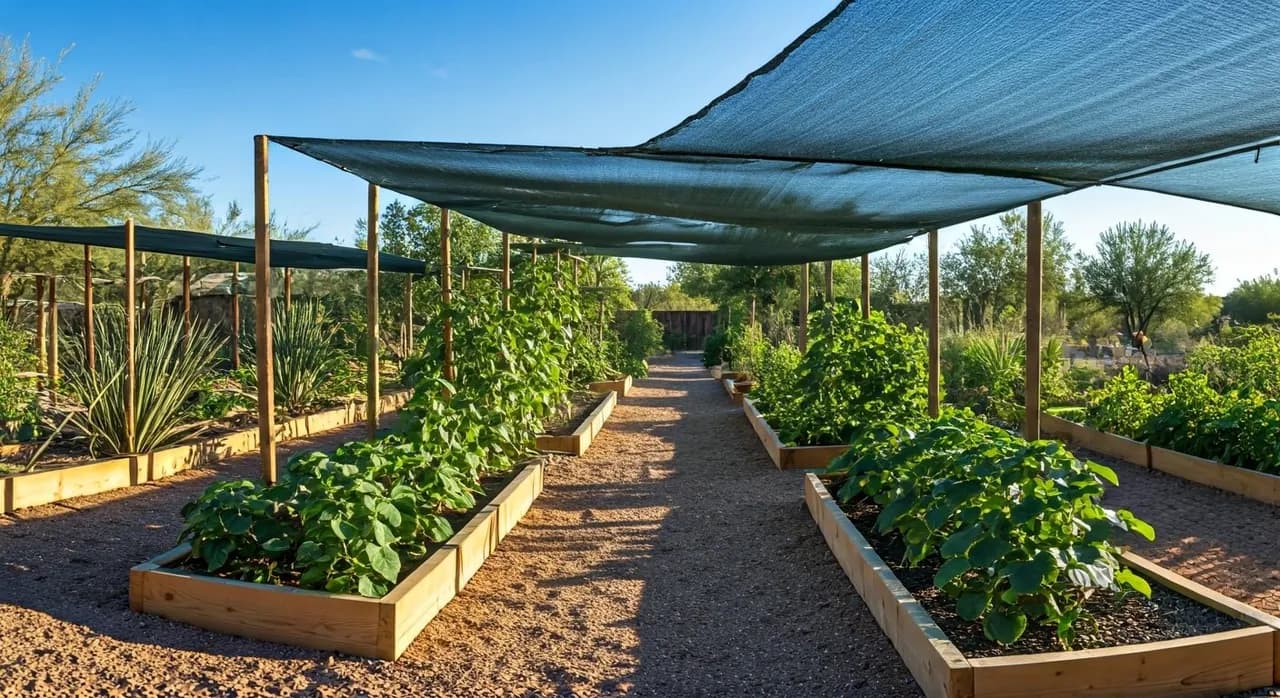
One of the most effective tools for mitigating intense desert sun is shade cloth. For many vegetable gardens and ornamental plants in USDA zones 8-10, a 50% shade cloth provides an ideal balance, reducing solar radiation by half while still allowing sufficient light for photosynthesis. This level of shade can lower ambient temperatures in the immediate plant environment by 10-15°F, significantly reducing heat stress and UV protection for sensitive plants. Installing shade cloth is a straightforward process, typically involving a simple frame constructed from PVC pipe or metal conduit, draped with the fabric. The goal is to provide overhead coverage, allowing for good airflow.
Choosing and installing the right shade percentage
While 50% is a common recommendation for general gardening, specific plants might benefit from different percentages. For instance, leafy greens like lettuce or spinach might prefer 60-70% shade in the hottest months, while sun-loving peppers or eggplants might thrive under 30-40% shade. Proactive measures can mitigate negative impacts, similar to how early intervention helps manage difficult situations [4]. When installing, ensure the cloth is positioned several feet above the plants to allow for air circulation, preventing heat from getting trapped underneath. For more detailed guidance on climate control, including shade cloth use, consider resources like Greenhouse climate control: shade cloth, cooling, insulation, and automation. A well-installed shade structure can extend the growing season by several weeks in both spring and fall in regions like Southern Nevada.
- Choose knitted shade cloth for durability and airflow.
- Ensure the shade structure is tall enough for plant growth and air circulation (at least 6 ft high).
- Anchor the frame securely to withstand winds up to 40 mph.
- Consider a retractable system for seasonal adjustment.
- Position the cloth to block afternoon sun, typically from 1 PM to 6 PM.
Optimizing garden layout: east-facing beds and afternoon shade
This builds directly on strategic shade.
Beyond artificial shade, thoughtful garden design also helps manage intense sun. Orienting garden beds to receive morning sun advantage is a cornerstone of desert gardening. The sun from 7 AM to 12 PM is less intense and provides essential light for plant growth without the scorching heat. Conversely, beds with western exposure should be avoided or heavily shaded, as the afternoon sun (from 1 PM to 6 PM) is the most damaging, especially in summer months when temperatures can peak at 105°F or higher. Utilizing existing structures like homes, fences, or strategically planted trees can provide effective passive cooling and natural afternoon shade.
Leveraging natural and structural shade elements
Deciduous trees, for example, offer excellent seasonal shade, providing cover in summer and allowing sun through in winter. Consider fast-growing varieties that establish quickly without causing issues; resources like Fast growing shade trees: speed without the split limbs and wrecked pipes can guide your choices. For a permanent, low-maintenance shade solution, consider desert-adapted species like Desert Teak, which can reach 15-20 ft tall and wide, offering substantial shade. Adapting to challenging conditions and implementing resilient strategies can lead to successful outcomes [5]. A well-placed trellis with a vigorous vine, such as grapes or passionfruit, can also create a living shade screen that cools an area by 5-10°F through evapotranspiration.
- Position taller plants or structures to the west of shorter, more sensitive crops.
- Plant deciduous trees to the west or southwest of garden beds for seasonal shade.
- Utilize existing fences or walls to cast afternoon shadows over vulnerable areas.
- Install vertical trellises with climbing plants for dynamic shade.
- Design pathways and seating areas to be shaded during peak afternoon hours, typically 2 PM to 5 PM.
Water management and soil health in arid climates
Even with optimal shade, effective water management and robust soil health are non-negotiable in desert gardening. The USDA Natural Resources Conservation Service provides guidelines and data critical for understanding and managing soil and water resources in various US regions [6]. Organic matter is the desert gardener’s best friend, improving soil structure, increasing water retention, and providing a slow release of nutrients. Incorporating 2-4 inches of compost into garden beds annually can increase the soil’s water-holding capacity by up to 20%. A thick mulch layer of 3-6 inches, such as wood chips or straw, is equally vital. Mulch dramatically reduces soil moisture evaporation by up to 30%, moderates soil temperature by 10-15°F, and suppresses weeds, which compete for precious water.
Efficient irrigation and drought-tolerant plant selection
Drip irrigation systems are far more efficient than overhead sprinklers in arid environments, delivering water directly to the root zone with minimal loss to evaporation. Strategic planning for resource management is essential in areas facing significant environmental stressors [6]. A soil moisture meter can help determine when to water, avoiding both overwatering and underwatering. When selecting plants, prioritize drought-tolerant species native to the region or those adapted to similar dry, hot conditions. Examples include Desert Bunch Grass, Sewan Grass, and Desert Cotton, which thrive on minimal water once established, often requiring less than one inch of water per week.
- Apply 2-4 inches of compost annually to improve soil structure.
- Maintain a 3-6 inch layer of organic mulch to conserve moisture.
- Install a drip irrigation system for targeted water delivery.
- Use a soil moisture meter to guide watering schedules.
- Select native or desert-adapted plant species for resilience.
Shade Cloth Performance Comparison for Desert Gardens
Shade Percentage | Light Reduction | Temperature Reduction | Best Use Case |
|---|---|---|---|
30% | Low | 5-8°F | Sun-loving vegetables (peppers, eggplant), light-sensitive ornamentals in milder deserts. |
50% | Moderate | 10-15°F | General vegetable gardens, herbs, most ornamentals in USDA zones 8-10. |
70% | High | 15-20°F | Leafy greens (lettuce, spinach), seedlings, very sensitive plants, or extreme desert heat (115°F+). |
Temperature Drop: A 50% shade cloth can lower ambient temperatures around plants by 10-15°F, significantly reducing heat stress during peak summer hours in the Southwest.
Water Savings: Applying a 3-6 inch layer of organic mulch can reduce soil moisture evaporation by up to 30%, conserving thousands of gallons of water annually in a 500 sq ft garden.
Soil Health Boost: Incorporating 2-4 inches of compost into desert soils annually can increase their water-holding capacity by as much as 20%, improving plant resilience.
Shop desert gardening essentials
Frequently asked questions
What percentage of shade cloth is best for desert vegetables?
For most desert vegetables like tomatoes, peppers, and beans, a 50% shade cloth is ideal. It effectively reduces intense solar radiation by half, lowering temperatures by 10-15°F, while still allowing sufficient light for strong growth and fruit production in USDA zones 8-10.
How does orienting garden beds to the east help in desert climates?
Orienting garden beds to face east allows plants to receive the gentler morning sun from 7 AM to 12 PM, which is crucial for photosynthesis without the scorching heat. This setup naturally shields plants from the more intense and damaging afternoon sun, which can reach 105°F or higher in western exposures.
What are the benefits of using organic mulch in a desert garden?
Organic mulch, applied 3-6 inches deep, provides numerous benefits in desert gardens. It significantly reduces soil moisture evaporation by up to 30%, moderates soil temperatures by 10-15°F, suppresses weed growth, and slowly releases nutrients as it decomposes, improving overall soil health over time.
Can I grow non-native plants in intense desert sun?
Yes, but it requires more intensive management. Non-native plants often need 50-70% shade cloth, consistent drip irrigation, and enriched soil with 2-4 inches of compost to thrive. Selecting varieties known for heat tolerance and adapting your microclimate are key to success in zones with summer highs exceeding 100°F.
How often should I water my desert garden with shade cloth?
Even with shade cloth, watering frequency depends on plant type, soil, and ambient temperature. A good starting point is deep watering 2-3 times per week for established plants, ensuring the top 6-12 inches of soil are moist. Using a soil moisture meter can help fine-tune this schedule, preventing both overwatering and underwatering.
What are some good drought-tolerant plants for desert gardens?
Excellent drought-tolerant plants for desert gardens include Desert Teak (Tecomella undulata), Desert Bunch Grass (Panicum turgidum), Sewan Grass (Lasiurus scindicus), and Desert Cotton (Aerva javanica). These species are adapted to arid conditions and often require less than one inch of supplemental water per week once established in USDA zones 8-10.
References
- Managing Intense Emotions and Overcoming Self-Destructive Habits (2004). Managing Intense Emotions and Overcoming Self-Destructive Habits.
- Understanding and managing emotions (2024). Understanding and managing emotions.
- Review of the paper “Direct radiative effects of intense Mediterranean desert dust outbreaks” by A. Gkikas et al. (2018). Review of the paper “Direct radiative effects of intense Mediterranean desert dust outbreaks” by A. Gkikas et al..
- Managing and reducing anger (2024). Managing and reducing anger.
- Overcoming depression and managing difficult mood states (2024). Overcoming depression and managing difficult mood states.
- USDA Natural Resources Conservation Service (2024). USDA Natural Resources Conservation Service.