Key takeaways
- Nitrogen-fixing plants naturally enrich soil, reducing the need for synthetic fertilizers in permaculture designs.
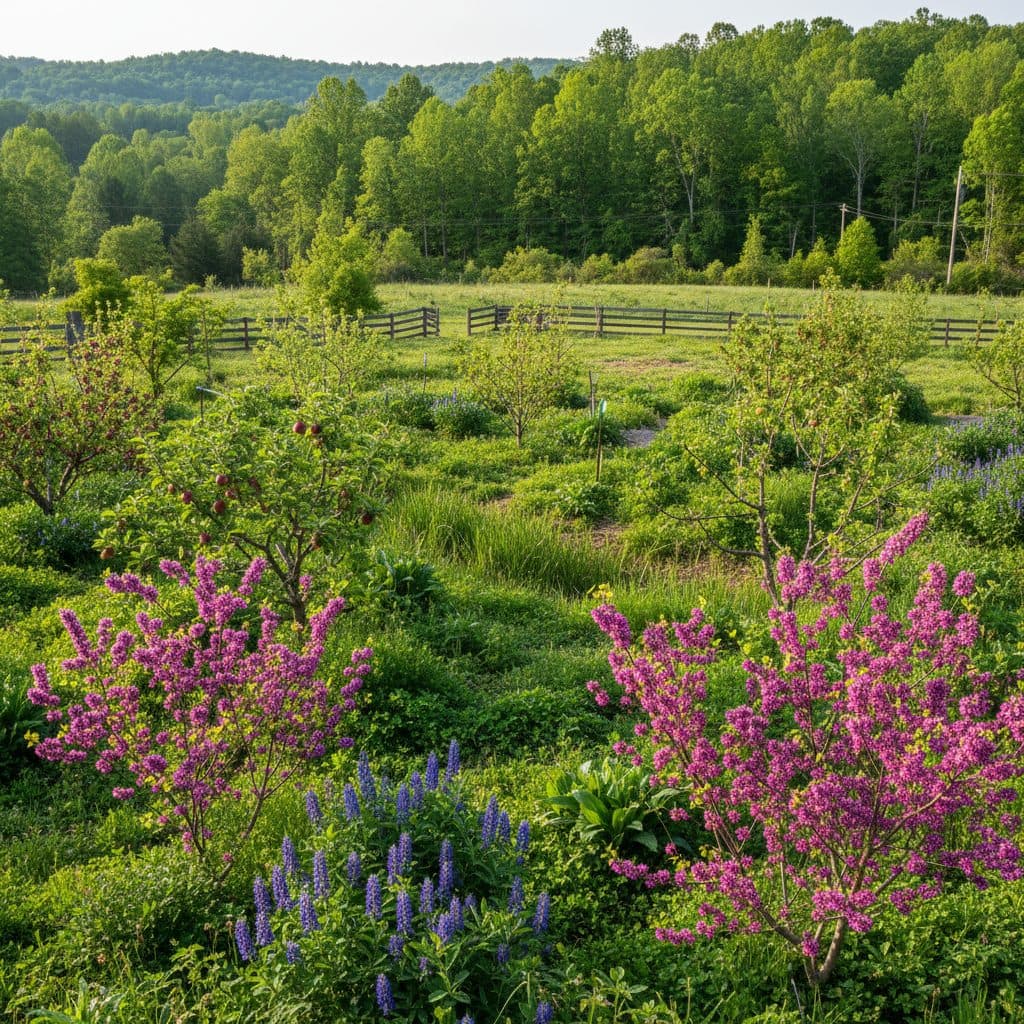
- Native alternatives to invasive mimosa include true nitrogen-fixers like False Indigo Bush, alongside non-fixing natives like Eastern Redbud that earn their place for early pollinator forage.
- Integrating these plants into food forests and plant guilds improves biodiversity, soil health, and system resilience.
- Proper site assessment and species selection, considering USDA zones 6 through 10, determine successful establishment.
- Nitrogen-fixing trees contribute significantly to soil fertility, with some species adding 30 to 200 pounds of nitrogen per acre annually.
- Beyond nitrogen, these plants provide fodder, wildlife habitat, and erosion control, supporting diverse permaculture functions.
Quick answer: True nitrogen-fixing trees and shrubs for the Southeast US, such as False Indigo Bush and American Wisteria, enrich soil, reduce fertilizer needs, and support biodiversity in permaculture systems. These native species offer superior ecological benefits compared to invasive plants like mimosa.
Across the humid Southeast and subtropical US, from USDA zone 6 through 10, growers often seek ways to build soil fertility without relying on synthetic inputs. One of the most effective strategies in permaculture design involves planting nitrogen-fixing trees and shrubs. These plants form a symbiotic relationship with soil bacteria, converting atmospheric nitrogen into a form usable by other plants, which can significantly boost overall garden productivity and health. For instance, some leguminous trees can contribute 30 to 200 pounds of nitrogen per acre per year to the soil, a substantial benefit for any food forest or perennial polyculture system [1].
Selecting appropriate nitrogen-fixing species provides alternatives to problematic plants like the invasive mimosa tree (Albizia julibrissin). Native species such as Eastern Redbud and False Indigo Bush fit into plant guilds, food forests, and swale plantings across the varied growing conditions of the southeastern United States.
The role of nitrogen fixers in permaculture systems
Nitrogen-fixing plants are cornerstones of productive permaculture systems, especially in the Southeast where soils can often benefit from organic matter and nutrient enrichment. These plants host specialized bacteria, primarily rhizobia in their root nodules, which capture atmospheric nitrogen (N₂) and convert it into ammonia (NH₃), a process known as biological nitrogen fixation [3]. This fixed nitrogen then becomes available to the plant itself and, through leaf drop, root exudates, and decomposition, to surrounding plants in the soil. For example, a mature black locust (Robinia pseudoacacia) in USDA zone 6 can fix up to 100 pounds of nitrogen per acre annually, providing a substantial boost to nearby fruit trees or berry bushes.
How nitrogen fixers support soil health
Integrating nitrogen fixers into permaculture design is about more than just adding nitrogen; it is about building a self-sustaining ecosystem. These plants contribute to improved soil structure, increased organic matter, and enhanced microbial diversity. A study in 2018 found that nitrogen-fixing trees allocate lower fractions of nitrogen to photosynthetic apparatus in their seedling leaves, suggesting an efficient use of resources that benefits the entire system [2]. In a typical food forest setting, planting nitrogen fixers around fruit and nut trees, such as pecans or persimmons, can meaningfully reduce the need for external nitrogen inputs over several seasons, creating a more resilient and less labor-intensive garden.
- Soil enrichment: Adds essential nitrogen and organic matter.
- Reduced fertilizer needs: Decreases reliance on synthetic nitrogen over time.
- Enhanced biodiversity: Supports a wider range of soil microorganisms.
- Improved plant growth: Supports stronger growth in companion plants.
- Erosion control: Deep root systems stabilize soil on slopes.
Mimosa alternatives for the Southeast and subtropical US
The mimosa tree (Albizia julibrissin) is a common sight in the Southeast, known for its attractive pink flowers. However, it is a highly invasive species, outcompeting native plants and interrupting local ecosystems across USDA zones 6 through 10. Its prolific seed production and rapid growth rate, often 10 to 20 feet in five years, make it a significant problem. Fortunately, numerous native and well-behaved nitrogen-fixing alternatives offer similar aesthetic appeal and superior ecological benefits. For instance, the Eastern Redbud (Cercis canadensis) provides spring blooms and supports local pollinators, growing 20 to 30 feet tall and wide.
Native alternatives to mimosa
When selecting alternatives, consider species that are well-adapted to the specific climate and soil conditions of the Southeast. The False Indigo Bush (Amorpha fruticosa) is a versatile shrub that thrives in wet or dry conditions, reaching 10 to 15 feet in height and providing valuable habitat. Another excellent choice is the American Wisteria (Wisteria frutescens), a native vine that, unlike its Asian counterparts, is not invasive and produces beautiful purple flowers. For subtropical areas like USDA zone 9 and 10, the Dahoon Holly (Ilex cassine) is a native evergreen that, while not a legume, supports local wildlife and can be part of a diverse guild. Several of these alternatives fix nitrogen, and all of them contribute to the local food web, offering nectar, pollen, and shelter for native insects and birds, improving the overall health of your permaculture garden plan.
- Eastern Redbud (Cercis canadensis): 20-30 ft tall, USDA zones 4-9.
- False Indigo Bush (Amorpha fruticosa): 10-15 ft tall, USDA zones 4-9.
- American Wisteria (Wisteria frutescens): Climbing vine, USDA zones 5-9.
- Black Locust (Robinia pseudoacacia): Up to 80 ft tall, USDA zones 4-8. Native only to the Appalachians and Ozarks, not the coastal plain; it suckers hard from the roots and cutting makes that worse, its bark, foliage, and seeds are toxic to livestock, and it is listed as invasive or restricted in a number of states — check your state noxious weed list before planting.
- Honey Locust (Gleditsia triacanthos): Up to 70 ft tall, thornless varieties available, USDA zones 3-9.
Redbud and false indigo: native powerhouses for the Southeast
The Eastern Redbud (Cercis canadensis) is a beloved native tree throughout the Southeast, hardy from USDA zone 4 to 9. It typically grows 20 to 30 feet tall with a similar spread, making it an excellent understory tree or specimen plant. Its pink-purple flowers appear in early spring before the leaves, providing an early nectar source for pollinators. Redbuds are relatively low-maintenance once established, preferring well-drained soils and partial to full sun. Redbud is a legume, but it does not form root nodules and does not fix nitrogen — a common and persistent misconception. Its value in a permaculture guild is real but different: early nectar for pollinators, a moderate mid-story size, and edible flowers and young pods.
Cultivating false indigo bush
The False Indigo Bush (Amorpha fruticosa) is another unsung hero for southeastern landscapes, thriving in USDA zones 4 through 9. This deciduous shrub can reach 10 to 15 feet in height and width, producing attractive purple flower spikes in late spring. It is incredibly adaptable, tolerating a wide range of soil conditions, from consistently moist to occasionally dry, and even thriving in disturbed sites. Its deep root system helps with erosion control, and its nitrogen-fixing capabilities enrich the soil for nearby plants. For example, planting False Indigo Bush along the edge of a swale can help stabilize the bank while improving soil fertility for its immediate neighbors, making it a functional and beautiful addition to any permaculture gardening system.
- Eastern Redbud: Prefers full sun to partial shade, well-drained soil.
- False Indigo Bush: Tolerates wet or dry conditions, full sun to partial shade.
- Growth rate: Redbud grows 1-2 ft per year; False Indigo grows 2-3 ft per year.
- Wildlife value: Both provide nectar and habitat for native insects and birds.
- Pest resistance: Generally resistant to most common pests and diseases in the region.
Integrating nitrogen fixers into your permaculture design
Effective permaculture design in the Southeast involves thoughtful placement of nitrogen-fixing plants within food forests, plant guilds, and along swales. When designing a food forest, consider the seven layers: canopy, understory, shrub, herbaceous, groundcover, rhizosphere (root zone), and vertical (climbers). Nitrogen fixers can occupy multiple layers. For example, a Black Locust (Robinia pseudoacacia) might form part of the canopy in USDA zone 6, while a False Indigo Bush (Amorpha fruticosa) fits perfectly into the shrub layer. Proper spacing is essential; plant nitrogen fixers 10 to 15 feet from primary fruit trees to allow for root development and nutrient sharing without competition.
Designing plant guilds with nitrogen fixers
Plant guilds are synergistic groupings of plants that support each other, and nitrogen fixers are often the central component. A typical guild might include a fruit tree (e.g., a fig or peach in USDA zone 8), surrounded by nitrogen-fixing shrubs, dynamic accumulators (plants that draw up nutrients from deep in the soil), insectary plants, and groundcovers. For instance, a guild around a young pecan tree could include an Eastern Redbud for shade and early nectar, False Indigo Bush for nitrogen and habitat, and sterile Bocking 14 comfrey as a cut-and-drop mulch crop. This multi-functional approach improves soil fertility, attracts beneficial insects, and reduces pest pressure. When designing the best nitrogen-fixing trees for every USDA zone, consider their mature size and light requirements.
- Canopy layer: Black Locust — a true fixer, though see the cautions on its suckering and livestock toxicity. Honey locust is a legume that does not nodulate or fix nitrogen; include it for shade and fodder pods, not fertility.
- Understory/Shrub layer: Eastern Redbud, False Indigo Bush, American Wisteria.
- Herbaceous layer: Partridge Pea (Chamaecrista fasciculata), various clovers.
- Spacing: Allow 10-15 ft between large nitrogen fixers and primary crop trees.
- Guild benefits: Increased yields, reduced pests, improved soil structure around the guild.
Care and establishment for long-term success
Establishing nitrogen-fixing trees and shrubs in the Southeast requires attention to site preparation and initial care to ensure long-term success. Most species prefer well-drained soil, with a pH range between 6.0 and 7.0. Before planting, conduct a soil test to determine nutrient levels and pH, making amendments as needed. For instance, if your soil is highly acidic (below 5.5), adding agricultural lime can raise the pH to a more suitable range for most legumes. Dig a planting hole two to three times wider than the root ball and just as deep to ensure the root collar is level with the surrounding soil. This promotes healthy root development and reduces transplant stress.
Watering and mulching strategies
Consistent watering is critical during the first one to two years after planting, especially in the hot, humid summers of the Southeast. Provide one inch of water per week, either from rainfall or irrigation, to encourage deep root growth. Applying a 3- to 4-inch layer of organic mulch, such as wood chips or pine straw, around the base of the plant helps retain soil moisture, suppress weeds, and regulate soil temperature. This conserves soil moisture and slowly builds soil organic matter. Pruning requirements vary by species; for example, False Indigo Bush benefits from occasional thinning to maintain its shape and vigor, while Redbuds generally require minimal pruning beyond removing dead or crossing branches. Proper care ensures these plants thrive and contribute to your permaculture system for 20 years or more.
- Soil pH: Target 6.0-7.0 for optimal nitrogen fixation.
- Planting depth: Root collar level with the soil surface.
- Initial watering: One inch per week for the first 1-2 years.
- Mulch depth: 3-4 inches of organic material around the base.
- Pruning: Minimal for Redbud, occasional thinning for False Indigo Bush.
Beyond nitrogen: additional benefits for the landscape
While nitrogen fixation is a primary reason to include these plants, their contributions to a permaculture landscape extend far beyond soil fertility. Many nitrogen-fixing trees and shrubs offer significant benefits for wildlife, providing food, shelter, and nesting sites. For instance, the flowers of Eastern Redbud are an early spring nectar source for bees, while its seeds are consumed by birds like quail and finches. False Indigo Bush provides excellent cover for small birds and mammals, and its flowers attract a wide array of beneficial insects. These plants help create a more biodiverse and resilient ecosystem, reducing the need for external interventions.
Erosion control and fodder production
The deep and extensive root systems of many nitrogen-fixing trees and shrubs are invaluable for erosion control, particularly on slopes or along waterways common in the varied topography of the Southeast. Species like Black Locust (Robinia pseudoacacia) can stabilize steep banks, preventing soil loss and improving water infiltration. Furthermore, some species offer edible components or serve as fodder for livestock. Honey locust pods, for example, are palatable to cattle and other stock. Black locust is the opposite case: its bark, foliage, and seeds are toxic, and horses are especially sensitive, so keep it and its prunings out of paddocks and away from anywhere stock can browse. Integrating these multi-functional plants into your design, as explored in articles like Best Fodder Trees and Shrubs for Livestock, maximizes the yield of your land, providing ecological services that are often overlooked but contribute significantly to the overall health and productivity of your system over a 10-year period [4].
- Wildlife habitat: Provides food, shelter, and nesting sites for birds and insects.
- Erosion control: Deep roots stabilize soil on slopes and riverbanks.
- Fodder: Honey Locust pods offer 12-17% protein for livestock.
- Biomass production: Fast-growing species generate abundant organic matter for mulching.
- Aesthetic value: Attractive flowers and foliage earn these plants a place on visible edges.
Comparison of trees for Southeast permaculture guilds (not all of these fix nitrogen)
Species | USDA Zones | Mature Height | Key Benefits |
|---|---|---|---|
Eastern Redbud (Cercis canadensis) | 4-9 | 20-30 ft | Early spring flowers, wildlife food, understory tree |
False Indigo Bush (Amorpha fruticosa) | 4-9 | 10-15 ft | Adaptable to wet/dry, erosion control, attracts pollinators |
Black Locust (Robinia pseudoacacia) | 4-8 | 50-80 ft | Fast growth, high nitrogen fixation, durable wood |
Honey Locust (Gleditsia triacanthos) | 3-9 | 30-70 ft | Thornless varieties, fodder pods, shade tree |
American Wisteria (Wisteria frutescens) | 5-9 | 25-30 ft (vine) | Non-invasive vine, beautiful flowers, trellis plant |
Soil Fertility Boost: Nitrogen-fixing trees can add 30 to 200 pounds of nitrogen per acre annually, significantly reducing the need for synthetic fertilizers [1].
Mimosa Alternative: Native Eastern Redbud offers similar aesthetic appeal to mimosa but supports local ecosystems across USDA zones 4-9 without invasiveness.
Water Conservation: A 3-4 inch layer of organic mulch around new plantings noticeably reduces watering needs during establishment.
Frequently asked questions
What is a nitrogen-fixing tree?
A nitrogen-fixing tree is a plant that forms a symbiotic relationship with soil bacteria, typically rhizobia, in its root nodules. These bacteria convert atmospheric nitrogen gas into ammonia, a form usable by plants, enriching the soil by up to 200 pounds per acre annually [1].
Why should I avoid planting mimosa trees in the Southeast?
Mimosa trees (Albizia julibrissin) are invasive in the Southeast, outcompeting native vegetation and interrupting ecosystems across USDA zones 6-10. They spread aggressively through prolific seed production, making them detrimental to local biodiversity.
How much nitrogen do these trees add to the soil?
The amount of nitrogen added varies by species and growing conditions, but some leguminous trees can contribute between 30 and 200 pounds of nitrogen per acre per year. For example, Black Locust can fix around 100 pounds of nitrogen per acre annually [3].
Can I use nitrogen-fixing trees in a small garden?
Yes, even in small gardens, you can incorporate smaller nitrogen-fixing shrubs like False Indigo Bush (10-15 ft tall) or herbaceous options. They can be integrated into plant guilds around fruit trees, benefiting their immediate neighbors.
What are the best native alternatives to mimosa for the subtropical US?
For subtropical areas (USDA zones 9-10), good native alternatives include False Indigo Bush, American Wisteria, and even some non-leguminous but beneficial natives like Southern Wax Myrtle. These offer ecological benefits without invasive tendencies.
How often should I water new nitrogen-fixing trees?
New nitrogen-fixing trees require consistent moisture for the first one to two years. Aim for one inch of water per week, either from rainfall or supplemental irrigation, to help establish a strong root system.
References
- Nitrogen-Fixing Leguminous Trees and Shrubs (1999). Nitrogen-Fixing Leguminous Trees and Shrubs.
- Seedling leaves allocate lower fractions of nitrogen to photosynthetic apparatus in nitrogen-fixing trees (2018). bioRxiv preprint, doi:10.1101/482984.
- Nitrogen-fixing trees (2023). Nitrogen-fixing trees.
- Potential Uses of Nitrogen-Fixing Trees and Shrubs in Commercial Forestry (1979). Potential Uses of Nitrogen-Fixing Trees and Shrubs in Commercial Forestry.