Key takeaways
- Ollas reduce water usage by 50-70% compared to surface irrigation in many US regions.
- Proper olla sizing and placement matter for root development and plant health, often requiring one olla per plant for tomatoes and peppers.
- For tomatoes and peppers, place a 1.5-2 gallon olla 6-8 inches from the plant stem.
- Larger plants like squash benefit from 3-5 gallon ollas, spaced 18-24 inches apart or one per plant.
- Integrating ollas into raised beds improves soil moisture consistency and nutrient uptake in confined spaces.
- Regular olla refilling and rainwater harvesting can significantly reduce reliance on municipal water sources.
Quick answer: To optimize olla placement for high-yield tomatoes, peppers, and squash, use 1.5-2 gallon ollas 6-8 inches from tomato/pepper stems, and 3-5 gallon ollas 18-24 inches apart for squash. This method reduces water usage by 50-70% and promotes deeper root growth.
In arid and semi-arid regions of the US, like Arizona or parts of California, efficient water use in gardening is essential. Even in wetter climates, reducing irrigation can save time and resources. Ollas, ancient unglazed clay pots, offer a passive irrigation method that can dramatically cut water consumption, often by 50-70% compared to traditional surface watering methods. This system delivers water directly to the root zone, minimizing evaporation and runoff, which is particularly beneficial for thirsty crops like tomatoes, peppers, and squash.
Correct olla sizing and placement determine how much benefit you get from them. Improper spacing can lead to uneven watering, stunted growth, or even root rot, especially for plants with specific moisture requirements. This guide provides practical, data-driven recommendations for integrating ollas into your garden, whether you are cultivating in a traditional plot or a metal raised garden bed, ensuring your plants receive consistent hydration without wasting a single drop.
The science behind olla irrigation for garden efficiency
Ollas operate on the principle of soil moisture tension. When the surrounding soil dries out, the porous clay of the olla releases water slowly, driven by the osmotic pressure difference between the water inside the pot and the drier soil outside. This self-regulating delivery system means plants get water precisely when and where they need it, directly at the root zone. Research from institutions like the USDA Natural Resources Conservation Service [6] has shown that this method can reduce water loss from evaporation by up to 90% compared to overhead sprinklers, making it highly effective in climates with high evaporation rates, such as those found in USDA zone 8b in Texas.
Benefits for water conservation and plant health
Beyond water savings, ollas promote deeper, more extensive root systems as plants grow towards the consistent moisture source. This deep rooting makes plants more resilient to drought and can improve nutrient uptake, and plants become healthier and more productive. For instance, a typical 1.5-gallon olla might need refilling only once every 5-7 days during peak summer in a temperate climate, significantly reducing daily watering chores. This consistent moisture also helps prevent common issues like blossom end rot in tomatoes, which is often linked to irregular watering patterns. The system is particularly effective for plants needing steady moisture, like many vegetables grown in US home gardens.
- Reduces water consumption by 50-70% compared to surface irrigation.
- Minimizes water loss due to evaporation and runoff, especially in hot climates.
- Encourages deeper and stronger root development in plants.
- Provides consistent moisture, which reduces stress and supports plant health.
- Decreases the frequency of manual watering, saving time for growers.
Olla spacing for tomatoes: maximizing fruit production
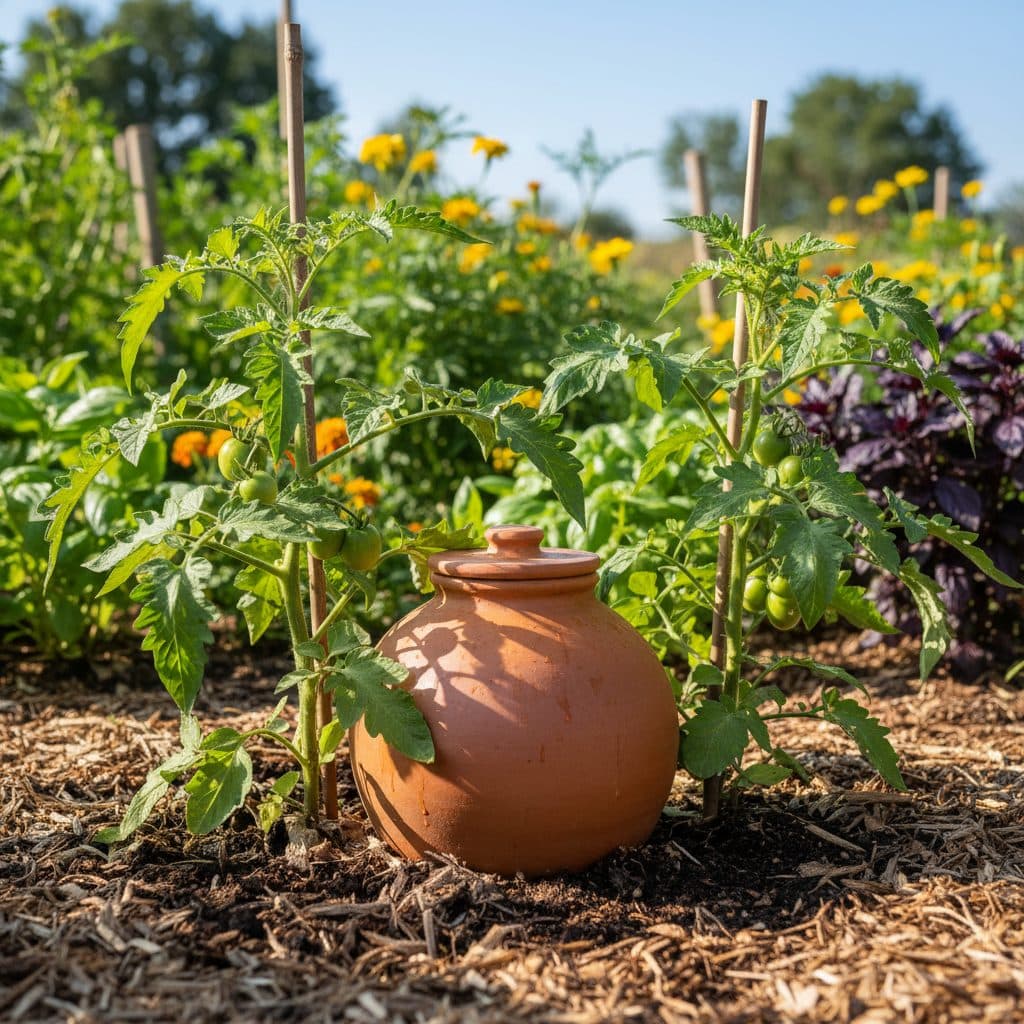
Tomatoes (Solanum lycopersicum) are heavy feeders and require consistent moisture for optimal fruit development and to prevent issues like cracking or blossom end rot. For most indeterminate and determinate tomato varieties, a single olla per plant provides adequate hydration. A 1.5-2 gallon olla is generally appropriate for a mature tomato plant, offering enough reservoir capacity to last several days between refills. Position the olla 6-8 inches away from the main stem of the tomato plant, allowing the roots to grow towards the water source without being directly in standing water. This distance ensures the entire root ball of a mature plant, which can extend 18-24 inches horizontally, receives sufficient moisture.
Specific placement for different tomato types
For larger, vigorous indeterminate varieties like ‘Beefsteak’ or ‘Brandywine’, consider using a 2-gallon olla or even two smaller 1-gallon ollas spaced 12 inches apart to support their extensive root systems and heavy fruit load. In a typical 4 ft by 8 ft raised bed, you might plant 4-6 tomato plants, each with its own olla, resulting in a spacing of roughly 24-30 inches between ollas. This setup can reduce overall water use by 60% compared to drip irrigation in a hot climate like USDA zone 9b in Florida. Always ensure the olla’s rim is slightly above the soil surface to prevent soil and debris from entering the reservoir.
- Use one 1.5-2 gallon olla per tomato plant for consistent moisture.
- Place the olla 6-8 inches from the plant’s main stem.
- For large indeterminate varieties, consider two 1-gallon ollas or one 2-gallon olla.
- Space tomato plants and their ollas 24-30 inches apart in a raised bed.
- Ensure the olla rim is above soil level to maintain water quality.
Olla placement for peppers and eggplant: balancing moisture needs
Peppers (*Capsicum annuum) and eggplants (Solanum melongena*) share similar moisture requirements with tomatoes, preferring consistent, deep watering over frequent shallow irrigation. For most pepper and eggplant varieties, a single 1-1.5 gallon olla per plant is sufficient. Position the olla 6 inches from the plant’s base, ensuring the roots can easily access the water. This setup is particularly effective in regions like the Central Valley of California, USDA zone 9a, where summer temperatures often exceed 90°F and evaporation rates are high. The consistent moisture helps prevent common issues such as sunscald and blossom drop, leading to a more robust harvest.
Adapting for different pepper and eggplant varieties
For smaller, bushier pepper varieties or compact eggplants, a 1-gallon olla might be perfectly adequate. For larger, more vigorous plants, such as bell peppers or large Italian eggplants, a 1.5-gallon olla will provide a better reservoir. In a typical garden bed, peppers and eggplants are often spaced 18-24 inches apart. Placing an olla centrally between two plants can sometimes work for closely spaced plants, but for optimal results and higher yields, one olla per plant is recommended. This approach can reduce water use by 45% compared to hand watering in a typical growing season of 120 days. Consider integrating rainwater harvesting to refill your ollas with collected water.
- Use one 1-1.5 gallon olla per pepper or eggplant plant.
- Place the olla approximately 6 inches from the plant’s base.
- For closely spaced plants, one olla between two plants can be considered, but one per plant is better.
- Maintain 18-24 inches spacing between pepper and eggplant plants.
- Consistent olla irrigation helps prevent sunscald and blossom drop in hot climates.
Olla strategies for squash and other large, sprawling plants
Squash varieties—including zucchini, pumpkins, and winter squash—are notoriously thirsty plants with extensive root systems. Their large leaves also contribute to significant transpiration, especially during hot summer days in regions like the Midwest, USDA zone 5b. For these large, sprawling plants, a larger olla is essential. A 3-5 gallon olla is recommended. This gives them a substantial water reservoir to support their rapid growth and heavy fruit set. For plants like ‘Big Max’ pumpkins, which can spread over 15-20 square feet, a single 5-gallon olla can effectively hydrate a large portion of its root zone, often reducing watering frequency to once a week.
Spacing for maximum coverage and growth
When planting squash, position the 3-5 gallon olla 12-18 inches from the plant’s central stem. For very large varieties or in extremely dry conditions, you might consider placing two 3-gallon ollas, spaced 24 inches apart, to ensure comprehensive coverage of the root system. In a traditional garden row, squash plants are often spaced 3-5 feet apart, allowing ample room for their vines. An olla placed near the base of each plant will significantly reduce the need for surface watering, potentially saving hundreds of gallons over a growing season. This method is also suitable for other large cucurbits like cucumbers and melons, which also benefit from consistent moisture. Consider using an expandable hose with a 7-pattern spray nozzle for easy olla refilling.
- Use large 3-5 gallon ollas for squash, pumpkins, and other sprawling plants.
- Place the olla 12-18 inches from the plant’s central stem.
- For very large varieties, consider two 3-gallon ollas spaced 24 inches apart.
- Squash plants typically need 3-5 feet of spacing in the garden.
- Ollas reduce water use and support vigorous growth in thirsty cucurbits.
Integrating ollas into raised beds and wicking systems
Raised garden beds, especially metal raised garden beds, offer excellent drainage and soil control but can also dry out faster than in-ground gardens due to increased air circulation around the bed. Ollas are an ideal solution for maintaining consistent moisture in these environments. For a standard 4 ft by 8 ft raised bed, you might strategically place 4-6 ollas, depending on the crops. For instance, if planting tomatoes and peppers, each plant would receive its own 1.5-gallon olla, spaced according to the guidelines above. This localized irrigation prevents waterlogging and ensures that precious nutrients remain available to the plants, rather than leaching away with excessive surface watering.
Ollas in wicking beds and container gardening
While wicking beds already provide a self-watering reservoir, integrating smaller ollas can fine-tune moisture delivery for specific plants or provide a backup reservoir during extended dry spells. For container gardening, where soil volume is limited, a small 0.5-1 gallon olla can be a lifesaver, keeping plants like patio tomatoes or dwarf peppers consistently hydrated. In a 15-gallon container, a single 1-gallon olla placed centrally can reduce watering frequency by 50% or more, allowing you to focus on other garden tasks. This method is particularly useful in urban settings, such as rooftop gardens in New York City, where water efficiency is paramount and manual watering can be cumbersome.
- Ollas help maintain consistent moisture in raised beds, counteracting faster drying.
- Place 4-6 ollas in a 4 ft by 8 ft raised bed for mixed crops.
- In containers, a 0.5-1 gallon olla can significantly reduce watering frequency.
- Ollas prevent nutrient leaching and waterlogging in confined garden spaces.
- They provide a reliable, low-maintenance irrigation solution for urban gardens.
Olla Sizing and Spacing for Common Garden Vegetables
Plant Type | Recommended Olla Size | Distance from Plant (in) | Plant Spacing (in) | Refill Frequency (days) |
|---|---|---|---|---|
Tomatoes (Determinate) | 1.5-2 gallons | 6-8 | 24-30 | 5-7 |
Tomatoes (Indeterminate) | 2 gallons (or two 1-gallon) | 6-8 | 30-36 | 4-6 |
Peppers (Bell, Chili) | 1-1.5 gallons | 6 | 18-24 | 3-5 |
Eggplant | 1-1.5 gallons | 6 | 18-24 | 3-5 |
Zucchini / Summer Squash | 3 gallons | 12-15 | 36-48 | 5-7 |
Winter Squash / Pumpkin | 3-5 gallons | 12-18 | 48-60 | 6-8 |
Water Savings: Olla irrigation can reduce water consumption by 50-70% compared to surface watering, saving hundreds of gallons per season in a typical 100 sq ft garden.
Root Depth: Plants irrigated with ollas develop deeper root systems, often extending 18-24 inches, making them more resilient to drought conditions.
Consistent Moisture: Ollas provide a steady moisture supply, helping to prevent blossom end rot in 30-40% of susceptible tomato and pepper plants.
Frequently asked questions
How deep should I bury an olla?
Bury the olla so that its neck or rim is slightly above the soil surface, typically 85-90% of the pot, to prevent soil from entering and to minimize evaporation. For a 1.5-gallon olla, this means burying about 8-10 inches deep.
Can I use ollas for all types of plants?
Ollas are most effective for plants that prefer consistent moisture and have moderate to deep root systems, such as tomatoes, peppers, squash, and many herbs. They are less suitable for shallow-rooted plants or those that prefer very dry conditions, like some succulents, which might only need watering every 10-14 days.
How often do ollas need to be refilled?
Refill frequency depends on olla size, plant type, soil type, and climate. A 1.5-gallon olla might need refilling every 3-7 days in a hot, dry climate like USDA zone 9, while a 5-gallon olla could last 6-8 days for a large squash plant.
What size olla is best for a 5-gallon container plant?
For a plant in a 5-gallon container, a small 0.5-1 gallon olla is typically ideal. This size provides sufficient water for the limited root space without over-saturating the soil, reducing watering frequency by up to 50%.
Do ollas work in heavy clay soils?
Ollas work in clay soils, but the water release rate might be slower due to the soil’s higher water retention. In very dense clay, you might need to amend the soil around the olla with some compost to improve porosity and water movement, ensuring a 6-inch radius of effective irrigation.
Can ollas help with nutrient delivery?
While ollas primarily deliver water, the consistent moisture they provide can improve nutrient uptake by plants. Nutrients dissolved in the soil water are more readily available to roots when moisture levels are stable, potentially boosting yields by 15-20% in some crops.
References
- International Congress on Greenhouse Vegetables. The Production Chain of Fresh Tomatoes, Peppers and Cucumbers (2003). International Congress on Greenhouse Vegetables. The Production Chain of Fresh Tomatoes, Peppers and Cucumbers.
- Tomatoes, Peppers and Cucumbers in Small-Scale Soilless and Hydroponics Systems (2019). Tomatoes, Peppers and Cucumbers in Small-Scale Soilless and Hydroponics Systems.
- Tomatoes, Peppers, Eggplants, and Other Solanaceous Vegetables (1997). Tomatoes, Peppers, Eggplants, and Other Solanaceous Vegetables.
- Tomatoes and Peppers – Western Influences on Middle Eastern Cooking (2023). Tomatoes and Peppers – Western Influences on Middle Eastern Cooking.
- Nematode Management in Tomatoes, Peppers, and Eggplant (2002). Nematode Management in Tomatoes, Peppers, and Eggplant.
- USDA Natural Resources Conservation Service (2024). USDA Natural Resources Conservation Service.