Key takeaways
- Select genuinely heat-tolerant basils for Southern gardens — Thai basil, Holy basil, or a late-flowering type such as ‘Everleaf Emerald Towers’.
- Provide consistent soil moisture, aiming for 1 inch of water per week, especially in USDA Zone 7 and warmer.
- Prune basil regularly by pinching back stems above a leaf node, removing about one-quarter of the plant every 10 to 14 days.
- Apply a 2 to 3 inch layer of organic mulch to keep soil temperatures down and cut evaporation from the soil surface.
- Consider providing partial shade in the hottest afternoon hours, particularly when temperatures exceed 90°F.
- Practice succession planting every 3 to 4 weeks to ensure a continuous harvest of tender leaves.
Quick answer: To delay basil bolting in hot Southern summers, select heat-tolerant varieties such as Thai basil, Holy basil, or a late-flowering ‘Everleaf’ type, provide consistent moisture (1 inch/week), prune regularly, apply mulch, and offer partial shade when temperatures exceed 90°F. Succession planting also ensures a continuous harvest.
In the humid heat of a Georgia summer, or across much of USDA Zone 8, basil can quickly transition from a lush green herb to a plant focused on reproduction. This process, known as bolting, involves the plant sending up flower stalks and producing seeds, often at the expense of its flavorful leaves. For growers in the Southern United States, where temperatures can regularly exceed 90°F for weeks, understanding and managing basil’s tendency to bolt is crucial for a continuous harvest.
Basil (Ocimum basilicum) is a warm-season annual, but its optimal growth temperature range is between 65°F and 80°F. When temperatures consistently climb above 85°F, and as the plant matures, basil shifts from making leaves to making flowers and seed. While a bolted basil plant is not toxic, its leaves often become smaller, tougher, and develop a bitter flavor due to increased essential oil production, making them less desirable for culinary use.
The science behind basil bolting
Basil’s primary goal, like any annual plant, is to reproduce. When environmental conditions signal that its growing season might be coming to an end, it diverts energy from leaf production to flower and seed development. This response is driven mainly by high temperatures and by the plant’s own maturity. On the Gulf Coast, where summer afternoons stay above 85°F for weeks at a stretch, basil reaches that tipping point far sooner than it would in a milder climate. This physiological shift is driven by hormones that respond to these environmental cues, initiating the formation of flower buds.
Once a basil plant begins to bolt, its growth habit changes dramatically. The stems become woodier, and the leaves, which are the culinary prize, shrink in size and lose their tender texture. The flavor profile also shifts; the plant produces more compounds like methyl chavicol and linalool, which can contribute to a more pungent or bitter taste. Basil grown in its preferred 65-80°F range holds its leaf quality far better than basil pushed through sustained 95°F heat, which runs to flower much sooner. Understanding these triggers is the first step in delaying this natural progression.
key triggers for basil bolting
Several environmental and cultural factors contribute to basil bolting:
- High temperatures, often above 85°F, are a primary trigger.
- Plant maturity — an older plant left unpinched will run to flower even in fair weather.
- Lack of consistent moisture, especially in sandy soils of Florida (USDA Zone 9b), can induce stress.
- Root restriction in small containers can also lead to premature flowering.
- Nutrient deficiencies or excesses, particularly low nitrogen, can contribute.
Selecting heat-tolerant basil varieties
Not all basil varieties respond to heat and day length in the same way. For growers in the Southern US, selecting cultivars specifically bred or known for their slower bolting characteristics is a critical first step. Traditional ‘Genovese’ basil, while excellent for pesto, can be particularly prone to bolting in hot climates like those found in central Texas (USDA Zone 8b) when temperatures consistently exceed 90°F. Where you want a Genovese-type basil that genuinely flowers late, the ‘Everleaf’ series — including ‘Emerald Towers’ — is the line bred for it. ‘Nufar’ and ‘Prospera’ are still worth growing in the South, but their breeding targets are disease resistance: Fusarium wilt for ‘Nufar’ and downy mildew for ‘Prospera’.
Beyond the classic Italian types, other basil species and cultivars offer natural resistance to bolting. Thai basil (Ocimum basilicum var. thyrsiflora) and Holy basil (Ocimum tenuiflorum) are generally more heat-tolerant and slower to bolt, making them excellent choices for Southern gardens. For example, Holy basil, often grown in USDA Zone 10, thrives in high temperatures and can produce leaves reliably even when daytime highs reach 95°F. While their flavor profiles differ from ‘Genovese’, they provide viable alternatives for culinary use. Exploring these options can significantly reduce frustration for growers facing intense summer heat.
top basil varieties for hot climates
Consider these varieties for improved performance in warm regions:
- ‘Everleaf Emerald Towers’, a columnar Genovese type, is bred to flower much later than standard Genovese.
- ‘Prospera’ is bred for resistance to downy mildew, the most damaging basil disease in humid climates.
- Thai basil varieties, with their anise-like flavor, generally withstand higher temperatures.
- Holy basil (Ocimum tenuiflorum) is exceptionally heat-tolerant and thrives in warm, humid conditions.
- ‘Sweet Large Leaf’ basil can also perform better than standard ‘Genovese’ in some Southern regions.
Essential cultural practices to delay flowering
Consistent moisture is paramount for delaying basil bolting, especially in the intense heat of a South Carolina summer (USDA Zone 8a). Basil plants require about 1 inch of water per week, either from rainfall or irrigation. During periods of high heat, when temperatures consistently exceed 90°F, this might need to be increased to 1.5 inches per week, applied in deep, infrequent waterings. Shallow watering encourages shallow root systems, making plants more susceptible to stress and premature bolting. Always water at the base of the plant to keep foliage dry, reducing the risk of fungal diseases common in humid environments.
Mulching is another effective strategy for managing soil temperature and moisture. Applying a 2 to 3 inch layer of organic mulch, such as straw, shredded leaves, or pine bark, around the base of basil plants keeps the root zone appreciably cooler than bare soil. This mulch layer also cuts evaporation from the soil surface, so you water less often. In the sandy soils typical of many Southern coastal areas, mulch also helps to improve soil structure over time, benefiting overall plant health. (Learn more about cover crops for soil health.)
Regular pruning is perhaps the most direct way to delay bolting. Basil wants to flower, so removing those flower buds as soon as they appear redirects the plant’s energy back into leaf production. Pinch back the central stem when the plant reaches 6 to 8 inches tall, removing about a quarter of the plant’s height just above a set of leaves. Continue to pinch off any developing flower stalks weekly, or even every 3 to 5 days during peak summer heat. A good rule of thumb is to harvest about 25% of the plant’s foliage every 10 to 14 days, which stimulates bushier growth and delays flowering.
key practices for extended basil harvests
Implement these practices for a longer basil season:
- Provide 1 to 1.5 inches of water per week, ensuring deep root penetration.
- Apply a 2 to 3 inch layer of organic mulch to cool soil and retain moisture.
- Pinch off flower buds as soon as they emerge to redirect energy to leaves.
- Harvest regularly, removing about one-quarter of the plant every 10 to 14 days.
- Avoid overhead watering to minimize fungal diseases in humid climates.
Strategic planting and environmental control
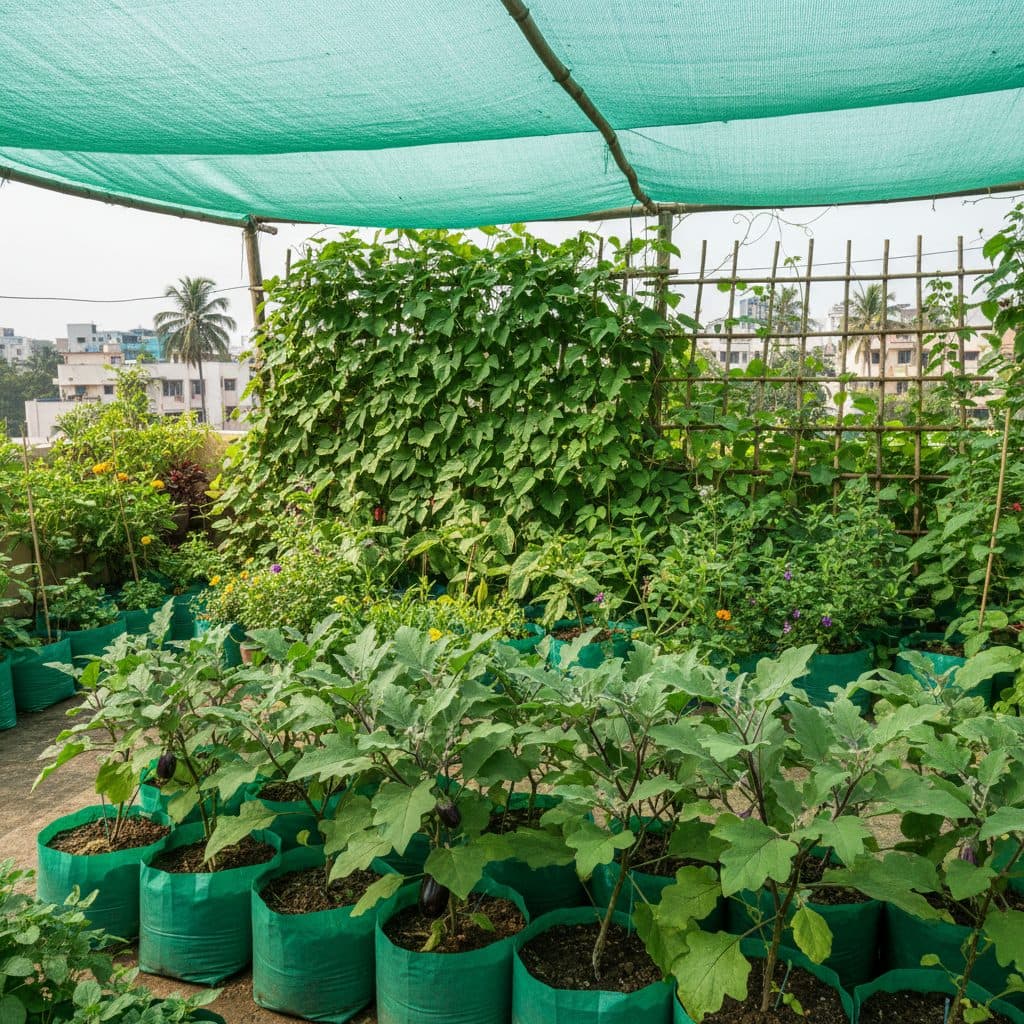
In the intense afternoon sun of a Louisiana summer, where temperatures can climb to 95°F or higher, providing some afternoon shade can significantly reduce heat stress on basil plants. While basil needs at least 6 hours of direct sunlight to thrive, 8 to 10 hours of direct sun in extreme heat can be detrimental. Consider planting basil where it will receive morning sun and be shaded from the harshest afternoon rays, typically from 1 PM to 5 PM. Shade cloth, providing 30% to 40% shade, can also be draped over plants during the hottest parts of the day. This simple intervention can extend the harvest period by several weeks.
Succession planting is a reliable strategy to ensure a continuous supply of tender basil leaves throughout the growing season. Instead of planting all your basil at once, sow new seeds or transplant new seedlings every 3 to 4 weeks. For example, in a long growing season like that in central Florida (USDA Zone 9a), you might plant basil in early April, then again in mid-May, and finally in late June. This ensures that as older plants begin to decline or bolt despite your best efforts, younger, more vigorous plants are ready to take their place. Each planting can consist of 3 to 5 plants per household for a steady supply. (Get started with your herb garden here.)
Container growing offers flexibility in managing basil’s environment. If you’re growing basil in pots, you can easily move them to a shadier location during the hottest parts of the day or bring them indoors during extreme heat waves. Use containers that are at least 8 to 10 inches in diameter to provide adequate root space and prevent rapid drying out. Ensure good drainage.
optimizing basil’s environment
Adjust your planting strategy for Southern summers:
- Provide afternoon shade, especially when temperatures exceed 90°F, using shade cloth or strategic placement.
- Implement succession planting by sowing new seeds or transplanting seedlings every 3 to 4 weeks.
- Grow basil in containers at least 8 inches in diameter for mobility and environmental control.
- Consider moving potted basil indoors during extreme heat waves or for year-round production.
- Ensure proper air circulation around plants to reduce humidity and disease pressure.
Harvesting for flavor and post-bolting options
Proper harvesting techniques give you fresh basil and also help delay bolting. Always harvest by pinching off stems just above a leaf node, rather than plucking individual leaves. This encourages the plant to branch out and produce more foliage. Aim to harvest about 25% of the plant’s leaves at a time, every 10 to 14 days, starting when the plant is 6 to 8 inches tall. Regular, consistent harvesting is a form of pruning that keeps the plant in a vegetative state, postponing its reproductive cycle. For maximum flavor, harvest in the morning after the dew has dried, but before the heat of the day intensifies.
Even with the best care, basil in hot Southern climates, like those in USDA Zone 9, will eventually bolt. If your basil has bolted, don’t despair entirely. While the leaves may be tougher and more bitter, they can still be used in vinegars, where the strong flavor can be a benefit. If you want to infuse oil, dry the basil thoroughly first — fresh herbs in oil create the low-acid, oxygen-free conditions in which Clostridium botulinum can grow, so any fresh-herb oil must be kept refrigerated and used within a few days. The flowers themselves are edible and can add a mild, peppery flavor to salads. You can also allow some plants to go to seed. Collecting basil seeds from open-pollinated varieties can provide you with free seeds for next season’s planting, saving you money and ensuring a continuous cycle of fresh basil. Just remember that hybrid varieties may not produce true-to-type seeds.
maximizing your basil harvest
Follow these tips for flavorful basil:
- Harvest by pinching stems above a leaf node to promote branching and bushier growth.
- Remove approximately 25% of the plant’s foliage every 10 to 14 days.
- Harvest in the morning for the best flavor and aroma.
- If basil has bolted, use the leaves in vinegars, or dry them thoroughly before infusing oil.
- Consider letting some open-pollinated plants go to seed for next season’s crop.
Basil varieties for Southern climates
Variety | Heat Tolerance | Bolting Tendency | Flavor Profile |
|---|---|---|---|
Genovese (Standard) | Moderate | High | Classic sweet, pungent |
Nufar | Good | High | Classic sweet, less pungent |
Prospera | Good | High | Classic sweet, good for pesto |
Thai Basil | High | Low | Anise, spicy, licorice notes |
Holy Basil | Very High | Very Low | Clove-like, peppery, medicinal |
Soil temperature: A 2 to 3 inch layer of organic mulch keeps the root zone appreciably cooler than bare soil, which matters in hot Southern summers.
Water needs: Basil requires 1 to 1.5 inches of water per week, especially when temperatures exceed 90°F in USDA Zone 8.
Pruning frequency: Pinch back basil stems every 3 to 5 days during peak summer heat to delay flowering.
Frequently asked questions
Can I still eat basil after it has bolted?
Yes, you can still eat bolted basil, but the flavor often becomes more bitter and the leaves tougher. Many growers in USDA Zone 7 and warmer find it less palatable for fresh use, but it can still be used for infused oils or vinegars.
How much sun does basil need in hot climates?
Basil generally needs 6 hours of direct sun, but in hot Southern climates with temperatures above 90°F, 4 to 6 hours of morning sun followed by afternoon shade is ideal. This can extend the plant’s productive life by several weeks.
What is the ideal temperature range for basil growth?
Basil thrives in temperatures between 65°F and 80°F. When temperatures consistently exceed 85°F, especially for more than 5 days, the plant is likely to experience stress and begin the bolting process.
How often should I water basil in a Southern summer?
In a hot Southern summer, basil needs consistent moisture, typically 1 to 1.5 inches of water per week. This might mean watering deeply every 2 to 3 days, especially in sandy soils or when temperatures are consistently above 90°F.
What are the best basil varieties for hot weather?
For hot weather, consider Thai basil, Holy basil (Ocimum tenuiflorum), or a late-flowering Genovese type such as ‘Everleaf Emerald Towers’. These hold their leafy growth longer in Southern heat than standard sweet basil. ‘Nufar’ and ‘Prospera’ are useful in the South as well, but for disease resistance — Fusarium wilt and downy mildew respectively — rather than for slower bolting.
Does pinching off flowers really prevent bolting?
Pinching off flowers does not prevent bolting indefinitely, but it significantly delays it by redirecting the plant’s energy back into leaf production. Regular pinching through peak summer keeps the plant in leaf noticeably longer, though sustained heat will win eventually.
References
- USDA Natural Resources Conservation Service (2024). USDA Natural Resources Conservation Service.