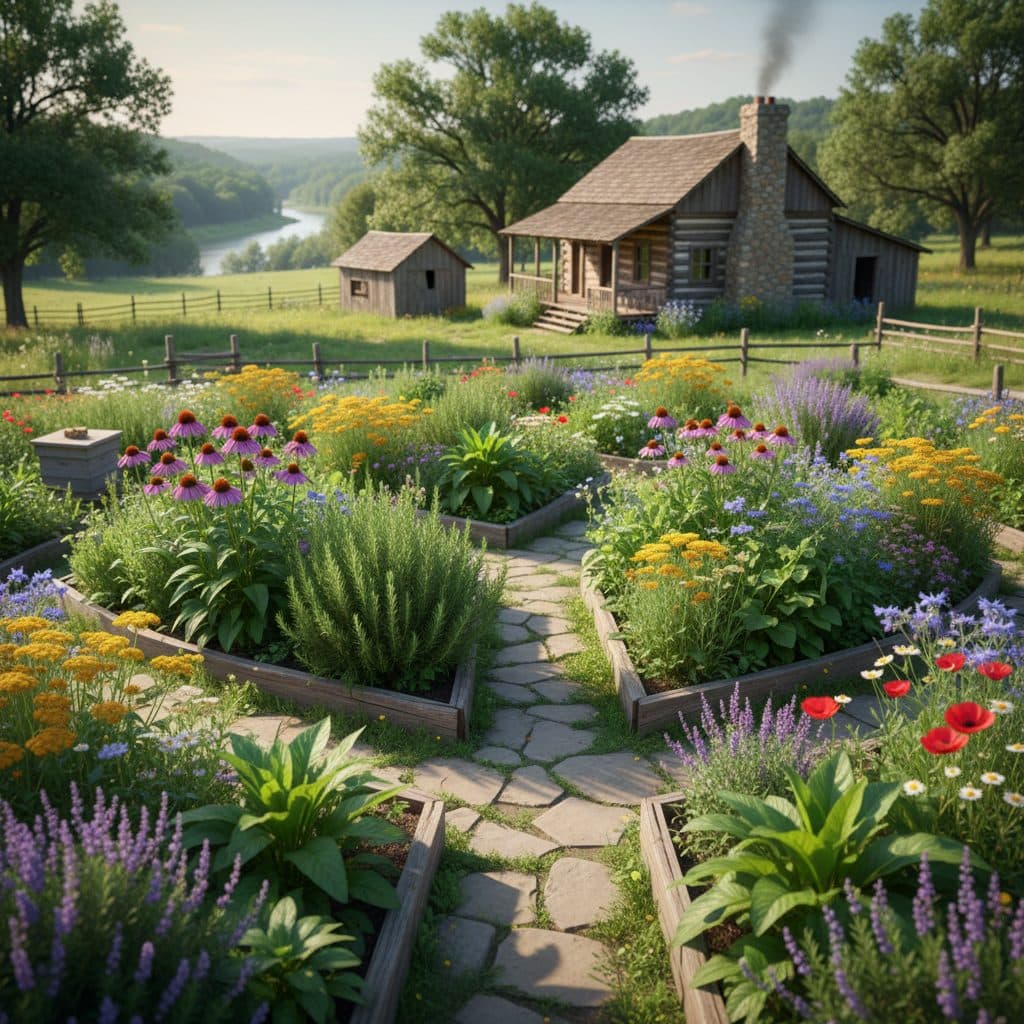
Key takeaways
- Perennial herbs offer long-term yields and often deeper root systems, reducing replanting efforts for 5 to 10 years or more.
- Annual herbs provide quick harvests, with some species ready in 60-90 days, and allow for beneficial crop rotation.
- USDA zone hardiness is critical for perennial survival; many common species like Echinacea purpurea thrive in zones 3-9.
- Proper soil preparation, including pH adjustment to between 6.0 and 7.0 and adding organic matter, is vital for both herb types.
- Mulching improves overwintering success for perennials in colder climates [1].
- Consider local climate data and microclimates when selecting herbs, as these can influence growth by up to one full USDA zone.
Quick answer: The choice between perennial and annual medicinal herbs for a home apothecary depends on desired harvest speed, long-term yield, and USDA hardiness zone. Perennials offer sustained harvests over many years, while annuals provide quick yields and flexibility for crop rotation.
In the United States, home growers across USDA zones 3 through 10 face a fundamental decision when planning a medicinal herb garden: should they prioritize annuals or perennials? This choice impacts everything from planting frequency and harvest schedules to long-term garden maintenance and overall yield. Many gardeners in the Midwest, for example, find that perennial herbs like Echinacea offer reliable returns year after year, while those in warmer Southern regions might enjoy multiple annual harvests of Calendula within a single growing season.
Understanding the distinct life cycles and cultivation needs of each type is key to establishing a productive home apothecary. A well-planned garden can provide a steady supply of botanicals, whether you’re aiming for a quick turnaround with annuals or a sustained harvest from resilient perennials. This article will guide you through the considerations, helping you select the best medicinal herbs for your specific climate and gardening goals.
Understanding the basics: annuals and perennials
The distinction between annual and perennial herbs lies primarily in their life cycle duration. Annual herbs complete their entire life cycle — from seed, to flower, to seed — within a single growing season, typically lasting less than one year. Common examples include German chamomile and Calendula, which can go from seed to harvest in approximately 60 to 90 days. Once they set seed, these plants generally die back, requiring replanting each spring for continuous harvests.
life cycle and growth patterns
Perennial herbs, on the other hand, live for more than two years, often returning year after year from the same rootstock. Many popular medicinal perennials, such as Peppermint and Yarrow, can thrive for 5 to 10 years or even longer under optimal conditions. Research from Southern Wisconsin in 1965 found distinct growth patterns between native annual and perennial herbs, noting the perennials’ more established root systems and slower initial growth [4]. This longer lifespan means less frequent planting and often sturdier plants over time, though initial establishment can take one or two full seasons. The USDA Natural Resources Conservation Service publishes plant hardiness data that helps determine perennial viability in your specific zone [6].
- Annual herbs: Complete life cycle in one season, typically 3-9 months.
- Perennial herbs: Live for two or more years, often 5-10 years or longer.
- Biennial herbs: Complete life cycle over two seasons, flowering in the second year.
- Root systems: Annuals have shallower roots, perennials develop deep, extensive systems.
- Planting frequency: Annuals require replanting every year, perennials every few years or decades.
Perennial powerhouses for your apothecary
Perennial medicinal herbs form the backbone of a sustainable home apothecary, offering consistent yields and often requiring less annual effort once established. Species like Echinacea purpurea, commonly known as purple coneflower, are hardy across a broad range of USDA zones, typically 3-9, and provide both flowers and roots for medicinal preparations. Another excellent choice is Yarrow (Achillea millefolium), which thrives in zones 3-9 and offers delicate white flowers and foliage for various uses. These plants develop extensive root systems, sometimes reaching 12 to 18 inches deep, making them more resilient to drought and temperature fluctuations.
cultivating resilient perennial herbs
To ensure the longevity of your perennial herbs, proper site selection and soil preparation are paramount. Most perennials prefer at least 6 hours of direct sunlight daily and well-draining soil. For those in colder regions, like USDA zone 4 or 5, applying a 3 to 4 inch layer of organic mulch in late fall can significantly aid overwintering success. Trials of dark plastic, fiber, and paper mulches show they warm the soil; organic mulches such as straw work differently, insulating against freeze-thaw rather than raising soil temperature [1]. Consider integrating these plants into a permaculture garden plan to maximize their benefits and reduce maintenance over the long term. For more on planning, see A permaculture garden plan.
- Echinacea purpurea: Hardy in USDA zones 3-9, roots and flowers used.
- Yarrow (Achillea millefolium): Thrives in zones 3-9, flowers and leaves harvested.
- Peppermint (Mentha piperita): Aggressive spreader, hardy in zones 3-11, leaves for tea.
- Lavender (Lavandula angustifolia): Prefers zones 5-9, flowers for calming preparations.
- Marshmallow (Althaea officinalis): Hardy in zones 3-9, roots and leaves used.
Annual abundance: quick harvests and flexibility
Annual medicinal herbs are excellent for gardeners seeking quick returns and the flexibility to rotate crops each season. These plants typically mature rapidly, allowing for harvests within weeks or a few months of planting. German Chamomile (Matricaria chamomilla), for instance, can be ready for flower harvest in about 70-90 days from seeding, and is traditionally used in calming teas; people sensitive to ragweed and other Asteraceae can react to it. Calendula officinalis, another popular annual, produces bright orange flowers in approximately 60-75 days, which are widely used for skin preparations. Their short life cycle means you can experiment with different varieties each year or easily adapt your garden layout.
maximizing annual herb yields
To get the most from annual herbs, focus on continuous planting and good soil management. Succession planting — sowing small batches of seeds every 2-3 weeks — ensures a steady supply of fresh material throughout the growing season, especially in regions like USDA zone 7 where the season is long. Annuals generally prefer rich, well-draining soil with a pH between 6.0 and 7.0. Because they complete their life cycle quickly, they benefit greatly from consistent moisture and nutrient availability. Incorporating compost before planting supports stronger growth and higher yields. For detailed guidance on starting your herb garden, explore Starting a herb garden: the easiest herbs to grow.
- German Chamomile (Matricaria chamomilla): Flowers harvested in 70-90 days.
- Calendula (Calendula officinalis): Flowers ready in 60-75 days for skin remedies.
- Holy Basil (Ocimum tenuiflorum): Leaves harvested for adaptogenic properties.
- Dill (Anethum graveolens): Leaves and seeds used, matures in 60-70 days.
- Coriander (Coriandrum sativum): Leaves (cilantro) and seeds used, quick growth.
Site selection and soil preparation for medicinal herbs
Regardless of whether you choose annuals or perennials, thoughtful site selection and careful soil preparation are foundational to a successful medicinal herb garden. Most medicinal herbs, particularly those grown for their aromatic compounds, require at least 6-8 hours of full sun daily to develop their full potency. In hotter climates, such as USDA zone 9, some herbs may benefit from afternoon shade to prevent scorching. Good air circulation is also important to prevent fungal diseases, so avoid planting too densely.
creating optimal growing conditions
Soil quality is arguably the most critical factor. Medicinal herbs generally prefer well-draining soil that is rich in organic matter. A soil test can show your soil’s pH and nutrient levels; many herbs thrive in a slightly acidic to neutral pH range of 6.0 to 7.0. If your soil is heavy clay, amend it with 3-4 inches of compost and perlite or sand to improve drainage. For sandy soils, adding compost will improve water retention and nutrient availability, increasing organic matter by 1-2% annually. Using a 3-in-1 Soil pH, Moisture & Light Meter can help you monitor these conditions throughout the growing season.
- Sunlight: 6-8 hours of direct sun daily for most herbs.
- Drainage: Essential; avoid waterlogged conditions to prevent root rot.
- Soil pH: Target 6.0-7.0 for optimal nutrient uptake.
- Organic matter: Incorporate 2-4 inches of compost annually.
- Air circulation: Space plants adequately to reduce disease risk.
Cultivation and care: maximizing your harvest
Consistent cultivation practices are essential for maximizing the medicinal potency and yield of both annual and perennial herbs. Watering needs vary, but generally, herbs prefer consistent moisture without being waterlogged. A good rule of thumb is to provide about 1 inch of water per week, either through rainfall or irrigation, especially during dry spells in USDA zone 6. For plants in containers or raised beds, more frequent watering, perhaps every 2-3 days, might be necessary. Over-watering can lead to root rot, while under-watering can stress plants and reduce the concentration of active compounds.
nutrient management and pest control
While many herbs are not heavy feeders, a balanced approach to nutrients supports strong growth. Incorporating a slow-release organic fertilizer at planting time, or a liquid feed every 4-6 weeks, can be beneficial, particularly for annuals that have a shorter growth window. For perennials, a top-dressing of compost in early spring often suffices. Pest and disease management should focus on prevention through good cultural practices, such as proper spacing and sanitation. If pests become an issue, identify them accurately before applying targeted, organic solutions.
- Watering: Aim for 1 inch of water per week, adjust for climate and soil type.
- Fertilization: Light feeding with organic compost or balanced liquid fertilizer.
- Pruning: Regular harvesting encourages bushier growth and prevents bolting.
- Weeding: Keep beds free of weeds to reduce competition for nutrients and water.
- Pest monitoring: Inspect plants regularly for early signs of pests or disease.
Harvesting and preserving your medicinal bounty
The timing of harvest significantly impacts the medicinal quality of your herbs. Generally, leaves are best harvested in the morning after the dew has dried, but before the sun is too high, when essential oil content is often highest. Flowers should be picked when they are fully open but still fresh. Roots, on the other hand, are typically harvested in the fall after the plant has died back or in early spring before new growth begins, when their energy stores are concentrated underground. For perennials, avoid harvesting more than 30% of the plant in its first year to ensure it establishes well; in subsequent years, you can harvest up to 50%.
effective preservation methods
Once harvested, prompt and proper preservation is important to retain the herbs’ medicinal properties. Drying is one of the most common methods; herbs can be air-dried in a well-ventilated, dark room with temperatures between 60-75°F and humidity below 60%. For thicker roots, a dehydrator set to 95-110°F may be more effective. Other preservation techniques include tincturing in alcohol, infusing in oil, or freezing. Store dried herbs in airtight containers away from direct light and heat to maintain their potency for 6-12 months. A comprehensive list of medicinal herbs compiled in 2013 provides further details on specific harvesting times for various species [3].
- Leaves: Harvest in the morning after dew, before midday sun.
- Flowers: Pick when fully open and vibrant.
- Roots: Harvest in fall or early spring for maximum potency.
- Drying: Air dry in a dark, well-ventilated space at 60-75°F.
- Storage: Store dried herbs in airtight containers for 6-12 months.
Comparing Annual and Perennial Medicinal Herbs
Feature | Annual Herbs | Perennial Herbs |
|---|---|---|
Life Cycle | One growing season (e.g., 3-9 months) | Two or more growing seasons (e.g., 5-10+ years) |
Planting Frequency | Replant every year | Plant once, returns annually |
Harvest Time | Quick harvests, often within 60-90 days | Established plants yield after 1-2 years, then consistent |
Root System | Generally shallow, 6-12 inches deep | Deep and extensive, often 12-24 inches or more |
Pest/Disease Management | Crop rotation helps manage issues | Established plants can be more resilient, but watch for persistent issues |
Flexibility | Easy to change garden layout annually | Fixed placement for multiple years |
Perennial Longevity: Many perennial herbs can live for 5 to 10 years or more, providing consistent yields after establishment with far less replanting.
Mulch Benefits: Dark-colored plastic and paper mulches raise soil temperature, which can help sensitive perennials overwinter in USDA zones 3-6 [1].
Annual Speed: Annual herbs like Calendula can reach harvestable size in as little as 60-90 days from seeding, offering rapid returns for medicinal preparations.
Frequently asked questions
What are the main differences between annual and perennial medicinal herbs?
Annual herbs complete their life cycle within one year, requiring replanting each season, while perennial herbs live for two or more years, returning from the same rootstock. For example, German chamomile is an annual, typically harvested within 90 days, whereas Echinacea purpurea is a perennial that can thrive for 5-10 years in USDA zones 3-9.
Which perennial herbs are best for USDA zone 5?
For USDA zone 5, excellent perennial medicinal herbs include Echinacea purpurea, Yarrow, Peppermint, and Lavender. These species are hardy enough to withstand winter temperatures down to -20°F and will reliably return each spring, providing consistent harvests for many years.
How can I improve the overwintering success of my perennial herbs?
To improve overwintering success, especially in colder zones like USDA 4, apply a 3-4 inch layer of organic mulch around the base of your perennial herbs in late fall. This insulates the soil, protecting roots from extreme cold. Trials on dark plastic, fiber, and paper mulches show they warm the soil, but an organic mulch such as straw protects differently — by steadying soil temperature and preventing freeze-thaw heaving [1].
Are annual herbs less potent than perennials?
Not necessarily. The potency of an herb, whether annual or perennial, depends more on growing conditions, harvest timing, and genetics than on its life cycle. For instance, annual Holy Basil can be highly potent, just as perennial Valerian root is. Optimal sun exposure of 6-8 hours daily and rich soil are key for both.
How often should I amend the soil for my medicinal herb garden?
For annual herbs, it’s beneficial to amend the soil with 2-4 inches of compost each spring before planting to replenish nutrients. For perennial herbs, a top-dressing of 1-2 inches of compost in early spring is usually sufficient every 1-2 years, as their established root systems are more efficient at nutrient uptake.
Can I grow both annual and perennial herbs together?
Yes, absolutely. Many gardeners successfully integrate both types of herbs in a single garden bed or in designated sections. This approach allows for continuous harvests throughout the season, with annuals filling in gaps while perennials establish. Just ensure both types have their basic needs met, such as 6 hours of sunlight and well-draining soil.
References
- The Effects of Dark-Colored Plastic, Fiber, and Paper Mulches on Yield and Over-Wintering of Perennial Herbs (2007). The Effects of Dark-Colored Plastic, Fiber, and Paper Mulches on Yield and Over-Wintering of Perennial Herbs.
- Chemometric-Infrared Spectroscopic Model for the Taxonomy of Medicinal Herbs – The Case of Perennial Sideritis Species (2020). Chemometric-Infrared Spectroscopic Model for the Taxonomy of Medicinal Herbs – The Case of Perennial Sideritis Species.
- List of Medicinal Herbs (2013). List of Medicinal Herbs.
- Growth Patterns of Some Native Annual and Perennial Herbs in Southern Wisconsin (1965). Growth Patterns of Some Native Annual and Perennial Herbs in Southern Wisconsin.
- Hydrogel Utilization and Water Management for Annual and Perennial Herbs in an Extensive Green Roof Environment (2026). Hydrogel Utilization and Water Management for Annual and Perennial Herbs in an Extensive Green Roof Environment.
- USDA Natural Resources Conservation Service (2024). USDA Natural Resources Conservation Service.