Key takeaways
- Excess nutrients, especially phosphorus and nitrogen, are the primary drivers of pond algae blooms.
- Uncontrolled sunlight reaching the pond bottom can accelerate algae growth, particularly in shallow areas.
- Implementing passive irrigation and water harvesting techniques can significantly reduce nutrient runoff into ponds.
- Strategic planting of beneficial aquatic plants provides natural competition for nutrients and shade for the water.
- Aeration systems improve water quality by increasing oxygen levels and reducing nutrient release from sediments.
- Regular maintenance, including debris removal and proper pond design, matters for long-term algae prevention.
Quick answer: Managing green pond algae in backyard ponds involves balancing nutrient levels and controlling sunlight exposure. Strategies include preventing nutrient runoff, strategic planting, aeration, and regular maintenance to maintain clear, healthy water.
If you’ve spent time around a backyard pond in states like Missouri or Ohio, you’ve likely seen it — that sudden, unwelcome shift from clear water to a thick, pea-green soup. This transformation isn’t just an aesthetic problem; it signals an imbalance in the pond’s ecosystem, often driven by factors we can control. In many US regions, particularly those with agricultural runoff or significant rainfall, managing pond health becomes a year-round task. For instance, a typical 1000-gallon garden pond in USDA Zone 6 can experience a complete green-out in just a few warm, sunny days if conditions are right.
Understanding why your pond turns green is the first step toward a lasting solution. This article will break down the core reasons behind algae blooms (primarily an excess of nutrients and sunlight) and explore practical, sustainable strategies for maintaining clear, healthy water. We’ll look at how smart pond design, water harvesting, and passive irrigation earthworks can prevent these issues, saving you time and effort in the long run.
The basics of pond algae – why it blooms
Algae are simple, plant-like organisms that thrive in water. They are a natural part of any aquatic ecosystem, but when conditions become ideal, their growth can explode, leading to what we call an algae bloom. The two main ingredients for this rapid growth are abundant nutrients and ample sunlight. For example, in a pond receiving runoff from a fertilized lawn in a humid southern state like Georgia, phosphorus levels can quickly exceed 0.02 mg/L, a threshold known to trigger significant algal growth. Under optimal conditions, some types of algae can double their biomass in as little as 24 hours, quickly turning a clear pond opaque.
Understanding the algae growth cycle
The cycle often begins with an influx of nutrients, such as nitrogen and phosphorus, from sources like decaying leaves, fish waste, or agricultural runoff. These nutrients act as fertilizer for the algae. When combined with sufficient sunlight, typically 6-8 hours of direct sun per day on the water’s surface, algae begin to multiply rapidly. As the algae grow, they consume oxygen at night and when they die, which can stress or kill fish and other aquatic life. A pond in a sunny, open yard in USDA Zone 7 without adequate shade or filtration is particularly susceptible to this cycle, often experiencing blooms from late spring through early fall.
- Nutrient accumulation from runoff or decaying matter.
- Sufficient sunlight penetration to the water column.
- Warm water temperatures, often above 65°F.
- Low competition from beneficial aquatic plants.
- Reduced oxygen levels, especially at night or during die-offs.
Nutrient overload: the primary driver of green ponds
The most common reason for a pond turning green is an excessive amount of nutrients in the water. Think of it like over-fertilizing a garden – the plants, in this case algae, grow out of control. Sources of these nutrients are varied, but often include runoff from lawns treated with fertilizers, decaying organic matter like leaves and grass clippings, and fish waste. For instance, a 500-gallon pond in a suburban setting might receive 5-10 lbs of leaf litter per year, which, upon decomposition, releases substantial amounts of phosphorus and nitrogen. This nutrient loading is a significant issue across many US states, from the agricultural plains of Iowa to the residential areas of Florida.
Preventing nutrient inflow with smart land management
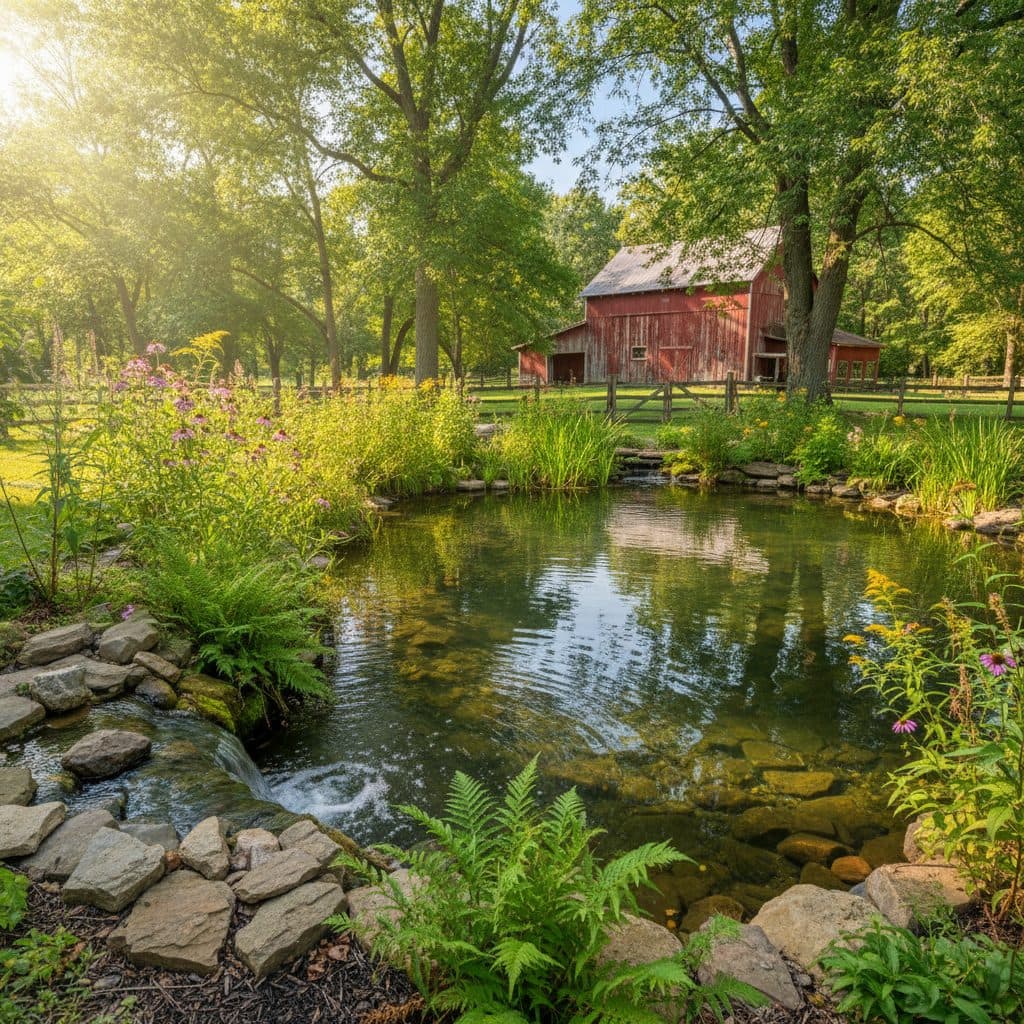
One of the most effective strategies for controlling algae is to prevent nutrients from entering the pond in the first place. This involves thoughtful landscape design around the pond. Creating a buffer zone of native plants around the pond’s edge, at least 3-5 ft wide, can filter out many pollutants before they reach the water. Redirecting downspouts away from the pond, perhaps towards a rainwater harvesting system or a vegetated swale, can significantly reduce the volume of nutrient-laden stormwater. The USDA Natural Resources Conservation Service (NRCS) promotes practices like riparian buffers, which can reduce sediment and nutrient runoff by 50-70% in agricultural areas, a principle applicable to backyard ponds as well.
- Establish a vegetated buffer zone around the pond.
- Redirect stormwater runoff from hard surfaces.
- Regularly remove fallen leaves and debris from the pond.
- Avoid overfeeding fish and use low-phosphorus fish food.
- Test soil in surrounding areas to prevent over-fertilization.
Sunlight management and pond design for clear water
While nutrients are essential for algae, sunlight provides the energy for them to grow. Reducing the amount of direct sunlight that penetrates your pond can dramatically slow algae growth. This doesn’t mean shading the entire pond, but rather creating a balance that supports a healthy ecosystem. For example, a pond in a sunny California valley might benefit from shading 60-70% of its surface during peak summer months. This can be achieved through a combination of strategic planting and structural elements. A pond that is at least 2 ft deep in its deepest sections also provides a cooler, darker refuge for aquatic life and helps reduce overall water temperature, which can inhibit algae.
Integrating shade and beneficial plants
One effective method is to plant taller, non-invasive plants on the sunny side of the pond, casting natural shade. Consider species like Green Oak (Quercus dilatata) or other appropriate native trees and shrubs for your USDA zone. Floating plants like water lilies, which cover a portion of the surface, also block sunlight and compete for nutrients. Aim for these plants to cover about one-third to one-half of the pond’s surface. For instance, a 100-square-foot pond might need 30-50 square feet of surface coverage from plants. Additionally, establishing a deeper section in your pond, perhaps 3-4 ft deep, provides an area where sunlight cannot easily reach the bottom, further deterring benthic algae growth.
- Plant deciduous trees or large shrubs on the south-facing side.
- Introduce floating plants to cover 30-50% of the surface.
- Ensure pond depth is at least 2 ft in key areas.
- Consider a pergola or shade sail for temporary summer shade.
- Use submerged plants to compete for light and nutrients.
Natural solutions and beneficial plants for algae control
Once nutrients and sunlight are managed, introducing beneficial aquatic plants and other natural controls can maintain a clear pond. These methods work by competing with algae for resources or by directly consuming them. For example, in a 2000-gallon pond in a temperate region like the Pacific Northwest, adding 20-30 lbs of submerged oxygenators can significantly improve water clarity within a few weeks. These plants, often called ‘oxygenators,’ release oxygen into the water, benefiting fish and microorganisms, while also absorbing excess nutrients that would otherwise feed algae.
Choosing the right aquatic plants
A diverse selection of aquatic plants creates a balanced ecosystem. Submerged plants like Anacharis or Hornwort are excellent nutrient sponges. Floating plants, such as water hyacinths or Water Chestnuts (Trapa natans), provide shade and absorb nutrients directly from the water column. Emergent plants, like cattails or irises, grow along the pond’s edge, filtering runoff and providing habitat. For a 50-square-foot pond, aim for 10-15 individual plants across these categories. Aeration, through a fountain or a solar-powered pump, also helps by circulating water and increasing oxygen, which can reduce the release of phosphorus from bottom sediments by up to 80%.
- Submerged plants: Anacharis, Hornwort, Eelgrass.
- Floating plants: Water Hyacinth, Water Lettuce, Water Lilies.
- Emergent plants: Cattails, Irises, Marsh Marigolds.
- Biological controls: Daphnia or other zooplankton for microscopic algae.
- Aeration systems: Fountains, waterfalls, or air pumps.
Water harvesting and passive irrigation for pond health
Integrating water harvesting and passive irrigation earthworks into your landscape can provide a holistic approach to pond health. By managing water flow across your property, you can minimize nutrient-rich runoff from reaching your pond. For example, a rain barrel system collecting water from a 1000-square-foot roof can capture 600 gallons of water from just one inch of rain, diverting it from potentially flowing into your pond. This collected water can then be used for irrigation in other parts of your garden, reducing the need for municipal water and its associated chemicals.
Earthworks and efficient irrigation for a balanced ecosystem
Passive irrigation techniques, such as wicking beds or ollas, offer highly efficient ways to water your garden beds, further reducing runoff. Wicking beds, which use a water reservoir at the bottom, can reduce water usage by 50% compared to traditional surface irrigation. Ollas, unglazed clay pots buried in the soil, slowly release water directly to plant roots, minimizing evaporation and surface runoff. A single olla can effectively irrigate a 2-foot diameter area, delivering water precisely where it’s needed. By using these methods, you reduce the overall water moving across your landscape, which in turn means less opportunity for nutrients to be picked up and carried into your pond. This is particularly beneficial in regions like Arizona or Texas, where water conservation is critical and nutrient runoff from intense, short rainfalls can be significant.
- Install rain barrels or cisterns to capture roof runoff.
- Create swales or berms to direct water away from the pond.
- Utilize wicking beds for efficient garden irrigation.
- Employ ollas to reduce water waste and runoff in planting areas.
- Design landscape contours to slow and filter water flow.
Comparison of Algae Control Methods
Method | Pros | Cons | Cost (1-5, 5=highest) |
|---|---|---|---|
Nutrient Reduction | Addresses root cause, long-term solution, improves overall ecosystem | Requires landscape changes, takes time to see results | 2 |
Sunlight Management | Natural, aesthetic, provides habitat, immediate impact on growth | Can be difficult for large ponds, may require plant maintenance | 2 |
Beneficial Plants | Natural, improves water quality, provides habitat, aesthetic | Requires plant selection and maintenance, may not be fast-acting | 1 |
Aeration | Increases oxygen, reduces sediment nutrient release, benefits fish | Initial equipment cost, energy consumption for pumps | 3 |
Chemical Algaecides | Fast-acting, immediate visual improvement | Temporary solution, can harm fish and beneficial organisms, does not address root cause, requires repeated application | 3 |
Phosphorus Trigger: Phosphorus concentrations as low as 0.02 mg/L can trigger significant algae blooms in many US ponds.
Shade Effectiveness: Shading 60% of a pond’s surface can reduce algae growth by over 50% during peak sunlight hours.
Water Savings: Ollas can reduce garden water usage by 50-70% compared to conventional irrigation methods, minimizing runoff.
Frequently asked questions
Is green pond water harmful to fish?
Yes, a severe green algae bloom can be harmful to fish. As algae die and decompose, they consume large amounts of oxygen, especially at night, leading to oxygen depletion that can stress or kill fish. Maintaining oxygen levels above 5 mg/L matters for most pond fish.
How quickly can a pond turn green?
A pond can turn green remarkably quickly, sometimes within 2-3 days under ideal conditions of high nutrients, warm water (above 65°F), and abundant sunlight. This rapid growth is why early intervention and preventative measures are so important.
Can I use tap water to fill my pond without causing algae?
Tap water typically contains chlorine or chloramines, which should be removed before adding to a pond to protect aquatic life. While generally low in phosphorus, tap water can still contribute to nutrient load over time, especially if you’re topping up a 500-gallon pond frequently.
What’s the best way to remove existing algae?
For existing algae, manual removal with a net is effective for string algae. For microscopic green water, consider a UV sterilizer or introducing beneficial bacteria. Addressing the underlying nutrient and sunlight issues matters, since a 1000-gallon pond will quickly re-bloom if conditions aren’t changed.
Do pond dyes help with algae control?
Pond dyes can help by blocking sunlight penetration into the water, thereby inhibiting algae growth. They are a temporary solution and do not address the root cause of nutrient overload. Dyes are typically safe for fish and plants when applied according to manufacturer directions for a pond of 500 gallons or more.
References
- When your local reflecting pool or pond turns green with algae, don’t reach for chemicals – nature has better solutions (2026). When your local reflecting pool or pond turns green with algae, don’t reach for chemicals – nature has better solutions.
- YOUR LIFE IS YOUR RESPONSIBILITY (2022). YOUR LIFE IS YOUR RESPONSIBILITY.
- YOUR RELATIONSHIP TO YOUR STORY WILL CHANGE OVER TIME (2022). YOUR RELATIONSHIP TO YOUR STORY WILL CHANGE OVER TIME.
- Choosing Your Pond: Location Choices and Relative Income (2017). Choosing Your Pond: Location Choices and Relative Income.
- I turned back my feet to your decrees (Psalm 119, 59) (2016). I turned back my feet to your decrees (Psalm 119, 59).
- USDA Natural Resources Conservation Service (2024). USDA Natural Resources Conservation Service.