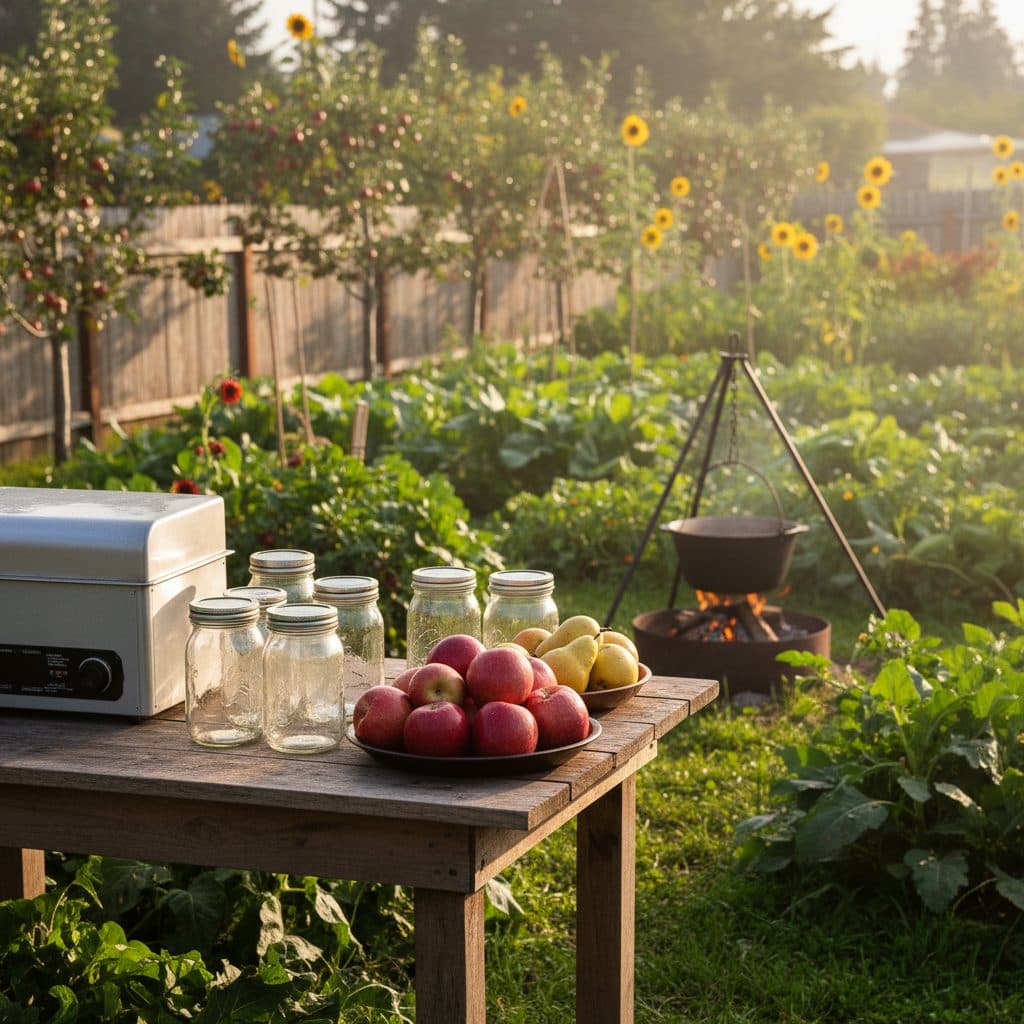
Key takeaways
- Proper storage and processing can extend fruit usability for 6 to 12 months, preventing waste from abundant harvests.
- Dehydrating apples and pears reduces their volume by 80 to 90%, making it an efficient long-term storage method.
- Homemade cider vinegar requires a 3 to 4 week initial fermentation period, followed by 4 to 8 weeks for full acetic acid development.
- Selecting the right apple or pear variety, like ‘Rome Beauty’ or ‘Bosc’, significantly impacts preservation quality and storage life.
- Preventing diseases such as fire blight matters for consistent yields in pear and apple plantings.
- Maintaining specific temperature and humidity levels, such as 32-40°F and 90-95% humidity, is vital for successful root cellaring.
Quick answer: To preserve apples and pears from an abundant harvest, utilize methods such as dehydrating, making sauces or butters, and root cellaring. These techniques extend fruit usability for 6 to 12 months, preventing waste and ensuring year-round enjoyment.
In orchards across Washington State and other prime growing regions, a mature apple tree can yield 400 to 800 pounds of fruit in a good year. This abundance, while welcome, often creates a surplus that challenges even the most prepared grower. When you have 100 pounds of apples or pears ripening all at once, you need a plan beyond fresh eating.
Turning a surplus into shelf-stable goods extends the season, adds food security, and puts your hard-earned harvest to use instead of letting it go to waste. Apple butter, cider vinegar, and other preserved goods make it possible to enjoy your apples and pears months after harvest.
Managing the abundant harvest
When the harvest comes in, especially for varieties like ‘Honeycrisp’ apples or ‘Bartlett’ pears, the sheer volume can be overwhelming. A single mature tree in a productive orchard, like those in USDA zone 5, might produce 15 to 20 bushels of fruit. The first step in managing this abundance is a thorough inspection. Cull any fruit with significant blemishes, wormholes, or signs of rot, as these can spread quickly in storage or processing. Growers often set aside 10% of the harvest for immediate processing into sauce or butter, while another 20% goes into cold storage for later use.
initial sorting and selection
For successful preservation, variety selection is key. Some apples, like ‘Granny Smith’ or ‘Fuji’, hold up better to cooking and drying, while ‘Bosc’ pears are excellent for canning. Understanding the harvest window for each variety grown on your property, which can be as short as two weeks, helps prevent over-ripening. Good storage conditions for fresh fruit, typically 35-40°F with 85-90% humidity, can extend their life by one to two months before processing. Disease resistance also plays a role; fire blight can destroy a substantial share of a pear crop in a bad year, so blight-resistant varieties are worth seeking out.
- Inspect each fruit for damage or disease.
- Separate fruit by ripeness for staggered processing.
- Wash fruit thoroughly to remove dirt and surface contaminants.
- Weigh or measure fruit to plan processing batches, often in 10-pound increments.
Making apple and pear sauce or butter
These managing abundant harvest points carry into this section, too.
Turning a surplus of apples or pears into sauce or butter produces a versatile product that can last for 12 months or more when properly canned. For every 10 pounds of raw fruit, you can expect to get about 6 to 7 pints of finished sauce. Using a mix of varieties, like ‘Golden Delicious’ for sweetness and ‘Granny Smith’ for tartness, helps achieve a balanced flavor profile. The key is slow cooking to break down the fruit fibers and concentrate the flavors. This usually takes 2 to 4 hours on the stovetop or 6 to 8 hours in a slow cooker.
the cooking and canning process
For water bath canning, jars should be clean and kept hot (in simmering water, for example) before filling; the processing step itself sterilizes the contents and creates the seal. Follow a tested recipe for the processing time: hot-packed applesauce needs 15 minutes for pints and 20 for quarts in a boiling water bath at up to 1,000 feet, apple butter needs less, and both need extra time at higher altitudes.
- Wash, core, and chop fruit; peeling is optional for sauce but recommended for butter.
- Cook fruit with a small amount of water until soft, about 20 minutes.
- Process cooked fruit through a food mill or sieve.
- Simmer sauce to desired consistency; continue simmering for butter until thick.
- Fill hot, clean jars, leaving 1/2 inch headspace, and process in a boiling water bath — 15 minutes for pints, 20 for quarts up to 1,000 feet, longer at altitude.
Dehydrating for long-term storage
Dehydrating fruit is an excellent way to preserve a large surplus, especially when storage space is limited. This method reduces the fruit’s weight by 80% to 90% and its volume significantly. For instance, 10 pounds of fresh apples might yield only 1 to 1.5 pounds of dried slices. A food dehydrator offers controlled temperatures, typically between 125°F and 140°F, ensuring even drying. However, a conventional oven set to its lowest temperature (often 150°F) with the door slightly ajar can also work, though it requires more monitoring. For more detailed guidance on methods, you can explore our article on dehydrating food.
preparing and drying fruit slices
To prepare apples and pears for drying, wash, core, and slice them about 1/4 inch thick. A dip in lemon juice (1 part lemon juice to 4 parts water) or an ascorbic acid solution prevents browning, especially for lighter-fleshed varieties. Sulfuring is traditional but carries conditions: sulfites provoke severe reactions in sulfite-sensitive people and asthmatics, sulfur must be burned outdoors, and sulfured fruit should not then be finished in an electric dehydrator. Arrange slices in a single layer on dehydrator trays, ensuring good air circulation. Drying time varies depending on fruit thickness, humidity, and dehydrator model, but generally takes 6 to 12 hours. The goal is a leathery, pliable texture with a moisture content below 20%. Once dried, allow the fruit to cool completely before storing in airtight containers, which helps prevent moisture reabsorption and extends shelf life to 12 months or more.
- Wash and core apples or pears; slice them uniformly to 1/4 inch thickness.
- Pre-treat slices with a lemon juice or ascorbic acid dip to prevent browning.
- Arrange slices in a single layer on dehydrator trays or baking sheets.
- Dry at 135°F for 6-12 hours until pliable and leathery.
- Condition dried fruit for 7-10 days before storing in airtight containers.
Crafting homemade cider vinegar
This builds directly on dehydrating.
Homemade cider vinegar is a fantastic way to utilize apple scraps or juice that might otherwise go to waste. It’s a two-stage fermentation process, relying on wild yeasts and bacteria to transform sugars into alcohol, then alcohol into acetic acid. For every gallon of apple juice or scraps, you can expect to yield about 3/4 gallon of finished vinegar. The process typically takes 3 to 4 weeks for the initial alcoholic fermentation, followed by 4 to 8 weeks for the acetic acid conversion, depending on ambient temperatures, ideally between 60°F and 80°F. If you’re interested in other fermentation projects, our article on fermenting and pickling vegetables offers more insights.
the fermentation process
To start, collect apple cores, peels, and bruised pieces, or use fresh apple juice. Place these in a clean glass jar, filling it about two-thirds full, then cover with filtered water, ensuring all solids are submerged to prevent mold. Add a tablespoon of sugar per cup of water to kickstart fermentation. Cover the jar with a cloth and secure it with a rubber band, allowing air exchange while keeping out pests. After the initial alcoholic fermentation, a gelatinous disc, known as the mother of vinegar, may form. This indicates the presence of acetic acid bacteria, which convert the alcohol into vinegar. The vinegar is ready when it smells and tastes sharply acidic. Home vinegar has no reliably known acid strength without titration, so treat it as a table condiment and never use it as the acid in a pickling or canning recipe, where a commercial 5% vinegar is required. Strain the finished vinegar, bottle it, and store it in a cool, dark place. A good mother can accelerate future batches, sometimes reducing the total process by 2-3 weeks.
- Collect apple scraps (cores, peels) or use fresh apple juice.
- Combine scraps with filtered water and a tablespoon of sugar per cup of water in a clean jar.
- Cover with a breathable cloth and let ferment at room temperature (60-80°F) for 3-4 weeks.
- Strain out solids and allow the liquid to continue fermenting for 4-8 more weeks until it tastes acidic.
- Bottle and store the finished vinegar, which can last indefinitely.
Long-term cold storage considerations
While processing is excellent for preserving fruit, some apple and pear varieties are bred for long-term fresh storage, often for 3 to 6 months, or even longer in ideal conditions. This is where a root cellar or dedicated cold storage unit becomes invaluable. In regions like the Northeast, many old farmhouses still have functional root cellars, maintaining a consistent temperature of 32-40°F and high humidity levels of 90-95%. This environment significantly slows down respiration and ripening. For more information on building or utilizing such spaces, consider reading our article on root cellaring.
ideal conditions and variety selection
The success of fresh storage hinges on maintaining a stable temperature range and high humidity. Fluctuations of more than 5°F can shorten storage life by weeks. Apples and pears release ethylene gas as they ripen, which can accelerate ripening in other fruits and vegetables. Therefore, storing them separately from ethylene-sensitive produce like potatoes or carrots matters. Regular inspection, perhaps once every two weeks, helps identify and remove any fruit showing signs of spoilage, preventing disease spread throughout the stored harvest. Certain varieties, such as ‘Northern Spy’ and ‘Arkansas Black’ apples, or ‘Anjou’ and ‘Comice’ pears, are known for their excellent keeping qualities and hold for several months in proper cold storage.
- Maintain a consistent temperature between 32-40°F.
- Keep humidity levels high, around 90-95%.
- Store apples and pears away from other ethylene-sensitive produce.
- Inspect stored fruit every 10-14 days to remove any spoiled pieces.
- Ensure good air circulation within the storage area to prevent moisture buildup.
Comparison of Apple and Pear Preservation Methods
Method | Effort Level | Typical Shelf Life | Storage Space Needed |
|---|---|---|---|
Fresh Cold Storage | Low (sorting, monitoring) | 3-6 months | Medium (cool, humid space; a bushel occupies about 1.25 ft³, plus room for air circulation) |
Sauce/Butter | Medium (cooking, milling, canning) | 12-18 months (canned) | Medium (jars on pantry shelves) |
Dehydrated | Medium (slicing, drying time) | 12-24 months (airtight) | Low (reduces volume by 80-90%) |
Cider Vinegar | Low (initial setup, waiting) | Indefinite (sealed) | Low (bottles on pantry shelves) |
Apple Yield: A mature apple tree in a productive orchard can yield 400 to 800 pounds of fruit in a good year, particularly in regions like Washington State.
Frequently asked questions
How much fruit do I need to make a gallon of apple sauce?
You’ll typically need about 12 pounds of fresh apples to make one gallon of apple sauce. This can vary slightly based on the apple variety and its water content, but it’s a good estimate for planning.
What’s the best way to store dehydrated apples and pears?
Dehydrated apples and pears should be stored in airtight containers, such as glass jars or vacuum-sealed bags, in a cool, dark place. This prevents moisture reabsorption and extends their shelf life to 12-24 months.
Can I use overripe fruit for cider vinegar?
Yes, overripe or bruised fruit, as well as apple cores and peels, are excellent for making cider vinegar. The sugars are still present and contribute to the fermentation process, yielding about 3/4 gallon of vinegar from one gallon of scraps.
What temperature is ideal for a root cellar?
An ideal root cellar maintains a consistent temperature between 32°F and 40°F, along with a high humidity level of 90-95%. These conditions significantly slow down the ripening process, extending the storage life of apples and pears by several months.
How long does it take to make homemade cider vinegar?
Making homemade cider vinegar typically involves a two-stage fermentation process. The first stage, alcoholic fermentation, takes 3 to 4 weeks, followed by the acetic acid conversion, which can take an additional 4 to 8 weeks, for a total of 7 to 12 weeks.
References
- Apple and pear seedlings : March surplus bulletin / (1915). Apple and pear seedlings : March surplus bulletin /.
- Blights of apple and pear trees / (1909). Blights of apple and pear trees /.
- Symposium on Clonal Variation in Apple and Pear (1977). Symposium on Clonal Variation in Apple and Pear.