Key takeaways
- Container plants in USDA Zones 8-10 require protection from afternoon sun when temperatures exceed 90°F.
- Shade cloth, typically 30% to 50% density, takes the edge off afternoon sun and noticeably lowers leaf and soil-surface temperatures.
- Strategic placement of containers or temporary shade structures can block intense 2 PM to 6 PM sun exposure.
- Proper watering, using soil moisture meters, and mulching are critical for container plant survival in heat waves.
- Selecting heat-tolerant plant varieties and using larger containers (10-gallon minimum) improves resilience.
- Simple DIY shade structures using PVC pipe or rebar offer cost-effective, portable solutions for balcony and rooftop gardens.
Quick answer: To protect container plants from 100°F+ heat in USDA Zones 8-10, use 30-50% shade cloth, ensure proper watering with soil moisture meters, and strategically place containers to block intense afternoon sun. Selecting heat-tolerant varieties and larger pots also improves resilience.
In regions like the Arizona desert or the humid Florida panhandle, summer temperatures frequently climb past 95°F, often reaching 100°F or more. For container gardeners in USDA Zones 8, 9, and 10, this intense heat presents a significant challenge to plant health and productivity. While morning sun is generally beneficial, the scorching afternoon sun, especially between 2 PM and 6 PM, can quickly damage or kill plants, even those considered heat-tolerant.
Container plants are particularly vulnerable to heat stress because their root systems are exposed to higher soil temperatures and their limited soil volume dries out rapidly. Without proper protection, a tomato plant in a 5-gallon pot might wilt irreversibly within a few hours on a 105°F day. Implementing strategic afternoon shade, primarily through shade cloth or clever placement, is not just a recommendation; it is often a necessity for successful harvests in these hot climates.
Understanding heat stress in container plants
Container plants face unique challenges when temperatures consistently rise above 90°F, making them more susceptible to heat stress than their in-ground counterparts. The confined soil volume in a container heats up much faster and to higher temperatures, often exceeding 110°F on a hot afternoon, which can cook roots. This elevated root zone temperature inhibits water and nutrient uptake, even if the soil itself is moist. For example, a black plastic 5-gallon container exposed to full sun can reach internal temperatures 20°F higher than ambient air.
the specific vulnerabilities of potted plants
The limited soil volume in containers means less thermal mass to buffer temperature fluctuations, leading to rapid drying. A typical 10-gallon container might need watering once daily during normal summer conditions, but during a 100°F heat wave, it could require water two or three times a day. Furthermore, the exposed sides of containers allow for evaporative cooling, but also for rapid heat transfer directly into the root ball. Plants like basil or lettuce, which thrive in 70-80°F conditions, will quickly bolt or scorch when exposed to sustained 95°F temperatures, reducing their productive life to just a few weeks. Understanding these vulnerabilities is the first step toward effective protection, helping gardeners decide when to deploy shade or move plants to a cooler spot.
- Root zone overheating: Soil in containers can reach 110°F+, damaging delicate roots.
- Rapid moisture loss: Smaller soil volume dries out quickly, requiring frequent watering.
- Nutrient lockout: High soil temperatures can hinder a plant’s ability to absorb essential nutrients.
- Leaf scorching: Direct afternoon sun at 95°F can burn foliage, especially on tender plants.
- Reduced fruit set: Many fruiting vegetables, like tomatoes, stop setting fruit when night temperatures remain above 75°F.
Choosing the right shade cloth
Choosing the right shade cloth matters for effective protection without hindering plant growth. Shade cloth is rated by its percentage of light blockage, typically ranging from 30% to 90%. For most container vegetables in USDA Zones 8-10, a 30% to 50% shade cloth is ideal, as it reduces intense afternoon sun by a significant margin, noticeably lowering leaf and soil-surface temperatures beneath it, without creating too much shade. Too much shade (e.g., 70% or 80%) can reduce photosynthesis and fruit production, especially for sun-loving plants like tomatoes or peppers.
knitted versus woven shade cloth
Shade cloth materials generally fall into two categories: knitted and woven. Knitted shade cloth is made from high-density polyethylene (HDPE) and is more durable, resistant to tearing, and typically lasts 7-10 years. It allows air to pass through freely, reducing heat buildup. Woven shade cloth, often made from polypropylene, is less expensive but can unravel if cut and may have a shorter lifespan of 3-5 years. For a balcony garden in a hot climate like Southern California, a 40% knitted shade cloth positioned to block the western sun from 1 PM to 6 PM can make the difference between a thriving garden and scorched plants. Consider lighter colors, such as white or silver, as they reflect more light and heat compared to black shade cloth, which absorbs more heat.
- 30-50% blockage: Optimal for most fruiting vegetables in hot climates.
- Knitted HDPE: Durable, tear-resistant, lasts 7-10 years, good airflow.
- Woven polypropylene: More affordable, 3-5 year lifespan, prone to unraveling if cut.
- Lighter colors: White or silver shade cloth reflects more heat, reducing under-canopy temperatures.
- UV stabilization: Look for UV-treated material to ensure longevity in intense sun exposure.
Implementing afternoon shade strategies
Effective afternoon shade involves more than just draping a cloth over plants; it requires strategic planning based on your garden’s orientation and the sun’s path. In USDA Zone 9, where summer temperatures can reach 105°F, the sun’s intensity from 2 PM to 6 PM is the most damaging. One simple strategy is to reposition containers so they receive morning sun (until about 1 PM) and then are naturally shaded by a building, a larger tree, or another structure for the rest of the day. This can reduce direct sun exposure by 4-5 hours during the hottest part of the day.
temporary structures and vertical gardening benefits
For gardeners with limited space, such as on a balcony or rooftop, temporary shade structures are invaluable. A simple frame made from PVC pipes or rebar can support shade cloth, creating a protective canopy. For example, a 6 ft by 8 ft structure can shade a dozen 5-gallon containers. Another approach involves using taller, heat-tolerant plants to shade smaller, more sensitive ones. Planting something tall and heat-tough on the west side of a row of peppers (sunflowers, sorghum, or a trellised row of pole beans) can provide natural dappled shade. Vertical gardening setups can also be adapted; installing shade cloth on the west-facing side of a vertical garden frame can protect plants from the most intense sun, while still allowing for good air circulation, which helps prevent fungal issues in humid areas like the Gulf Coast.
- Reposition containers: Move pots to naturally shaded areas after 1 PM.
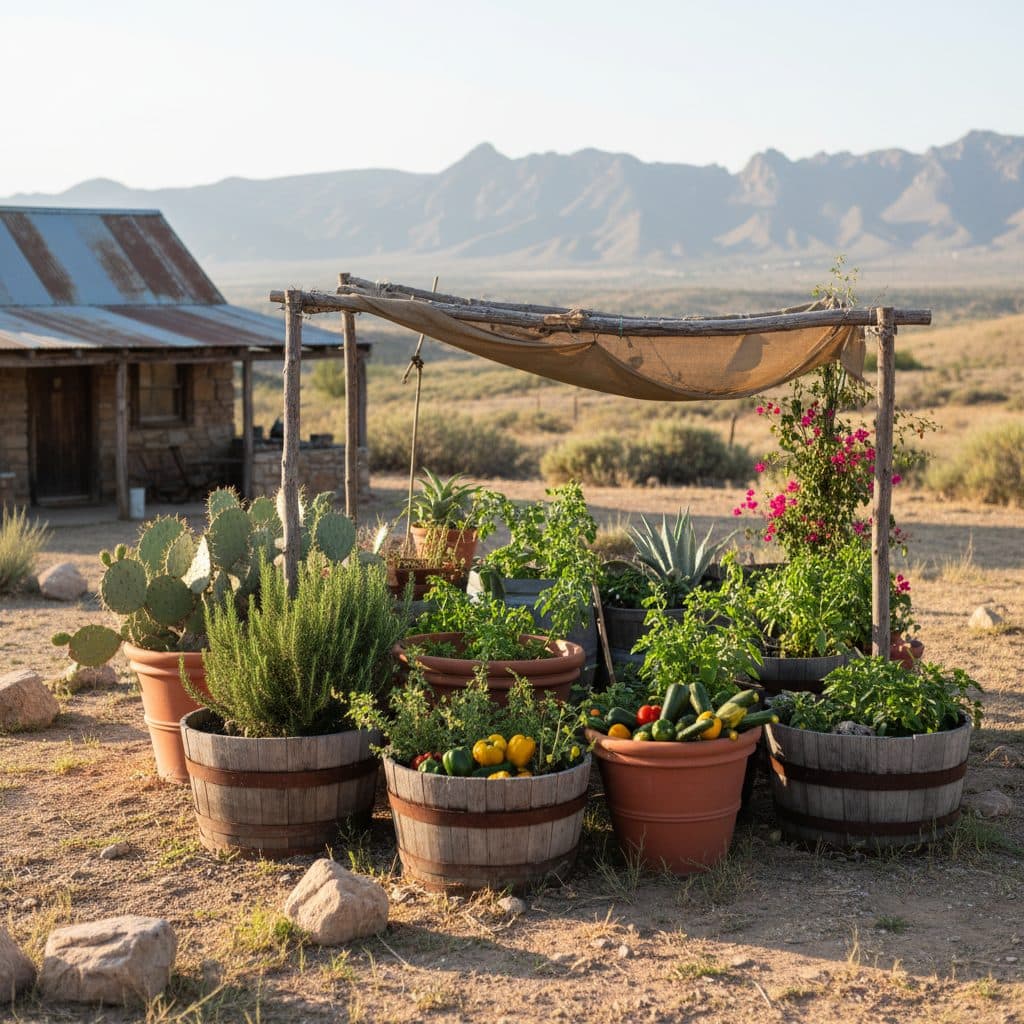
- Temporary canopies: Construct simple frames with PVC or rebar to hold shade cloth.
- Companion planting: Use taller, heat-tolerant plants to cast shade on smaller, sensitive ones.
- Vertical shade screens: Attach shade cloth to the west side of vertical garden structures.
- Movable shade panels: Create small, portable shade screens that can be shifted as needed.
Watering and soil management under shade
Even with shade protection, proper watering and soil management remain critical for container plants facing high temperatures. Shading can reduce soil temperatures by 10-20°F and decrease water evaporation by up to 30%, but plants still require consistent moisture. During a heat wave in USDA Zone 10, a 15-gallon container tomato plant might still need 2-3 gallons of water daily. Using a soil moisture meter can help accurately assess soil hydration, preventing both overwatering and underwatering, which are common issues in extreme heat.
mulching and container choice
Applying a 1-2 inch layer of mulch, such as straw, wood chips, or even shredded leaves, to the top of your container soil can significantly reduce evaporation and keep roots cooler. This can lower soil surface temperatures by 10°F or more. Furthermore, the choice of container material and color impacts soil temperature. Light-colored containers, particularly those made from breathable materials like terracotta or fabric grow bags, will keep soil temperatures lower than dark plastic pots. For instance, a white fabric grow bag can keep soil 5-8°F cooler than a black plastic pot of the same size. Ensuring good drainage is also vital; containers should have at least three 0.5-inch drainage holes to prevent waterlogging, especially during periods of heavy watering.
- Consistent moisture: Check soil daily, possibly twice, with a moisture meter.
- Mulch application: Add 1-2 inches of straw or wood chips to reduce evaporation.
- Container color: Use light-colored pots to reflect heat and keep roots cooler.
- Breathable materials: Fabric grow bags or terracotta pots promote better aeration and temperature regulation.
- Adequate drainage: Ensure containers have sufficient drainage holes to prevent root rot.
Plant selection for hot climates
While shade cloth provides essential relief, selecting appropriate plant varieties can further improve your container garden’s resilience in hot climates like USDA Zones 8-10. Some vegetables are naturally more tolerant of heat, particularly those originating from tropical or arid regions. For example, okra, sweet potatoes, and many varieties of peppers (especially chili peppers) will continue to produce even when daytime temperatures consistently exceed 90°F. These plants often have thicker leaves or more extensive root systems that help them cope with heat stress.
heat-tolerant varieties and afternoon shade needs
Even within a species, specific cultivars can exhibit better heat tolerance. Look for tomato varieties labeled ‘heat-set’ or ‘tropical,’ which are bred to set fruit in night temperatures above 75°F. Examples include ‘Florida 91’ and ‘Solar Fire.’ Conversely, cool-season crops like lettuce, spinach, and broccoli will quickly bolt or become bitter in sustained temperatures above 80°F, even with shade. If you must grow these, ensure they receive maximum shade, perhaps 50% shade cloth, and consider planting them in larger 10-gallon containers to buffer root temperatures. For gardeners in USDA Zone 8b, planting a second succession of heat-tolerant beans or corn in late summer, under partial shade, can extend the harvest well into the fall, after the most intense heat has passed.
- Okra and sweet potatoes: Naturally resilient to high temperatures, thriving above 90°F.
- Heat-set tomatoes: Cultivars like ‘Florida 91’ and ‘Solar Fire’ set fruit on hot nights.
- Chili peppers: Many varieties tolerate and even prefer intense heat for optimal growth.
- Malabar spinach: A heat-loving alternative to traditional spinach, growing well in 90°F+ weather.
- Asian greens: Some varieties, like ‘Tatsoi,’ can handle more heat than European greens with afternoon shade.
Building simple shade structures
Creating effective shade for container gardens does not require complex construction; simple, DIY structures can provide significant relief. For a small balcony garden in a region like central Florida (USDA Zone 9b), a basic PVC pipe frame can be assembled in less than an hour. You’ll need 1-inch diameter PVC pipes, 90-degree elbow connectors, and T-connectors to form a rectangular frame. A 4 ft by 6 ft frame, standing 5 ft tall, can easily cover four to six 15-gallon containers, protecting them from the intense 3 PM sun. The shade cloth can then be secured to this frame using zip ties or spring clamps, allowing for easy removal on cooler days.
rebar frames and movable options
Another robust option involves using rebar for a more permanent, yet still movable, structure. Four 6 ft lengths of 0.5-inch rebar can be hammered 1 ft into the ground around a raised container bed or a cluster of large pots. Bending the tops of the rebar inwards and securing them with heavy-duty zip ties or wire creates a sturdy dome or arch. On a rooftop or balcony, never drive anything into the deck — use a freestanding frame with weighted bases, and tie the shade cloth down so a gust cannot turn it into a sail and send it over the edge. For maximum flexibility, consider creating smaller, individual shade panels. A 2 ft by 3 ft wooden frame covered with 40% shade cloth can be propped up against a single container, allowing you to adjust the angle of shade throughout the afternoon. This approach is practical for gardeners with a diverse collection of plants, each with slightly different shade requirements.
- PVC pipe frames: Lightweight, easy to assemble, and portable for temporary shade.
- Rebar structures: Sturdy and durable for more permanent, wind-resistant solutions.
- Zip ties or clamps: Simple fasteners for attaching shade cloth securely to frames.
- Movable shade panels: Small, independent frames for targeted shade on individual plants.
- Strategic placement: Position structures to block western sun exposure from 2 PM to 6 PM.
Temperature Reduction: A 40% shade cloth cuts the radiant load on plants and keeps leaf and soil-surface temperatures well below what they reach in full sun.
Container Size Matters: Using 10-gallon or larger containers provides more soil volume, buffering root temperatures and moisture levels.
Frequently asked questions
What percentage shade cloth is best for tomatoes in a hot climate?
For tomatoes in USDA Zones 8-10, a 30% to 40% shade cloth is generally recommended. This level of shade cuts afternoon sun intensity substantially and keeps leaf and soil temperatures down, without excessively limiting the light needed for fruit production.
Can I use a white bed sheet instead of shade cloth?
While a white bed sheet can offer some temporary shade, it is not an ideal long-term solution. A bed sheet typically provides 70-90% shade, which is too dense for most vegetables, and it can trap heat and block air circulation, potentially increasing humidity around plants. Dedicated shade cloth is designed for proper light transmission and airflow.
How often should I water container plants under shade during a heat wave?
Even with shade, container plants in a heat wave (above 95°F) may need watering once or twice daily, sometimes even three times for smaller pots. Use a soil moisture meter to check the top 2-3 inches of soil; if it feels dry, it’s time to water. A 10-gallon container might require 1-2 gallons of water per day.
What are some heat-tolerant vegetables for containers in Zone 9?
Excellent choices for USDA Zone 9 container gardens include okra, sweet potatoes, Malabar spinach, and many varieties of chili peppers. Look for ‘heat-set’ tomato cultivars like ‘Florida 91’ that can produce fruit even when night temperatures stay above 75°F. These plants are better equipped to handle sustained temperatures above 90°F.
Does the color of my container matter for heat protection?
Yes, container color significantly impacts soil temperature. Dark-colored pots (black, dark brown) absorb more solar radiation and run distinctly warmer at the root zone than light-colored ones. Opt for white, light gray, or terracotta containers to help keep root zones cooler, especially for sensitive plants in 100°F+ conditions.