Key takeaways
- Temporary shade significantly reduces transplant shock and improves survival rates for young plants in hot, dry conditions.
- Simple, low-cost materials like old shingles, cardboard, or recycled milk jugs can provide effective short-term shade.
- Shade cloth, typically 30% to 50% density, offers a more durable and adjustable solution for protecting vulnerable plants.
- Strategic placement of temporary shade during the hottest parts of the day (e.g., 10 AM to 4 PM) matters for success.
- Combining temporary shade with good soil moisture management and mulching can increase plant establishment by 25% or more.
- Removing temporary shade once plants are established, usually after 10-14 days, helps them acclimate to full sun.
Quick answer: Protecting young transplants from 100°F heat in USDA Zone 7 gardens involves providing temporary shade using materials like shingles, cardboard, or shade cloth. This reduces leaf temperatures and water evaporation, significantly improving plant survival and establishment.
In many parts of the United States, gardeners face increasingly challenging conditions, with summer temperatures regularly exceeding 90°F and extended periods of drought becoming more common. For instance, states in the Southwest, like Arizona and California, have seen average summer temperatures rise by 2°F over the last 30 years, putting immense stress on newly planted seedlings and transplants. Establishing young plants in these environments requires careful planning and protective measures to ensure they thrive rather than wilt.
One of the most effective strategies for giving transplants a strong start is providing temporary shade. This simple practice can reduce leaf temperatures by 10-15°F and decrease water evaporation from the soil by up to 30%, making a critical difference in their survival during the crucial first few weeks. From repurposed household items to purpose-built shade structures, understanding how and when to apply temporary shade is essential for building a resilient garden in a warming climate.
The critical need for temporary shade in hotter climates
As growing seasons extend and average temperatures climb across US regions, particularly in USDA zones 6 through 9, young plants face significant hurdles. A newly transplanted seedling, whether it’s a tomato in Ohio or an agave in Texas, has a compromised root system and struggles to absorb enough water to compensate for moisture lost through its leaves. This imbalance leads to transplant shock, which can stunt growth or even kill the plant within days if temperatures consistently hit 95°F or higher. Research on temporary shade for crops like cacao has shown a substantial increase in seedling survival rates, sometimes by over 50%, when protected during establishment [2].
Understanding plant stress and heat damage
Direct, intense sunlight combined with high temperatures can cause irreversible damage to plant cells, leading to scorched leaves and stunted development. In areas like the Central Valley of California, where summer highs can reach 105°F, young plants can lose up to 40% of their moisture content in a single afternoon. Temporary shade acts as a buffer, reducing the solar radiation hitting the plant by 30% to 70%, depending on the material used. This allows the plant’s root system to recover and grow, enabling it to better handle the demands of its new environment. Without this protection, a significant portion of your planting efforts—perhaps 20% to 30% of your transplants—may not survive their first two weeks.
- Reduced transplant shock by up to 60%
- Lowered leaf surface temperatures by 10-15°F
- Decreased soil moisture evaporation by 25-35%
- Protection from intense UV radiation
- Improved overall plant establishment within 10 days
DIY solutions: shingles, milk jugs, and cardboard
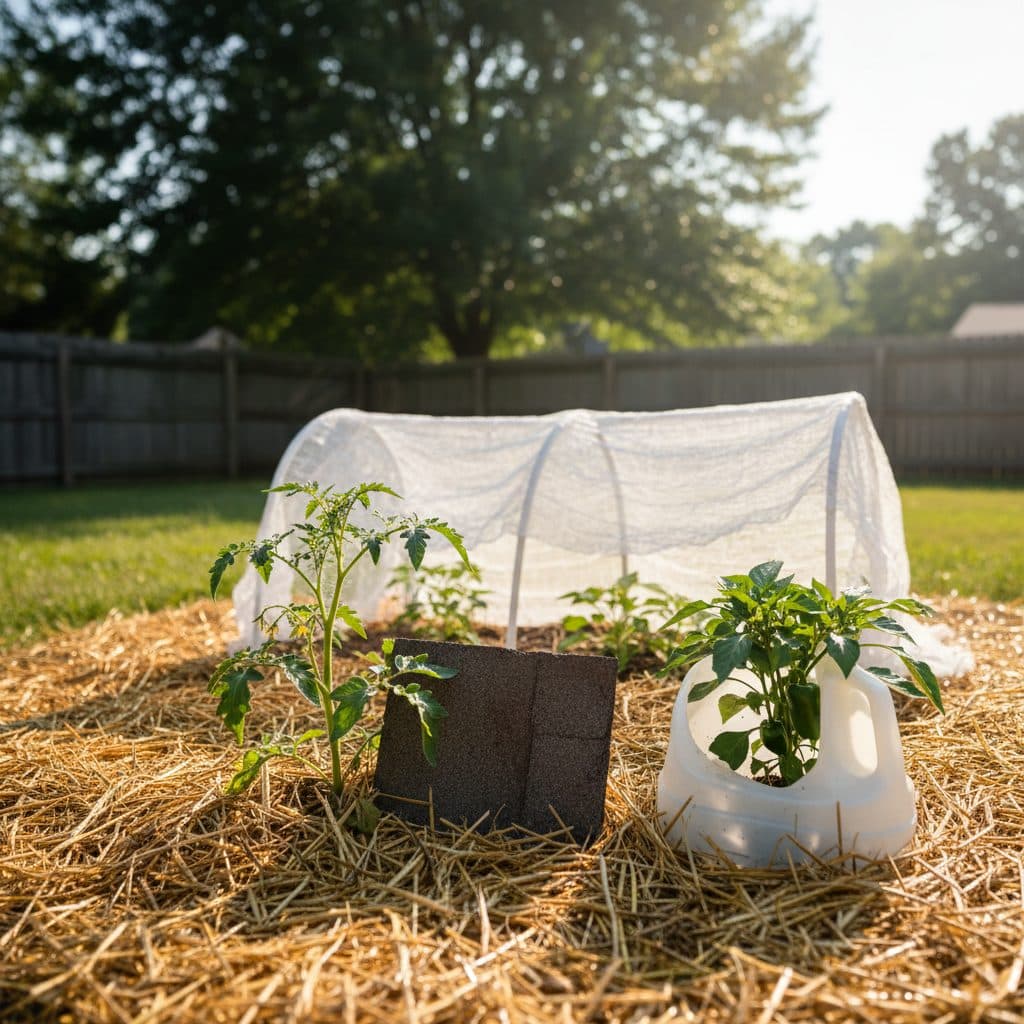
You don’t need specialized equipment to provide effective temporary shade. Many common household items can be repurposed to protect young plants, saving money and reducing waste. For instance, a single asphalt shingle, often found after roof repairs, measures about 12 in by 36 in and can be propped up on its long edge on the south or west side of a young plant. This simple barrier can block 100% of direct sun during the hottest parts of the day, from 11 AM to 3 PM, for a plant up to 18 in tall.
Crafting effective homemade shades
Recycled gallon milk jugs are another excellent option. Cut off the bottom and top, then slice the jug vertically to create a flat plastic sheet. This sheet can be bent into a semi-circle or square and staked into the ground around a plant, providing 360-degree protection from wind and sun. For larger areas or rows of plants, cardboard boxes can be cut and folded into temporary tents or lean-tos. While cardboard is less durable—it might only last 3-5 days in humid conditions—it’s free and biodegradable. These methods are particularly useful for small-scale gardens in USDA zones 5-8, where occasional heat waves can be unexpected. Always ensure your chosen material allows for some airflow to prevent overheating, which can happen if temperatures inside the shade exceed 100°F.
- Old asphalt shingles: 12 in x 36 in, block 100% direct sun.
- Plastic milk jugs: Cut and shaped for individual plant protection.
- Cardboard boxes: Free, biodegradable, good for short-term use.
- Wooden stakes or wire hangers: To secure shade structures in place.
- Old window screens: Reduce sun intensity by 50-70% for delicate plants.
Purpose-built solutions: shade cloth and small tents
For gardeners seeking more durable and adjustable solutions, purpose-built temporary shade options like shade cloth and small grow tents offer significant advantages. Shade cloth is a woven or knitted material designed to block a specific percentage of sunlight, typically ranging from 30% to 70%. A 30% shade cloth is ideal for vegetables like tomatoes and peppers in USDA zone 8, allowing sufficient light for growth while reducing heat stress, whereas a 50% shade cloth is better for more sensitive plants or extreme heat in zones 9-10. This material can be draped over hoops, simple PVC pipe frames, or even suspended from existing structures to protect a bed of plants up to 4 ft wide.
Choosing and installing shade cloth effectively
When selecting shade cloth, consider the light requirements of your plants and the intensity of your local sun. For most vegetable gardens in the US, a 30% to 40% shade cloth provides a good balance, reducing temperatures by 5-10°F without significantly impacting photosynthesis. Installation is straightforward: create a simple frame using 1/2 in PVC pipes or rebar, then secure the shade cloth with clips or zip ties. For smaller, individual plants, mini-greenhouses or reflective indoor grow tents can be adapted for outdoor use, providing a controlled microclimate. These structures are especially useful for protecting high-value crops or delicate starts in regions like Florida, where intense sun and humidity can be challenging for 8 months of the year. For more extensive setups, consider principles from greenhouse climate control to manage temperature and humidity effectively.
- 30-50% shade cloth: Optimal for most vegetables in hot climates.
- PVC pipe or rebar frames: Easy to assemble and dismantle.
- Clips or bungee cords: For securing shade cloth to frames.
- Small grow tents: Provide controlled microclimates for individual plants.
- Temporary cold frames: Can be covered with shade cloth for protection.
Strategic placement and timing for maximum effect
The effectiveness of temporary shade isn’t just about the material; it’s also about strategic placement and timing. Most plants need protection during the hottest part of the day, typically from 10 AM to 4 PM, when solar radiation is most intense. Placing shade on the south and west sides of plants ensures they are shielded from the afternoon sun, which often feels 10-15°F hotter than morning sun. For plants in rows, a continuous shade structure oriented east-west can provide consistent protection. In regions like the high desert of New Mexico, where UV index can reach 10+, even morning sun can be damaging, so a more encompassing shade might be necessary for the first 7-10 days.
When to apply and remove temporary shade
Apply temporary shade immediately after transplanting, especially if the forecast calls for temperatures above 85°F or strong winds over 15 mph. The goal is to reduce stress during the critical establishment phase, which usually lasts 7 to 14 days. Once plants show signs of new growth—like a new leaf appearing or a stem thickening—and average daily temperatures drop below 80°F, you can gradually remove the shade. Start by removing it for a few hours in the morning, then increasing exposure over 2-3 days. This hardening-off process helps plants acclimate to full sun exposure, preventing a second shock. Monitoring soil moisture with a soil moisture meter can help determine if plants are hydrating adequately, indicating they are ready for less shade.
- Apply shade immediately after transplanting if temperatures exceed 85°F.
- Target shade from 10 AM to 4 PM for peak sun protection.
- Remove shade gradually over 2-3 days after 7-14 days of protection.
- Orient shade structures east-west for row crops.
- Adjust shade based on local UV index and wind speeds over 15 mph.
Beyond shade: soil and water management for resilience
While temporary shade is a powerful tool, its effectiveness is greatly enhanced when combined with sound soil and water management practices. Healthy soil, rich in organic matter, can hold significantly more moisture—up to 20% more by volume—and provide a stable temperature for young roots. Incorporating compost or well-rotted manure, especially in sandy soils found in parts of Florida or heavy clay soils in the Midwest, improves soil structure and water retention. The USDA Natural Resources Conservation Service emphasizes the importance of soil health for drought resilience, noting that healthy soils can reduce runoff by 50% and increase water infiltration [6].
Mulching and efficient watering techniques
Mulching is a simple yet extremely effective practice. A 2-4 in layer of organic mulch—such as straw, wood chips, or shredded leaves—around your transplants can reduce soil temperature by 10-15°F and cut evaporation by 20-30%. This means less frequent watering, saving up to 500 gallons of water per 100 square feet over a growing season. When you do water, do so deeply and infrequently, aiming to moisten the soil to a depth of 6-8 in. Drip irrigation or soaker hoses deliver water directly to the root zone, minimizing waste compared to overhead sprinklers, which can lose 30% of water to evaporation. For optimal plant nutrient uptake, consider amending your soil with products like fermented soybean meal organic fertilizer, which provides a slow-release nitrogen boost.
- Incorporate 2-4 in of compost to improve soil water retention.
- Apply 2-4 in of organic mulch to reduce evaporation by 20-30%.
- Water deeply to 6-8 in depth, rather than frequently.
- Use drip irrigation to save up to 50% water compared to overhead.
- Test soil pH and moisture regularly with a 3-in-1 soil pH, moisture & light meter.
Temporary Shade Solutions: DIY vs. Purpose-Built
Feature | DIY Solutions (Shingles, Milk Jugs, Cardboard) | Purpose-Built Solutions (Shade Cloth, Small Tents) |
|---|---|---|
Cost | Very low, often free from recycled materials. | Moderate initial investment, ranging from $20 for small cloth to $100+ for frames. |
Durability | Low, cardboard lasts 3-5 days, plastic jugs 1-2 seasons. | High, shade cloth lasts 3-5 years, frames 5-10 years. |
Adjustability | Limited, manual repositioning needed for sun path changes. | High, easily adjusted for light percentage, can be raised or lowered. |
Coverage | Individual plants or small clusters (e.g., 1-2 sq ft per item). | Small beds (e.g., 4 ft x 8 ft) to individual plants. |
Airflow | Often good, but can be limited if too enclosed. | Excellent, designed to allow airflow and prevent heat buildup. |
Heat Stress Threshold: Most young transplants begin to show significant stress when ambient temperatures consistently exceed 90°F, leading to a 30% reduction in growth rate.
Shade Cloth Efficacy: Using a 30% shade cloth can reduce the temperature around plants by 5-10°F, making a critical difference for survival in USDA zones 7-9.
Soil Health Impact: Increasing soil organic matter by just 1% can improve water holding capacity by 25,000 gallons per acre, according to USDA estimates [6].
Frequently asked questions
How long should temporary shade remain on transplants?
Temporary shade should generally remain on transplants for 7 to 14 days after planting. This period allows the root system to establish itself without the added stress of intense sun, especially if daily temperatures are above 85°F.
What percentage of shade cloth is best for vegetable gardens?
For most vegetable gardens in US climates, a shade cloth with 30% to 40% density is usually ideal. This range blocks enough sunlight to reduce heat stress by 5-10°F while still allowing sufficient light for healthy growth and fruit development.
Can I use clear plastic for temporary shade?
No, clear plastic is not recommended for temporary shade as it can trap heat, potentially raising temperatures around the plant by 15°F or more, which can cause severe damage. Opaque or woven materials are much better for heat reduction.
How does temporary shade help with drought conditions?
Temporary shade helps in drought conditions by reducing the amount of direct sunlight hitting the plant and soil, which in turn lowers leaf temperatures and decreases water evaporation from the soil by up to 30%. This means plants need less water and experience less stress.
When should I remove temporary shade from my plants?
You should remove temporary shade gradually once plants show signs of new, healthy growth and average daily temperatures consistently fall below 80°F. Start by removing it for a few hours in the morning for 2-3 days to help plants acclimate to full sun.
References
- The (Temporary?) Queering of Japanese TV (2018). The (Temporary?) Queering of Japanese TV.
- Prospects of using cassava as temporary shade for cocoa in degraded areas (2000). Prospects of using cassava as temporary shade for cocoa in degraded areas.
- Nitrogen fixing potential ofFlemingia macrophylla when planted as temporary shade for cacao (2005). Nitrogen fixing potential ofFlemingia macrophylla when planted as temporary shade for cacao.
- A heart transplant under temporary paracorporeal biventricular circulatory support (2023). A heart transplant under temporary paracorporeal biventricular circulatory support.
- Bridging Adults to Heart Transplant: Temporary versus Durable Mechanical Circulatory Support and Post-Transplant Outcomes (2025). Bridging Adults to Heart Transplant: Temporary versus Durable Mechanical Circulatory Support and Post-Transplant Outcomes.
- USDA Natural Resources Conservation Service (2024). USDA Natural Resources Conservation Service.