Key takeaways
- Identify leggy growth early, often characterized by stems over 6 inches between leaf nodes.
- Prune suckers and lower leaves to redirect energy to fruit production and improve air circulation.
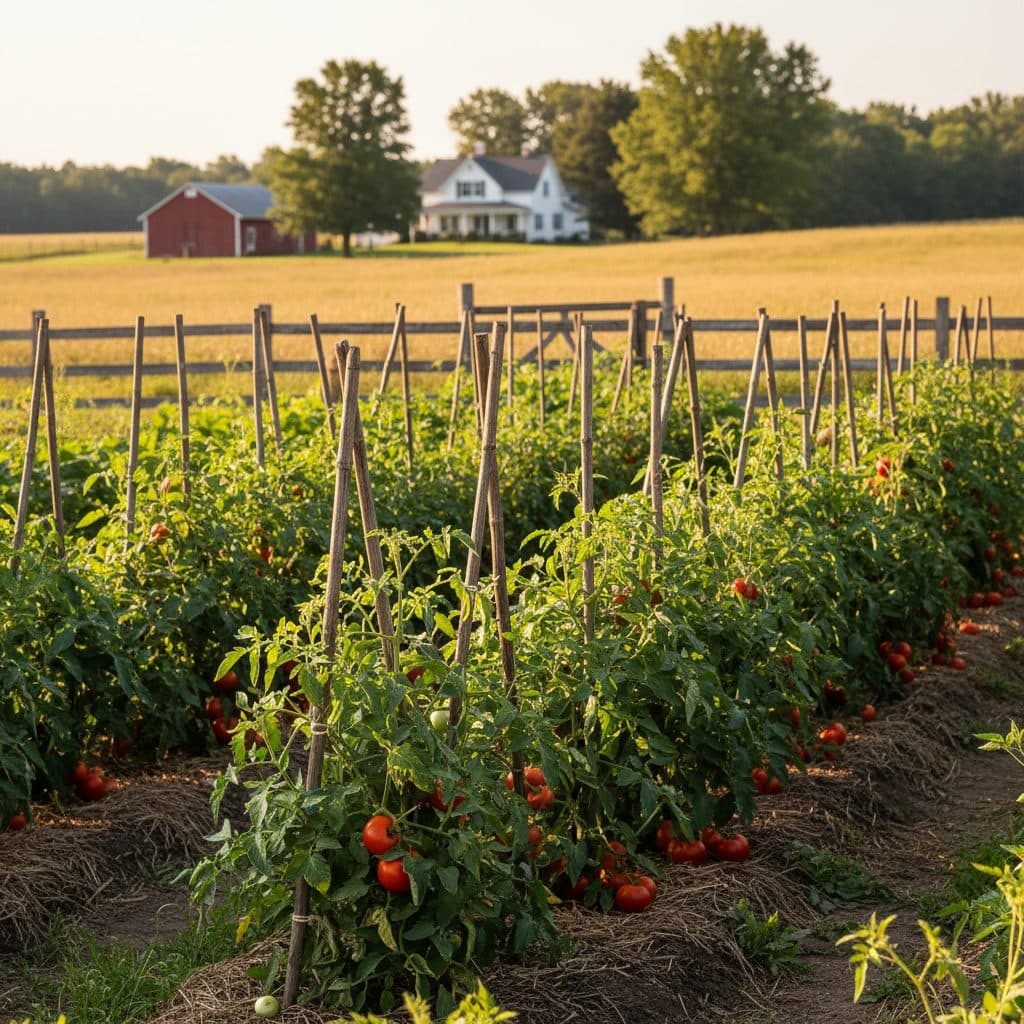
- Implement sturdy staking or caging systems, like Florida weave or single stakes, for support up to 6 feet tall.
- Adjust pruning and staking methods based on tomato type: indeterminate, determinate, or dwarf.
- Ensure proper soil nutrition and adequate sunlight (at least six hours daily) to prevent legginess.
- Consider companion planting to support overall plant health and deter pests, potentially reducing stress.
Quick answer: To redirect leggy tomato growth and improve yields, identify causes like insufficient light or overcrowding, then implement strategic pruning of suckers and lower leaves, and provide robust staking for support.
In the Midwest, where summer temperatures can reach 90°F, many home gardeners face a common challenge: tomato plants that grow tall and thin, with sparse foliage and few fruits. This condition, often called “legginess,” can significantly reduce your harvest, turning a promising crop into a disappointing one. A leggy plant, as defined by botanists, has an excessively long stem with leaves spaced far apart, often more than 6 inches between nodes [2, 3]. It’s a clear sign your plant is stretching for light or experiencing other environmental stresses, diverting energy from fruit development.
Addressing legginess requires a two-pronged approach: strategic pruning and robust staking. By understanding how to properly manage your tomato plants, you can redirect their energy from unproductive stem growth to developing strong, fruit-bearing branches. This article will guide you through practical techniques, grounded in horticultural science, to transform sprawling, leggy plants into productive, well-supported specimens, potentially increasing your yield by 20% or more in a typical growing season.
Understanding leggy growth and its causes
Leggy growth in tomato plants is a common issue, particularly for gardeners in regions like USDA zone 4, where short growing seasons might tempt early indoor starts. It manifests as a plant with a long, thin stem and leaves that are spaced too far apart, often more than 6 inches between leaf nodes [3]. This stretching is primarily a plant’s desperate attempt to find more light, but it can also be exacerbated by other environmental factors, leading to weaker plants and a reduced fruit set, sometimes by as much as 30% compared to well-grown plants.
identifying the signs of stress
Beyond the obvious long stems, a leggy tomato plant may exhibit pale green or yellowish leaves, especially on the lower parts of the plant, indicating a lack of chlorophyll production due to insufficient light. Overcrowding, where plants are spaced less than 24 inches apart, can also lead to competition for light and nutrients, causing plants to stretch. Furthermore, an imbalance in soil nutrients, such as an excess of nitrogen (e.g., a 10-5-5 NPK ratio), can promote leafy growth at the expense of stem strength and fruit development, especially in the first 30 days of growth. Consistent temperatures above 85°F can also stress young plants, causing them to stretch.
- Insufficient light: Less than six hours of direct sunlight daily.
- Overcrowding: Plants too close, reducing light and airflow.
- Nutrient imbalance: Too much nitrogen, too little phosphorus or potassium.
- High temperatures: Consistent heat above 85°F without adequate light.
- Lack of airflow: Stagnant air weakens stems, especially in indoor setups.
The art of pruning for vigor and yield
Pruning tomato plants redirects the plant’s energy from vegetative growth to fruit production, potentially increasing marketable yields by 15-25%. This is especially true for indeterminate varieties that can grow to 8 feet or more in a long season, such as those found in USDA zone 8. Proper pruning also improves air circulation, which is crucial for reducing the incidence of fungal diseases like early blight by up to 15% [1], a common problem in humid climates like the southeastern US.
strategic sucker removal
The most common pruning technique involves removing “suckers,” which are small shoots that emerge from the axil where a leaf stem meets the main stem. If left to grow, these suckers will develop into full branches, competing for the plant’s energy and creating a dense, sprawling canopy that reduces light penetration to the fruit. Pinch off suckers when they are small, typically 2-4 inches long, to minimize stress on the plant. For indeterminate varieties, you might remove all suckers below the first fruit cluster, and then selectively remove others to maintain an open structure with 2-3 main stems. For determinate varieties, less pruning is generally needed, perhaps only 1-2 suckers. You can learn more about specific tomato needs at agripure.org/plants/solanum-lycopersicum.
- Pinch off suckers: Remove shoots between main stem and leaf axils when 2-4 inches long.
- Remove lower leaves: Clear leaves below the first fruit cluster, especially if they touch the soil, to reduce disease risk by 15%.
- Top indeterminate plants: Once plants reach 5-6 feet, consider topping to encourage ripening of existing fruit.
- Prune diseased foliage: Promptly cut away any yellowing or spotted leaves, using sterilized shears to prevent disease spread.
Building a strong foundation: staking and support
A leggy tomato plant, with its weak, stretched stem, is highly susceptible to wind damage, fruit rot from soil contact, and general breakage under the weight of ripening fruit. Providing sturdy support is essential for a successful harvest, especially for indeterminate varieties that can produce 20-30 pounds of fruit per plant. In areas with strong summer storms, like Oklahoma, a well-staked plant can withstand winds up to 40 mph, minimizing crop loss.
choosing the right support system
There are several effective methods for supporting tomato plants, each with its own advantages. Single stakes, typically 6-8 feet tall and made of wood or metal, are a classic choice for individual plants, requiring regular tying every 12 inches of new growth. Tomato cages, while convenient, often provide insufficient support for large indeterminate varieties, which can easily outgrow a 4-foot tall cage. The Florida weave method, utilizing posts every 3-4 feet and twine, is highly effective for rows of 10 or more plants, offering excellent support and airflow. For gardeners using reflective indoor grow tents, such as those found at agripure.org/shop/beylsion-grow-tent-growbox-plant-tent-indoor-hydroponics-grow-room-tent-growing-tent-for-indoor-greenhouse-growing-plants-mylar, smaller stakes or trellises may be more appropriate.
- Single stakes: 6-8 foot tall posts, tied every 12 inches of growth.
- Tomato cages: Best for determinate varieties, at least 4 feet tall and 18 inches wide.
- Florida weave: Ideal for rows, using posts every 3-4 feet and strong twine.
- Trellis systems: Durable, long-term solution for indeterminate plants, allowing growth up to 8 feet or more.
Beyond pruning and staking: holistic plant health
While pruning and staking are crucial for managing leggy tomato plants, a holistic approach to plant health will yield the best results. Healthy soil, adequate water, and balanced nutrition create resilient plants less prone to legginess and more capable of producing abundant fruit. In regions with heavy clay soils, like parts of Ohio, amending the soil is particularly important to ensure proper drainage and root development, potentially increasing yields by 20% or more. You can find more information on improving challenging soils at agripure.org/articles/plants-for-clay-soil.
optimizing soil and water
Start with well-draining soil rich in organic matter. Incorporate 2-3 inches of compost annually to improve soil structure and nutrient retention [5]. Consistent watering is vital; aim for 1-1.5 inches of water per week, especially during fruit development [6]. Deep, infrequent watering encourages deeper root growth, making plants more drought-tolerant. For nutrition, a balanced fertilizer is key. Avoid excessive nitrogen, which promotes leafy growth; instead, opt for a formula like 5-10-10 or use organic options such as fermented soybean meal, which provides a slow-release nutrient boost. Companion planting can also help, with certain plants deterring pests and attracting beneficial insects, potentially reducing pest damage by 10-15%.
- Soil enrichment: Incorporate 2-3 inches of compost annually to improve soil structure [5].
- Consistent watering: Provide 1-1.5 inches of water per week, especially during fruit development [6].
- Balanced nutrition: Use a balanced fertilizer like 5-10-10, avoiding excess nitrogen.
- Pest management: Regularly inspect plants; use organic controls if populations exceed 10-15 individuals per leaf.
- Companion planting: Utilize plants like basil or marigolds to deter pests and support growth.
Comparing tomato support systems for home gardens
Support System | Best For | Pros | Cons |
|---|---|---|---|
Single Stake | Indeterminate varieties, small spaces | Strong support, good air circulation | Labor-intensive tying, can restrict growth |
Tomato Cage | Determinate varieties, less pruning | Easy setup, moderate support | Can be flimsy, difficult to harvest inner fruit |
Florida Weave | Multiple indeterminate plants in rows | Cost-effective, good support, improved airflow | Requires posts and twine, initial setup time |
Early intervention: Addressing legginess when plants are 6-8 inches tall can prevent 30% of future growth issues.
Nutrient balance: A soil test revealing nitrogen levels above 20 ppm might indicate a need for a lower nitrogen fertilizer.
Frequently asked questions
How much sunlight do leggy tomato plants need?
Leggy tomato plants, and all tomato plants, require a minimum of six to eight hours of direct sunlight daily to produce fruit effectively. Insufficient light, especially less than five hours, is a primary cause of stretching and weak stems, often reducing fruit set by 25%.
Can I fix a very leggy tomato seedling?
Yes, you can often fix very leggy seedlings by burying a significant portion of the stem when transplanting, leaving only 4-6 inches of foliage above the soil line. Tomatoes can root along their stems, forming a stronger root system within 10-14 days, which improves stability and nutrient uptake.
What’s the difference between determinate and indeterminate tomatoes for pruning?
Determinate tomatoes, like ‘Roma,’ typically grow to a specific height, often 3-4 feet, and produce their crop within a short period, requiring minimal pruning. Indeterminate varieties, such as ‘Brandywine,’ continue to grow and produce fruit until frost, potentially reaching 8-10 feet, and benefit greatly from regular pruning of suckers to maintain vigor and yield.
When should I start staking my tomato plants?
Begin staking or caging your tomato plants when they are young, typically when they reach 12-18 inches in height. Early support prevents damage to the main stem and encourages upright growth from the start, avoiding issues with sprawling and potential breakage of branches under a load of 15-20 pounds of fruit.
Does removing lower leaves help prevent disease?
Yes, removing lower leaves, especially those touching the soil, significantly improves air circulation around the plant and reduces the risk of soil-borne diseases like early blight. Aim to remove leaves up to 10-12 inches from the ground, which can decrease fungal infection rates by up to 15% in humid environments.
What kind of fertilizer helps prevent legginess?
To prevent legginess, focus on a balanced fertilizer that isn’t too high in nitrogen, especially after the initial growth phase. A ratio like 5-10-10 or 3-4-6 is often recommended for fruiting plants, supporting flower and fruit development over excessive leafy growth. A soil test every 2-3 years can confirm specific nutrient needs.
References
- Leaf Removal Applied to a Sprawling Canopy to Regulate Fruit Ripening in Cabernet Sauvignon (2021). Leaf Removal Applied to a Sprawling Canopy to Regulate Fruit Ripening in Cabernet Sauvignon.
- From Towns to Sprawling Suburbs (2011). From Towns to Sprawling Suburbs.
- leggy, n. (2023). leggy, n..
- leggy, adj. (2023). leggy, adj..
- USDA Natural Resources Conservation Service (2024). USDA Natural Resources Conservation Service.
- EPA — Soak Up the Rain (2024). EPA — Soak Up the Rain.