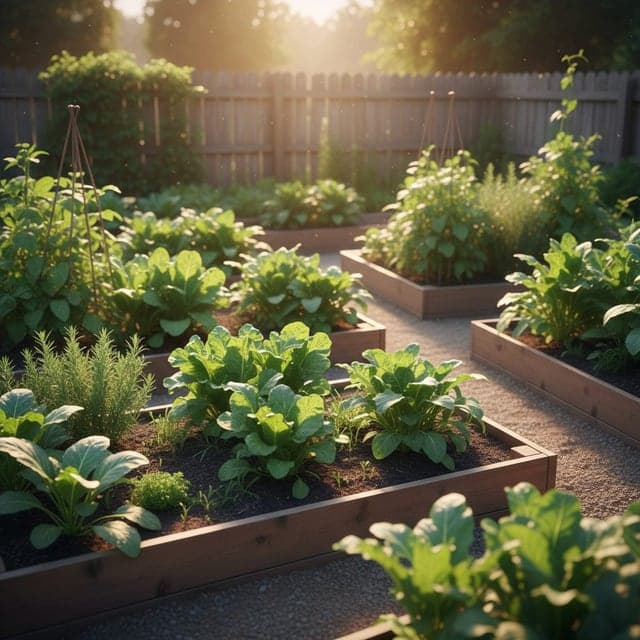
Homemade vinegar, kombucha, pickles: save $200+ annually
Make homemade vinegar, kombucha, and pickles to preserve food at home and save money on groceries. Methods and recipes for reliable fermentation.
Topic
Keep your harvest eating-ready all year. This hub covers the core home food-preservation methods—water-bath and pressure canning, fermenting, dehydrating, root cellaring, and home dairy—with safety-first, beginner-friendly guides. Learn which technique suits each fruit or vegetable, how to avoid spoilage, and how to build a self-reliant pantry from scratch.
108 articles in this topic on agripure. — page 5 of 5
Make homemade vinegar, kombucha, and pickles to preserve food at home and save money on groceries. Methods and recipes for reliable fermentation.
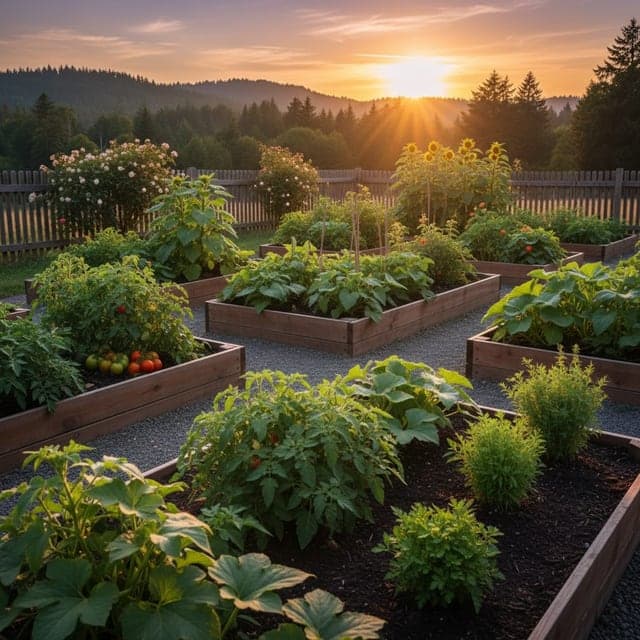
Learn to dehydrate your garden harvest for long-term storage and concentrated flavor. This guide covers temps, prep, and drying tomatoes, peppers, and herbs in USDA Zone 6.
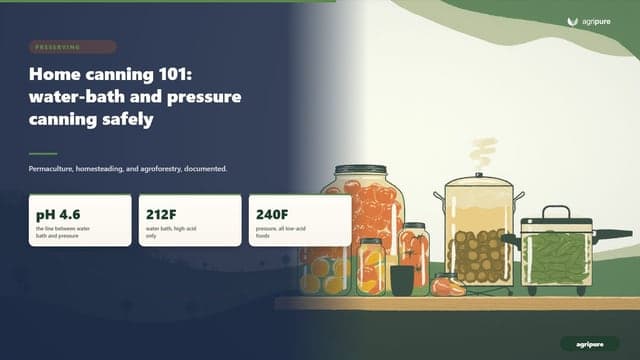
Home canning safely: when to water-bath vs pressure can, the pH 4.6 line, why low-acid foods need pressure, tested recipes, headspace, altitude, and spoilage signs.
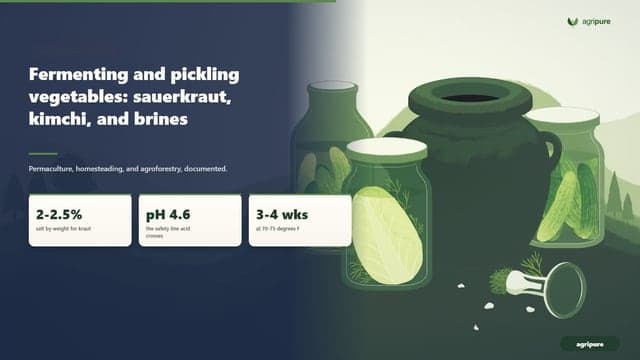
Lacto-fermenting vs vinegar pickling vegetables: why ferments are safe below pH 4.6, sauerkraut salt by weight, kimchi and brined pickles, gear, and troubleshooting.
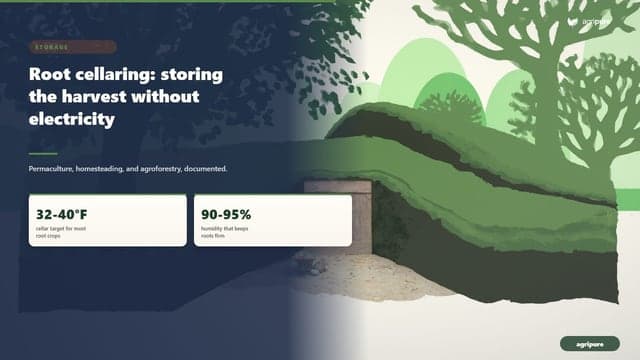
How to build and use a root cellar: the four conditions to manage (32-40F, humidity, dark, airflow), which crops store at what temperature, curing, and the ethylene rule.
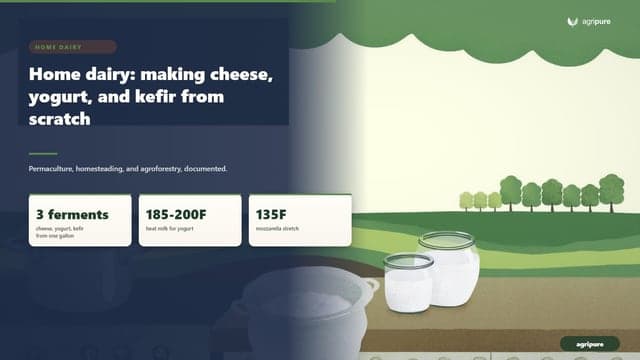
Make cheese, yogurt, and kefir at home: the one idea behind every cheese, beginner fresh cheeses, yogurt and kefir step by step, the kit you need, and food safety.
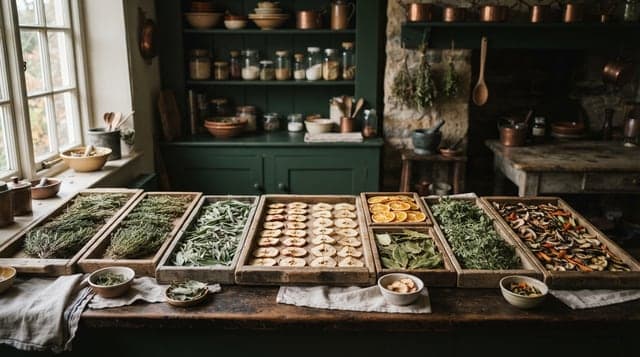
How to dehydrate food at home: how drying works, dehydrator temperatures by food (herbs 95-115F, produce 135-145F), pretreatment, the USDA 160F/165F jerky rule, and storage.
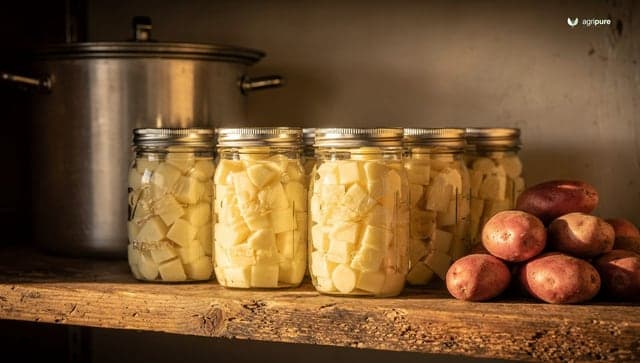
Pressure canning potatoes safely: NCHFP-tested times, variety selection, step-by-step hot pack, altitude table, troubleshooting, and uses from the jar.
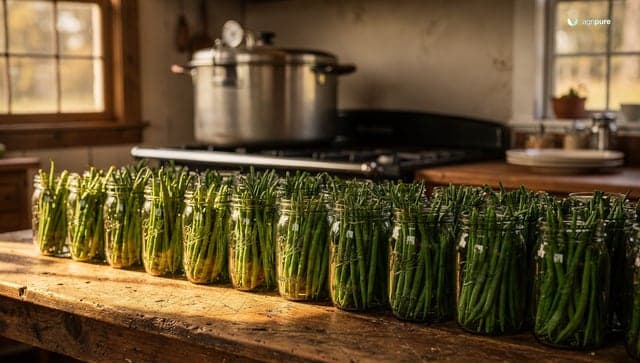
Green beans are low-acid and must be pressure canned — never water-bath. USDA-tested times, altitude pressure table, raw vs hot pack, and troubleshooting.
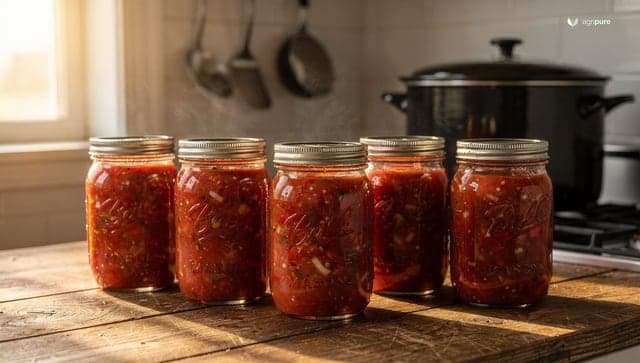
Use the NCHFP-tested Choice Salsa recipe for safe water bath canning: correct acid ratios, step-by-step process, altitude table, and what you cannot change.
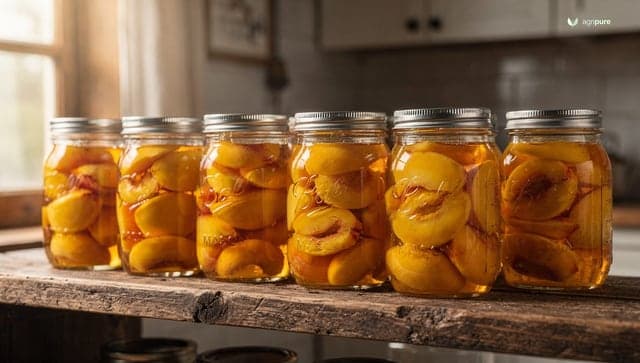
Can yellow-flesh peaches safely with USDA/NCHFP boiling-water and pressure-canner altitude times, 3 g/gal ascorbic acid anti-browning soaks, 5 syrup ratios, and white-peach pH 4.6 safety rules.
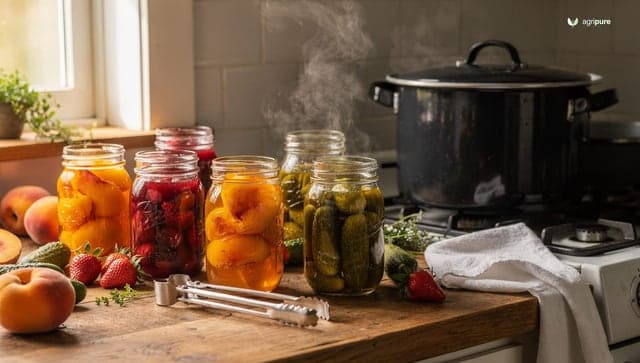
Learn water bath canning step by step: what high-acid foods are safe, jar prep, headspace, processing times, altitude adjustments, and USDA-backed safety rules.