Key takeaways
- July is midwinter in Australia, representing the peak planting window for bare-rooted fruit trees, deciduous vines, and perennial crowns.
- Temperate and cool gardeners plant asparagus crowns, rhubarb crowns, and hardy broad beans, reserving seed potatoes for frost-free coastal zones or late winter.
- In tropical northern regions, the dry season makes July the peak planting month for tomatoes, capsicums, and sweetcorn; subtropical growers stay with cool-season crops.
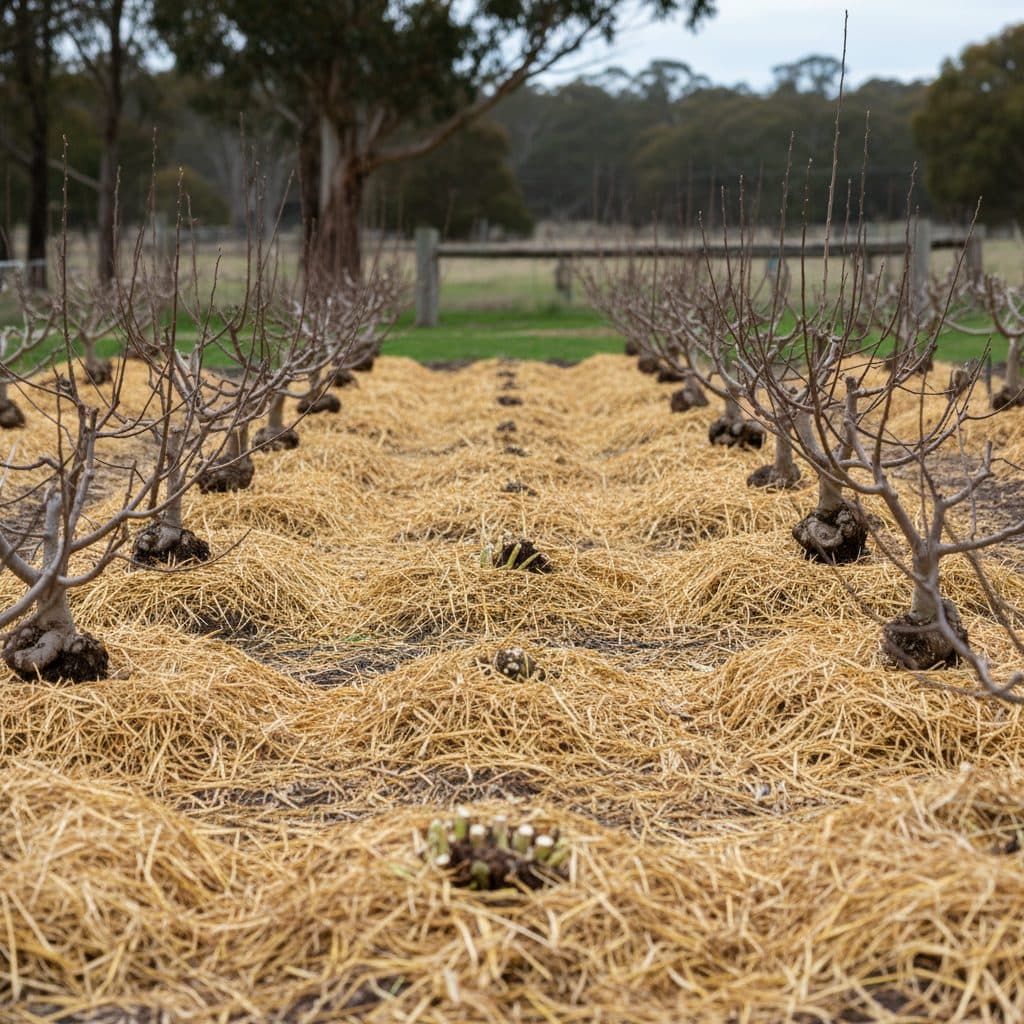
- Planting bare-rooted trees in July ensures root systems settle into native soil before rising spring temperatures trigger foliage growth.
- Applying a thick layer of organic straw mulch protects winter soil structure and insulates root zones against severe overnight frosts.
Quick answer: Understanding what to plant in July Australia depends on your regional climate. In southern, temperate, and cool areas, July is the premier month for planting bare-rooted fruit trees, roses, asparagus crowns, rhubarb, and broad beans (delaying seed potatoes in heavy frost zones). In tropical northern regions, the dry season makes July the peak season for planting tomatoes, capsicums, and sweetcorn, while subtropical growers focus on cool-season vegetables.
July represents the coldest point of the year across southern Australia, with short days and crisp mornings. While the veggie patch may appear quiet, midwinter is one of the most strategic planting periods on the gardening calendar. Knowing what to plant in july australia allows growers to establish deep-rooted perennial crops and bare-root orchards that will yield abundant harvests in spring and summer.
In temperate and cold climate zones, soil temperatures remain low, which pauses active top growth on deciduous plants. This dormancy creates the ideal conditions to plant bare-rooted stone fruits, pome fruits, berries, and perennial vegetable crowns without causing transplant stress. The roots slowly establish in cool, moist soil weeks before the first green shoots appear in August or September.
Conversely, northern gardeners in Queensland, the Northern Territory, and northern Western Australia experience sunny days and low humidity. July is the dry-season garden peak in the tropics, where growers harvest fresh salads and tender vegetables that cannot survive the scorching humidity of summer. Matching your July planting activities to your geographic region keeps your land productive year-round.
Australian climate zones for July sowing
Australia spans four primary climate zones during midwinter, each demanding a distinct gardening approach:
+-------------------------------------------------------------------+
|               JULY CLIMATE REGIONS IN AUSTRALIA                   |
|                                                                   |
|  TROPICAL (Far North QLD, NT, Kimberley)                          |
|  - Dry season, 24°C to 31°C daily, cool nights                    |
|  - Tomatoes, capsicums, cucumbers, beans, zucchini, sweetcorn     |
|                                                                   |
|  SUBTROPICAL (SE QLD, Northern NSW)                               |
|  - Mild 19°C to 23°C days, light frost inland                     |
|  - Peas, silverbeet, broccoli, carrots, onions, seed potatoes     |
|                                                                   |
|  TEMPERATE (Sydney, Melbourne coastal, Adelaide, Perth)           |
|  - 11°C to 18°C days, cold nights, occasional light frosts        |
|  - Broad beans, English spinach, asparagus crowns, bare-root      |
|                                                                   |
|  COOL / COLD (Canberra, Tasmania, Victorian High Country)         |
|  - 4°C to 11°C days, heavy sub-zero frosts, snow in highlands     |
|  - Bare-root fruit trees, rhubarb crowns, soil preparation        |
+-------------------------------------------------------------------+- Tropical (Darwin, Cairns, Katherine): Clear skies and dry weather make July the most versatile planting month. Sow tomatoes, capsicums, rockmelons, cucumbers, eggplants, and sweetcorn.
- Subtropical (Brisbane, Bundaberg, Northern Rivers): Mild winter conditions support cool-season staples. Plant snow peas, silverbeet, beetroot, cabbage, broccoli, and seed potatoes.
- Temperate (Sydney, Melbourne, Adelaide, Perth): Cool daytime temperatures with damp soil. Direct sow broad beans, peas, and leafy greens, while planting perennial crowns and bare-rooted stock. If you planted garlic during the window described in our guide on what to plant in june australia, keep rows weeded and mulched.
- Cool and Cold (Canberra, Hobart, Southern Highlands): Heavy frost and icy winds limit direct seed sowing. Focus on bare-root orchard plantings, rhubarb and asparagus crowns, and overwintering green manures.
Midwinter vegetables to plant in July
Despite cold temperatures, several hardy annual vegetables thrive when sown or transplanted during July.
Broad beans and climbing peas
Broad beans continue to be a staple for southern gardeners throughout July. If earlier sowings were delayed, push seeds 5 cm into loose soil in a sunny position. July is also the ideal time to sow English shelling peas and snow peas across temperate and subtropical zones. Peas do best in near-neutral soil, about pH 6.0 to 7.0 (lime only if a soil test shows the bed is acidic), and they benefit from trellis support put in before tendrils begin seeking anchors.
Hardy leafy greens: silverbeet, spinach, and rocket
Silverbeet performs reliably in Australian gardens, providing continuous harvests throughout winter and into spring. Transplant robust seedlings 30 cm apart into beds rich in aged compost. English spinach requires the cool temperatures of July to produce thick, sweet leaves without bolting. Direct sow rocket and Asian greens like pak choy in sunny positions for fast harvesting within four to six weeks.
Alliums: onions and spring onions
July is the prime window across southern Australia to transplant young onion seedlings into garden beds. Space brown, white, and red onion seedlings 10 to 12 cm apart in firm soil. Keep beds free from competing weeds, as young onion shoots cannot tolerate weed pressure. Spring onions and leeks can also be transplanted in July for continuous kitchen harvesting.
Planting asparagus crowns and seed potatoes
Perennial crowns and tuber crops require dedicated garden space but reward gardeners with reliable food production year after year.
Establishing an asparagus bed
Asparagus crowns are dormant, spider-like root clusters available in nurseries during July. An established asparagus bed can produce fresh spears for fifteen to twenty years, so choose the site carefully:
- Choose a permanent, full-sun position with excellent drainage.
- Dig a trench 25 cm deep and 30 cm wide, mixing well-rotted cow manure and compost into the trench floor.
- Create a 5 cm ridge of soil along the bottom of the trench.
- Drape the asparagus roots over the ridge, spacing crowns 35 to 40 cm apart.
- Cover crowns with 5 to 8 cm of rich soil and water thoroughly.
- As spears emerge in spring, gradually backfill the trench until level with the surrounding garden bed. Do not harvest any spears in year one to allow root reserves to build; take only a light two-week harvest in year two, and full six-to-eight week harvests from year three onward.
Certified seed potatoes
In subtropical and frost-free coastal temperate areas, July is the ideal month to plant seed potatoes. In frosty or cold inland/tableland districts, delay planting until late winter or early spring (August/September) once severe frost danger passes, as tender potato foliage is easily killed by sub-zero mornings (or keep emerging shoots heavily mounded under thick straw). Always purchase certified virus-free seed tubers rather than supermarket potatoes, which may carry virus (PVY, leafroll), blight (Phytophthora infestans) or sprout inhibitors.
Cut larger seed potatoes into pieces containing at least two healthy eyes or sprouts, allowing cut surfaces to callus over for two days before planting. Plant tubers 10 cm deep in raised beds, grow bags, or trenches spaced 30 cm apart. As shoots emerge, hill soil or compost around the stems to encourage tuber development and prevent greening from light exposure. Green tubers have accumulated solanine and should not be eaten—cut the green parts away or discard them.
Bare-root fruit trees, roses, and berry canes
July represents the peak of the Australian bare-root season. Deciduous orchard species are fully dormant, meaning their root systems can be handled and transplanted with minimal stress.
- Pome fruits: Apples and European or Asian pears thrive when planted into well-prepared soil in cool and temperate regions.
- Stone fruits: Peaches, nectarines, plums, and apricots establish quickly when planted in July. Ensure planting sites have excellent subsoil drainage; test your site using a soil drainage percolation test to avoid waterlogged root rot.
- Berries and vines: Plant bare-rooted raspberry canes and table grapevines along sturdy wire trellises. Blackberry is a Weed of National Significance and is declared in every Australian state—check what, if anything, your state permits before planting any Rubus fruticosus cultivar.
- Formative pruning at planting: On an unbranched maiden, cut back by roughly one-third after planting to force scaffold branches; on a feathered tree, keep the existing well-placed laterals and only tip them. Follow structured guidelines in formative pruning young fruit trees for optimal tree architecture.
Winter soil preparation and bed maintenance
July is a vital month for building soil structure and preparing vacant beds for early spring planting.
+-------------------------------------------------------------------+
|               MIDWINTER SOIL CARE CHECKLIST                       |
|                                                                   |
|   1. Apply compost: 3-5 cm aged compost over resting beds         |
|  2. Mineral amendments: Add lime or dolomite to acidic clay       |
|   3. Protect with mulch: 5-8 cm clean pea straw or lucerne        |
|   4. Clear drainage: Clear furrows to prevent waterlogging        |
|   5. Inspect for pests: Monitor young brassicas for aphids/snails |
+-------------------------------------------------------------------+
Spread a generous 3 to 5 cm layer of compost or well-rotted animal manure across vacant garden beds. In heavy clay soils, test first with a simple dispersion test—a crumb left in a jar of rainwater will cloud the water if the clay is sodic. Gypsum helps sodic clay; on non-sodic clay, organic matter is the better fix. Agricultural lime helps sweeten acidic soils before spring legumes.
Cover all exposed soil with a thick 5 to 8 cm blanket of organic mulch, such as pea straw, lucerne hay, or sugarcane mulch. Mulch protects beneficial soil microbes from freezing winds and heavy midwinter downpours. Reviewing our organic mulching strategies will help you select the ideal mulch material for your soil type.
By focusing on bare-root orchard plantings, perennial crowns, and winter vegetables, you lay the groundwork for an abundant harvest. At agripure, proven practical horticultural practices keep your Australian garden productive and thriving in every season.