Key takeaways
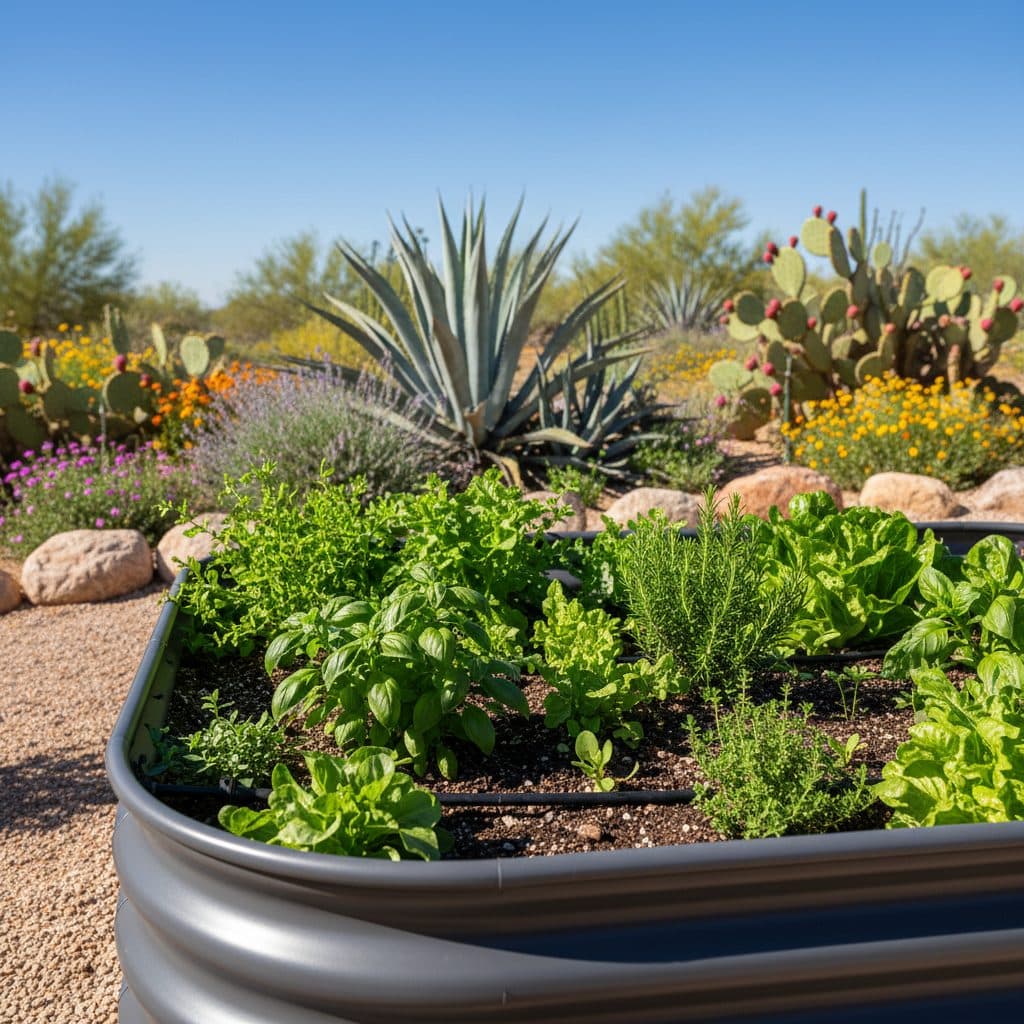
- Wicking beds significantly reduce water consumption by 50% or more in arid regions like Arizona, compared to traditional irrigation.
- Proper drainage layers and overflow points are crucial in humid climates, such as Florida, to prevent waterlogging and root rot.
- Soil composition in wicking beds needs adjustment: more organic matter for water retention in dry areas, and coarser aggregates for aeration in humid zones.
- Passive irrigation methods, including ollas and earthworks, complement wicking beds by distributing water efficiently and reducing evaporation.
- Regular monitoring of soil moisture and nutrient levels is essential, especially in humid environments where nutrient leaching can occur.
- Consider plant selection carefully; drought-tolerant varieties thrive in Southwest wicking beds, while humidity-loving plants suit the Southeast.
Quick answer: Wicking beds manage moisture by creating a consistent water reservoir beneath plants, drawing water upwards via capillary action. Design adapts to climate: arid regions prioritize water retention, while humid areas focus on drainage to prevent waterlogging.
Growing food in challenging climates, whether the scorching deserts of Arizona or the steamy lowlands of Florida, demands smart water management. In Phoenix, Arizona, where summer temperatures regularly exceed 105°F and annual rainfall might only reach 7-8 inches, traditional gardening can feel like a constant battle against evaporation. Conversely, in Miami, Florida, with its average annual rainfall of over 60 inches and humidity often above 80%, the challenge shifts from finding water to managing excess moisture [1].
Wicking beds offer a promising solution by creating a consistent reservoir of water beneath the plant roots, drawing moisture upwards through capillary action. This system can drastically cut water use, sometimes by 50% or more compared to surface irrigation, making it appealing in water-scarce regions. However, the design and management of these beds must adapt significantly to account for the vastly different environmental pressures of a hot dry climate versus a hot humid one.
Understanding the wicking bed principle
A wicking bed operates on a simple but powerful principle: a reservoir of water sits beneath a layer of soil, with a wicking medium (often sand or geotextile) drawing moisture upwards to plant roots through capillary action. This system ensures consistent moisture availability, reducing the stress on plants and the gardener. In regions like Southern California, where water restrictions are common and summer temperatures can easily hit 95°F, this method can cut irrigation needs by 50% or more, allowing for more productive gardens with less effort.
The core components of a wicking system
At its heart, a wicking bed consists of several key layers designed to optimize water delivery. The bottom layer is a waterproof liner, typically a heavy-duty pond liner of 45 mil EPDM, which holds the water reservoir. Above this, a perforated pipe or a gravel layer creates the reservoir space, often 6-12 inches deep, allowing water to be added and distributed. A geotextile fabric separates this reservoir from the growing medium, preventing soil from washing into the water and clogging the system. The soil layer itself, usually 12-18 inches deep, is where plants root and thrive, drawing moisture from below.
- waterproof liner: typically 45 mil EPDM pond liner to prevent water loss.
- water reservoir: 6 to 12 inches deep, filled with gravel or an aggregate.
- wicking medium: a layer of sand or geotextile fabric, promoting capillary action.
- overflow pipe: essential for preventing waterlogging, set at a specific height.
- growing medium: 12 to 18 inches of rich, well-draining soil for plant roots.
Wicking beds in hot dry climates: maximizing water retention
In places like the Sonoran Desert, covering parts of Arizona and California, where annual rainfall averages less than 10 inches and daily summer temperatures routinely exceed 100°F, water conservation is paramount. Wicking beds here are designed to hold as much water as possible, minimizing evaporation and extending the time between refills. A deeper water reservoir, often 12-18 inches, is beneficial, allowing for several weeks of irrigation from a single fill. The overflow pipe should be positioned high, just below the soil surface, to maximize the reservoir’s capacity.
Soil composition and mulching for arid zones
The growing medium in a hot dry climate wicking bed needs to be rich in organic matter, typically 30-40% by volume, to improve its water-holding capacity. Materials like well-rotted compost, coco coir, or peat moss help the soil retain moisture and nutrients when temperatures exceed 110°F. A layer of mulch 4-6 inches deep protects the surface. Wood chips, straw, or even gravel can significantly reduce surface evaporation, sometimes by 70%, and keep soil temperatures cooler by 10-15°F. This strategy ensures plants like tomatoes, peppers, and melons thrive even in intense desert heat.
- okra: heat-tolerant and productive in 90°F+ temperatures.
- sweet potatoes: deep roots access moisture, tolerant of dry spells.
- desert gourds: robust vines, high water efficiency.
- pigeon peas: nitrogen-fixing and drought-resistant, good for soil.
- prickly pear cactus: edible pads and fruit, extremely water-wise.
Integrating rainwater harvesting systems can significantly enhance the sustainability of wicking beds in these arid environments. A 1,000 square foot roof can collect over 600 gallons of water from just one inch of rain, providing a substantial reservoir refill. This approach reduces reliance on municipal water supplies, a critical consideration in regions facing long-term drought conditions.
Wicking beds in hot humid climates: managing drainage and preventing rot
The challenges in the Southeast, from the Gulf Coast of Louisiana to the humid plains of Georgia, are distinctly different. Here, average annual rainfall can exceed 50 inches, and relative humidity often stays above 75% for extended periods [1]. In these conditions, the primary concern shifts from water scarcity to preventing waterlogging and fungal diseases. A wicking bed must be designed to drain efficiently, not just retain water. This means a shallower water reservoir, typically 6-10 inches deep, and a lower overflow pipe, often set 2-4 inches below the soil surface, to ensure excess water can escape quickly.
Soil aeration and minimal mulching for humid zones
For humid environments, the soil mix needs to prioritize aeration and drainage over extreme water retention. A lighter mix with 20-30% organic matter and a higher proportion of coarse aggregates like perlite or pumice is ideal. This prevents compaction and allows oxygen to reach plant roots, helping prevent root rot when soil stays saturated for too long [2]. Mulch should be used sparingly, if at all, to avoid trapping excessive moisture around plant stems, which can encourage fungal growth. When used, a thin layer of 1-2 inches of coarse material like pine bark can offer some benefits without hindering air circulation.
- malabar spinach: thrives in heat and humidity, tolerant of moist soil.
- ginger: prefers consistently moist, well-drained soil, ideal for wicking beds.
- sweet potato greens: productive in humid conditions, less prone to disease.
- taro: a wetland plant, perfectly suited for consistently moist environments.
- collard greens: tolerant of both heat and humidity, grows well in the Southeast.
Even in humid climates, supplemental irrigation might be needed during dry spells. A simple garden PE irrigation hose connected to a rain barrel can efficiently top up the reservoir. This ensures plants receive consistent moisture without overwatering, even when daily temperatures hover around 90°F with high humidity.
Integrating passive irrigation and earthworks
Wicking beds are highly efficient, but they can be part of a larger, integrated passive irrigation strategy. In arid regions like Southern Nevada, where summer temperatures can hit 115°F, combining wicking beds with other water harvesting techniques can further reduce water needs. Ollas, unglazed clay pots buried in the soil, slowly release water directly to plant roots, significantly reducing evaporation compared to surface watering. A single olla can effectively irrigate a 2-3 foot diameter area, needing refills only every 5-7 days, even in extreme heat.
Earthworks for landscape-scale water management
Beyond individual beds, passive earthworks like swales and berms help manage runoff across the landscape in areas receiving less than 20 inches of annual rainfall. Swales, which are level ditches dug along contours, capture and slow down rainwater runoff, allowing it to infiltrate the soil over a larger area. Berms, the raised mounds adjacent to swales, create planting zones that benefit from this increased soil moisture. For instance, a 100-foot swale can capture hundreds of gallons of water from a single rain event, replenishing local groundwater and supporting surrounding vegetation. These methods are particularly valuable in USDA zones 7-9 of the Southwest, where every drop counts.
- swales: level ditches that capture and infiltrate rainwater.
- berms: raised mounds adjacent to swales, creating planting areas.
- ollas: buried clay pots that slowly release water to roots.
- keyline design: a system of earthworks that guides water across the landscape.
- terracing: creating level steps on slopes to reduce runoff and erosion.
For larger-scale operations or for filling multiple wicking beds and ollas, considering solar water pumps for wells and irrigation can provide an independent and sustainable water source. A small 100-watt solar pump can move hundreds of gallons of water per day to keep reservoirs full in remote locations without grid power.
Soil health and plant selection for climate resilience
Those integrating passive irrigation habits matter here as well.
The success of any wicking bed, regardless of climate, hinges on the quality of its soil and the suitability of the plants chosen. In the arid Southwest, a soil mix with high organic matter content (up to 40%) maximizes water retention and provides a slow-release nutrient source. This rich, spongy soil helps buffer against extreme temperature fluctuations, keeping roots cooler when air temperatures hit 100°F and warmer during cooler desert nights. Soil tests every 1-2 years monitor nutrient levels and pH to guide soil management.
Tailoring plant choices to your climate
Plant selection is equally important. For the hot, dry Southwest, choose varieties known for drought tolerance and heat resistance. Examples include many native desert plants, but also garden staples like okra, sweet potatoes, and certain varieties of peppers that thrive in 90°F+ heat. In contrast, the humid Southeast demands plants that can withstand consistent moisture and are resistant to fungal diseases, which flourish when humidity levels are consistently above 70% [5]. Malabar spinach, ginger, and certain leafy greens like collards are excellent choices. Understanding your specific USDA hardiness zone, from zone 4 in northern states to zone 10 in Florida, helps narrow down appropriate species.
- compost: improves soil structure and water retention by 20-30%.
- coco coir: holds up to 8-9 times its weight in water, excellent for dry climates.
- perlite: increases aeration and drainage, crucial for humid soils.
- vermiculite: enhances water and nutrient retention, good for both.
- pine bark fines: a coarse organic matter, improves drainage in humid soils.
Regardless of climate, healthy soil is a living system. Adding beneficial microbes and mycorrhizal fungi can improve nutrient uptake by 15-20% and enhance plant resilience. This is particularly true in newly established wicking beds where the soil microbiome is still developing. Maintaining a balanced soil pH, typically between 6.0 and 7.0, ensures nutrients are available to plants across both hot dry and hot humid regions of the US.
Wicking Bed Design Considerations: Hot Dry vs. Hot Humid Climates
Feature | Hot Dry Climates (e.g., Arizona) | Hot Humid Climates (e.g., Florida) |
|---|---|---|
Water Reservoir Depth | Deeper (12-18 in) for extended periods between refills | Shallower (6-10 in) to minimize waterlogging risk |
Overflow Drain Height | Higher, just below soil level, to maximize reservoir capacity | Lower, 2-4 inches below soil level, to ensure adequate drainage |
Soil Mix | Rich in organic matter (30-40%) for water retention, often with mulch layer | Lighter, well-draining (20-30% organic matter), with coarse aggregates |
Mulch Layer | Thick (4-6 in) to reduce evaporation and regulate soil temperature | Thinner (1-2 in) or none, to prevent fungal growth and promote air circulation |
Liner Material | Heavy-duty pond liner (45 mil EPDM) for durability and water retention | Similar, but ensure no punctures to prevent water loss during dry spells |
Plant Selection | Drought-tolerant, heat-loving vegetables (e.g., okra, sweet potatoes) | Humidity-tolerant, disease-resistant varieties (e.g., malabar spinach, ginger) |
Water Savings: Wicking beds can reduce irrigation water consumption by 50% to 70% compared to conventional surface watering in arid regions, saving thousands of gallons annually.
Soil Health: In humid climates, adding at least 20% coarse aggregates to a wicking bed’s soil mix improves aeration and prevents root rot when humidity is consistently above 70%.
Frequently asked questions
How often do wicking beds need refilling in a hot dry climate?
In hot dry climates like Arizona, a well-designed wicking bed with a 12-18 inch deep reservoir can often go 10-14 days between refills, even when temperatures exceed 100°F. This extended period is due to reduced evaporation and efficient capillary action, saving significant time and water.
What’s the main difference in soil mix for humid versus dry wicking beds?
For humid climates, the soil mix should prioritize drainage, often containing 20-30% coarse aggregates like perlite to prevent waterlogging and root rot. In hot dry climates, the focus is on water retention, so a mix with 30-40% organic matter like compost is preferred to hold moisture effectively.
Can wicking beds prevent fungal issues in humid environments?
While wicking beds provide consistent moisture, proper design can mitigate fungal issues in humid environments. Ensuring a lower overflow pipe, a shallower reservoir (6-10 inches), and a well-aerated soil mix with minimal mulch helps prevent the excessive moisture that fungi thrive in when humidity is above 75%.
Are ollas effective in both hot dry and hot humid climates?
Ollas are most effective in hot dry climates, where they can reduce water use by up to 70% by delivering water directly to roots and minimizing evaporation. In humid climates, their benefits are less pronounced for water savings, but they can still provide targeted moisture without surface wetting, which helps prevent foliar diseases when used carefully.
What is the ideal depth for a wicking bed’s water reservoir?
The ideal depth depends on your climate. In hot dry regions, a deeper reservoir of 12-18 inches is recommended to maximize water storage and extend refill intervals. For hot humid areas, a shallower reservoir of 6-10 inches is better to ensure adequate drainage and prevent waterlogging, which can lead to root problems.
References
- Humid Climates (2023). Humid Climates.
- Humid climates (2023). Humid climates.
- Overview of Energy Consumption in Hot-Humid Climates of Asia (2018). Overview of Energy Consumption in Hot-Humid Climates of Asia.
- The question of coastal dunes in tropical humid climates (1964). The question of coastal dunes in tropical humid climates.
- Window-Opening Behaviour in Hot and Humid Climates of Southeast Asia (2018). Window-Opening Behaviour in Hot and Humid Climates of Southeast Asia.
- USDA Natural Resources Conservation Service (2024). USDA Natural Resources Conservation Service.