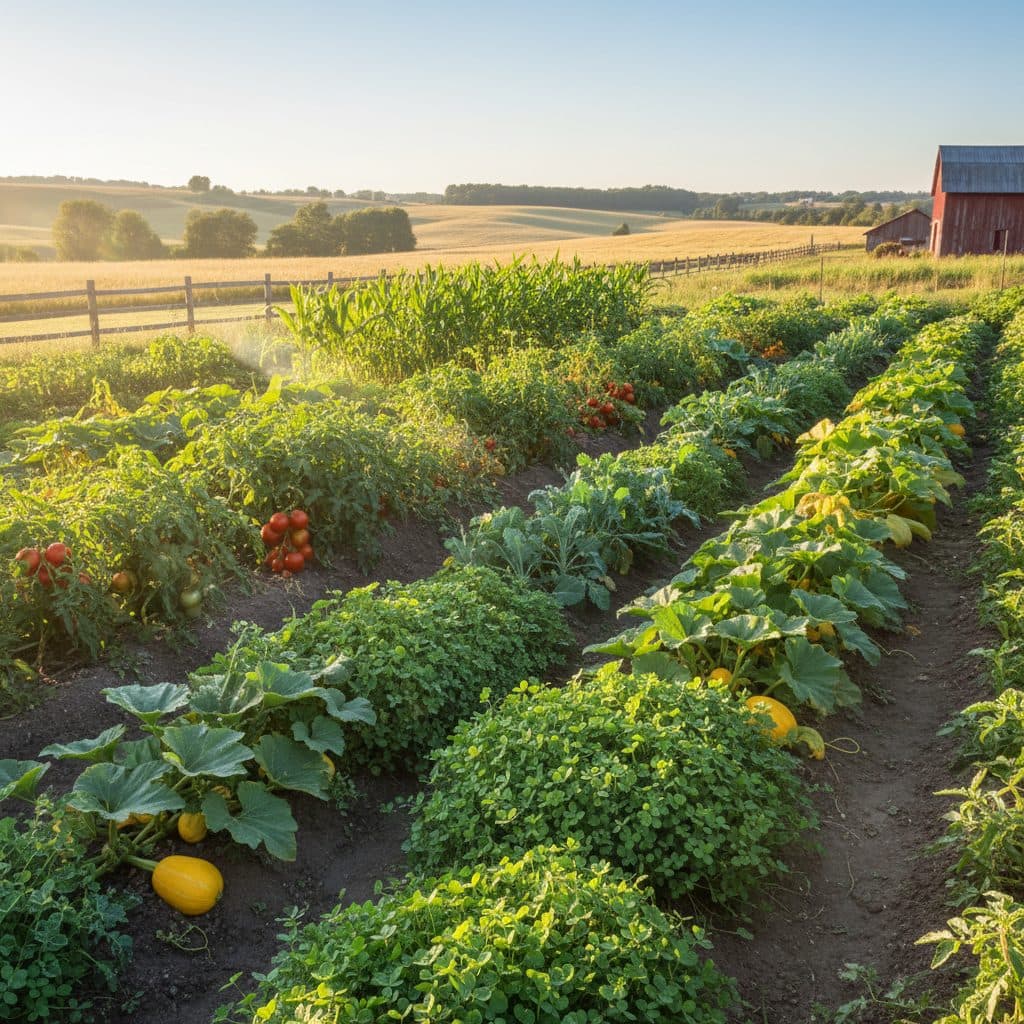
Key takeaways
- Green manures and cover crops significantly improve soil structure, fertility, and water retention in home gardens.
- Selecting the right species for your climate (e.g., USDA zone 5) and garden goals is important for success.
- Integrating these plants into permaculture designs (such as food forests and plant guilds) improves system resilience.
- Proper timing for planting and termination maximizes benefits, such as nutrient cycling and weed suppression.
- Chop-and-drop methods for termination return organic matter directly to the soil, mimicking natural processes.
- Long-term use of cover crops can reduce the need for external fertilizers over several years.
Quick answer: Green manures and cover crops significantly improve soil structure, fertility, and water retention in USDA zone 6 gardens by adding organic matter, fixing nitrogen, and preventing erosion. They are integrated into permaculture designs to improve system resilience and reduce the need for external inputs.
In the plains of Kansas, where annual rainfall averages 30 inches, home gardeners often use green manures and cover crops to build soil. These plants build soil by adding fertility, suppressing weeds, and improving water retention. For a modest investment of time and seed, gardeners can see improvements in soil structure and plant vigor within a single growing season, reducing the need for external inputs.
These practices follow permaculture design principles, which emphasize working with natural systems to create resilient, productive plantings. Whether you’re establishing a new food forest in USDA zone 7 or enriching existing vegetable beds in a small urban plot, understanding how to select, plant, and manage these beneficial crops is a foundational step. This approach helps create self-sustaining plant guilds and optimizes water use, moving towards a more regenerative gardening system [4].
The foundation of soil health: living roots year-round
Healthy soil is the bedrock of a productive garden, and maintaining living roots in the ground for as much of the year as possible is a core principle. Green manures and cover crops are specifically utilized for this purpose, preventing soil erosion, adding organic matter, and cycling essential nutrients. For instance, in a garden in upstate New York, planting a cover crop like winter rye after the main harvest takes up nitrogen that would otherwise leach away over the winter months. These plants act as a living mulch, protecting the soil surface from the impact of heavy rains and strong winds, which can otherwise degrade soil structure over time.
understanding their primary benefits
The primary benefits of incorporating green manures and cover crops go beyond simple nutrient addition. They improve soil aggregation, creating stable clumps of soil particles that allow for better air and water movement needed for root development. Continuous cover cropping builds soil organic matter slowly, over years rather than seasons, and improves water infiltration as those aggregates build. Furthermore, certain species are excellent at suppressing weeds, reducing the need for manual weeding by up to 50% in some cases, and providing habitat for beneficial insects. For more detailed guidance on integrating these into your garden, consider reviewing resources like Permaculture gardening: no-dig beds, guilds, and zones.
- Increased soil organic matter: Adds biomass and carbon to the soil.
- Enhanced nutrient cycling: Captures and stores nutrients, preventing loss.
- Improved soil structure: Creates better aeration and water penetration.
- Weed suppression: Outcompetes undesirable plants for resources.
- Erosion control: Protects bare soil from wind and water damage.
Choosing the right green manures for your climate and goals
The effectiveness of green manures and cover crops largely depends on selecting species appropriate for your specific climate, soil type, and gardening objectives. Gardeners in the Pacific Northwest (USDA zone 8), for example, might prioritize different species than those in the arid Southwest. Legumes, such as crimson clover or hairy vetch, are excellent for fixing atmospheric nitrogen into a plant-available form, potentially adding 60 to 100 pounds of nitrogen per acre to the soil [2]. Grasses, like cereal rye or oats, excel at producing abundant biomass and scavenging excess nutrients from deeper soil layers, preventing them from leaching away.
matching species to your specific needs
Consider your garden’s specific needs when making selections. If you’re looking to break up compacted clay soil in a new bed, a deep-rooted radish or turnip variety can penetrate up to 18 inches, creating channels for air and water. For a quick summer cover in a hot climate like central Texas (USDA zone 8b), buckwheat can establish within three to five days and flower in 30 days, providing quick organic matter and attracting beneficial insects [3]. It’s also important to think about the timing of your planting and the subsequent cash crop. A fast-growing cover crop might be ideal between spring and fall vegetable plantings, while a winter-hardy variety is better for overwintering. For more specific recommendations, consult resources like Cover crops for the home garden: best species, timing, and termination.
- Legumes (e.g., clover, vetch): Fix nitrogen, enriching soil fertility.
- Grasses (e.g., rye, oats): Produce high biomass, prevent erosion, scavenge nutrients.
- Brassicas (e.g., radish, mustard): Break up compaction, suppress pests and diseases.
- Buckwheat: Fast-growing, attracts pollinators, good for short rotations.
- Mixes: Combine benefits, offering diversity and resilience to the system.
Integrating cover crops into permaculture design
Permaculture design offers a holistic framework for integrating green manures and cover crops into a resilient home garden system. Instead of viewing them as standalone elements, permaculture encourages their use within zones, guilds, and food forests to maximize ecological benefits. For instance, in a zone 1 kitchen garden, a low-growing clover cover crop can be interplanted with vegetables, providing living mulch and nitrogen without competing significantly with the main crop, reducing evaporation from the soil surface. This approach minimizes disturbance and supports a more stable microclimate around your food plants.
enhancing guilds and food forests
In larger systems, such as a developing food forest in USDA zone 6, cover crops help establish the understory and build long-term soil fertility. Deep-rooted legumes like alfalfa can be planted around young fruit trees as part of a tree guild, drawing up nutrients from deeper soil layers and providing nitrogen. This can reduce the need for supplemental nitrogen fertilizer for young trees. Diverse cover crop mixes can also attract a wider range of beneficial insects and pollinators, increasing biodiversity and natural pest control across the system. Designing your garden with these principles in mind can be explored further at A permaculture garden plan: zones, guilds, and a first-year layout.
- Zone integration: Use short-season covers in intensive Zone 1 beds.
- Guild companions: Plant nitrogen-fixing covers with fruit trees and shrubs.
- Food forest establishment: Build soil and suppress weeds in new plantings.
- Water conservation: Living mulches shade the soil surface and slow evaporation.
- Biodiversity enhancement: Attract beneficial insects and pollinators.
Practical application and management: from seed to soil
Implementing a successful green manure or cover crop strategy requires attention to practical details, from seedbed preparation to termination. For most home gardeners, a finely raked seedbed is sufficient, ensuring good seed-to-soil contact for optimal germination rates, often exceeding 80% with proper technique. Seeding rates are typically higher than for cash crops, sometimes 2-3 times more dense, to ensure full coverage and effective weed suppression. For example, sowing cereal rye at 100 pounds per acre provides a dense stand that effectively smothers weeds in a USDA zone 7 garden [2].
effective termination methods
The timing and method of termination are critical to maximizing benefits and preventing the cover crop from becoming a weed itself. The ‘chop-and-drop’ method is a permaculture staple: cutting the plants at or just below the soil surface and leaving the biomass on top as mulch. This returns all the organic matter and nutrients directly to the soil, improving soil structure and feeding soil microbes. For larger areas or tougher plants, a weed whacker or scythe can be effective. Ensure termination occurs before the plants set seed, typically when they are in early flower, to prevent unwanted reseeding. In a small garden bed, a simple hand trowel or shovel can be used to undercut roots, allowing the plant to die back naturally. Monitoring soil moisture after termination is important, which can be done with a Soil Moisture Meter, especially before planting your next crop.
- Seedbed preparation: Create a fine, firm bed for good germination.
- Seeding rates: Use higher rates (e.g., 100 lbs/acre for rye) for dense coverage.
- Timing termination: Cut before seed set to prevent unwanted reseeding.
- Chop-and-drop: Leave biomass on the soil surface as mulch.
- Root residue: Allow roots to decompose in place, enhancing soil structure.
Nitrogen Boost: Leguminous cover crops like hairy vetch can add 60 to 100 pounds of nitrogen per acre to your garden soil annually [2].
Weed Reduction: A dense, well-timed cover crop stand can sharply cut the amount of hand weeding a bed needs.
Frequently asked questions
What is the main difference between green manures and cover crops?
While often used interchangeably, ‘green manure’ specifically refers to plants grown primarily to be tilled or chopped into the soil to add nutrients and organic matter. ‘Cover crop’ is a broader term for plants grown to cover the soil, protecting it from erosion, suppressing weeds, and improving soil health, whether they are incorporated or left as mulch. For instance, winter rye used to prevent erosion in USDA zone 5 is a cover crop, and when it’s chopped into the soil, it is also a green manure.
How do green manures improve soil structure?
Green manures improve soil structure primarily through their extensive root systems, which create channels and bind soil particles together, forming stable aggregates. When the plants are terminated, their roots decompose, leaving behind organic matter and pore space that improve aeration and water infiltration. This can measurably increase soil water holding capacity in sandy soils over several seasons.
Can I plant vegetables directly after terminating a cover crop?
Yes, in many cases, you can plant vegetables directly into the residue of a terminated cover crop, especially using no-till methods. It’s generally recommended to wait 2-3 weeks after termination to allow the cover crop residue to begin decomposing and to prevent any allelopathic effects (chemical inhibition) that some cover crops, like cereal rye, might have on new seedlings. This waiting period also allows soil microbes to start breaking down the biomass, making nutrients available.
What are some good cover crops for a small home garden in USDA zone 7?
For a small home garden in USDA zone 7, excellent choices include crimson clover for nitrogen fixation and weed suppression, oats for quick biomass and erosion control, or buckwheat for a fast-growing summer cover that attracts pollinators. A mix of oats and crimson clover can provide a balanced approach, offering both biomass and nitrogen benefits, and can be planted in late summer for overwintering or in early spring.
Do cover crops attract pests?
While some cover crops can temporarily host certain pests, a diverse mix of cover crops generally enhances biodiversity, attracting beneficial insects like ladybugs and predatory wasps that help control pest populations. For example, flowering cover crops like buckwheat or phacelia can significantly increase beneficial insect activity, supporting the predators and parasitoids that keep aphid numbers down on nearby cash crops. Proper termination timing also prevents cover crops from becoming overgrown and harboring unwanted pests.
How much does it cost to start using cover crops?
The cost of starting with cover crops is relatively low, primarily involving the purchase of seeds. A pound of common cover crop seed like oats or crimson clover might cost between $3 and $10, which can cover a significant area in a home garden, often 500-1000 square feet. Over time, the investment pays off by reducing the need for purchased fertilizers and herbicides.
References
- Cover crops, green manures and herbal leys. (2022). Cover crops, green manures and herbal leys..
- Cover Crops and Green Manures (2011). Cover Crops and Green Manures.
- Use of green manures & cover crops for the south (2023). Use of green manures & cover crops for the south.
- Editorial: Cover crops and green manures: providing services to agroecosystems (2024). Editorial: Cover crops and green manures: providing services to agroecosystems.
- CHAPTER VIII. COVER CROPS AND GREEN MANURES (1948). CHAPTER VIII. COVER CROPS AND GREEN MANURES.
- USDA Natural Resources Conservation Service (2024). USDA Natural Resources Conservation Service.