Key takeaways
- Wood sorrel (Oxalis spp.) and wild violets (Viola spp.) are common, edible plants found across most US regions.
- Both plants offer distinct tart and mild flavors, suitable for salads, garnishes, and beverages.
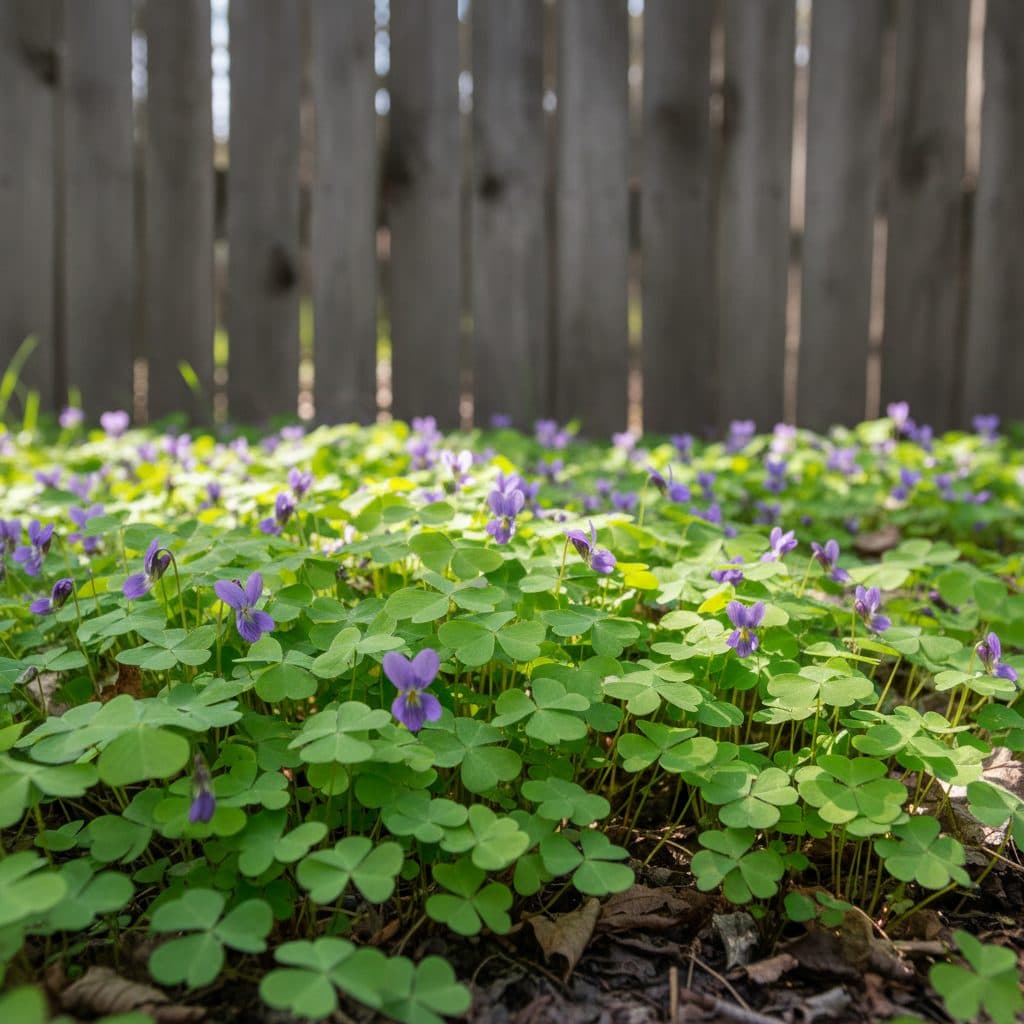
- Proper identification matters; wood sorrel has clover-like leaves, while violets have heart-shaped leaves and five-petaled flowers.
- Harvest sustainably, taking only a small portion from any single patch to ensure regrowth and local populations thrive.
- Oxalic acid in wood sorrel means it should be consumed in moderation, especially by those with certain health conditions.
- Wild violets are a good source of vitamins A and C, with flowers and leaves being edible.
Quick answer: Wood sorrel and wild violets are common, edible plants found across most US regions (USDA zones 3-9). They offer distinct tart and mild flavors, suitable for salads and garnishes, but require proper identification and sustainable harvesting.
From the humid Southeast to the cooler Pacific Northwest, many US yards and wild spaces host two common, edible plants: wood sorrel and wild violets. These plants, often considered weeds, offer tart greens and delicate flowers worth foraging. In USDA zone 7, for example, you might find wood sorrel emerging as early as March, which adds a fresh, lemony bite to spring salads.
Understanding how to properly identify, harvest, and prepare these wild edibles can add unique flavors and nutrients to your diet. This guide details their characteristics, regional growth patterns across the United States, and safe foraging practices, so you can confidently use them in your kitchen, whether you’re in a suburban yard or a more rural setting where they often thrive in partially shaded areas with moist soil, reaching heights of 4 to 12 inches.
Identifying common wood sorrel species
Wood sorrel, often mistaken for clover due to its trifoliate leaves, is a widespread edible plant in the United States. There are several species, but Oxalis stricta (yellow wood sorrel) and Oxalis acetosella (common wood sorrel) are among the most prevalent across USDA zones 4 through 9. Oxalis stricta typically has bright green leaves and small yellow flowers, often growing in disturbed soils. Its leaves fold up at night or during stress, a characteristic shared by many Oxalis species [1].
Distinguishing features of wood sorrel
The leaves of wood sorrel are heart-shaped or clover-like, arranged in threes, and possess a distinct tart, lemony flavor due to oxalic acid content. The flowers of Oxalis stricta are yellow, usually with five petals, while Oxalis acetosella often has white or pinkish-white flowers with purple veins [2]. You can find these plants in lawns, gardens, and along woodland edges, often forming dense patches that can cover several square feet. A single plant can produce hundreds of seeds, which keeps it present year after year [3].
- Heart-shaped leaves: Three leaflets per stem, resembling clover.
- Tart, lemony flavor: Distinctive taste when chewed raw.
- Yellow or white flowers: Typically five petals, appearing from spring to fall.
- Seed pods: Explosive capsules that scatter seeds.
- Diurnal leaf movement: Leaves fold at night or in intense sun.
Identifying common wild violets
Wild violets, primarily Viola sororia (common blue violet), are another widespread edible found across most of the US, thriving in USDA zones 3 to 9. These plants prefer moist, shady areas like woodland floors, stream banks, and often, the shadier parts of your lawn. They typically grow to a height of 4 to 8 inches, forming dense mats of foliage that can cover several square feet. The flowers, usually purple, blue, or white, emerge in early spring, often by late March in warmer regions like North Carolina.
Characteristics of wild violets
The leaves of Viola sororia are distinctly heart-shaped, often glossy, and can be eaten raw or cooked. The flowers are five-petaled, with two upper petals, two side petals, and one lower petal that often has fine hairs or stripes. These flowers are edible and visually appealing, and make excellent garnishes for salads or desserts. Unlike wood sorrel, violets do not contain significant amounts of oxalic acid, so they are safe to eat in larger quantities. You can learn more about identifying and using them at Wild violets: how to identify Viola sororia, eat the flowers, and decide whether to keep it.
- Heart-shaped leaves: Dark green, often glossy, with serrated edges.
- Five-petaled flowers: Typically purple, blue, or white, appearing in spring.
- Low growing habit: Forms rosettes of leaves, usually 4 to 8 inches tall.
- Rhizomatous roots: Spreads easily, forming dense patches.
- Edible leaves and flowers: Both parts can be consumed raw or cooked. It is important not to confuse true wild violets (Viola spp.) with the common houseplant known as African violet (Saintpaulia spp.), which is not edible.
Safe and sustainable foraging practices
Before you begin foraging for any wild edible, including wood sorrel and violets, it is paramount to ensure accurate identification and safe harvesting practices. Misidentification can lead to consuming toxic plants, so always consult multiple reliable sources and consider taking a local foraging class. Foraging for beginners often starts with common, easily identifiable plants like these. Never consume a plant unless you are 100% certain of its identity. You can find more general information at Foraging for beginners: identifying common wild edibles safely.
Harvesting guidelines for your yard
When harvesting, always choose areas free from pesticides, herbicides, or heavy pollution, such as roadsides with high traffic volume. In your own yard, ensure no chemical treatments have been applied for at least 12 months. Take only a small portion, perhaps 10% to 20%, of the plants from any single patch to allow for regeneration. This sustainable approach ensures that the plants continue to thrive for future harvests and contribute to local biodiversity. For example, leaving 80% of a violet patch untouched allows it to spread via rhizomes and seeds, which helps it return strong next season. Harvesting wood sorrel leaves in early spring when they are young and tender, typically 2 to 4 inches long, yields the best flavor.
- Positive identification: Always be 100% sure of the plant’s identity.
- Chemical-free zones: Avoid areas treated with pesticides or near roads.
- Sustainable harvest: Take only 10-20% of plants from a patch.
- Wash thoroughly: Rinse all foraged plants to remove dirt and insects.
- Know your limits: Avoid overconsumption, especially of oxalic acid-rich plants.
Culinary uses and nutritional benefits
Both wood sorrel and wild violets offer distinct flavors and nutritional benefits that can improve your meals. Wood sorrel’s tart, lemony taste makes it an excellent addition to salads, sandwiches, or as a garnish for fish. It can also be brewed into a refreshing tea. However, due to its oxalic acid content, similar to spinach or rhubarb, it should be consumed in moderation. Due to its oxalic acid content, it's best to start with small quantities, especially for those new to foraging. For more general ideas, see Wild edible plants: a beginner’s guide to 6 safe-to-forage greens.
Incorporating into your diet
Wild violets, on the other hand, have a milder, slightly sweet, and earthy flavor. Their leaves are rich in vitamins A and C, and are a good source of Vitamin C. The flowers are beautiful and edible, perfect for decorating cakes, infusing into vinegar, or making violet jelly. In spring, a handful of violet leaves can be added to a green smoothie for a nutritional boost, or a cup of violet flowers can be steeped in hot water for a soothing tea. Both plants can be used to make distinctive pestos, often requiring only 2 cups of leaves for a batch.
- Wood sorrel salads: Adds a tart, lemony kick to mixed greens.
- Violet jelly: A sweet, floral spread made from violet flowers.
- Garnishes: Both flowers and leaves can beautify dishes.
- Herbal teas: Wood sorrel for tartness, violets for mild sweetness.
- Pesto base: Use leaves of either plant for a unique pesto.
Regional growth and cultivation tips
Wood sorrel and wild violets are adaptable plants, thriving across a wide range of climates in the US, generally from USDA zone 3 to 9. Wood sorrel, particularly Oxalis stricta, is very common in disturbed areas and lawns across the Midwest and Northeast, often appearing by mid-April. It tolerates a variety of soil types but prefers well-drained conditions. In contrast, wild violets (Viola sororia) prefer consistently moist, humus-rich soils and partial shade, making them common under deciduous trees in the Southeast and Pacific Northwest, where they can form dense groundcovers.
Encouraging growth in your yard
If you wish to encourage these edibles in your yard, consider their preferred conditions. For violets, mimic a woodland edge by providing partial shade, especially during the hot afternoon sun, and ensuring consistent moisture. Adding compost to the soil surface can significantly improve their growth. For wood sorrel, simply allowing it to grow in less manicured areas of your lawn or garden beds, where it can receive 4 to 6 hours of sun daily, will usually suffice. Both plants are prolific self-seeders, with violets also spreading via rhizomes, meaning a small patch can expand to several square feet within one to two seasons. For more perennial options, check out Perennial Leafy Greens and Edible Weeds for Every Zone: A Hardiness-Keyed Forager’s Planting List.
- USDA Zones: Both thrive in zones 3-9, with some species extending to zone 10.
- Soil Preference: Violets prefer moist, rich soil; sorrel tolerates various types.
- Light Requirements: Violets prefer partial shade; sorrel tolerates full sun to partial shade.
- Water Needs: Violets need consistent moisture; sorrel is more drought-tolerant once established.
- Spread: Both self-seed readily; violets also spread via underground rhizomes.
Comparison of Wood Sorrel vs. Wild Violets
Feature | Wood Sorrel (Oxalis stricta) | Wild Violet (Viola sororia) |
|---|---|---|
Leaf Shape | Three heart-shaped leaflets | Single heart-shaped leaf |
Flower Color | Yellow (most common) | Purple, blue, or white |
Flavor Profile | Tart, lemony | Mild, slightly sweet, earthy |
Oxalic Acid Content | Moderate (consume in moderation) | Low (generally safe in larger quantities) |
Preferred Habitat | Disturbed soil, lawns, partial sun | Moist, shady areas, woodlands |
Edible Parts | Leaves, flowers, seed pods | Leaves, flowers |
Oxalic Acid: Wood sorrel contains oxalic acid, which can be problematic in large quantities for individuals with kidney issues; a typical serving is 1/4 to 1/2 cup.
Vitamin C Boost: Wild violet leaves are a good source of Vitamin C, with 100 grams containing more than an equivalent amount of oranges.
References
- Oxalis acetosella (2022).
- Wood-Sorrel (1917).
- OXALIS (Wood-Sorrel) (2023).
- OXALIDEÆ.—THE WOOD-SORREL TRIBE (2014).
- USDA Natural Resources Conservation Service (2024).