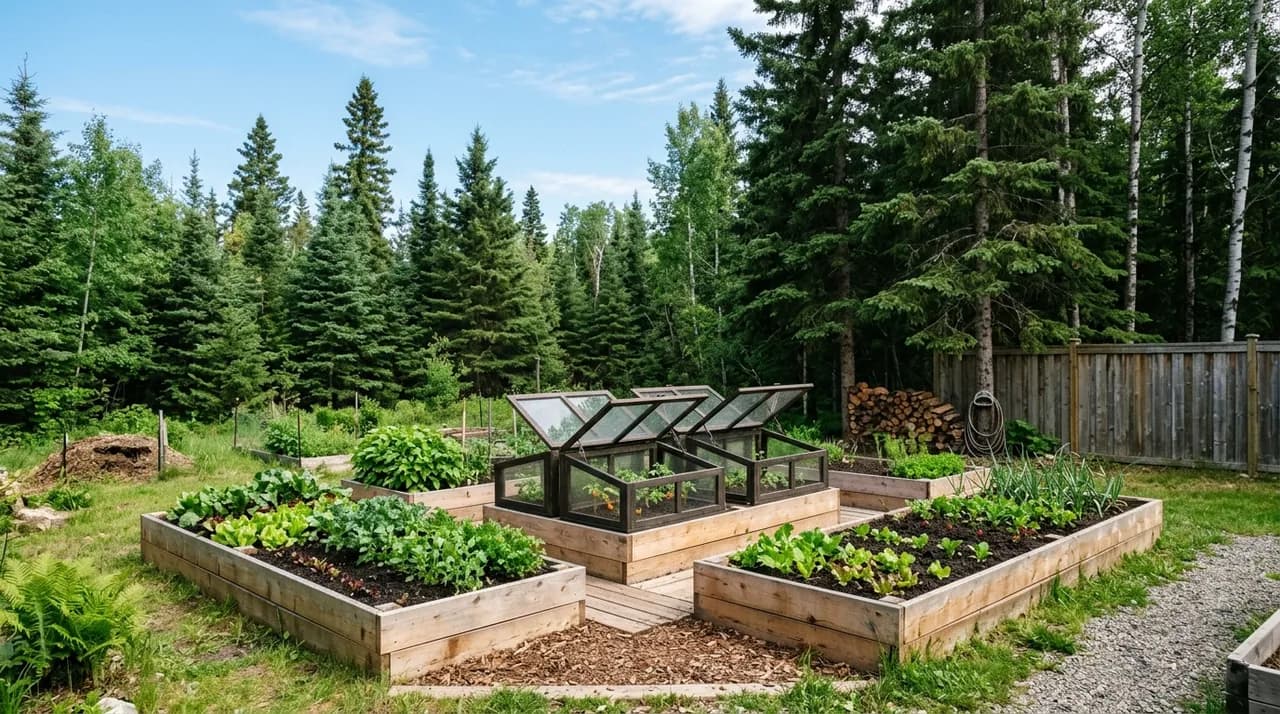
Gardening in USDA Plant Hardiness Zones 2 through 4 represents the everyday reality for vast expanses of the Canadian landscape, spanning the Prairie provinces, northern Ontario, rural Quebec, and high-latitude valleys. In these northern regions, long sub-zero winters, deeply frozen ground, and brief summer windows define the horticultural calendar. Successful northern growers work with the climate by selecting hardy cultivars and using passive microclimate techniques to produce dependable harvests.
To explore additional northern growing resources and cold-hardy crop profiles across the country, visit the Canadian growing hub.
The climatic realities of northern growing zones
Canadian hardiness zones 2 to 4 are characterized by extreme minimum winter temperatures that routinely plunge below minus thirty, and in zone 2, below minus forty degrees Celsius. In addition to severe winter lows, northern growers face a compressed frost-free season that can span as few as seventy to one hundred days between the final spring frost and the first autumn freeze.
However, northern latitudes also offer significant growing advantages. During June and July, long summer daylengths (often providing sixteen to eighteen hours of daylight) fuel rapid photosynthetic growth in cool-season crops. Furthermore, lower nighttime humidity reduces the incidence of many fungal leaf blights that plague humid southern gardens.
Because frost occurrences vary widely depending on elevation, proximity to lakes, and local topography, tracking local historical trends is essential. Local historical trends matter more than broad provincial averages; use our interactive frost dates tool to look up realistic planting windows for your specific municipality.
What genuinely survives: hardiness benchmarks
A common pitfall for new northern gardeners is attempting to cultivate temperate fruit and perennial crops bred for milder coastal or southern regions. In zones 2 to 4, perennial tissues must survive bitter atmospheric cold as well as prolonged winter desiccation caused by dry polar winds:
Truly resilient perennials and small fruits
Several perennial fruit and vegetable species have adaptations that enable them to thrive in severe northern climates:
- Haskaps (Honeyberries): These northern shrubs (Lonicera caerulea) are exceptionally cold-hardy, with open spring blossoms capable of withstanding sub-zero freezes without dropping fruit set.
- Saskatoon berries: Native to the Canadian prairies (Amelanchier alnifolia), saskatoons tolerate extreme winter cold and produce reliable summer crops of blueberry-like fruit.
- Cold-hardy bush cherries: University-developed dwarf sour cherry selections (such as the Romance series and Carmine Jewel) survive zone 2 and 3 winters on their own roots without winter dieback.
- Perennial vegetables: Rhubarb, established asparagus crowns, horseradish, and lovage remain fully dormant under snow cover and emerge vigorously as soon as the topsoil thaws in spring.
For an extensive survey of long-lived, frost-tolerant perennial food crops suited to northern homesteads, consult our guide to perennial vegetables for Canada.
Annual vegetable categories: cold-tolerant vs heat-demanding
Annual crops must be grouped according to their thermal thresholds:
- Direct-seeded cool-season vegetables: Spinach, radishes, brassicas (kale, collards, rutabaga), Swiss chard, peas, and short-season carrots germinate in cool spring soils and withstand light late-spring frosts without permanent injury.
- Short-season root crops: Early maturing potato varieties and hardneck garlic varieties (especially porcelain and purple stripe types) thrive in northern soils. Hardneck garlic requires winter vernalization beneath deep mulch to produce large, segmented bulbs.
- Heat-demanding vegetables: Indeterminate tomatoes, bell peppers, eggplants, sweetcorn, and winter squashes struggle if planted in open, unprotected ground in zone 2 or 3. These species require pre-season indoor starting, raised bed soils that warm quickly, and shelter from cold night air.
Practical bed management techniques for high-latitude growing are covered in detail within our review of zone 3 gardening practices.
Microclimate tactics: harnessing thermal mass and shelter
A microclimate is a localized area where physical features alter temperature, wind exposure, or moisture retention relative to the surrounding landscape. In cold northern zones, intentionally creating and exploiting microclimates can effectively elevate a garden bed by a full hardiness zone:
- South-facing masonry and timber walls: Siting delicate vegetables or trellised fruit against the south or southwest side of a house, dark wooden outbuilding, or stone retaining wall captures low-angle northern sunlight. The wall absorbs heat during the day and radiates warmth back into the planting zone during cold nights, preventing light frost damage.
- Shelterbelts and windbreaks: Prevailing Arctic winds drastically increase plant transpiration and cool surface soil. Establishing multi-row shelterbelts of native spruce, willow, or dense shrubbery on the north and west borders of the property slows wind speeds across the garden, raising ambient soil and air temperatures.
- Cold air drainage and slope: Cold air is dense and behaves like water, flowing downhill and settling in low depressions. Siting vegetable beds on gentle south-facing slopes ensures that cold night air drains away toward lower ground, preventing frost pockets from damaging tender foliage.
- Raised wooden beds: In zones 2 to 4, flat ground remains cold and waterlogged well into May. Constructing raised timber beds elevates the root zone above the frozen subsoil, allowing excess snowmelt to drain freely and enabling soil to warm up two to three weeks earlier in spring.
The protective role of winter snowpack
In northern Canada, snow provides some of the most effective natural insulation available to the homestead gardener. Fresh, uncompacted snow contains trapped air, acting as a thermal blanket that buffers perennial root crowns and soil biology against lethal atmospheric drops.
This protective blanket prevents deep soil frost penetration and safeguards dormant root systems from freeze-drying winds.
To maximize snow insulation:
- Avoid shoveling or trampling snow away from the bases of fruit trees and perennial berry beds.
- Erect temporary snow fencing or leave standing sunflower stalks across the garden in autumn to catch drifting snow and build deep drifts over delicate root zones.
- In late winter, as days lengthen, monitor snowmelt carefully; ensure runoff paths are open so that melting snow drains away from raised beds and does not refreeze into dense ice sheets over perennial crowns.
Selecting varieties matched to short northern seasons, using microclimates to buffer cold night temperatures, and leveraging natural snow insulation helps gardeners in zones 2 through 4 maintain reliable food production.