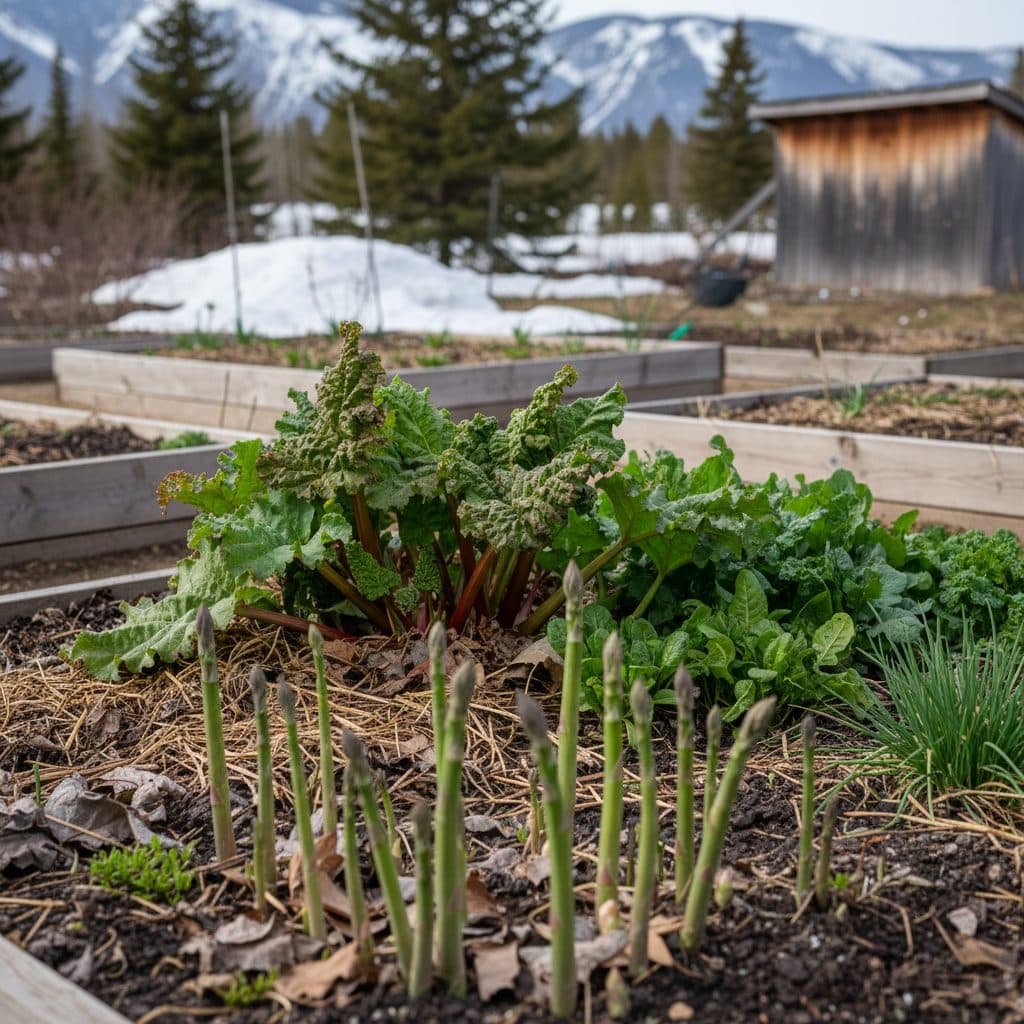
Key takeaways
- Perennial vegetables survive severe Canadian sub-zero winters (-25°C to -40°C) and produce fresh food weeks before annual seeds can be sown.
- Canadian-bred asparagus cultivars such as 'Guelph Millennium' provide high spring yields and superior winter hardiness down to Zone 3.
- Intersperse herbaceous perennial food plants into permaculture guild designs to build long-term soil structure and reduce annual bed preparation.
- Sunchokes (Jerusalem artichokes) and Egyptian walking onions offer continuous root and green harvests throughout late autumn and early spring thaws.
- Apply a 10 to 15 cm autumn mulch layer of clean straw or shredded leaves across crowns before ground freezes solid to moderate soil temperature swings.
- Never over-harvest perennial greens or spears in their first two establishing seasons to allow root crowns to store sufficient winter starches.
Quick answer: For Canadian gardens spanning Zones 2 to 5, the most reliable perennial vegetables are asparagus ('Guelph Millennium'), rhubarb ('Canada Red'), sea kale, Good King Henry, sunchokes, Egyptian walking onions, and lovage. Plant crowns in deep, compost-rich soil, mulch heavily with straw in late autumn, and harvest tender spring shoots as soon as snow melts.
In Canadian climates, the annual vegetable gardening season is notoriously short, often compressed into 90 to 120 frost-free days between late May and early September. Waiting for spring soil to dry out and warm up to germination temperature delays the first fresh harvests until well into June or July.
Integrating perennial vegetables canada gardeners can rely on transforms this cold-climate constraint. Because established perennial vegetables maintain extensive underground root networks and dormant crown buds insulated by winter snow, they awaken the moment the ground thaws in April, yielding tender shoots, stems, and greens during the early spring "hungry gap."
Whether you homestead in the Prairie provinces, manage cold-climate raised beds in Ontario or Quebec, or cultivate maritime food forests in the Atlantic provinces, this guide outlines the hardiest perennial edible crops, soil preparation, and winter maintenance.
+-------------------------------------------------------------+
|              CANADIAN HARDINESS ZONE OVERVIEW               |
|                                                             |
|   HARDINESS ZONE    TYPICAL MIN TEMP   EXAMPLE REGIONS      |
|   --------------    ----------------   ---------------      |
|   Zone 2b - 3b      -35°C to -45°C     Prairies, N. Ontario |
|   Zone 4a - 4b      -30°C to -35°C     Ottawa, Quebec City  |
|   Zone 5a - 6b      -20°C to -30°C     S. Ontario, Maritimes|
+-------------------------------------------------------------+
Which perennial vegetables are hardiest in Canadian winters?
The following cold-climate perennials possess exceptional cellular frost resistance and thrive across Canadian hardiness zones:
+-------------------------------------------------------------+
|              TOP COLD-HARDY PERENNIAL VEGETABLES            |
|                                                             |
|   CROP SPECIES      COMMON NAME        ZONE    EDIBLE PART  |
|   ------------      -----------        ----    -----------  |
|   *Asparagus off.*  Asparagus          Zone 2b Spring spears|
|   *Rheum hybridum*  Rhubarb            Zone 2b Spring stalks|
|   *Helianthus tub.* Sunchoke (Artichoke Zone 3  Winter tubers|
|   *Allium prolifer.* Walking Onion     Zone 3  Greens/bulbs |
|   *Blitum bonus-h.* Good King Henry    Zone 3  Spring greens|
|   *Crambe maritima* Sea Kale           Zone 4  Blanched shoot|
|   *Levisticum off.* Lovage             Zone 3  Celery herb  |
+-------------------------------------------------------------+
1. Asparagus (Asparagus officinalis): zones 2b to 5
Asparagus is the king of cold-climate perennial vegetables, producing productive spears for 20 to 30 years from a single planting.
- Top Canadian cultivar: 'Guelph Millennium', bred specifically at the University of Guelph in Ontario. It exhibits superior winter survivability in heavy soils and out-yields traditional cultivars across Canadian zones.
- Spear emergence: Spears begin pushing through the earth in late April or May as soon as soil temperatures reach 10°C.
2. Rhubarb (Rheum x hybridum): zones 2b to 5
Extremely rugged and completely winter-hardy. Cultivars like 'Canada Red' and 'German Wine' produce thick, sweet-tart crimson stalks that thrive under heavy prairie snowpack.
3. Sunchoke / Jerusalem artichoke (Helianthus tuberosus): zones 3 to 9
A native North American perennial sunflower that produces heavy yields of crisp, nutty underground tubers.
- Winter storage in ground: Very hardy tuber (Zones 3-9, surviving in Zone 2 with reliable snow cover); un-dug tubers stay crisp in frozen soil until spring thaw. You can harvest half your crop in November before freeze-up and leave the remainder in the earth to dig during the spring thaw in April.
- Containment warning: Sunchokes spread rapidly via vigorous underground rhizomes and can become difficult-to-eradicate weeds in cultivated vegetable beds. Plant them in dedicated, bordered perennial zones or barrier-lined trenches where their running habit is safely contained.
+-------------------------------------------------------------+
|                 SUNCHOKE IN-GROUND HARVEST TIMELINE         |
|                                                             |
|   Oct - Nov         First autumn freeze; dig initial tubers |
|   Dec - March       Ground frozen solid (natural storage)   |
|   April - May       Spring thaw; dig remaining sweet tubers |
+-------------------------------------------------------------+
4. Egyptian walking onion (Allium x proliferum): zones 3 to 6
Also known as tree onions. These winter-hardy perennials produce clusters of pungent bulbils at the top of their stalks, which bend over and root into the surrounding soil. They provide tender green scallions in early April and small shallot-like bulbs in summer.
5. Good King Henry (Blitum bonus-henricus): zones 3 to 6
A traditional European cottage garden staple that works as a perennial spinach substitute. In early spring, harvest the succulent young flowering shoots like asparagus; throughout summer, cook the arrowhead-shaped leaves like spinach.
For growers planning larger cold-climate acreage, see our complete guide to homesteading in Ontario.
How do you prepare planting beds for long-term perennials?
Unlike annual crops that allow yearly soil amendment, perennial beds remain undisturbed for decades. Investing in deep soil conditioning before planting is essential:
+-------------------------------------------------------------+
|                 PERENNIAL TRENCH PREPARATION                |
|                                                             |
|   ================ Soil Surface ===============             |
|   |  Topsoil + Rotted Manure + Compost (20 cm)  |           |
|   |-------------------------------------------|             |
|   |  Bone Meal + Rock Phosphate + Native Soil  | (Base 15cm)|
|   +-------------------------------------------+             |
+-------------------------------------------------------------+- Eradicate perennial weeds: Completely clear the site of invasive creeping weeds like couch grass (Elymus repens) and field bindweed before planting. Once deep perennial crowns establish, extracting creeping grass roots without damaging crowns becomes difficult.
- Deep organic trenching: Dig trenches or wide holes 30 to 40 cm deep. Incorporate generous amounts of well-rotted compost, aged cattle manure, and leaf mould.
- Phosphorus and drainage: Add slow-release bone meal or rock phosphate to the bottom of the planting trench to fuel deep root anchorage. In heavy clay soils subject to waterlogging during spring snowmelt, incorporate coarse horticultural grit or plant atop 20 cm raised mounds.
To understand soil warming dynamics in cold climates, consult soil temperature for planting.
How do you integrate perennial vegetables into cold-climate food forests?
Perennial vegetables form the vital herbaceous and ground-cover layers of cold-climate permaculture designs:
+-------------------------------------------------------------+
|                 PERENNIAL LAYER INTEGRATION                 |
|                                                             |
|   LAYER             FUNCTION             REPRESENTATIVE CROP|
|   -----             --------             ------------------- |
|   Overstory Tree    Canopy / Fruit       Apples, Pears       |
|   Understory Shrub  Berries / Shelter    Haskaps, Currants   |
|   Herbaceous Layer  Nutrient/Leaf Veg    Good King Henry,    |
|                                          Lovage, Sea Kale    |
|   Rhizosphere       Tuber Production     Sunchokes           |
|   Ground Cover      Soil Protection      Alpine Strawberries |
+-------------------------------------------------------------+- Understory guilds: Plant Good King Henry and Egyptian walking onions beneath fruit trees and berry bushes (such as hardy haskaps or redcurrants). These perennials emerge early, shading the root zone and suppressing unwanted weeds.
- Dynamic accumulators: Interplant deep-rooted companion perennials to cycle subsoil minerals. Compare their benefits in our guide on comfrey vs borage.
- Foraging and wild greens: Integrate native shade perennials like ostrich fern (Matteuccia struthiopteris) for spring fiddlehead harvests in damp, wooded borders. Food safety notice: Raw or undercooked fiddleheads contain an unidentified heat-labile toxin that causes severe gastroenteritis. Boil fiddleheads for at least 10 minutes or steam for 20 minutes before consuming or using in other dishes; never eat raw. Learn more about wild species in our guide to wild edible plants.
To evaluate multi-tier permaculture layouts against standard single-crop rows, read our detailed comparison of food forest vs orchard.
How do you protect perennial vegetables through Canadian winters?
While these species are genetically cold-hardy, alternating winter freeze-thaw cycles and bare, snowless sub-zero winds can cause crown desiccation and root heaving.
+-------------------------------------------------------------+
|                 WINTER PROTECTION PROTOCOL                  |
|                                                             |
|   TIMING            ACTION                                  |
|   ------            ------                                  |
|   Late Autumn       Cut back dead fern fronds & stems       |
|   Post-Light Freeze Apply 10 to 15 cm clean straw mulch     |
|   Mid-Winter        Allow snowpack to build naturally       |
|   Early Spring      Rake back mulch as snow melts           |
+-------------------------------------------------------------+- Timing the mulch application: Wait until the first light frosts freeze the top 2 cm of soil in late October or November before applying winter mulch. Applying heavy mulch too early in warm autumn weather invites nesting rodents that can gnaw dormant root crowns.
- Mulch materials: Spread a 10 to 15 cm layer of clean, seed-free wheat straw, chopped leaves, or evergreen boughs across the crowns.
- Snow as natural insulation: Snow is an exceptional natural thermal insulator in Canada. A 30 cm layer of light, fluffy snowpack maintains soil temperatures near 0°C even when ambient air temperatures plunge below -30°C.
- Spring clearance: As snow melts in April, rake the heavy straw mulch into the pathways between rows. This exposes bare dark soil to direct spring sunshine, accelerating soil warming and prompting immediate spear emergence.