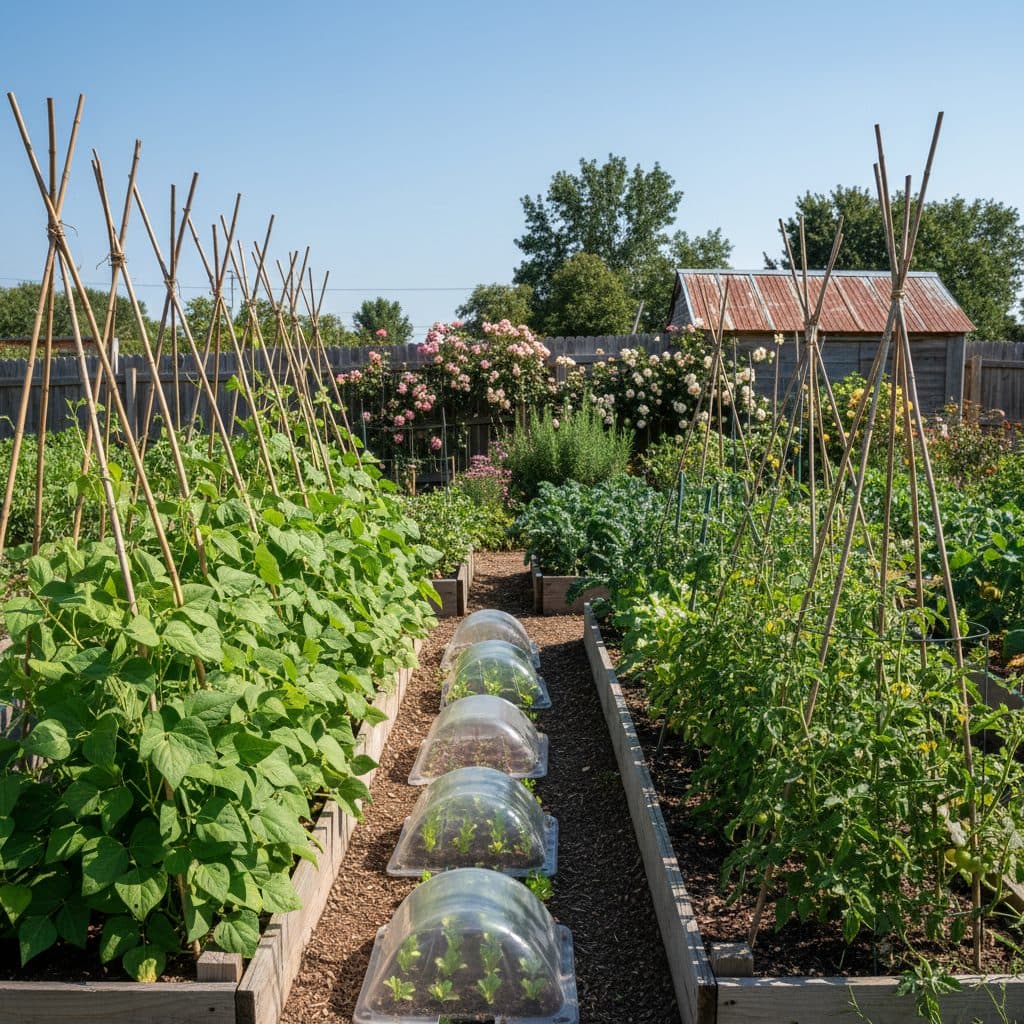
Key takeaways
- USDA Zone 5 is defined by minimum winter temperatures between -20°F and -10°F (-29°C to -23°C), with an average frost-free growing season of 140 to 160 days.
- Last spring frost dates generally fall between late April and late May, while first fall frosts arrive between mid-September and mid-October depending on local county elevation and microclimates.
- Start indoor seeds for slow-growing crops (onions, leeks, peppers, tomatoes) under grow lights between late February and early April.
- Direct sow cold-hardy cool-season vegetables (peas, spinach, radishes, carrots) outdoors as soon as the soil thaws and drains in April.
- Transplant tender warm-season crops (tomatoes, peppers, squash, cucumbers) outdoors after mid-to-late May once soil temperatures reach 60°F (15°C).
- Start your fall garden in July and August by sowing fast-maturing brassicas, root vegetables, and cold-hardy leafy greens.
Quick answer: In USDA Zone 5, begin indoor seed starting in March for peppers, tomatoes, and brassicas. Direct sow cool-season crops (peas, spinach, carrots) outdoors in April, transplant warm-season nightshades and sow beans after the final frost in mid-to-late May, start fall crops in July, and plant hardneck garlic in October.
Gardening in USDA Hardiness Zone 5 (which spans across large sections of the American Midwest, Great Lakes, Upstate New York, southern New England, and high mountain valleys of the West) offers a remarkably productive growing climate. With warm, sunny summers and adequate natural rainfall, Zone 5 gardens produce abundant harvests of nearly every temperate vegetable.
However, success with a zone 5 planting schedule requires precise timing. USDA Hardiness Zone 5 is defined by minimum winter temperatures (-20°F to -10°F / -29°C to -23°C), not frost dates. Across Zone 5, last spring frost dates generally fall between late April and late May, and first fall frosts between mid-September and mid-October; check your local county extension frost dates rather than relying on a single zone average.
This comprehensive month-by-month calendar breaks down indoor seed starting dates, outdoor direct sowing windows, transplanting targets, and fall garden timelines for Zone 5 growers.
+-------------------------------------------------------------+
|              ZONE 5 FROST WINDOW & GROWING PROFILE          |
|                                                             |
|   Average Last Spring Frost:   Late April - Late May        |
|   Average First Fall Frost:    Mid-Sept - Mid-October       |
|   Total Frost-Free Days:       140 to 160 Days              |
|   Winter Extreme Lows:         -20°F to -10°F (-29°C to -23°C)
+-------------------------------------------------------------+
When are frost dates and indoor starting windows in Zone 5?
All vegetable planting schedules in Zone 5 are calculated relative to your local last spring frost date (traditionally Mother's Day, May 10 to May 20).
+-------------------------------------------------------------+
|              INDOOR SEED STARTING TIMELINE (WEEKS)          |
|                                                             |
|   WEEKS BEFORE LAST FROST   DATE RANGE       CROPS TO SOW   |
|   -----------------------   ----------       ------------   |
|   10 - 12 Weeks (Feb-Mar)   Feb 15 - Mar 1   Onions, Leeks  |
|   8 - 10 Weeks (Early Mar)  Mar 1 - Mar 15   Peppers, Eggpl.|
|   6 - 8 Weeks (Late Mar)    Mar 15 - Apr 1   Tomatoes, Brass|
|   3 - 4 Weeks (Mid April)   Apr 15 - May 1   Squash, Melons |
+-------------------------------------------------------------+
1. Late winter seed starting (February to March)
- Late February (10 to 12 weeks before frost): Sow slow-growing alliums indoors under high-output LED or T5 fluorescent lights. Onion seeds and leeks require a long indoor head start to develop thick root systems before early spring transplanting.
- Early to mid-March (8 to 10 weeks before frost): Sow hot peppers, sweet bell peppers, and eggplants. Pepper seeds require warm bottom heat (75°F to 85°F / 24°C to 29°C) provided by a seedling heat mat to achieve uniform germination within 10 to 14 days.
- Late March (6 to 8 weeks before frost): Sow maincrop tomatoes, broccoli, cauliflower, cabbage, and Brussels sprouts. Maintain lights 2 to 3 inches above seedlings to prevent leggy growth.
2. Mid-spring seed starting (April)
- Mid-April (3 to 4 weeks before frost): Sow fast-growing cucurbits (zucchini, summer squash, winter squash, cucumbers, pumpkins, and watermelons) in 3-inch biodegradable pots. Cucurbits have sensitive taproots and resent staying in small pots for more than four weeks.
To manage young seedlings and prevent transplant shock, review our guidelines on seedling care, thinning, and spacing.
+-------------------------------------------------------------+
|              COOL-SEASON VS WARM-SEASON REQUIREMENTS        |
|                                                             |
|   CATEGORY         MIN. SOIL TEMP     FROST TOLERANCE       |
|   --------         --------------     ---------------       |
|   Cool-Season      40°F to 50°F (5°C) Tolerates Light Frost |
|   (Peas, Greens)                      (Down to 28°F / -2°C) |
|   Warm-Season      60°F to 70°F (16°C)Zero Frost Tolerance  |
|   (Tomatoes, Corn)                    (Damaged below 35°F)  |
+-------------------------------------------------------------+
Month-by-month Zone 5 vegetable planting calendar
Follow this detailed seasonal progression to organize your garden beds throughout the Zone 5 growing year:
April: the early spring outdoor launch
Once snow melts and soil thaws (usually early to mid-April), conduct a soil squeeze test. If the soil forms a loose, crumbly ball rather than a sticky mud ball, outdoor planting can commence:
- Direct sow outdoors: Shelling peas, sugar snap peas, spinach, radishes, arugula, mache, turnip greens, and parsnips.
- Transplant outdoors: Hardened-off onion sets, leek seedlings, and cold-hardy brassicas (kale, collards, cabbage, and broccoli). Cover young brassica transplants with lightweight floating row covers to shield them from sudden 25°F (-4°C) spring cold snaps and hungry flea beetles.
- Plant seed potatoes: Plant chitted early and maincrop seed potato tubers 4 inches deep in trenches or raised beds in mid-to-late April.
May: the maincrop warm-season transition
May is the most active transition month in the Zone 5 garden:
- Early May (before last frost): Direct sow beets, Swiss chard, carrots, and second successions of peas and salad greens.
- Mid-to-late May (after last frost / May 15 to 20): Harden off and transplant warm-season nightshades (tomatoes, sweet peppers, hot peppers, eggplants) into sunny beds.
- Direct sow warm crops: Plant bush beans, pole beans, cucumbers, zucchini, pumpkins, and winter squash directly into warm soil (60°F / 15°C minimum). Sweet corn seed rots in cold soil below 50°F (10°C); wait until the third week of May when soil temperatures exceed 60°F (16°C) for standard cultivars (or 65°F for supersweet "sh2" types), where emergence takes roughly 7 to 10 days. Learn specific legume timing in how to grow green beans.
+-------------------------------------------------------------+
|              MAY WARM-SEASON PLANTING MATRIX                |
|                                                             |
|   CROP             PLANTING METHOD      SPACING IN ROW      |
|   ----             ---------------      --------------      |
|   Tomatoes         Transplants (May 15+)24 to 36 inches     |
|   Bell Peppers     Transplants (May 20+)18 to 24 inches     |
|   Bush Beans       Direct seed (May 15+)3 to 4 inches       |
|   Sweet Corn       Direct seed (May 20+)8 to 12 inches      |
|   Zucchini         Direct seed/transpl. 36 inches           |
+-------------------------------------------------------------+
June: rapid growth and succession sowing
With frost danger completely behind you and daylight reaching peak duration, focus on maintenance and succession:
- Succession sow: Sow fresh rounds of bush beans, sweet corn, cilantro, dill, and salad radishes every two to three weeks to ensure uninterrupted summer harvests.
- Mulch beds: Apply a 3-inch layer of clean straw, shredded leaves, or wood shavings around tomatoes and squash to conserve soil moisture and suppress summer weeds.
July and August: starting the fall and winter garden
July and August are productive months for starting a second harvest season:
- July: Direct sow fall brassicas (cabbage, broccoli, cauliflower, kohlrabi) and fall carrots. Carrots sown in mid-July mature under cooling fall weather, converting starches into rich natural sugars.
- August: Direct sow fast-maturing cool-season greens for fall salads: spinach, tatsoi, bok choy, lettuce, radishes, and winter turnips.
- Season extension: Unheated low tunnels or cold frames keep spinach, mache, kale, and leeks harvestable through November and into December in milder Zone 5 autumns, protecting leaves from wind desiccation and heavy snow.
To maximize cold-season yields, consult our complete guide on fall and winter gardening sowing.
+-------------------------------------------------------------+
|              FALL GARDEN SOWING SCHEDULE (JULY - AUG)       |
|                                                             |
|   MONTH            CROPS TO SOW         HARVEST TARGET      |
|   -----            ------------         --------------      |
|   Early July       Fall Carrots, Beets  Sept to November    |
|   Mid-Late July    Broccoli, Kale, Kohl.October to December |
|   Early August     Turnips, Winter Rad. October to November |
|   Mid-Late August  Spinach, Asian GreensLate Fall to Winter |
+-------------------------------------------------------------+
September and October: harvest, garlic, and winter prep
- September: Harvest maincrop winter squash, pumpkins, and storage potatoes before hard freezes arrive. Cover late tomato vines with tarps or frost blankets on frosty nights to ripen final green fruit.
- October: The average first frost arrives between mid-September and mid-October depending on elevation. Clean spent summer vines onto your compost heap.
- Plant hardneck garlic (mid-to-late October): Separate cured bulbs into individual cloves and plant them point-upward 2 inches deep and 6 inches apart. Cover the garlic bed with a thick 4 to 6-inch blanket of straw mulch to insulate cloves against deep winter ground freezing.
- Sow winter cover crops: Broadcast winter rye and hairy vetch on empty beds in early October to protect topsoil from winter erosion and fix nitrogen for spring.
Structure your seasonal beds into sustainable four-year rotations following principles in crop rotation plans for home gardens.
By adhering to this structured Zone 5 planting schedule, you can make the most of every frost-free day and harvest delicious, homegrown vegetables across eight months of the year.