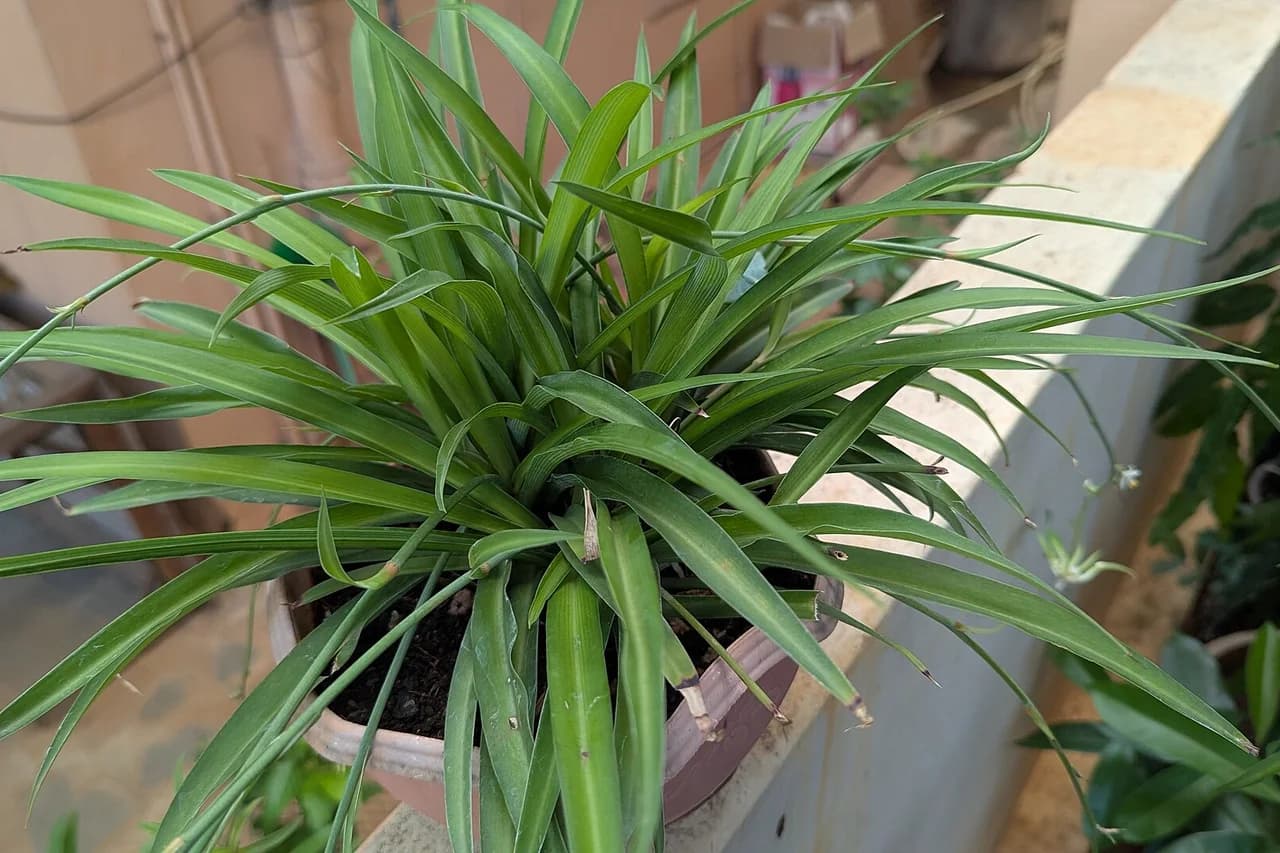
Image: Rajasekhar1961 (CC0) · Source
support
Spider plant
Chlorophytum comosum
Also known as Airplane plant / ribbon plant (United States).
- punjab plains
- pothohar
- sindh coast
International hardiness
- USDA 9-11
- RHS H1c
- AU: Subtropical, temperate, Tropical
Where it grows — regional guide
Safe around pets — though cats frequently chew dangling 'spiderette' pups like cat grass, so expect trim marks if pots hang within leap reach.
| Zones / rating | Regional notes |
|---|---|
USDA 9-11 | Outdoor hardy across frost-free USDA Zones 9–11 shade beds; classic pet-safe hanging basket plant in every US state. |
| Zones / rating | Regional notes |
|---|---|
H1c (5 to 10C) | RHS H1c sub-tropical perennial; handles cool unheated spare rooms down to 5–7°C during mild overcast UK winters. |
| Zones / rating | Regional notes |
|---|---|
Subtropical, temperate, Tropical | Resilient shaded veranda border and hanging basket performer from Brisbane south to sheltered Melbourne courtyards. |
| Zones / rating | Regional notes |
|---|---|
USDA 9-11 (USDA scale) Canada uses its own zone system; Canadian zones run roughly one lower than USDA. | No region-specific data yet |
| Zones / rating | Regional notes |
|---|---|
Punjab plains, Pothohar, Sindh coast | No region-specific data yet |
Grows alongside
Species that appear with Spider plant in 12 of our published guides — a starting list for a guild, not a planting plan.
Growing conditions and light
Spider plant (Chlorophytum comosum) pairs thick, tuber-like white storage roots with cascading green or white-banded arch foliage 10–14 in tall and spilling runners up to 24–36 in. While variegated cultivars prefer 150–300 fc beside east or bright north glass, solid-green strains adapt steadily at 100–175 fc.
Plants thrive in average home warmth (60–80°F / 16–27°C), endure 25–35% winter relative humidity, and prefer mildly neutral soil pH 6.0–7.0. Compare spider plant light needs and safe placement alongside eight non-toxic peers in our best indoor plants for low light guide.
Watering, soil, and propagation
Thick white roots store surprising reserves, so allow the top 1–2 in of mix to dry between thorough drenchings (usually every 7–10 days). Switching from fluoridated tap water or boron-rich municipal supplies to rainwater, filtered, or distilled water eliminates nearly all brown crispy tip burn along delicate arch ends.
Use any fast-draining general potting blend amended with 20% perlite, feeding very lightly during bright spring growth (`1/4` strength every 6 weeks — heavy nitrogen reduces runner flowering). Propagation takes under three weeks: simply pin attached stolon plantlets ('spiderettes') directly onto small damp pots or suspend root nubs just touching water until vigorous white roots form, then snip the runner stem.
Pests and common issues
Crispy brown tips represent the single most common complaint on indoor Chlorophytum, almost always traced back to tap-water fluoride, excess mineral fertilizer salts, or potbound roots outgrowing small plastic hangers. Trim brown ends with clean shears at a slight diagonal to match natural leaf tapers.
Inspect pale crown centers occasionally for mealybugs or scale, and check watering schedules in heated seasons with our winter houseplant watering guide.
Safety and toxicity
According to ASPCA Animal Poison Control, Chlorophytum comosum is non-toxic to cats and dogs. Keep in mind that many cats are mildly obsessed with batting and nibbling grass-like spiderette babies (trace natural compounds give mild catnip-like stimulation), which can trigger mild hairball-like stomach upset if binged in quantity — hang baskets high if foliage vanity matters.
Sourcing notes
Pick solid-green Chlorophytum comosum if placing inside dim 75–125 fc rooms, or bright white-striped 'Vittatum' / 'Ocean' cultivars for clear north/east sills; easy propagation via free hanging plantlets.
Frequently asked questions
Why do spider plant leaf tips keep turning brown even when humidity is fine?
Chlorophytum comosum is unusually sensitive to fluoride, chlorine, boron, and soluble fertilizer salts present in municipal tap water and dense potting mixes. Watering primarily with collected rainwater or distilled water and flushing pots every two to three months prevents tip burn cleanly.
Is spider plant safe if my cat chews on the dangling babies?
Yes — ASPCA Animal Poison Control confirms spider plant is non-toxic to cats and dogs. Cats often treat dangling green foliage like indoor grass and occasionally throw up harmless blades if they gorge, so elevate hanging pots slightly if you want tidy long leaves.
Which spider plant variety tolerates low light best?
Plain solid-green Chlorophytum comosum tolerates lower foot-candles (around 75–125 fc) better than variegated 'Vittatum' or curly 'Bonnie', since every square inch of green tissue carries full chlorophyll.
When should I repot a spider plant whose thick roots push soil over the rim?
Repot only when thick white fleshy roots begin lifting the crown physically above the pot rim or coiling tightly out drainage holes — typically every one to two years in spring, moving up only 1–2 inches in diameter.
References
- ASPCA Animal Poison Control — Toxic & Non-Toxic Plants Database (Spider Plant Cat Note)
- University of Illinois Extension — Houseplant Tip Burn, Light & Runner Propagation
- UF/IFAS Gardening Solutions — Houseplants Care, Media & Mineral Sensitivity
- University of Georgia Cooperative Extension Bulletin 1318 — Growing Indoor Plants with Success