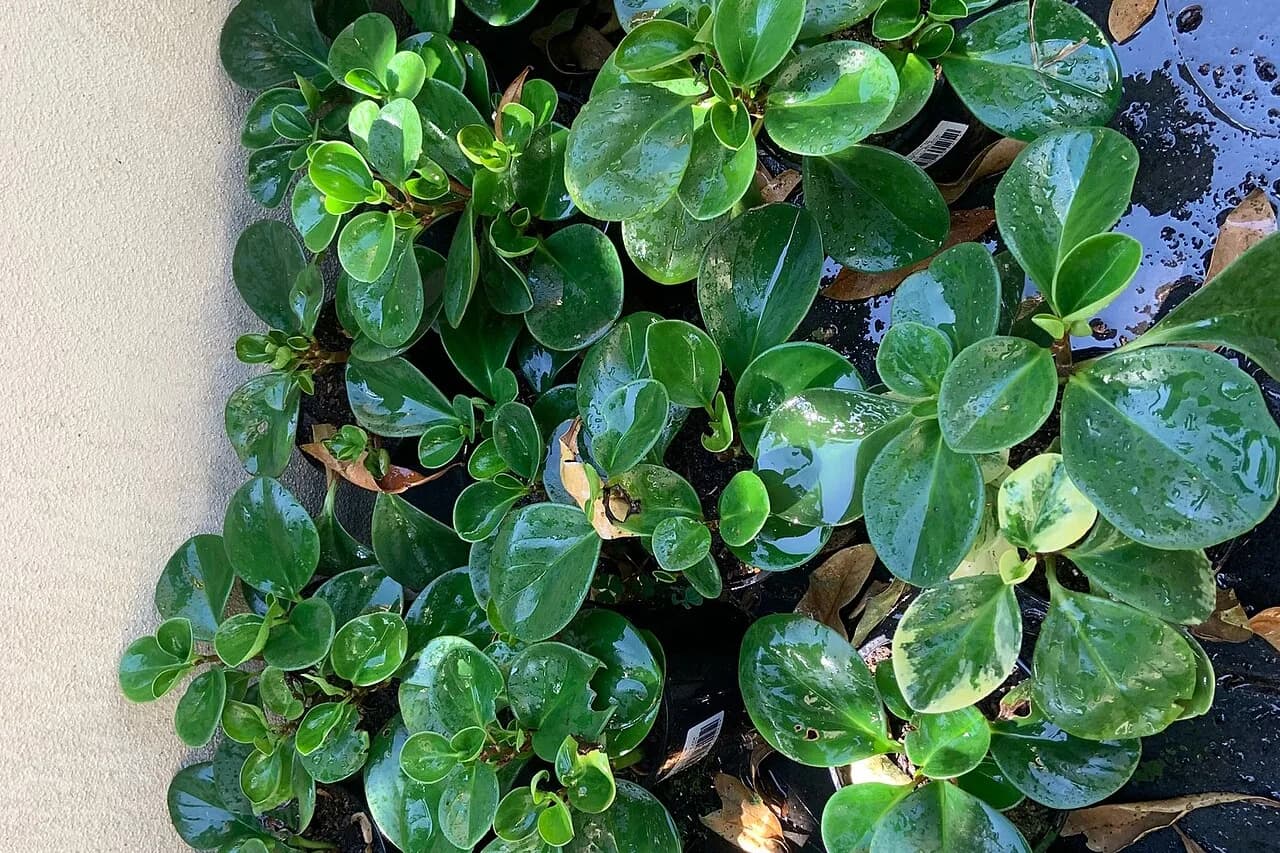
Image: Kittykittymaomao (CC BY-SA 4.0) · Source
support
Baby rubber plant
Peperomia obtusifolia
Also known as American rubber plant / pepper face (United States).
- sindh coast
International hardiness
- USDA 10-12
- RHS H1b
- AU: Tropical, Subtropical
Where it grows — regional guide
Botanically unrelated to giant Ficus elastica (weeping/rubber fig) — Peperomia obtusifolia stays under 12 inches and is pet-safe.
| Zones / rating | Regional notes |
|---|---|
USDA 10-12 | Outdoor understory perennial in South Florida (USDA Zones 10–12); compact non-toxic low-to-medium-light desk plant indoors nationwide. |
| Zones / rating | Regional notes |
|---|---|
H1b (10 to 15C) | Tender indoor houseplant (RHS H1b, avoid drafts under 12°C) sized cleanly for narrow UK windowsills and small home offices. |
| Zones / rating | Regional notes |
|---|---|
Tropical, Subtropical | Tidy shaded terrace container specimen in humid Queensland; reliable winter-heated apartment foliage pick across southern capitals. |
| Zones / rating | Regional notes |
|---|---|
USDA 10-12 (USDA scale) Canada uses its own zone system; Canadian zones run roughly one lower than USDA. | No region-specific data yet |
| Zones / rating | Regional notes |
|---|---|
Sindh coast | No region-specific data yet |
Grows alongside
Species that appear with Baby rubber plant in 14 of our published guides — a starting list for a guild, not a planting plan.
Growing conditions and light
Baby rubber plant (Peperomia obtusifolia) packs plump, succulent-thick glossy green leaves onto sturdy upright stems only 8–12 in tall, solving small desks and narrow bookshelves where giant floor canes cannot fit. Unlike the toxic Ficus elastica rubber tree, this gentle tropical epiphyte handles 100–200 foot-candles (fc) beside clear north or shaded east glass.
Thick water-storing blades endure normal 20–35% winter indoor humidity smoothly alongside 65–80°F (18–27°C) living temperatures and slightly acidic soil pH 6.0–6.8. Compare its compact size against bird's nest snake plant and dwarf ZZ inside our best indoor plants for low light guide.
Watering, soil, and propagation
Peperomia holds fine, shallow hair-like roots paired with thick water-storing leaves — treat it gently like an epiphytic semi-succulent. Let the top 2 in of mix dry cleanly (test leaf firmness too: healthy blades feel crisp, softening faintly only when truly thirsty), watering once every 10–14 days.
Pot shallowly inside two parts potting mix, one part perlite, and one part fine bark using a snug 4–6 in pot with drain holes, applying quarter-strength liquid feed monthly in spring and summer. Propagate reliably by rooting short two-leaf stem cuttings or single leaf petioles anchored in lightly damp perlite.
Pests and common issues
Because roots stay remarkably fine and shallow, oversized deep containers holding damp cold soil easily cause soft black base stem rot and oedema corky bumps along leaf undersides. Shift any struggling specimen immediately into a snug clay pot using principles from our pot porosity and container watering guide and winter watering checklist.
Watch tight stem axils occasionally for mealybugs, soft brown scale, and fungus gnats; keep dense potting surfaces cleanly dry down 2 inches between soakings and isolate newly bought 4-inch nursery pots using our pest quarantine checklist.
Safety and toxicity
Per ASPCA Animal Poison Control, Peperomia obtusifolia is non-toxic to cats and dogs — one of the best compact desk plants for pet households. Do not confuse it with true rubber tree (Ficus elastica), whose milky latex sap irritates skin and stomachs; see more cat-safe species in our pet-safe houseplants guide.
Sourcing notes
Stocked widely in 4- and 6-inch desk pots across solid emerald green and cream-edged variegata lines; choose solid green for dimly lit 100–125 fc shelves and verify names against toxic Ficus elastica rubber tree.
Frequently asked questions
Is baby rubber plant (Peperomia obtusifolia) the same as a giant Ficus rubber tree?
No — they belong to completely unrelated plant families. Peperomia obtusifolia stays compact at 8–12 inches tall with zero milky latex sap and is ASPCA non-toxic to cats and dogs, whereas Ficus elastica becomes a large tree with irritating sap.
How do you know when to water Peperomia obtusifolia in lower light?
Check that the top 2 inches of potting mix feels dry and gently fold a mature lower leaf between two fingers: well-hydrated blades stay firm and stiff, while thirsty leaves begin yielding softly like thin leather (usually every 10–14 days).
Does Peperomia obtusifolia need high bathroom humidity?
No. Semi-succulent thick glossy leaves hold internal moisture efficiently and handle ordinary 25–35% winter apartment humidity without browning leaf tips, unlike sensitive ferns or Calathea.
Why did my Peperomia stems turn black and fall over near the soil?
Black mushy base rot happens when fine shallow roots stay sitting in soggy, oversized pots under cool dim light. Trim clean healthy stem tops above the blackened zone and reroot them directly in fresh, airy perlite-bark potting mix.
References
- ASPCA Animal Poison Control — Toxic & Non-Toxic Plants Database (Peperomia Safe Listing)
- University of Wisconsin–Madison Extension — Small-Space Succulent & Peperomia-Style Houseplants
- University of Illinois Extension — Indoor Houseplant Care & Fine-Root Watering
- UF/IFAS Gardening Solutions — Houseplants Selection, Lighting & Container Fit