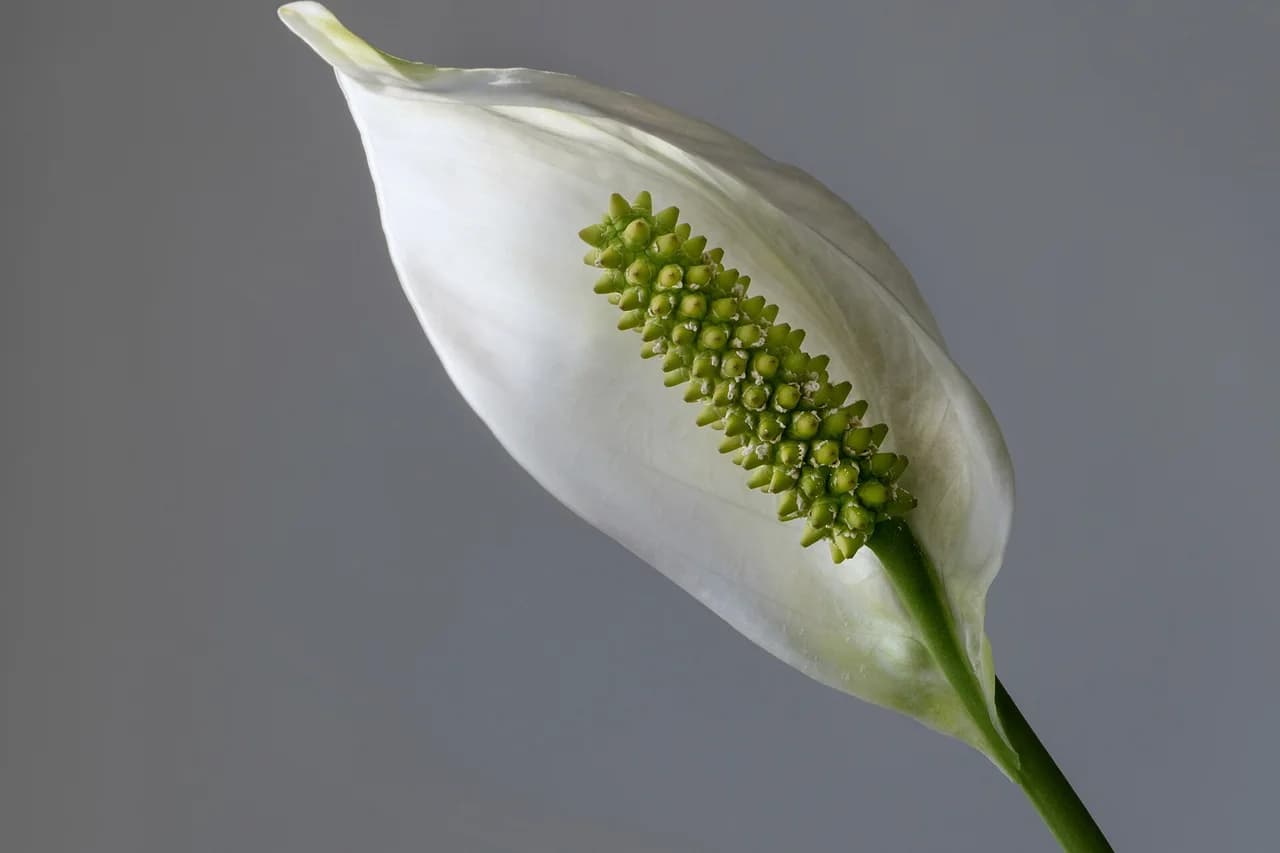
Image: W.carter (CC BY-SA 4.0) · Source
support
Peace lily
Spathiphyllum wallisii
Also known as Spadix lily / white sails (United States).
- sindh coast
International hardiness
- USDA 10-12
- RHS H1b
- AU: Tropical, Subtropical
Where it grows — regional guide
Peace lily is NOT a true Lilium or Hemerocallis — it causes painful oral irritation rather than lethal feline acute kidney failure, though it remains toxic if chewed.
| Zones / rating | Regional notes |
|---|---|
USDA 10-12 | Outdoors in humid USDA Zones 10–12 shade; premier flowering low-to-medium-light houseplant (100–200 fc) nationwide. |
| Zones / rating | Regional notes |
|---|---|
H1b (10 to 15C) | Warm interior perennial (RHS H1b, avoid below 13°C) prized in north-facing rooms where flowering plants rarely bloom. |
| Zones / rating | Regional notes |
|---|---|
Tropical, Subtropical | Clean indoor or shaded coastal patio foliage plant in Brisbane and Sydney; rinse chloramine tap water tip-burn off cleanly. |
| Zones / rating | Regional notes |
|---|---|
USDA 10-12 (USDA scale) Canada uses its own zone system; Canadian zones run roughly one lower than USDA. | No region-specific data yet |
| Zones / rating | Regional notes |
|---|---|
Sindh coast | No region-specific data yet |
Grows alongside
Species that appear with Peace lily in 14 of our published guides — a starting list for a guild, not a planting plan.
Growing conditions and light
Peace lily (Spathiphyllum wallisii) occupies the sweet spot between tough dim-hallway foliage and sunny windowsill flowers. Foliage hangs cleanly at 75–100 fc, while reliable spring and summer creamy-white spathe blooms with subtle dawn citrus-vanilla fragrance form best in 100–200 foot-candles (fc) — directly alongside a clear north window or 4–8 ft from east glass.
Clumps reach 16–30 in tall and wide depending on cultivar, preferring 65–82°F (18–28°C), 40–60% relative humidity, and slightly acidic soil pH 5.5–6.5. Check rebloom light thresholds alongside moth orchids and Hoya inside our best indoor plants for low light guide.
Watering, soil, and propagation
Peace lily communicates dryness clearly: entire leafy petioles droop dramatically the hour roots finish pulling available water, bouncing upright within two hours of a thorough soak. Avoid making every single watering cycle reach hard wilt; soak cleanly as soon as the top 1 in dries, using rainwater, distilled, or overnight-rested tap water where municipal fluoride or heavy dissolved minerals cause crispy brown tips.
Pot into two parts rich peat-free or coir potting mix plus one part coarse perlite or fine orchid bark so damp soil holds air around thirsty roots. Feed every 6 weeks from April to August with dilute one-quarter-strength flowering houseplant formula, and divide congested clumps gently by teasing offset crowns apart at spring repotting.
Pests and common issues
Two classic signals show up frequently on Spathiphyllum: green-turned blooms occur simply as white spathes age past week four (or when light is bright enough to photosynthesize inside petals), so snip spent stalks low cleanly. Persistent brown leaf margins without stem wilt indicate fluoridated/chloraminated tap water or salt buildup rather than lack of humidity — check real room levels with our hygrometer houseplant humidity guide.
Keep moist soil tops free of fungus gnats and wipe glossy leaf blades to prevent mealybugs from tucking inside folded base bracts.
Safety and toxicity
Per ASPCA Animal Poison Control, peace lily is toxic to cats and dogs because tissues carry insoluble calcium oxalate crystals causing oral pain, drooling, swelling, and vomiting if chewed. Importantly, Spathiphyllum is an aroid rather than a true Lilium Easter/Asiatic lily (whose pollen causes fatal feline kidney failure), yet prudent owners still keep peace lilies off cat-accessible floor corners.
Sourcing notes
Select compact varieties ('Petite', 'Wallisii') for apartment desks or sweeping 'Mauna Loa' / 'Sensation' forms for bright north floor corners; avoid specimens whose dark spathes have already turned stiff green with age.
Frequently asked questions
Why does my peace lily grow lush green leaves yet never bloom indoors?
Failing to throw white spathes almost always reflects insufficient light (below 75–100 foot-candles) rather than missing fertilizer. Move the pot 2–4 feet closer to a clear north or east window or add a small warm LED bulb 12 inches overhead for 12 hours daily.
Is peace lily fatal to cats like Easter lilies?
No — unlike true Lilium species whose pollen and petals trigger acute kidney failure in cats, peace lily (Spathiphyllum) is a member of the Araceae family containing insoluble calcium oxalate crystals. It still causes painful mouth burning, drooling, and vomiting if chewed, so keep it away from curious pets.
Why are the tips of my peace lily turning brown?
Dry brown tips stem most commonly from fluoride, dissolved salts, or fertilizer buildup in municipal water rather than low air moisture alone. Flush potting soil cleanly once every three months with distilled or rainwater and fertilize at quarter strength only.
Are peace lily flowers naturally green or white?
Fresh Spathiphyllum spathes open crisp creamy white and slowly mature toward pale lime-green after four to eight weeks on the plant as chlorophyll develops inside the aging bract. Simply snip faded green stalks cleanly at the base to encourage fresh buds.
References
- ASPCA Animal Poison Control — Peace Lily (Spathiphyllum) Calcium Oxalate Toxicity Details
- University of Illinois Extension — Houseplant Flower Care & Tip-Burn Troubleshooting
- UF/IFAS Gardening Solutions — Houseplants Care, Water Quality & Shading Ranges
- University of Georgia Cooperative Extension Bulletin 1318 — Growing Indoor Plants with Success