Key takeaways
- Leggy seedlings result from insufficient light intensity and improper light distance.
- Cost-effective lighting options like T8 fluorescent shop lights or full-spectrum LED shop lights can be purchased for under $30 per fixture.
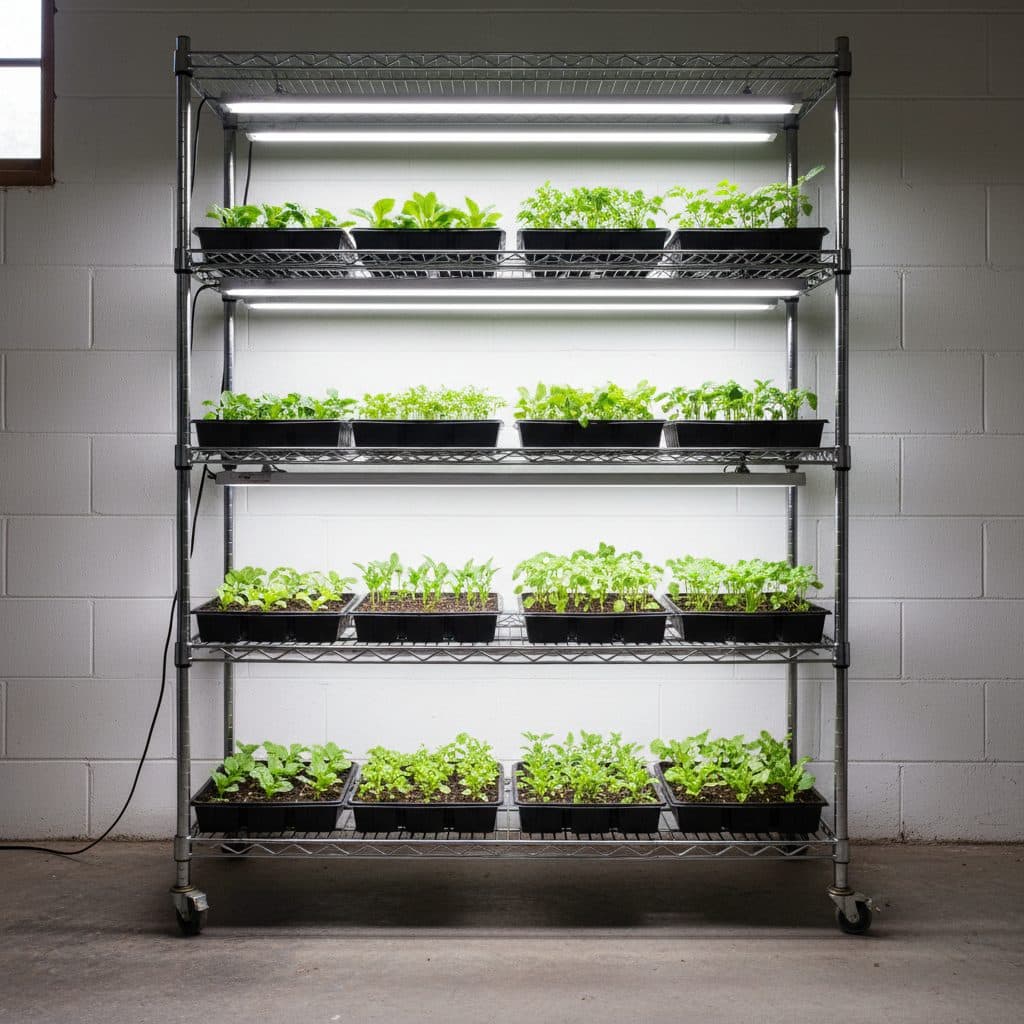
- A sturdy shelving unit, such as a 5-tier wire rack, provides adjustable height for grow lights, essential for maintaining optimal seedling distance.
- Proper light placement, typically 2 to 4 inches above seedling tops, is vital for compact growth and preventing stretching.
- Utilizing an inexpensive timer to provide 14 to 16 hours of light daily mimics natural growing conditions and promotes vigorous development.
- Air circulation, achieved with a small fan, strengthens seedling stems, preventing damping-off disease and preparing them for outdoor conditions.
Quick answer: To prevent leggy seedlings, build a budget grow-light shelf using cost-effective T8 or LED shop lights, a sturdy wire shelving unit, and a timer. Position lights 2-4 inches above seedlings for 14-16 hours daily to promote compact, strong growth.
In many regions across the US, from the cold winters of Minnesota to the shorter spring days in USDA zone 6, home gardeners often face a common frustration: leggy seedlings. These weak, stretched-out plants, characterized by long, thin stems and small leaves, are a direct result of insufficient light. Without adequate light intensity, young plants expend all their energy reaching for a non-existent sun, leading to poor development and reduced yields later in the season. A grow-light shelf, even a budget-conscious one, can solve this problem by providing consistent, bright light.
Preventing leggy seedlings does not require expensive equipment. A grow-light setup built for under $150 provides sufficient light to produce compact seedlings for transplanting, whether starting long-season crops like peppers or cool-season vegetables like radishes.
Understanding why seedlings get leggy
Leggy seedlings are a clear sign your young plants aren’t getting enough light. When light levels are too low, or the light source is too far away, seedlings activate a survival mechanism called etiolation. This causes them to stretch rapidly, allocating energy to stem elongation instead of root and leaf development. For instance, a tomato seedling in a dimly lit north-facing window in upstate New York might stretch 4 to 6 inches in just a few days, while a well-lit one grows only 1 to 2 inches in the same period.
The critical role of light intensity and duration
Seedlings require specific light conditions to thrive. Most vegetable and flower seedlings need far more light than a windowsill or ordinary room lighting provides, which is why a dedicated fixture hung close to the canopy makes such a difference. They also benefit from a long ‘day’ (typically 14 to 16 hours of light daily) followed by a period of darkness for respiration. Without this intensity and duration, even robust seeds will produce weak plants. For example, pepper seedlings, which need a long growing season, demand consistent high light from the start to develop strong stems and fruit production potential.
- Insufficient light intensity causes stretching.
- Light source placed too far from seedlings, typically over 6 inches away, encourages etiolation.
- Lack of a consistent 14-16 hour light cycle prevents proper photosynthesis.
- Overwatering can exacerbate leggy growth by weakening stems.
- High temperatures coupled with low light accelerate stretching, especially above 75°F.
Choosing cost-effective lights
When budgeting for grow lights, the goal is maximum light output for minimal cost. While specialized LED grow lights can be expensive, excellent results can be achieved with more affordable options. For many years, T8 and T5 fluorescent shop lights were the go-to for seed starting, and they remain a viable, budget-friendly choice. A 4-foot T8 fixture with two bulbs can cost as little as $20 to $30 and provides sufficient light for one shelf of seedlings.
Modern budget alternatives: LED shop lights
Today, full-spectrum LED shop lights offer a compelling alternative. They are more energy-efficient, last longer (up to 50,000 hours compared to 20,000 hours for fluorescents), and often produce less heat. A 4-foot LED shop light, often found for $25 to $40, can provide 4,000 to 5,000 lumens, which is ample for a 2 ft x 4 ft growing area. Look for lights labeled ‘daylight’ (5000K-6500K color temperature) as this spectrum closely mimics natural sunlight, essential for seedling development. For example, starting celery from seed requires consistent light for its long germination period, making reliable, full-spectrum lighting essential.
- T8 fluorescent fixtures: $20-$30 for a 4-foot, 2-bulb unit.
- T5 fluorescent fixtures: Slightly more expensive, but brighter, around $30-$50.
- LED shop lights: $25-$40 for a 4-foot, full-spectrum unit.
- Light bulbs: T8 bulbs cost $5-$10 each; LED tubes are often integrated.
- Timers: Mechanical timers are $8-$15; digital timers are $15-$25.
Building a sturdy and adjustable shelf
The foundation of your budget grow-light setup is a sturdy shelving unit. Wire shelving units, commonly found at home improvement stores or online retailers, are an excellent choice. A 5-tier, 36-inch wide by 18-inch deep by 72-inch tall unit can be purchased for $50 to $80. These units are easy to assemble, require no tools for most models, and their open design allows for good air circulation and light penetration. The key benefit is their adjustable shelves, which are essential for raising and lowering your lights as seedlings grow.
Securing and adjusting your lights
Once you have your shelving unit, attaching the lights is straightforward. S-hooks and chains, available for under $10, allow you to hang the lights directly from the wire shelves. This setup provides easy vertical adjustment; simply move the S-hooks up or down the chain to maintain the ideal 2 to 4 inch distance between the light source and the seedling tops. For instance, pumpkin seedlings, which grow quickly, will need their lights adjusted every few days.
- Wire shelving unit (5-tier, 36x18x72 in): $50-$80.
- S-hooks and chains (pack of 10 hooks, 10 ft chain): $8-$15.
- Zip ties (pack of 100): $3-$5 for securing wires.
- Power strip with surge protector: $15-$25 for multiple outlets.
- Small oscillating fan (6-inch): $15-$25 for air circulation.
Optimizing your grow-light environment
Beyond the hardware, optimizing your grow-light environment involves a few key practices that significantly impact seedling health. A simple mechanical timer, costing around $10, is indispensable. It ensures your seedlings receive a consistent 14 to 16 hours of light daily, followed by 8 to 10 hours of darkness. This consistent cycle prevents stress and promotes steady growth. For instance, seed starting for beginners often overlooks the importance of consistent light duration, leading to suboptimal results.
Air circulation and watering practices
Good air circulation is another critical, often overlooked, factor. A small 6-inch oscillating fan, positioned to gently move air around your seedlings for several hours a day, does wonders. This gentle breeze strengthens seedling stems, making them less prone to damping-off disease (a fungal issue) and better prepared for outdoor conditions. Also, proper watering (allowing the top inch of soil to dry out between waterings) prevents root rot and encourages strong root development. For example, radishes grow quickly but are susceptible to damping-off if overwatered in stagnant air.
- Use a timer for consistent 14-16 hour light cycles.
- Provide gentle air circulation with a small fan for 2-4 hours daily.
- Water thoroughly when the top inch of soil is dry, avoiding soggy conditions.
- Maintain ambient temperatures between 65°F and 75°F for most seedlings.
- Rotate seedling trays every few days to ensure even light exposure.
Comparison of budget grow light options
Feature | T8 fluorescent shop lights | LED shop lights (full spectrum) |
|---|---|---|
Initial cost (4-foot fixture) | $20 – $30 | $25 – $40 |
Bulb replacement cost | $5 – $10 per bulb | N/A (integrated LEDs) |
Energy efficiency | Moderate |
|
|
Lifespan | 10,000 – 20,000 hours | 30,000 – 50,000 hours |
Heat output | Moderate | Low |
Light spectrum | Cool white (6500K) or Warm white (3000K) | Full spectrum (5000K-6500K) |
Lumens (approx. per 4-ft fixture) | 2,000 – 2,800 | 4,000 – 5,000 |
Cost Savings: A complete budget grow-light shelf can be built for under $150, significantly less than commercial setups costing $300 to $500.
Light Output: Keep a 4-foot shop light 2 to 4 inches above the seedling tops, and cover no more than a 2 ft x 4 ft area per fixture.
Frequently asked questions
How far should grow lights be from seedlings?
For most budget grow lights like T8 fluorescents or LED shop lights, maintain a distance of 2 to 4 inches from the top of your seedlings. This close proximity provides maximum light intensity, preventing leggy growth and promoting compact development in plants like beets.
What is the best light spectrum for starting seeds?
Seedlings benefit most from a full-spectrum light, often referred to as ‘daylight’ with a color temperature between 5000K and 6500K. This spectrum provides the necessary blue light (400-500 nm) to encourage strong, stocky growth and prevent stretching, which is important for crops like herbs.
How many hours of light do seedlings need daily?
Seedlings typically require 14 to 16 hours of light per day, followed by 8 to 10 hours of darkness. Using an inexpensive timer, costing around $10, ensures this consistent cycle, which is essential for proper photosynthesis and overall plant health, especially for long-season crops.
Can I use regular shop lights as grow lights?
Yes, standard fluorescent or LED shop lights, particularly those labeled ‘daylight’ with a color temperature of 5000K to 6500K, are highly effective and budget-friendly for starting seedlings. A 4-foot LED shop light can provide 4,000 to 5,000 lumens, which is sufficient for a 2 ft x 4 ft growing area.
What is the ideal temperature for seedling growth?
Most vegetable and flower seedlings thrive in ambient temperatures between 65°F and 75°F. Maintaining temperatures within this range, along with adequate light, promotes vigorous growth and helps prevent issues like damping-off.
How does air circulation help prevent leggy seedlings?
Gentle air circulation, provided by a small oscillating fan for 2 to 4 hours daily, strengthens seedling stems by mimicking natural outdoor breezes. This physical stimulation makes stems thicker and sturdier, reducing leggy growth and improving resistance to fungal diseases like damping-off.