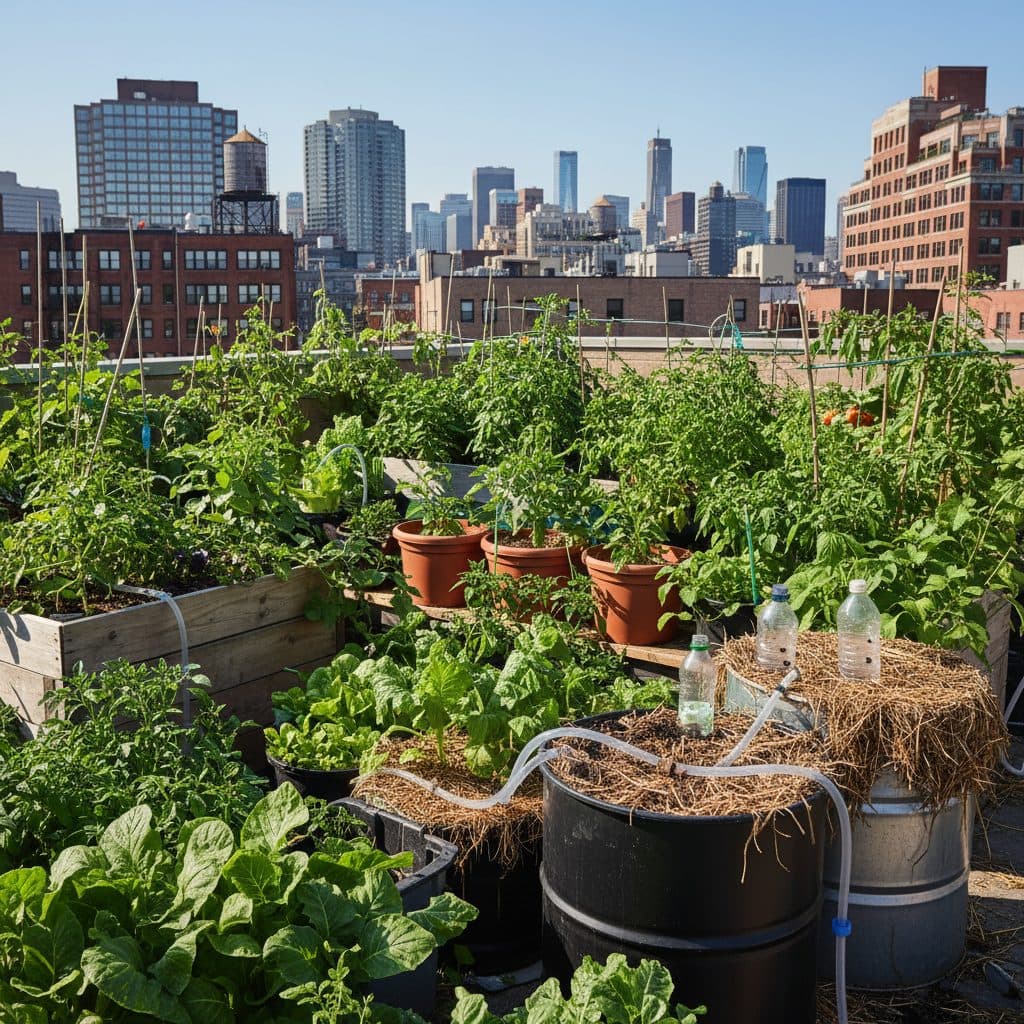
Key takeaways
- Larger containers (15 gallons or more) retain moisture significantly better than smaller pots.
- Implement passive watering systems like wicking beds for consistent moisture over a week or more; bottle drippers only bridge a few days.
- Strategic placement, grouping, and a 2-inch layer of organic mulch substantially reduce water evaporation.
- Before leaving, remove flowers and any foliage that is shading nothing, and harvest all ripe produce — but do not strip the canopy over developing fruit, which sunscalds once exposed.
- Choose drought-tolerant plant varieties, such as rosemary or peppers, which handle a dry week far better than leafy greens.
- Consider a temporary ‘plant nursery’ in a shaded spot, like a garage, to lower light and temperature stress.
Quick answer: To keep container plants thriving for two weeks without daily watering, use larger pots, implement passive watering systems like wicking beds, apply 2 inches of organic mulch, and strategically prune foliage before departure.
Leaving your thriving container garden for a vacation can be a source of anxiety for any dedicated grower. Imagine a grower in central Pennsylvania, USDA Zone 6, with a balcony full of tomatoes and peppers, facing a two-week trip. The concern is real: how do those plants survive without daily attention? The good news is that with careful planning your container plants can come through an absence of a week or more in good shape — though reaching a full 14 days without any intervention generally needs a large reservoir system instead of mulch and shade alone.
Managing moisture and reducing plant stress requires practical methods rather than guesswork. From selecting the right container size to setting up passive watering systems, we’ll cover the steps to ensure your rooftop or balcony garden in places like coastal California or the humid Southeast remains healthy until you return. Our focus is on tangible actions that deliver measurable results, helping you enjoy your time away without worrying about wilting foliage.
Preparation before you leave
The success of your container garden during an extended absence hinges on the preparation you undertake in the week leading up to your departure. One important step is ensuring your plants are in good health, as stressed plants are far more susceptible to drought. For instance, a tomato plant showing signs of nutrient deficiency in USDA Zone 7 will struggle more than a healthy one if left unwatered for 10 days. Inspect foliage for pests and diseases, addressing any issues immediately to prevent further stress.
Container size and plant health
Consider upgrading smaller containers to larger ones if possible. A 5-gallon container will dry out significantly faster than a 15-gallon pot, especially for thirsty plants like cucumbers or squash. A larger container holds more water and stays moist for longer; moving from a 5-gallon to a 15-gallon pot buys meaningful extra days before the soil dries out. About 3-5 days before you leave, give all plants a thorough watering, ensuring water drains from the bottom. This deep watering helps saturate the entire root ball. You might also want to consult resources like Vegetable gardening for beginners: your questions answered for general plant health tips before you go.
- Inspect plants for pests and diseases.
- Repot smaller plants into 10-15 gallon containers.
- Prune 20-30% of non-essential foliage.
- Harvest all ripe or nearly ripe produce.
- Deep water plants 3-5 days prior to departure.
Smart watering solutions for extended absences
When no one is available to water, passive irrigation systems become indispensable. These methods deliver water directly to the root zone, minimizing evaporation and ensuring a consistent supply over several days. One popular and effective approach is the wicking bed system. A simple DIY wicking bed can be constructed using a large container, a water reservoir at the bottom, and a wicking fabric or soil column to draw moisture upwards. For a 15-gallon container, a 2-gallon reservoir typically covers a few days for a mature fruiting plant and longer for smaller or slower-growing ones; size the reservoir against how fast the pot dries out before leaving.
DIY drip and wicking systems
Another straightforward option involves inverted plastic bottles with small holes poked in the cap, buried neck-down in the soil. A 2-liter bottle can provide slow release watering for 2-4 days, sufficient for smaller plants or as a supplement for larger ones. For more precise monitoring, consider using a soil moisture meter to gauge the effectiveness of your system before you leave. Aim for soil that stays evenly damp, dark and cool a couple of inches down, never sodden and never dust-dry. For those with multiple containers, a simple drip irrigation kit connected to a large barrel can water 10-20 plants for over a week.
- Wicking beds provide continuous moisture from a reservoir.
- Inverted 1-2 liter plastic bottles offer slow, direct watering.
- Capillary mats placed under pots can draw water from a tray.
- DIY drip systems using a large water barrel can serve multiple plants.
- Bathtub or kiddie pool methods: stand pots in 1-2 inches of water so they wick from below, for no more than 2-3 days. Never submerge the pots; waterlogged soil holds no oxygen and roots begin to die.
Microclimate management: shade, mulch, and grouping
Managing the immediate environment around your container plants can significantly reduce water loss. Heat and direct sun are primary drivers of evaporation, especially in regions like Arizona where summer temperatures routinely exceed 100°F. Relocating containers to a shadier spot, such as under a porch overhang or on the north side of a building, keeps soil markedly cooler and cuts water demand. Grouping plants closely together also creates a more humid microclimate, where the transpiration from one plant benefits its neighbors and the whole cluster loses less water.
Mulching for moisture retention
Applying a 2-inch layer of organic mulch, such as straw, shredded leaves, or wood chips, to the top of your container soil is highly effective. Mulch acts as an insulating layer, keeping soil temperatures more stable and reducing surface evaporation by 25-50%. For example, in a container in USDA Zone 8, a good layer of mulch can extend the time between waterings by 2-3 days. Before applying mulch, ensure the soil is thoroughly watered. You might use tools like a wooden-handle garden fork to gently loosen the topsoil before mulching, improving water penetration.
- Move containers to a shaded location.
- Group pots closely to create a humid microclimate.
- Apply a 2-inch layer of organic mulch to conserve soil moisture.
- Use shade cloth (30-50% shade) over exposed areas.
- Consider a temporary indoor ‘plant nursery’ in a cool, low-light room.
Choosing resilient plants and container types
Along with preparation and watering systems, the characteristics of your plants and containers also affect their survival. Some plants are naturally more forgiving of dry spells than others. For example, many herbs like rosemary, thyme, and oregano, common in gardens across the US, are quite drought-tolerant and can easily go 7-10 days without water once established. Peppers and certain varieties of beans also show good resilience compared to water-intensive plants like lettuce or celery, which may wilt after just 2-3 days without moisture in a 5-gallon pot.
Container materials and plant selection
The material of your container impacts moisture retention. Terracotta pots, while attractive, are porous and allow water to evaporate quickly, often drying out 20-30% faster than plastic or glazed ceramic pots in similar conditions. If you must use terracotta, place it inside a larger non-porous container, or line it with plastic and punch drainage holes through the liner to match the pot’s own hole; an unpunctured liner turns the pot into a sealed bucket and drowns the roots. For growers in arid regions like New Mexico, small-fruited and determinate varieties handle an absence better than large heirlooms, which crack and drop fruit when soil moisture swings. Always aim for containers that hold at least 10 gallons for most fruiting vegetables to provide a sufficient soil volume for moisture retention.
- Select drought-tolerant plants like rosemary, peppers, or certain beans.
- Avoid water-intensive plants such as lettuce, celery, or most leafy greens.
- Choose plastic or glazed ceramic containers over porous terracotta.
- Ensure containers are at least 10-15 gallons for adequate soil volume.
- Consider varieties specifically bred for heat and drought resistance.
Container watering solutions for a 1-2 week absence
Method | Duration (approx.) | Effort/cost | Best for |
|---|---|---|---|
Wicking bed system | 7-10 days | Moderate | Medium to large containers, thirsty plants |
Bottle drip system | 2-4 days per bottle | Low | Smaller containers, supplementary watering |
Mulching (2-inch layer) | Extends by 2-3 days | Low | All containers, moisture retention |
Grouping & shade | Reduces water use by 15-30% | Low | All containers, microclimate control |
Bathtub/kiddie pool | 2-5 days | Low-Moderate | Smaller, movable pots, short absences |
Container Size Matters: A 15-gallon container holds approximately 3 times more soil volume than a 5-gallon container, significantly extending watering intervals by 3-5 days for most plants.
Mulch Efficiency: Applying a 2-inch layer of organic mulch can reduce soil surface evaporation by 25-50%, keeping soil temperatures 10-15°F cooler in direct sunlight.
Frequently asked questions
How much water do container plants need before a vacation?
Before leaving, give your container plants a very thorough watering, ensuring water drains freely from the bottom for at least 30 seconds. This saturates the entire root ball, providing the maximum possible moisture reserve for the next 2-3 days.
What is the best type of mulch for container plants?
Organic mulches like straw, shredded leaves, or wood chips are excellent for containers. A 2-inch layer can reduce evaporation by 25-50% and help regulate soil temperature by 10-15°F, especially beneficial in USDA Zones 7-9.
Can I use self-watering pots for a two-week vacation?
Yes, many self-watering pots are designed to hold a water reservoir that can last for 7-14 days, depending on the pot size (e.g., a 5-gallon reservoir) and the plant’s water needs. They are a reliable option for extended absences.
Should I prune my plants before leaving for vacation?
Pruning 20-30% of non-essential foliage, such as lower leaves or non-fruiting branches, 3-5 days before your trip can significantly reduce the plant’s overall water demand. This helps conserve moisture for the remaining vital parts of the plant.
What are some drought-tolerant vegetables for containers?
For container gardens, consider planting herbs like rosemary or thyme, and vegetables such as peppers, eggplant, or okra. These plants generally tolerate dry spells of 5-10 days much better than water-intensive greens like lettuce or spinach.
Is it better to move plants indoors or group them outside?
For a 1-2 week absence, grouping plants closely together in a shaded outdoor spot, like under a porch, can reduce water loss by 15-20% by creating a more humid microclimate. Moving them indoors to a cool, low-light area can also work, especially for smaller plants, since cooler air and lower light slow transpiration.
References
- Keeping food and agricultural systems alive (2020). Keeping food and agricultural systems alive.
- USDA Natural Resources Conservation Service (2024). USDA Natural Resources Conservation Service.