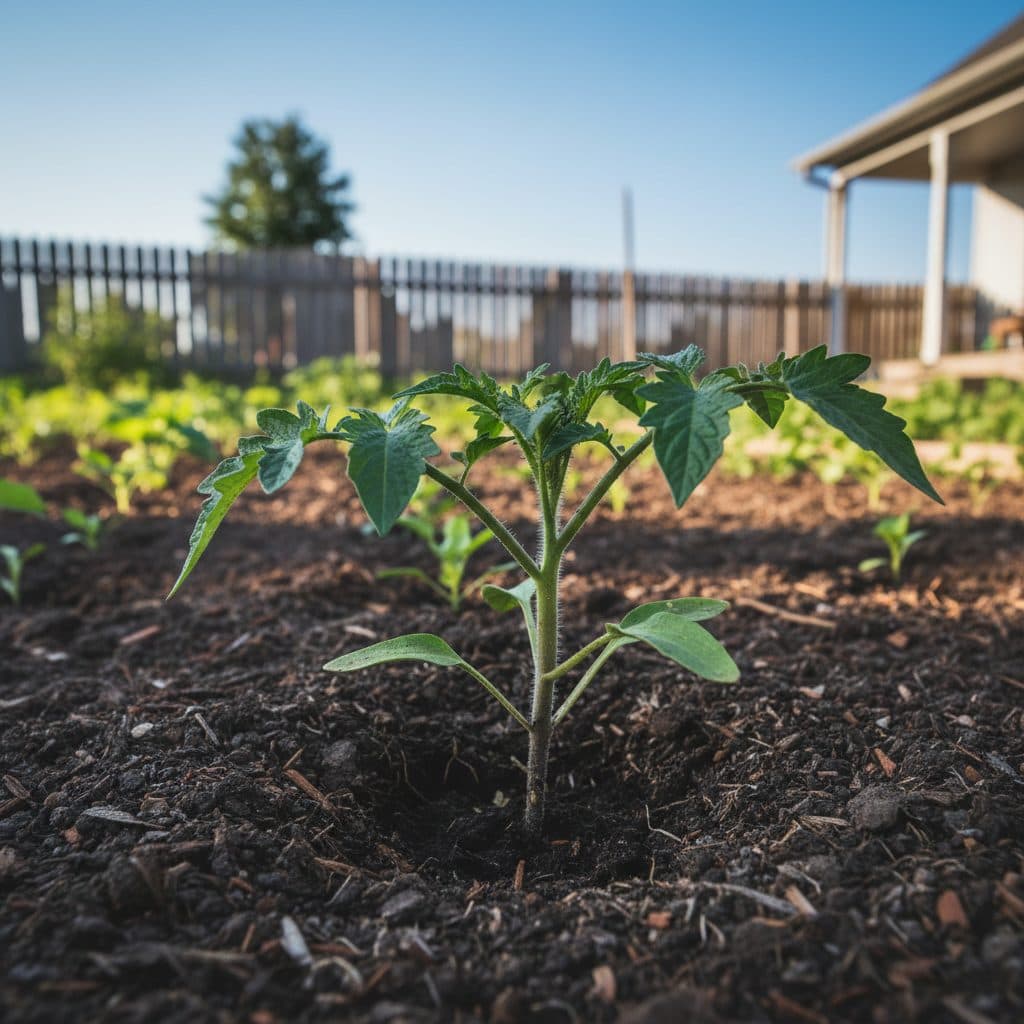
Key takeaways
- Harden off seedlings over seven to fourteen days, gradually exposing them to outdoor conditions to build resilience.
- Minimize root disturbance during transplanting by watering plants thoroughly before moving them and handling the root ball gently.
- Plant at the correct depth; tomatoes benefit from deep planting (up to 6 inches of stem below soil), while cucurbits prefer their original soil line.
- Ensure consistent soil moisture after transplanting, providing one to two gallons of water per plant immediately and maintaining a moist, but not waterlogged, environment.
- Apply a low-nitrogen starter fertilizer, such as a 5-10-5 or fermented soybean meal, to encourage root development rather than excessive foliage growth.
- Monitor newly transplanted plants for signs of stress, like wilting or yellowing, and provide temporary shade during the hottest parts of the day for the first three to five days.
Quick answer: To fix transplant shock in tomatoes and cucurbits, harden off seedlings, minimize root disturbance, plant at the correct depth, ensure consistent soil moisture, and apply low-nitrogen fertilizer. Monitor for stress and provide temporary shade.
In the fertile fields of central California, or a backyard garden in USDA zone 7, the transition from a cozy seed-starting tray to the open ground can be a perilous journey for young plants. Many growers, myself included, have watched promising tomato and cucurbit seedlings turn pale, wilt, or simply stop growing after transplanting. This common setback, known as transplant shock, can reduce yields by 20% or more and delay fruit production for weeks, which affects home gardeners and commercial operations working toward a specific harvest window.
Understanding and mitigating transplant shock is not just about saving individual plants; it is about ensuring a productive season. Vigorous plants, like the WL 712 variety mentioned in some research, demonstrate significantly better growth at bud stage than slow-growing types, and that supports a smooth transition [1]. This article will walk through practical, data-backed strategies to prepare your seedlings, execute a successful transplant, and provide the care needed for your plants to thrive, from the first true leaves to a bountiful harvest.
Recognizing and understanding transplant shock
Transplant shock manifests in several ways, often appearing within a few days to a week after moving seedlings outdoors. Common symptoms include yellowing leaves, wilting foliage, and a noticeable stalling of growth. For example, a healthy tomato seedling growing 1 inch per day might stop growing entirely for five to seven days after transplant. This slowdown is often due to root damage, as even careful handling can break fine root hairs essential for water and nutrient uptake. Research on yellow-poplar seedlings, for instance, showed a clear intolerance to flooding, a stress factor akin to poor drainage after transplant [2].
common causes of post-transplant stress
Beyond physical root damage, several environmental factors contribute to transplant shock. Sudden exposure to intense sunlight, strong winds, or significant temperature fluctuations (for example, a drop from a consistent 70°F indoor environment to outdoor temperatures fluctuating between 50°F and 85°F) can overwhelm young plants. Soil temperature is also critical; yellow-poplar seedlings respond poorly if soil temperatures are too low, ideally needing above 60°F for optimal growth [4]. Insufficient watering immediately after transplanting, or conversely, overwatering that leads to waterlogged soil, can also contribute to stress. Without proper care, plants may struggle to recover for two to three weeks, delaying fruit set significantly.
- Root disturbance: Damage to fine root hairs during removal from containers.
- Environmental stress: Abrupt changes in light, temperature, or wind exposure.
- Water imbalance: Too little or too much water in the new planting site.
- Nutrient deficiency: Lack of available nutrients in the new soil, or inability to absorb them due to root damage.
- Soil temperature: Cold soil below 60°F can inhibit root activity and nutrient uptake.
Preparing for success: hardening off seedlings
These recognizing and understanding points carry into this section, too.
The single most effective strategy to prevent transplant shock is hardening off your seedlings. This process gradually acclimates plants to outdoor conditions over a period of seven to fourteen days, preparing them for the harsher environment of your garden. Starting about two weeks before transplant, begin by moving your young tomatoes and cucurbits outdoors for a few hours each day, perhaps three to four hours on the first day, in a sheltered location with partial shade. Over the next week, gradually increase their exposure to direct sunlight and wind, leaving them out for longer periods, up to eight to ten hours daily.
steps for effective hardening off
During hardening off, keep an eye on the weather. Avoid exposing tender seedlings to temperatures below 50°F or strong winds above 15 mph. Reduce watering slightly during this period, allowing the top inch of soil to dry out between waterings. This encourages stronger root development and helps the plants cope with potential water stress after transplanting. For growers using controlled environments, a reflective indoor grow tent can be useful for managing light and temperature during the initial stages of growth before outdoor acclimation begins. By the end of the two-week period, your plants should be able to tolerate full sun and typical outdoor temperatures, ready for their permanent home.
- Gradual exposure: Start with two to four hours outdoors in partial shade.
- Increase duration: Extend outdoor time by one to two hours daily over seven to fourteen days.
- Reduce watering: Allow soil to dry slightly to encourage root strength.
- Monitor temperatures: Bring plants indoors if temperatures drop below 50°F.
- Full sun acclimation: By the end, plants should tolerate eight to ten hours of direct sun.
The transplant operation: technique and timing
That work on preparing sets up what follows here.
Timing your transplant is as important as the technique itself. The ideal time to transplant tomatoes and cucurbits is on a cloudy day, or in the late afternoon or early evening, typically after 5 PM, to allow plants to acclimate overnight before facing the full intensity of the sun. Ensure your garden soil is well-prepared, with good drainage and a pH between 6.0 and 6.8, as recommended by the USDA Natural Resources Conservation Service for many vegetable crops [6]. For those dealing with heavy clay soils, incorporating 2 to 3 inches of compost can significantly improve soil structure and drainage; more information can be found in our article on plants for clay soil.
proper planting depth and root care
When removing seedlings from their containers, water them thoroughly about one hour beforehand to ensure the root ball stays intact. Gently squeeze the sides of the container and invert it, supporting the plant by its base. Handle the root ball minimally, avoiding tearing or crushing. For tomatoes, plant them deeply, burying up to two-thirds of the stem, as they will develop new roots along the buried stem — this can add 6 inches of root depth. Cucurbits, such as cucumbers and melons, should be planted at the same depth they were in their original container, ensuring the root crown is level with the soil surface. After placing the plant, backfill the hole gently, firming the soil around the base to remove air pockets, then water immediately with one to two gallons of water per plant.
- Choose the right time: Late afternoon or a cloudy day after 5 PM.
- Prepare soil: Ensure good drainage, pH 6.0-6.8, and amend with compost if needed.
- Water before transplant: Hydrate seedlings one hour prior to moving.
- Handle gently: Minimize root disturbance, supporting the root ball.
- Plant depth: Tomatoes deep (2/3 stem), cucurbits at original soil line.
Post-transplant care for vigorous growth
Immediate and consistent care after transplanting matters for plant recovery and strong growth. Within the first 24 hours, ensure plants receive adequate water, about one to two gallons per plant, soaking the root zone deeply. For the first three to five days, consider providing temporary shade during the hottest part of the day, especially if temperatures exceed 85°F. This can be as simple as an overturned bucket or a piece of cardboard, protecting the plants from excessive sun stress while their roots establish. Even western yellow pine seedlings, known for their resilience, show improved recovery from stress when protected [5].
nutrition and ongoing protection
Avoid applying high-nitrogen fertilizers immediately after transplanting, as this can encourage leafy growth at the expense of root development. Instead, use a low-nitrogen, high-phosphorus starter solution, such as a 5-10-5 NPK ratio, or a natural option like fermented soybean meal, which provides a slow-release nutrient boost. Apply this at half strength, about one cup per plant, around the base. Continue to monitor soil moisture for the first two weeks, watering when the top inch of soil feels dry. Protecting plants from pests and diseases during this vulnerable period is also important; consider companion planting strategies for tomatoes, as discussed in our article on tomato companion plants, to deter common garden invaders. After two to three weeks, once new growth is evident, you can switch to your regular fertilization schedule.
- Immediate watering: One to two gallons per plant within 24 hours.
- Temporary shade: Protect from intense sun for three to five days if temperatures exceed 85°F.
- Low-nitrogen fertilizer: Use a 5-10-5 starter or fermented soybean meal for root growth.
- Consistent moisture: Water when the top inch of soil is dry for the first two weeks.
- Pest monitoring: Watch for early signs of pests or disease during establishment.
Transplant practices: good vs. poor outcomes
Practice | Outcome for seedlings |
|---|---|
Hardening off for 10 days | Robust, drought-tolerant plants; 90% survival rate. |
Direct transplant from indoors | High risk of wilting, yellowing; 40% survival rate in first week. |
Planting tomatoes 6 inches deep | Stronger root system, increased nutrient uptake, 20% more fruit. |
Planting tomatoes at original depth | Weaker root structure, slower growth, 15% less fruit. |
Watering 1 gallon per plant post-transplant | Adequate moisture for root establishment, reduced shock symptoms. |
Minimal watering post-transplant | Severe wilting, increased mortality, 30% yield loss. |
Root zone temperature: Maintaining soil temperatures above 60°F is critical for new root growth in warm-season vegetables, preventing a 25% slowdown in initial establishment.
Watering volume: Providing one to two gallons of water per plant immediately after transplanting can reduce wilting by up to 50% in the first 48 hours.
Shop essential garden supplies
Frequently asked questions
How long does transplant shock typically last?
Transplant shock usually lasts for five to seven days if conditions are optimal and care is consistent. In more severe cases, or with poor post-transplant care, plants might take two to three weeks to recover and show new growth.
Can I use fertilizer immediately after transplanting?
It is best to use a low-nitrogen starter fertilizer, such as a 5-10-5 NPK ratio, at half strength, immediately after transplanting. High-nitrogen fertilizers can stress the plant and inhibit root development in the first two weeks.
What is the ideal soil temperature for transplanting tomatoes?
For tomatoes, the ideal soil temperature for transplanting is consistently above 60°F, measured at a depth of 4 to 6 inches. Planting into colder soil can significantly slow root establishment and overall growth, potentially by 20%.
Should I water my seedlings before transplanting?
Yes, watering your seedlings thoroughly about one hour before transplanting is a critical step. This ensures the root ball remains intact and moist, minimizing physical damage and reducing initial water stress by 30%.
How can I tell if my plant is recovering from shock?
Signs of recovery include new leaf growth, the cessation of wilting, and a return to a healthy green color in previously yellowed leaves. You should typically see these improvements within one to two weeks if proper care is provided.
Is temporary shade necessary after transplanting?
Temporary shade for the first three to five days is highly beneficial, especially if daily temperatures exceed 85°F or if plants were not fully hardened off. This reduces intense sun stress, which can otherwise cause up to 40% more wilting.
References
- Figure 1: Slow-growing Aohan and vigorous-growing WL 712 plants at bud stage. (2023). Figure 1: Slow-growing Aohan and vigorous-growing WL 712 plants at bud stage..
- Yellow-Poplar Seedlings Intolerant to Flooding (1961). Yellow-Poplar Seedlings Intolerant to Flooding.
- Allelopathic Relationship between Yellow Birch and Sugar Maple Seedlings (1973). Allelopathic Relationship between Yellow Birch and Sugar Maple Seedlings.
- Notes and Observations: Yellow-Poplar Seedlings Respond to Soil Temperature (1965). Notes and Observations: Yellow-Poplar Seedlings Respond to Soil Temperature.
- Recovery of Western Yellow Pine Seedlings from Injury by Grazing Animals (1931). Recovery of Western Yellow Pine Seedlings from Injury by Grazing Animals.
- USDA Natural Resources Conservation Service (2024). USDA Natural Resources Conservation Service.