Key takeaways
- Alkaline soils with pH 7.5-8.5 are common across significant portions of the US Southwest and Mountain West, impacting nutrient availability.
- Regular soil testing, including pH, matters for understanding your garden’s specific conditions and guiding amendment strategies.
- Amending alkaline soils with organic matter like compost or aged manure can buffer pH and improve nutrient access over time.
- Choosing crops tolerant to high pH, such as many native plants and specific vegetables, is important for success in these regions.
- Iron chlorosis, a common issue in alkaline soils, can be managed with chelated iron foliar sprays or soil amendments.
- Water quality, often high in dissolved minerals in arid regions, can contribute to soil alkalinity and should be considered.
Quick answer: To garden successfully in alkaline soils (pH 7.5-8.5) common in the US Southwest and Mountain West, conduct regular soil tests, amend with organic matter, and choose high pH-tolerant plants. Managing nutrient deficiencies like iron chlorosis is also crucial for plant health.
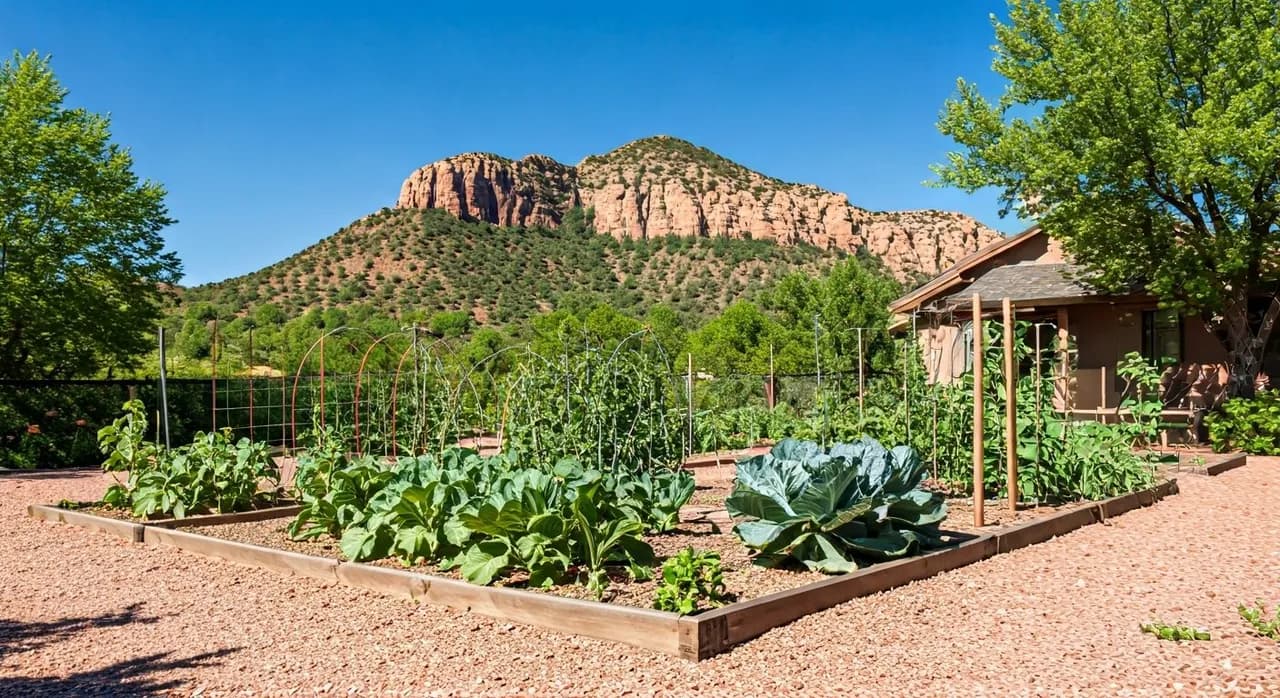
In states like Arizona, Nevada, Utah, and Colorado, home gardeners often face a unique challenge: alkaline soils. These soils, frequently registering pH values between 7.5 and 8.5, are particularly prevalent in arid and semi-arid regions of the American Southwest and Mountain West [3]. This high pH can significantly impact nutrient availability for plants, making gardening a different experience compared to regions with more neutral or acidic soils.
Understanding your soil’s specific pH is the first step toward a productive garden. While it might seem daunting to grow in soils that naturally lean towards alkalinity, many resilient and delicious plants thrive in these conditions. With proper soil testing, strategic amendments, and informed plant choices, you can grow a productive garden even when working with a pH of 8.0.
Understanding alkaline soils: pH 7.5-8.5 in the Southwest and Mountain West
The vast landscapes of the American Southwest and Mountain West, spanning states from California’s eastern deserts to the high plains of Wyoming, are characterized by diverse geology and climate. A common thread across much of this region is the prevalence of alkaline soils, often with pH levels ranging from 7.5 to 8.5. This alkalinity is largely due to the presence of calcium carbonate, or limestone, in the parent material from which these soils formed, combined with low rainfall that limits the leaching of basic cations. For instance, many soils in USDA zone 7b in New Mexico will naturally exhibit a pH above 7.8.
what high pH means for your plants
A soil’s pH level dictates the availability of essential plant nutrients. In alkaline soils, several crucial micronutrients, particularly iron, manganese, zinc, and copper, become less soluble and thus less accessible to plant roots [3]. Phosphorus availability can also be reduced above pH 7.0, even if the total amount in the soil is high. This can lead to nutrient deficiencies, manifesting as yellowing leaves (chlorosis), stunted growth, and reduced yields. For example, a tomato plant in pH 8.2 soil might show severe iron chlorosis, with new leaves turning bright yellow while veins remain green.
- Iron becomes less available, causing chlorosis in new growth.
- Manganese and zinc uptake are hindered, affecting photosynthesis.
- Phosphorus can bind with calcium, reducing its availability to roots.
- Boron and molybdenum generally remain available, or even increase.
- Overall plant vigor and disease resistance can be compromised.
Soil testing: your first step to success
Before you even think about planting a single seed, understanding your specific soil conditions is paramount. A comprehensive soil test provides a baseline of your garden’s pH, nutrient levels, and organic matter content. Many state university extension services, such as those in Colorado or Arizona, offer affordable soil testing for home gardeners, typically costing between $15 and $30. These reports often include recommendations tailored to your region and desired crops, providing actionable insights for your 100 square foot garden plot.
interpreting your soil test results
When you receive your soil test results, focus on the pH reading first. If it’s consistently above 7.5, you’re dealing with alkaline soil. The report will also detail levels of macronutrients like nitrogen (N), phosphorus (P), and potassium (K), as well as micronutrients. Pay close attention to iron, manganese, and zinc levels, as these are often deficient in high-pH environments. For a quick check of pH and moisture between laboratory tests, a 3-in-1 Soil pH, Moisture & Light Meter can give a rough moisture reading, but the pH probes on these meters are unreliable and should not be used to make amendment decisions.
- Identify your soil’s exact pH value, for example, 8.1.
- Note deficiencies in iron, manganese, or phosphorus.
- Check the organic matter percentage; aim for at least 3-5%.
- Understand your soil’s texture – sandy, silty, or clay.
- Look for recommendations on nutrient amendments or pH adjusters.
Amending alkaline soils: practical strategies for pH 7.5-8.5
While drastically changing the pH of highly buffered alkaline soils (those with significant calcium carbonate) can be a long-term battle, you can certainly improve growing conditions for your plants. The most effective long-term strategy is to incorporate generous amounts of organic matter. Materials like well-rotted compost, aged manure, and leaf mold help to slowly lower pH by releasing organic acids as they decompose. Adding 2-4 inches of compost annually will not move the pH of a calcareous soil much, but it improves structure, water holding and micronutrient availability, which is usually what limits plants in an area like USDA zone 6b in Utah.
choosing the right amendments
Beyond organic matter, specific amendments can address nutrient deficiencies common in alkaline soils. Elemental sulfur can be added to lower pH, but its effects are often slow and temporary in highly buffered soils, requiring applications of 10-20 pounds per 1000 square feet to achieve a noticeable change. Chelated iron products, available as foliar sprays or soil drench, provide readily available iron to plants suffering from chlorosis. For example, a foliar application of chelated iron can green up yellowing leaves within 7-10 days. Consider building a thriving organic gardening soil by focusing on these practices.
- Add 2-4 inches of finished compost or aged manure yearly.
- Incorporate peat moss for acid-loving plants in specific beds.
- Use elemental sulfur cautiously and consistently for pH reduction.
- Apply chelated iron (Fe-EDDHA is effective at high pH) directly to plants.
- Grow cover crops like hairy vetch or crimson clover to add organic matter.
Choosing tolerant crops for high pH environments
One of the most effective strategies for gardening in alkaline soils is to select plants that naturally tolerate or even prefer higher pH levels. Many native plants of the Southwest and Mountain West are perfectly adapted to these conditions, thriving in soils with pH 8.0 or higher. For example, species like rubber rabbitbrush (Ericameria nauseosa) or Apache plume (Fallugia paradoxa) are alkaline-adapted natives that are readily available from western native-plant nurseries and hardy well below zone 5b. Don’t fight your soil; work with it by embracing plants that are already well-suited to your local environment.
vegetables and fruits that thrive
While blueberries and azaleas might struggle, a wide variety of vegetables and fruits can produce excellent yields in alkaline conditions. Many members of the cabbage family (Brassicas) like broccoli, cabbage, and kale, perform well up to pH 7.5-8.0. Root vegetables such as carrots, beets, and radishes are also quite tolerant. Even some legumes, including Garden Peas and most beans, can flourish. Consider growing corn, melons, and squash, which often show good tolerance to pH up to 7.8. For fruit trees, apricots tend to handle alkaline soils better than most stone fruit, while peaches are notably prone to lime-induced iron chlorosis on high-pH soils; on calcareous ground the rootstock matters more than the species.
- Asparagus, beans, beets, and broccoli.
- Cabbage, carrots, cauliflower, and corn.
- Cucumbers, lettuce, melons, and onions.
- Peas, radishes, spinach, and squash.
- Apricots, cherries, and peaches among fruit trees.
pH Tolerance of Common Garden Vegetables
Vegetable | Optimal pH Range | Tolerance to pH 7.5-8.5 |
|---|---|---|
Blueberry | 4.5-5.5 | Poor (will show severe chlorosis) |
Potato | 5.0-6.0 | Poor (susceptible to scab) |
Tomato | 6.0-6.8 | Moderate (prone to iron deficiency) |
Pepper | 6.0-7.0 | Moderate (may need iron supplements) |
Corn | 6.0-7.5 | Good (can tolerate up to 7.8) |
Carrot | 6.0-7.0 | Good (tolerates up to 8.0) |
Cabbage | 6.0-7.5 | Good (tolerates up to 7.8) |
Asparagus | 6.5-7.5 | Excellent (prefers neutral to slightly alkaline) |
Beet | 6.0-7.5 | Excellent (tolerates up to 8.0) |
Soil pH Range: Alkaline soils in the Southwest and Mountain West commonly exhibit pH values between 7.5 and 8.5, impacting nutrient availability [3].
Organic Matter Goal: Aim for at least 3-5% organic matter in your soil to improve buffering capacity and nutrient retention, which can be achieved with annual compost additions of 2-4 inches.
Frequently asked questions
What is the ideal pH range for most garden vegetables?
Most garden vegetables prefer a slightly acidic to neutral soil pH, typically ranging from 6.0 to 7.0. However, many common crops can still produce well in soils up to pH 7.5, and some even higher with proper care.
Can I permanently lower my soil’s pH from 8.0 to 6.5?
Permanently lowering the pH of highly buffered alkaline soils from 8.0 to 6.5 is extremely challenging and often impractical for home gardeners. It would require substantial and continuous additions of acidifying amendments like elemental sulfur, potentially 10-20 pounds per 1000 square feet annually, with effects often being temporary.
What are the best organic amendments for alkaline soil?
The best organic amendments for alkaline soil are well-rotted compost, aged manure, and leaf mold. These materials slowly release organic acids as they decompose, helping to buffer pH and improve nutrient availability over time, especially with annual applications of 2-4 inches.
How often should I test my soil’s pH?
For new gardens or areas with known pH issues, test your soil annually for the first 2-3 years to monitor changes. Once conditions stabilize, testing every 3-5 years is generally sufficient, though a quick check with a home meter can be done monthly.
What is iron chlorosis and how do I treat it in alkaline soils?
Iron chlorosis is a nutrient deficiency where plant leaves turn yellow, often with green veins, due to insufficient iron uptake in high pH soils. You can treat it by applying chelated iron products directly to the soil or as a foliar spray, which can show results within 7-10 days.
Does water quality affect soil pH in arid regions?
Yes, water quality significantly affects soil pH in arid regions like the Southwest. Irrigation water often contains high levels of dissolved calcium and magnesium carbonates, which can contribute to increasing soil alkalinity over time, especially if the water pH is above 7.5.
References
- Pollen preservation in alkaline soils of the American Southwest (1994). Pollen preservation in alkaline soils of the American Southwest.
- The Mountain West (2023). The Mountain West.
- Alkaline Soils (2023). Alkaline Soils.
- USDA Natural Resources Conservation Service (2024). USDA Natural Resources Conservation Service.