Key takeaways
- Tulsi, or holy basil, thrives as an annual in USDA zones 4-9 and as a perennial in zones 10-11, preferring 6-8 hours of direct sunlight daily.
- Plant tulsi seeds 1/4 inch deep in well-draining soil with a pH between 6.0 and 7.5, maintaining consistent moisture.
- Harvest tulsi leaves and flowers before the plant goes to seed, typically 60-75 days after planting, to encourage bushier growth.
- Dry tulsi at low temperatures, around 95-105°F, using a dehydrator or air-drying in a well-ventilated area to preserve its volatile compounds.
- Blend dried tulsi with complementary herbs like mint or ginger, using one teaspoon of tulsi per 8 ounces of hot water for a beneficial tea.
- Regular consumption of tulsi tea may support the body’s adaptation to stress and contribute to overall well-being.
Quick answer: Tulsi (holy basil) thrives as an annual in USDA zones 4-9 and perennial in 10-11, requiring 6-8 hours of sun and well-draining soil. Harvest leaves before seeding, dry at low temperatures, and brew into a wellness tea.
In the humid summers of the American Southeast, from USDA zone 7b up through the cooler reaches of zone 9, many home gardeners are discovering the benefits of growing tulsi, or holy basil (Ocimum tenuiflorum). This revered herb, traditionally used for centuries in Ayurvedic practices, is gaining traction among US growers for its adaptogenic properties and its pleasant, slightly spicy aroma [1]. With careful planning, you can grow a substantial crop of tulsi in your backyard. Before making it a daily drink, note the standard cautions: holy basil has shown anti-fertility effects in animal studies and is generally avoided by people who are pregnant or trying to conceive, and it has mild antiplatelet activity and may lower blood sugar, so it can interact with blood thinners and diabetes medication. Talk to a healthcare provider before drinking it daily, particularly if you take prescription medication.
This article will guide you through the process of growing tulsi, from seed to harvest, and then how to properly dry and blend it into a therapeutic tea. We will focus on practical, numerate advice, so your efforts yield a good supply of this beneficial herb, whether you are in a mild climate like coastal California (USDA zone 10) or a more challenging region like the Great Lakes states (USDA zone 5).
understanding tulsi
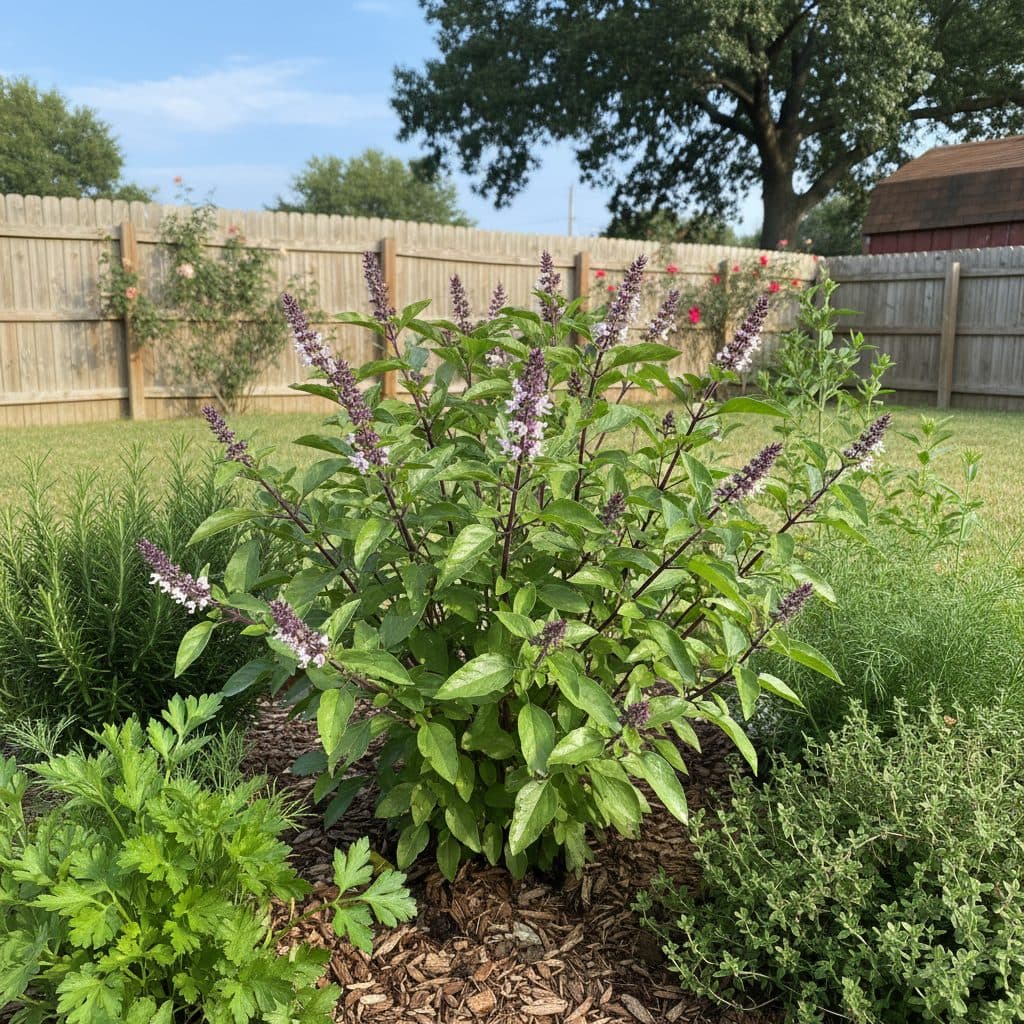
Tulsi, known botanically as Ocimum tenuiflorum or Ocimum sanctum, holds a prominent place in traditional wellness systems. There are three main types commonly grown: Rama, Krishna, and Vana tulsi, each with slightly different flavor profiles and growth habits. Rama tulsi, with its green leaves, is often described as having a milder, sweeter taste, while Krishna tulsi features purple-tinged leaves and a more pungent, peppery flavor [1]. Vana tulsi, often wild-grown, has a distinctly lemony aroma and can reach heights of 3-4 feet in optimal conditions.
the adaptogenic advantage
The primary reason for tulsi’s growing popularity in the US is its classification as an adaptogen, a substance believed to help the body adapt to stress and maintain balance [3]. Research indicates that tulsi contains a complex array of compounds, including eugenol, rosmarinic acid, and ursolic acid, which contribute to its beneficial effects [4]. These compounds work synergistically, offering support for various bodily systems. Growing your own gives you a fresh supply and control over how it was dried and stored, usually for less than the cost of buying dried leaf.
- Rama Tulsi: Green leaves, milder flavor, often preferred for daily tea.
- Krishna Tulsi: Purple leaves, spicier, peppery notes, high in anthocyanins.
- Vana Tulsi: Wild forest tulsi, lemony aroma, grows taller, up to 48 inches.
- Adaptogenic Properties: Helps the body manage physical and mental stress.
- Key Compounds: Contains eugenol, ursolic acid, and rosmarinic acid.
growing tulsi in us climates
Tulsi is remarkably adaptable, thriving as a perennial in tropical and subtropical regions (USDA zones 10-11) and as a vigorous annual in cooler climates (USDA zones 4-9) [1]. In regions like Florida or Southern California, plants can live for several years, reaching heights of 24-36 inches. For gardeners in states like Ohio or Pennsylvania, starting seeds indoors 6-8 weeks before the last frost date is crucial to ensure a productive growing season. The ideal outdoor planting time is when soil temperatures consistently reach 65°F or higher, typically in late May or early June in many northern states.
soil, light, and water requirements
Tulsi plants require at least 6-8 hours of direct sunlight daily to produce a robust harvest. They prefer well-draining soil with a pH between 6.0 and 7.5. On heavy clay, work in compost, and do not add sand: in the quantities a home gardener can realistically add, sand makes clay set harder rather than drain better. For gardeners in the Pacific Northwest, where soils can be acidic, lime will raise pH, but the rate depends on your soil texture and starting pH, so follow the recommendation on a soil test rather than guessing. Wood ash acts faster and more strongly than lime and also adds potassium, so use it sparingly if at all. Consistent moisture is key; aim for 1 inch of water per week, either from rainfall or irrigation. Overwatering can lead to root rot, especially in cooler, wetter climates, so checking soil moisture with a 3-in-1 soil pH, moisture, and fertility meter is a good practice. Planting seeds 1/4 inch deep and spacing seedlings 12-18 inches apart will provide ample room for growth.
- USDA Zones: Perennial in 10-11, annual in 4-9.
- Sunlight: Minimum six hours of direct sun daily.
- Soil pH: Optimal range is 6.0 to 7.5.
- Watering: One inch of water per week, consistent moisture.
- Planting Depth: Sow seeds 1/4 inch deep.
harvesting and drying tulsi for potency
The timing of your tulsi harvest significantly impacts the potency and flavor of your tea. Begin harvesting when the plant is well-established, typically 60-75 days after planting, and before it starts to flower extensively [1]. While the flowers are also beneficial, harvesting the leaves and tender stems before the plant fully goes to seed encourages bushier growth and a higher yield of leaves. In a typical growing season in a USDA zone 6 garden, you can expect 2-3 significant harvests from a single plant. Use clean pruning shears or scissors to snip off the top 4-6 inches of the plant, leaving at least two sets of leaves on the lower stem to promote regrowth.
drying methods for preservation
Proper drying is essential to preserve tulsi’s volatile compounds and prevent mold. Air drying is a simple and effective method for small batches; gather stems into small bundles and hang them upside down in a warm, dry, well-ventilated area, away from direct sunlight. The ideal temperature for air drying is between 70-80°F with humidity below 60%. For larger harvests or in humid climates like the Gulf Coast, a food dehydrator is a superior choice. Drying tulsi leaves at 95-105°F for 12-24 hours helps to preserve its aromatic oils and beneficial compounds [5]. Once completely dry—the leaves should crumble easily—store them in airtight containers, such as glass jars, in a cool, dark place. Properly stored dried tulsi can maintain its potency for 12-18 months, providing a consistent supply for your daily tea ritual.
- Harvest Time: 60-75 days after planting, before heavy flowering.
- Harvest Technique: Snip top 4-6 inches, leaving two leaf sets.
- Air Drying: Hang bundles in a warm, dry, well-ventilated spot (70-80°F).
- Dehydrator Drying: Use 95-105°F for 12-24 hours.
- Storage: Airtight containers in a cool, dark place for 12-18 months.
blending tulsi for a daily wellness tea
Once you have a supply of dried tulsi, the next step is to transform it into a soothing and beneficial tea. For a basic tulsi tea, a common ratio is one teaspoon of dried tulsi leaves per 8 ounces of hot water [5]. Steep the leaves for 5-10 minutes, depending on your desired strength. For a stronger brew, you can use 1.5 teaspoons of tulsi per cup. The flavor of tulsi is unique—slightly peppery, sometimes clove-like, and subtly sweet. Experimenting with steeping times and leaf quantities will help you find your preferred balance, ensuring a pleasant daily ritual.
complementary herbs and blending tips
Tulsi blends beautifully with a variety of other herbs, enhancing both flavor and therapeutic properties. For a calming evening tea, combine tulsi with one-half teaspoon of dried chamomile flowers or a quarter teaspoon of dried lavender per cup. If you are seeking an invigorating morning blend, add a few slices of fresh ginger or a quarter teaspoon of dried peppermint leaves. Many growers also enjoy blending tulsi with other members of the mint family, such as garden sage or even sweet basil, which can be grown alongside tulsi in similar conditions. Consider a 2:1 ratio of tulsi to a complementary herb for a balanced flavor profile. Store your custom blends in clearly labeled, airtight containers to maintain freshness for up to six months, ensuring your home apothecary is well-stocked for daily use.
- Basic Ratio: One teaspoon dried tulsi per 8 ounces hot water.
- Steeping Time: 5-10 minutes for optimal flavor and potency.
- Calming Blend: Combine tulsi with chamomile or lavender (e.g., 2:1 ratio).
- Invigorating Blend: Add fresh ginger or dried peppermint.
- Storage: Airtight containers, labeled, in a cool, dark place for six months.
integrating tulsi into your home apothecary
Cultivating and preparing tulsi for tea is a foundational step in building a practical home apothecary. The value of growing your own medicinal herbs extends beyond cost savings, though a productive plant does displace a fair amount of bought tea over a season. Beyond daily tea, tulsi can be incorporated into other preparations, such as tinctures or infused oils, further expanding its utility in your home.
the broader benefits of an herbal garden
An herbal garden, starting with a plant like tulsi, offers numerous advantages. It provides fresh ingredients for culinary use, supports local pollinators, and reduces your reliance on external supply chains. Many growers find that dedicating even a small 4×4 foot raised bed to herbs like tulsi, mint, and lemon balm can provide a significant portion of their annual herbal needs. For those interested in expanding their herbal knowledge, resources like starting a herb garden: the easiest herbs to grow offer practical advice. By understanding the growth cycles and specific needs of each plant, you can create a resilient and productive garden that contributes significantly to your family’s well-being, year after year. Growing your own herbs replaces some of what you would otherwise buy, and gives you control over how the plants were grown and dried.
- Cost Savings: A productive plant displaces a fair amount of bought tea over a season.
- Freshness: Ensures a potent supply of beneficial compounds.
- Versatility: Can be used in teas, tinctures, and infused oils.
- Pollinator Support: Herbal gardens attract beneficial insects.
- Self-Sufficiency: Reduces reliance on commercial herbal products.
Comparison of Tulsi Drying Methods
Method | Pros | Cons | Optimal Conditions |
|---|---|---|---|
Air Drying | Low cost, simple, no special equipment needed | Slower, susceptible to humidity and dust, risk of mold if not well-ventilated | 70-80°F, <60% humidity, good airflow |
Dehydrator | Faster, consistent results, better preservation of compounds, controlled environment | Requires equipment, uses electricity | 95-105°F, 12-24 hours, even air circulation |
Oven Drying | Faster than air drying, uses common kitchen appliance | Risk of scorching, uneven drying, higher temperatures can degrade compounds | Lowest oven setting (150-175°F), door ajar, constant monitoring |
Plant Height: Tulsi plants can reach 18-24 inches in height in a single growing season, providing a substantial harvest of leaves and flowers [1].
Yield Potential: Yields vary widely with season length and how often you cut, so plan around what your own plants give you rather than a fixed figure.
Frequently asked questions
What USDA zones is tulsi best suited for?
Tulsi is best suited as a perennial in USDA zones 10-11, where it can grow year-round. In zones 4-9, it is successfully grown as an annual, requiring replanting each spring after the last frost date, typically when soil temperatures reach 65°F.
How much sunlight does tulsi need?
Tulsi plants require a minimum of six to eight hours of direct sunlight daily to thrive and produce a good yield of leaves. Insufficient sunlight, such as less than four hours, can result in leggy growth and reduced potency.
When is the best time to harvest tulsi for tea?
The best time to harvest tulsi for tea is when the plant is mature, usually 60-75 days after planting, and before it flowers extensively. Regular harvesting of the top 4-6 inches of growth encourages the plant to become bushier and produce more leaves.
What is the ideal temperature for drying tulsi leaves?
For optimal preservation of its volatile compounds, tulsi leaves should be dried at low temperatures, ideally between 95-105°F. This can be achieved using a food dehydrator, which typically completes the process within 12-24 hours.
Can I grow different types of tulsi together?
Yes, you can grow different types of tulsi, such as Rama, Krishna, and Vana, together in the same garden. They generally have similar growing requirements, and interplanting them can lead to a diverse harvest for blending unique tea flavors.
How long does dried tulsi last when stored properly?
When stored properly in airtight containers in a cool, dark place, dried tulsi leaves can maintain their potency and flavor for 12-18 months. Beyond this period, while still safe to consume, their beneficial compounds may begin to degrade.
References
- Holy Basil/Tulsi (Ocimum tenuiflorum/sanctum) (2022). Holy Basil/Tulsi (Ocimum tenuiflorum/sanctum).
- Formulation and evolution of tulsi (holy basil) (2025). Formulation and evolution of tulsi (holy basil).
- Therapeutic Benefits of Holy Basil (Tulsi) (2025). Therapeutic Benefits of Holy Basil (Tulsi).
- Chemical constituents and pharmacological action of Ocimum sanctum (Indian holy basil-Tulsi) (2016). Chemical constituents and pharmacological action of Ocimum sanctum (Indian holy basil-Tulsi).
- Tulsi (Holy Basil) (Ocimum tenuiflorum): The Sacred Herb of Wellness (2025). Tulsi (Holy Basil) (Ocimum tenuiflorum): The Sacred Herb of Wellness.
- USDA Natural Resources Conservation Service (2024). USDA Natural Resources Conservation Service.