Key takeaways
- Select herbs that are naturally compact or can be pruned to fit container life, such as chamomile or peppermint, suitable for USDA zones 4-9.
- Utilize containers with a minimum 6-inch diameter for most herbs, ensuring adequate drainage holes to prevent root rot.
- Provide 6-8 hours of direct sunlight daily for optimal essential oil production in many medicinal herbs, especially those like Moldavian balm.
- Implement consistent watering practices, checking soil moisture daily with a meter, and feed with a balanced liquid fertilizer at 50% strength every 2-3 weeks.
- Harvest herbs like chamomile when flowers are fully open, typically in mid-morning, when their medicinal compound content is highest.
- Prepare container herbs for winter by bringing them indoors when temperatures consistently drop below 45°F, providing supplemental light if needed.
Quick answer: To grow medicinal herbs in containers, select compact varieties or those that respond well to pruning, ensure adequate drainage, provide 6-8 hours of direct sunlight, and use a well-aerated potting mix. Consistent watering and feeding maintain plant health and potency.
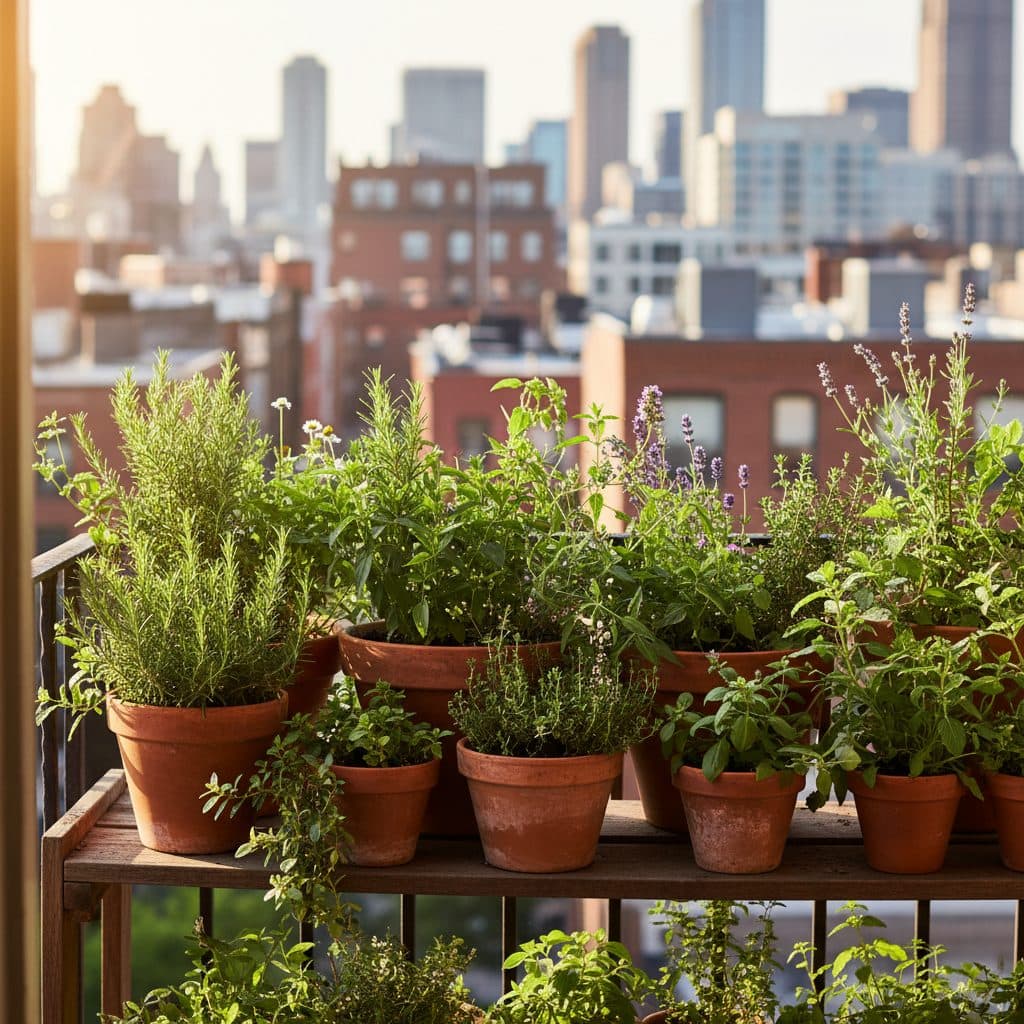
Growers with limited space, such as an apartment balcony or small patio, can cultivate a productive collection of medicinal herbs. Even with limited space, such as a small patio or an apartment balcony, cultivating a home apothecary is entirely achievable. Even a small balcony has room for a dozen or so containers, turning unused space into a productive garden.
Selecting species that suit container culture and matching them to your USDA zone (from zone 5 to zone 9) allows reliable harvests from spring through late fall.
Choosing the right herbs for small spaces
These takeaways points carry into this section, too.
Plant selection determines success in small spaces. Focus on species known for their compact growth habits or those that respond well to pruning. For instance, peppermint (Mentha piperita) and spearmint (Mentha spicata) are vigorous growers but can be contained effectively in 10-inch pots, preventing their spread. Chamomile (Chamomilla recutita) is another excellent choice, thriving in containers as small as 6 inches in diameter; it is an annual, so a hardiness range does not really apply — sow it fresh each year in any zone instead of expecting the plant to overwinter [4]. Most commonly used medicinal herbs can be grown in containers, offering a wide array of options.
Understanding herb-specific needs
Consider the specific light and water requirements of each herb. Lavender (Lavandula angustifolia), for example, prefers full sun — at least six hours daily — and well-draining soil, making it ideal for a sunny balcony in USDA zones 5-9. Conversely, lemon balm (Melissa officinalis) tolerates partial shade, needing only four hours of direct light, and can thrive in 8-inch containers. For more ideas on easy-to-grow herbs, check out our guide on starting a herb garden.
- Chamomile: Compact, annual, ideal for 6-inch pots.
- Peppermint: Spreading, needs 10-inch pots, thrives in partial shade.
- Lavender: Sun-loving, requires 8-inch or larger containers.
- Lemon Balm: Tolerates partial shade, grows well in 8-inch pots.
- Thyme: Drought-tolerant, perfect for 6-inch containers or hanging baskets.
Container selection and optimal soil mixes
The choice of container significantly impacts plant health. For most medicinal herbs, a container with a minimum 6-inch diameter and depth is recommended, though larger herbs like rosemary may need 12-inch pots. All containers must have adequate drainage holes (at least three 0.5-inch holes) to prevent waterlogging and root rot. Terracotta pots are excellent for herbs that prefer drier conditions, as they allow for better air circulation and moisture evaporation, often drying out 20-30% faster than plastic pots.
Crafting a potting mix
A high-quality potting mix is essential for container success. Avoid using garden soil, which can compact in pots and introduce pests or diseases. A good mix typically consists of 50% peat moss or coco coir, 30% perlite or vermiculite for drainage, and 20% compost for nutrients. This blend provides aeration and moisture retention for healthy root development. For herbs like lavender or sage that prefer slightly alkaline conditions, adding a tablespoon of agricultural lime per gallon of potting mix can raise the pH by 0.5 to 1.0 points.
- Peat Moss/Coco Coir: Provides moisture retention, 50% of mix.
- Perlite/Vermiculite: Ensures drainage and aeration, 30% of mix.
- Compost: Supplies essential nutrients, 20% of mix.
- Sand: Optional for very well-draining mixes, 10% maximum.
- Agricultural Lime: Adjusts pH for specific herbs, 1 tbsp per gallon.
Light, watering, and feeding strategies
Most medicinal herbs require adequate direct sunlight. A minimum of six hours of direct sunlight daily is ideal for species like rosemary, thyme, and lavender. Balconies facing south or west typically receive the most intense light, often exceeding eight hours a day. Research on Dracocephalum moldavica (Moldavian balm) shows that light intensity significantly influences its medicinal traits, with higher light levels associated with greater essential oil content [2]. If your balcony receives less than six hours of direct sun, consider herbs like mint, lemon balm, or parsley, which tolerate partial shade.
Maintaining moisture and nutrients
Container herbs require consistent watering because pots dry out faster than garden beds. Check the soil moisture daily by sticking your finger about one inch deep; if it feels dry, it’s time to water. A soil moisture meter can provide a more accurate reading, typically indicating when moisture levels drop below 30%. During hot summer months, some plants may need watering twice a day. Fertilize container herbs every 2-3 weeks with a balanced liquid organic fertilizer diluted to 50% strength. Over-fertilization can lead to lush foliage but reduced medicinal potency, so follow package instructions carefully, typically applying 1 tablespoon per gallon of water.
- Sunlight: 6-8 hours direct sun for most herbs.
- Watering Frequency: Daily check, water when top inch is dry.
- Fertilization: Every 2-3 weeks with 50% strength liquid feed.
- Moisture Meter: Use to maintain soil moisture above 30%.
- Partial Shade Herbs: Mint, lemon balm, parsley need 4 hours of sun.
Harvesting for potency and pest prevention
The timing and method of harvesting significantly impact the medicinal potency of your herbs. For most leafy herbs like peppermint or lemon balm, harvest in the morning after the dew has dried but before the sun is too intense, typically between 8:00 AM and 10:00 AM. This is when essential oil content is often at its peak. For flowering herbs like chamomile, harvest the blossoms when they are fully open, when their essential oil content is highest [4]. Never remove more than one-third of the plant at a time to ensure continued growth and subsequent harvests, which can occur every 3-4 weeks.
Managing common container pests
Container gardens, even on balconies, can attract pests. Common culprits include aphids, spider mites, and whiteflies. Inspect your plants regularly, at least once a week, for any signs of infestation. A strong spray of water can dislodge many pests, especially aphids. For more persistent issues, an insecticidal soap solution (2 tablespoons per gallon of water) applied every 5-7 days can be effective. Companion planting, such as placing marigolds near your herbs, can also deter pests naturally. Ensure good air circulation around your plants, keeping at least 2 inches between containers, to reduce humidity and fungal issues.
- Leafy Herbs: Harvest in morning, 8:00 AM-10:00 AM.
- Flowering Herbs: Harvest when fully open, when potency peaks.
- Harvest Limit: Never remove more than one-third of plant.
- Pest Inspection: Weekly checks for aphids, mites, whiteflies.
- Insecticidal Soap: 2 tbsp per gallon of water, apply every 5-7 days.
Extending the growing season and winter protection
For many medicinal herbs, especially perennials in colder climates like USDA zones 3-6, extending the growing season requires proactive measures. As outdoor temperatures consistently drop below 45°F in late fall, it’s time to prepare. Consider bringing tender perennials like rosemary, lemon verbena, and stevia indoors. Before moving them, inspect plants thoroughly for pests and treat any infestations to avoid introducing them into your home. A thorough rinse with water and an application of insecticidal soap knocks back most of the pests before the plant comes indoors.
Overwintering and dormant care
Indoors, place plants in the brightest available window, ideally south-facing, or supplement with a grow light for 12-14 hours daily. Reduce watering frequency, allowing the top 2-3 inches of soil to dry out between waterings, as plants enter a semi-dormant state. Roots in a pot sit much closer to air temperature than roots in the ground, so a container plant needs to be rated roughly two zones hardier than your own to come through winter outdoors. Wrapping pots in burlap or bubble wrap, or sinking them inside a larger container packed with straw, buys a few degrees of protection — useful in a cold snap, but not a whole zone. In zone 5 and colder, the reliable options are to sink the pot in the ground or move it into an unheated garage or shed.
- Indoor Move: Bring tender herbs indoors below 45°F.
- Pest Check: Inspect and treat plants before moving indoors.
- Indoor Light: South-facing window or 12-14 hours grow light.
- Winter Watering: Reduce frequency, allow top 2-3 inches to dry.
- Outdoor Insulation: Wrap or heel in pots; insulation buys a few degrees, not a whole zone.
Medicinal herb container growing guide
Herb | Container Size (min) | Sunlight (hours/day) | USDA Zones |
|---|---|---|---|
Chamomile | 6 inches | 6+ | 3-9 |
Peppermint | 10 inches | 4-6 | 3-11 |
Lavender | 8 inches | 6+ | 5-9 |
Lemon Balm | 8 inches | 4-6 | 3-7 |
Rosemary | 12 inches | 6+ | 7-10 |
Thyme | 6 inches | 6+ | 4-9 |
Balcony Space: Even a compact balcony has room for a dozen or so containers.
Potency Boost: Chamomile grown in full sun generally carries more essential oil than shade-grown plants [4].
Drainage requirements: Ensure containers have at least three 0.5-inch drainage holes to prevent root rot, which can kill plants within 7-10 days.
Frequently asked questions
What size container is best for most medicinal herbs?
For most medicinal herbs, a container with a minimum 6-inch diameter and depth is recommended. Larger herbs like rosemary may require 12-inch pots to accommodate their root systems and growth, ensuring they thrive for several seasons.
How much sunlight do medicinal herbs need on a balcony?
Most medicinal herbs require at least six hours of direct sunlight daily for optimal growth and medicinal potency. Balconies facing south or west typically provide sufficient light, often exceeding eight hours, which supports higher essential oil content in some species [2].
Can I use regular garden soil in my containers?
It is not recommended to use regular garden soil in containers as it can compact, leading to poor drainage and aeration. A specialized potting mix, typically 50% peat moss, 30% perlite, and 20% compost, provides the ideal structure for container-grown herbs.
How often should I water container herbs?
Container herbs generally need more frequent watering than garden beds. Check the soil moisture daily by feeling the top inch; if it’s dry, water thoroughly. During hot summer periods, some plants may require watering twice a day to maintain optimal moisture levels.
When is the best time to harvest medicinal herbs?
For most leafy herbs, harvest in the morning after the dew has dried, typically between 8:00 AM and 10:00 AM, when essential oil content is highest. For flowering herbs like chamomile, harvest when the blossoms are fully open, when active compounds are highest [4].
References
- Herbs (2024). Herbs.
- Phenological Variation in Medicinal Traits of<i>Dracocephalum moldavica</i>L. (Lamiaceae) under Different Growing Conditions (2013). Phenological Variation in Medicinal Traits of<i>Dracocephalum moldavica</i>L. (Lamiaceae) under Different Growing Conditions.
- Herbs IX, Herbs [growing on] Stones Group, 19 kinds (2022). [Herbs IX, Herbs \growing on] Stones Group, 19 kinds.
- Growing Conditions and the Essential Oil of Chamomile,<i>Chamomilla recutita</i>(L.) Rauschert (1994). Growing Conditions and the Essential Oil of Chamomile,<i>Chamomilla recutita</i>(L.) Rauschert.
- The use of apartment balconies: context, design and social norms (2022). The use of apartment balconies: context, design and social norms.
- USDA Natural Resources Conservation Service (2024). USDA Natural Resources Conservation Service.