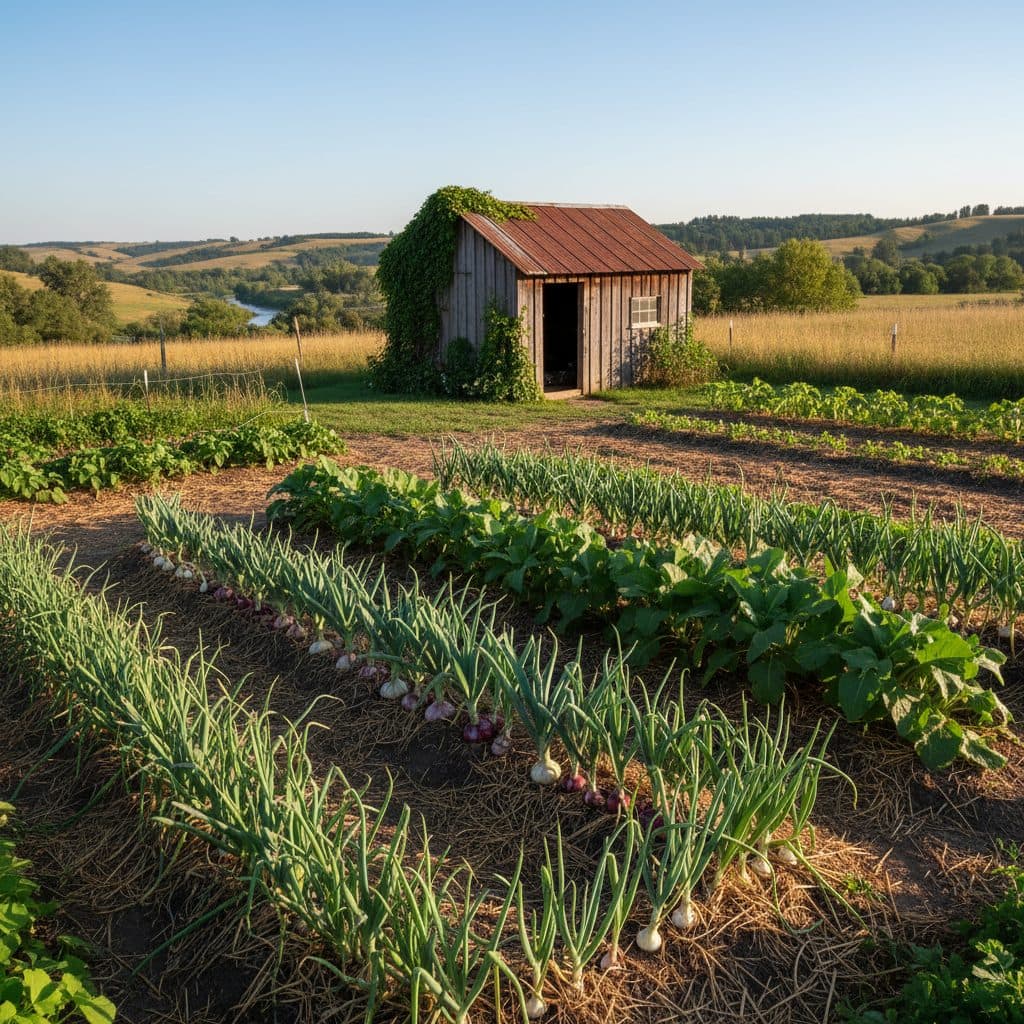
Key takeaways
- Allium crops, including onions, garlic, leeks, and green onions, can be successfully grown across most of the US, from USDA Zone 3 to 9.
- Garlic should be planted in the fall, typically six to eight weeks before the first hard frost, for harvest the following summer.
- Onions are sensitive to day length, requiring specific varieties (long-day, short-day, intermediate) to bulb properly based on your latitude.
- Leeks benefit from blanching, achieved by mounding soil around the stems, which can extend the white edible portion up to 10-12 inches.
- Green onions offer a quick harvest, maturing in 60-80 days from seed, and can be cut repeatedly for several months.
- Alliums generally prefer well-drained soil with a pH between 6.0 and 7.0, and at least six to eight hours of direct sunlight daily.
Quick answer: Alliums like onions, garlic, and leeks can be successfully grown across US Zones 3-9 by ensuring well-drained soil, 6-8 hours of sunlight, and proper planting times for each variety. Important steps include fall planting for garlic, understanding onion day-length needs, and blanching leeks.
Across the United States, from the cool northern reaches of USDA Zone 3 down to the warmer climates of Zone 9, gardeners can successfully cultivate a variety of alliums. These foundational ingredients (onions, garlic, leeks, and green onions) offer distinct flavors and culinary uses, and their cultivation is straightforward with the right approach. A 1996 study reported an association between regular onion consumption and a lower risk of colorectal cancer [2].
Understanding the specific needs of each allium, such as planting times, soil requirements, and day-length sensitivity for onions, is essential for a productive harvest. Matching planting dates and soil conditions to your local climate helps produce consistent yields across US growing conditions. Most alliums require at least six hours of direct sunlight each day for optimal growth.
Getting started with alliums: soil and site selection
Successful allium cultivation begins with proper site selection and soil preparation. These plants thrive in full sun, meaning at least six to eight hours of direct sunlight daily, and require well-drained soil to prevent root rot. Heavy clay soils, common in parts of the Midwest, should be amended with organic matter like compost to improve drainage and aeration. A soil test is recommended every three to five years to determine nutrient levels and pH, which ideally should be between 6.0 and 7.0 for most alliums [4]. In regions like the Pacific Northwest, where rainfall can be abundant, ensuring excellent drainage is essential to prevent bulb diseases.
Preparing your garden bed
Before planting, clear the area of weeds and debris. Incorporate a generous amount of aged compost or well-rotted manure, about 2-3 inches deep, into the top 6-8 inches of soil. This improves soil structure, provides nutrients, and improves water retention, which is particularly important in regions with dry summers, such as the Southwest. For example, in Tennessee, enriching the soil with organic matter is recommended for growing alliums to support steady growth and bulb size [4].` Consider building raised beds, 8-12 inches high, if your native soil drains poorly, as this can significantly improve growing conditions and prevent waterlogging, especially during spring rains that deliver 4-6 inches of precipitation in many US states.
- Compost: Add 2-3 inches of aged compost or well-rotted manure.
- pH Adjustment: Aim for a soil pH range of 6.0-7.0 for optimal nutrient uptake.
- Drainage: Ensure excellent drainage to prevent bulb rot, potentially using raised beds.
- Sunlight: Provide at least six to eight hours of direct sun daily for steady growth.
- Weed Control: Keep the bed free of competing weeds, especially in the first 8-10 weeks after planting.
Growing garlic: planting, care, and harvest
Garlic (Allium sativum) is a cool-season crop best planted in the fall, typically six to eight weeks before the first hard frost, across most of the US. In USDA Zone 6, this often means late September through October. Each clove, separated from a healthy bulb, will grow into a new bulb. Plant cloves 2-4 inches deep and 4-6 inches apart, with the pointed end facing up. Hardneck varieties, like ‘Music’ or ‘German White’, are generally preferred in colder climates (USDA Zones 3-7) for their strong flavor and ability to produce scapes [3]. Softneck varieties, such as ‘Inchelium Red’ or ‘California Early’, are better suited for warmer regions (USDA Zones 7-10) and store well, often for 8-10 months.
Garlic care and harvesting
Consistent moisture is important, especially during spring growth; aim for about one inch of water per week, either from rain or irrigation, from April through June. Reduce watering significantly as harvest approaches in early summer, usually around June or July in the Mid-Atlantic states, to prevent mold and encourage bulb maturity. Garlic is ready to harvest when the bottom two or three leaves have turned yellow or brown, but before all the leaves have died back, which typically occurs 240-300 days after fall planting. Carefully loosen the soil around the bulbs with a fork to avoid damage, then pull them up. Curing garlic for two to four weeks in a warm, dry, well-ventilated area, like a shed with temperatures around 75°F and humidity below 60%, is essential for long-term storage, extending shelf life up to eight months [5].
- Hardneck: Best for colder climates (USDA Zones 3-7), produces scapes, often has 4-10 large cloves.
- Softneck: Ideal for warmer climates (USDA Zones 7-10), braids well, typically has 10-20 smaller cloves.
- Elephant Garlic: Not a true garlic, but a leek relative, with milder flavor and bulbs weighing up to 1 pound.
- Creole Garlic: Suited for hot climates, like those in USDA Zone 9, known for its deep purple wrappers.
Cultivating onions: seeds, sets, and transplants
Onions are categorized by their day-length requirements, which dictate where they will successfully bulb. Long-day onions, such as ‘Walla Walla’ or ‘Yellow Sweet Spanish’, need 14-16 hours of daylight to form bulbs and are best suited for northern US states (above 37°N latitude, roughly USDA Zones 5-7). Short-day onions, like ‘Granex’ or ‘Georgia Sweet’, require 10-12 hours of daylight and thrive in southern regions (below 35°N latitude, USDA Zones 7-10). Intermediate-day onions, needing 12-14 hours, are versatile for middle latitudes, including states like North Carolina and Oklahoma [4]. Planting the wrong day-length type will result in stunted growth and a failure to bulb, producing green tops without forming a bulb.
Planting methods and care
You can grow onions from seeds, sets (small immature bulbs), or transplants. Seeds offer the widest variety but take 100-175 days to mature, requiring an early start indoors in January or February in colder zones, planted 0.25 inch deep. Sets are the quickest option, maturing in 60-80 days, planted 1 inch deep and 4 inches apart in early spring when soil temperatures reach 50°F. Transplants, young plants started by nurseries, offer a good balance of variety and speed, typically maturing in 90-120 days. Consistent watering, about one inch per week, and light fertilization with a 10-10-10 granular fertilizer side-dressed at the rate given on the product label every three weeks until bulbing begins, will support strong growth. Harvest when tops fall over naturally, then cure for two to three weeks in a warm, dry spot at 70-80°F with good air circulation.
- Long-Day Onions: ‘Walla Walla’, ‘Yellow Sweet Spanish’, ‘Redwing’ (Northern US, >37°N latitude).
- Short-Day Onions: ‘Granex’, ‘Georgia Sweet’, ‘Texas Grano’ (Southern US, <35°N latitude).
- Intermediate-Day Onions: ‘Candy’, ‘Red Amposta’, ‘Super Star’ (Mid-US, 35°-37°N latitude).
- Storage Onions: ‘Copra’, ‘Patterson’ (Thick skins, store for 6-12 months at 40-50°F).
- Sweet Onions: ‘Vidalia’, ‘Walla Walla’ (High water content, shorter storage, 1-2 months).
Leeks and green onions: quick growth and continuous harvest
Leeks are a milder allium, prized for their tender white stalks. They prefer a long, cool growing season, thriving in temperatures between 55°F and 75°F. Plant leek seeds indoors 8-10 weeks before the last frost, then transplant seedlings 6 inches apart in trenches 4-6 inches deep once they are 6-8 inches tall. As the leeks grow, gradually fill the trenches with soil, or mound soil around the stems, a process called blanching. This protects the stems from sunlight to keep them white and tender, which can extend the blanched portion to 10-12 inches [5]. Leeks can be harvested from late summer through fall, and even into winter in milder USDA Zones 7-9, providing fresh produce for up to 180 days from transplanting. Some varieties, like ‘Bandit’, are particularly cold-hardy, tolerating temperatures down to 10°F.
Green onions: a versatile crop
Green onions, also known as scallions or spring onions, are immature onions harvested before the bulb fully forms. They are one of the quickest alliums to grow, maturing in 60-80 days from direct-sown seed. Plant seeds 0.5 inch deep and 1 inch apart in rows spaced 12 inches apart. Consistent moisture is necessary for tender green onions, which require about 1 inch of water per week. For a continuous supply, plant small batches every two to three weeks from early spring until late summer, ensuring fresh harvests for up to six months. Many varieties, like ‘Evergreen Bunching’, can be harvested using a cut-and-come-again method: cut the green tops about 1 inch above the soil line, and they will regrow multiple times over several months. This method can yield up to three or four harvests from a single planting, making them a highly productive crop for small spaces.
- Leek Varieties: ‘American Flag’, ‘Bandit’, ‘Tadorna’ (Good for blanching, often reaching 12-18 inches in height).
- Green Onion Varieties: ‘Evergreen Bunching’, ‘Tokyo Long White’, ‘White Lisbon’ (Excellent for cut-and-come-again, growing 12-18 inches tall).
- Welsh Onions: Allium fistulosum (Perennial green onion, no true bulb, can live for 5+ years).
- Chives: Allium schoenoprasum (Perennial herb, similar to green onions but smaller, reaching 10-12 inches).
Allium growing characteristics
Allium Type | Planting Time | Maturity (Days) | Storage Potential |
|---|---|---|---|
Garlic | Fall (Sept-Oct) | 240-300 | 6-8 months |
Bulbing Onions | Spring (Sets/Transplants), Winter (Seeds) | 60-175 | 1-12 months (variety dependent) |
Leeks | Spring (Transplants) | 120-180 | 1-2 months (refrigerated) |
Green Onions | Spring-Summer (Direct Sow) | 60-80 | 1-2 weeks (refrigerated) |
Garlic yield: A single pound of garlic cloves can yield 30-40 new bulbs, providing a substantial harvest for home gardeners.
Onion storage: Well-cured, thick-skinned storage onions can last for 6-12 months when kept in a cool, dry place at 40-50°F.
Frequently asked questions
What is the best time to plant garlic in the US?
The best time to plant garlic is in the fall, typically six to eight weeks before the first hard frost. In USDA Zone 6, this usually means planting in late September or October, allowing the cloves to establish roots before winter sets in.
How do I know which type of onion to plant for my region?
Onion types depend on day length. If you are above 37°N latitude (e.g., northern US), plant long-day onions. If you are below 35°N latitude (e.g., southern US), plant short-day onions. Intermediate-day varieties are suitable for areas in between, roughly 35°-37°N.
Can I grow green onions indoors?
Yes, green onions can be grown indoors in a sunny window or under grow lights, especially in colder months. Plant them in pots at least 6 inches deep, ensuring consistent moisture and at least four hours of direct light daily for best results.
How deep should I plant garlic cloves?
Garlic cloves should be planted 2-4 inches deep, with the pointed end facing upwards. This depth helps protect the developing bulb from temperature fluctuations and ensures proper root development for a strong plant.
What is blanching for leeks, and why is it done?
Blanching for leeks involves mounding soil or other material around the growing stems to exclude light. This process keeps the stem white and tender, preventing it from turning green and tough, and can extend the white portion to 10-12 inches on a well-blanched plant.
How often should I water my allium plants?
Most alliums require consistent moisture, especially during their active growth phase. Aim for about one inch of water per week, either from rainfall or irrigation. Reduce watering as bulbs mature, typically a few weeks before harvest, to prevent rot and encourage curing.
References
- Modification of maximum residue levels for cyazofamid in hops, globe artichokes, leeks and spring/green onions and Welsh onions (2015). Modification of maximum residue levels for cyazofamid in hops, globe artichokes, leeks and spring/green onions and Welsh onions.
- Onions, leeks, garlic and colorectal cancer (1996). Onions, leeks, garlic and colorectal cancer.
- The<i>Allium</i>Species (Onions, Garlic, Leeks, Chives, and Shallots) (2000). The<i>Allium</i>Species (Onions, Garlic, Leeks, Chives, and Shallots).
- Onions, Leeks and Shallots for the Tennessee Vegetable Garden (2020). Onions, Leeks and Shallots for the Tennessee Vegetable Garden.
- Onions and Leeks (2011). Onions and Leeks.
- USDA Natural Resources Conservation Service (2024). USDA Natural Resources Conservation Service.