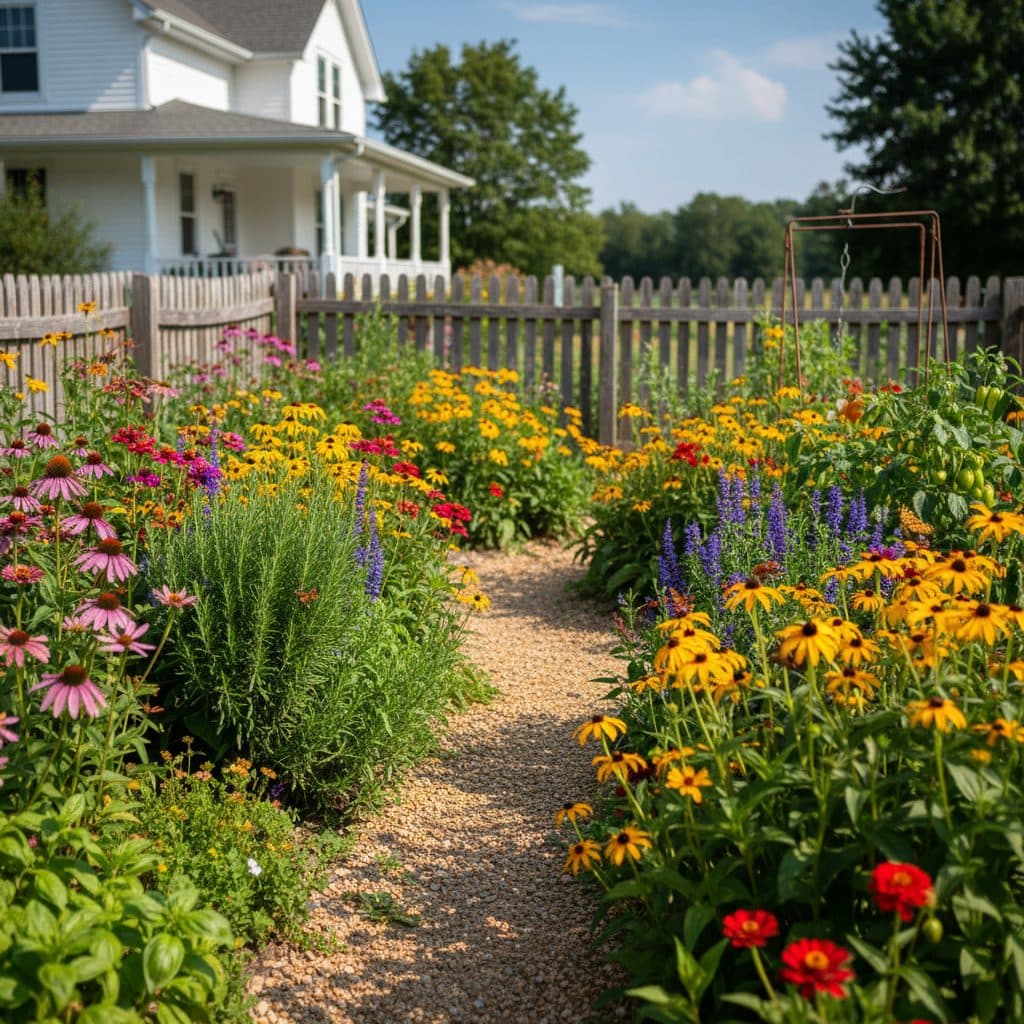
Key takeaways
- Select plants specifically adapted to local USDA zones and average July temperatures, often above 90°F.
- Prioritize soil health by incorporating 3-4 inches of organic matter and 2-3 inches of mulch to conserve moisture.
- Implement deep, infrequent watering — aiming for 6-8 inches of soil penetration — rather than shallow, frequent irrigation.
- Choose a diverse array of heat-tolerant flowers and shrubs, such as Salvia, Echinacea, and Lantana, to support a variety of pollinators.
- Monitor soil moisture levels regularly, especially during periods of drought, using tools like a 3-in-1 soil meter.
- Consider the long-term benefits of drought-tolerant shrubs and trees for garden structure and sustained pollinator support in hot climates.
Quick answer: To keep US gardens thriving in July heat, select heat-tolerant plants like Salvia and Echinacea, prioritize soil health with organic matter and mulch, and implement deep, infrequent watering. These strategies support pollinators even when temperatures exceed 90°F.
Across the United States, July often brings the garden’s toughest challenge: sustained heat and potential drought. In regions like the Southwest, daily temperatures can consistently exceed 100°F, while even in the Midwest, heat waves pushing past 90°F are common. This intense summer weather can stress plants, reduce flowering, and diminish the vital activity of pollinators, which are crucial for plant reproduction and gene dispersal [0, 1]. For growers aiming to maintain a vibrant, productive garden through the peak of summer, selecting the right plants and preparing the soil are essential steps.
Resilient strategies for US gardens focus on plants that tolerate high temperatures while providing nectar and pollen for bees, butterflies, and other beneficial insects. Choosing species adapted to hotter, drier conditions and implementing sound watering and soil management preserves garden health when temperatures climb past 95°F across USDA zones 4 to 10.
Understanding July's garden challenges: heat, drought, and soil
July’s heat can be relentless, with average daily temperatures often reaching 85°F to 95°F across much of the US, and even higher in arid regions. This heat, combined with reduced rainfall, places significant stress on garden plants. Plants respond to heat by increasing transpiration, losing water vapor through their leaves, which can lead to wilting if soil moisture is insufficient. Drought conditions exacerbate this, as plants struggle to absorb enough water from dry soil. For instance, a plant in USDA zone 7 experiencing 90°F temperatures might require 1.5 times more water than it would at 70°F.
assessing your garden’s vulnerability
Before selecting plants, it is important to understand your garden’s specific microclimates and soil conditions. South-facing beds, for example, often receive 6-8 hours of direct sun daily and can be 5-10°F hotter than other areas. Soil type affects water retention: sandy soils drain quickly, holding moisture for only a few days, while heavy clay soils can become compacted and shed water, preventing deep penetration. A simple soil test reveals pH and nutrient levels to guide amendments, and a 3-in-1 soil meter provides immediate readings to help determine watering schedules. Understanding these factors will help you choose resilient plant varieties and implement effective water conservation strategies, reducing overall plant stress by up to 25%.
- Identify sun exposure patterns in different garden areas.
- Test soil drainage by digging a 12-inch deep hole and filling it with water.
- Note areas prone to standing water or rapid drying.
- Observe existing plants for signs of heat stress, such as leaf scorch or wilting.
Top heat-tolerant flowers for a buzzing July garden
When selecting flowers for a hot July garden, the goal is to find species that can withstand temperatures consistently above 90°F while still producing abundant blooms for pollinators. Many plants adapted to arid or semi-arid regions naturally possess these traits. For example, Salvia species, like ‘May Night’ or ‘Victoria Blue’, are excellent choices, thriving in USDA zones 4-9 and blooming profusely from late spring through fall. These plants offer symmetrical flowers that are highly attractive to pollinators [4], providing a steady nectar source even when other plants falter. They typically grow to 18-36 inches tall and require minimal water once established, often just 1 inch per week.
pollinator favorites that beat the heat
Another robust option is Coneflower (Echinacea purpurea), hardy in USDA zones 3-9. These iconic prairie plants tolerate full sun and drought, producing large, daisy-like flowers up to 4 inches wide that are irresistible to bees and butterflies. They bloom from June to September, providing continuous forage. **Lantana** (Lantana camara), a vigorous choice for zones 8-11, offers clusters of small, colorful flowers that change hue as they mature. It thrives in extreme heat and requires very little water, making it a staple in southern gardens. Yarrow (Achillea millefolium) is another tough perennial for zones 3-9, producing flat-topped clusters of tiny flowers that attract beneficial insects. These plants are drought-tolerant and provide extended bloom periods, sustaining a diverse range of pollinator species throughout the summer.
- Salvia (e.g., Salvia nemorosa ‘Caradonna’): Blooms purple spikes, 18-24 inches tall.
- Coneflower (Echinacea purpurea): Pink-purple petals, 3-4 feet tall.
- Lantana (Lantana camara): Multi-colored clusters, 2-6 feet wide.
- Yarrow (Achillea millefolium): White, yellow, or pink flowers, 2-3 feet tall.
- Gaillardia (Gaillardia grandiflora): Red and yellow daisy-like blooms, 1-2 feet tall.
Building soil resilience for hot climates
The foundation of a heat-tolerant garden lies in its soil. Healthy soil acts like a sponge, absorbing and retaining moisture, and providing essential nutrients to plants even under stress. In hot climates, improving soil structure is paramount. Incorporating organic matter, such as compost or well-rotted manure, can significantly enhance water retention, increasing the soil’s capacity to hold water by up to 30% to 50%. For instance, adding a 3-inch layer of compost to the top 6 inches of your garden bed can transform sandy soil into a more moisture-retentive medium, reducing the need for frequent watering by 20%.
mulching for moisture and temperature regulation
Beyond amendments, mulching is one of the most effective strategies for battling heat and drought. A 2-4 inch layer of organic mulch, such as wood chips, shredded bark, or straw, helps to suppress weeds, which compete for water, and keeps the soil surface cooler by 10-15°F. This reduction in soil temperature minimizes evaporation by up to 30%, meaning more water stays in the root zone where plants can access it. Mulch also breaks down over time, slowly adding organic matter to the soil. For gardens with heavy clay, consider strategies for improving drainage and aeration, as discussed in our article on plants for clay soil. These soil improvement techniques create a stable growing environment that supports steady plant growth and reduces water stress, especially in USDA zones 6-9.
- Incorporate 2-3 inches of finished compost annually.
- Apply a 3-inch layer of wood chip mulch around plants.
- Avoid tilling excessively to preserve soil structure.
- Consider cover crops in off-seasons to add organic matter.
Smart watering strategies for summer survival
Even with heat-tolerant plants and improved soil, proper watering is essential during July's peak heat. Water deeply and infrequently to encourage roots to grow deeper into the soil where moisture is consistent. Deliver enough water to penetrate 6 to 8 inches into the soil profile for most established plants: apply 1 to 2 gallons of water per square foot 2 to 3 times per week instead of sprinkling lightly each day. Shallow watering promotes shallow root systems, making plants more vulnerable to drought stress when the top inch of soil dries out.
when and how to water effectively
The best time to water is early morning, between 5 AM and 8 AM. This allows the water to soak in before the sun’s intensity increases evaporation, and it gives plant foliage time to dry, reducing the risk of fungal diseases. Avoid watering in the late evening, as wet foliage overnight can invite problems. For precise watering, consider drip irrigation or soaker hoses, which deliver water directly to the root zone with up to 90% efficiency, minimizing waste. Regularly check soil moisture levels by hand or with a soil moisture meter. If the soil feels dry at a depth of 2-3 inches, it is time to water. These efficient watering practices are vital for conserving water and ensuring plant health, particularly in regions like California or Texas where water restrictions are common during summer months, potentially saving 30-40% of water compared to overhead irrigation.
- Water in the early morning to reduce evaporation.
- Apply water slowly and deeply to encourage deep root growth.
- Use drip irrigation or soaker hoses for targeted delivery.
- Check soil moisture at 4-6 inches before watering again.
Beyond flowers: drought-tolerant shrubs and trees for structure and pollinators
While flowers provide immediate nectar and pollen, incorporating drought-tolerant shrubs and trees offers long-term structure, shade, and sustained pollinator support. These woody plants often have deeper root systems, making them inherently more resilient to heat and drought once established. For instance, the Desert Willow (Chilopsis linearis), hardy in USDA zones 7-9, is a small tree or large shrub that produces beautiful trumpet-shaped flowers throughout the summer, attracting hummingbirds and bees. It can reach 15-25 feet tall and tolerates extreme heat and poor soils, requiring very little supplemental water after its first year.
creating a resilient landscape
Consider Sumac (Rhus spp.), particularly varieties like ‘Tiger Eyes’ or ‘Gro-Low’, which are hardy in zones 4-8. These shrubs offer striking foliage and, in some species, provide berries for birds. They are exceptionally drought-tolerant and can thrive in challenging conditions. Another excellent choice is Vitex (Vitex agnus-castus), or Chaste Tree, a large shrub or small tree for zones 6-9, known for its lavender-blue flower spikes that bloom from July to September, drawing in a multitude of pollinators. These plants add visual structure to the garden while providing shelter and food for pollinators. Regional selections in guides on drought-tolerant shrubs and trees outline further options to maintain plant health during periods of 100°F heat.
- Desert Willow (Chilopsis linearis): Small tree, purple-pink flowers.
- Sumac (Rhus glabra): Shrub, vibrant fall color, red berries.
- Vitex (Vitex agnus-castus): Large shrub/small tree, lavender flowers.
- Texas Sage (Leucophyllum frutescens): Shrub, silver foliage, purple flowers.
- Juniper (Juniperus spp.): Conifer, various sizes, extremely hardy.
Heat-Tolerant Pollinator Plants for July
Plant Name | USDA Zones | Water Needs (Established) | Pollinator Appeal |
|---|---|---|---|
Salvia (e.g., ‘May Night’) | 4-9 | Low (1 inch/week) | Bees, Butterflies, Hummingbirds |
Coneflower (Echinacea) | 3-9 | Low to Moderate | Bees, Butterflies |
Lantana (Lantana camara) | 8-11 | Very Low | Butterflies, Bees |
Yarrow (Achillea millefolium) | 3-9 | Low | Bees, Beneficial Insects |
Desert Willow (Chilopsis linearis) | 7-9 | Very Low | Hummingbirds, Bees |
Vitex (Vitex agnus-castus) | 6-9 | Low to Moderate | Bees, Butterflies |
Soil Moisture Retention: Adding 3 inches of organic compost can increase soil water retention by 30-50%, significantly reducing watering frequency.
Mulch Temperature Reduction: A 2-4 inch layer of organic mulch can lower soil surface temperatures by 10-15°F and reduce evaporation by 30%.
Frequently asked questions
What are the best heat-tolerant flowers for pollinators in USDA zone 6?
For USDA zone 6, excellent choices include Salvia ‘May Night’, Coneflower (Echinacea purpurea), and Yarrow (Achillea millefolium). These plants can withstand temperatures up to 95°F and bloom profusely, providing nectar for bees and butterflies from June through September.
How much organic matter should I add to my garden soil for heat resilience?
To significantly improve soil resilience, aim to incorporate a 2-3 inch layer of finished compost or well-rotted manure into the top 6-8 inches of your garden beds annually. This can increase water retention by 30% and improve nutrient availability for plants.
When is the optimal time to water a garden in July to minimize evaporation?
The optimal time to water your garden in July is early morning, between 5 AM and 8 AM. Watering during these hours allows the water to soak into the soil before the sun’s intensity causes significant evaporation, potentially saving 20-30% of water compared to mid-day watering.
Can drought-tolerant shrubs also support pollinators effectively?
Yes, many drought-tolerant shrubs are excellent pollinator plants. For example, Vitex (Chaste Tree) and Desert Willow produce abundant flowers that attract bees and hummingbirds throughout the summer, often from July to September, even in temperatures exceeding 90°F.
What is the recommended depth for mulching to conserve soil moisture?
A 2-4 inch layer of organic mulch, such as wood chips or shredded bark, is recommended to conserve soil moisture effectively. This depth helps suppress weeds, keeps soil temperatures 10-15°F cooler, and reduces water evaporation by up to 30%.
How often should I check soil moisture during a July heatwave?
During a July heatwave, you should check soil moisture levels every 1-2 days, especially for newly established plants or those in containers. Use your finger or a soil moisture meter to ensure the soil is moist at a depth of 2-3 inches before deciding to water again.
References
- Pollinator-driven speciation in plants (2006). Pollinator-driven speciation in plants.
- Models of pollinator-mediated gene dispersal in plants (2006). Models of pollinator-mediated gene dispersal in plants.
- Economic Uses of Salt-Tolerant Plants (2023). Economic Uses of Salt-Tolerant Plants.
- Pollinator Preference for Symmetrical Flowers and Sexual Selection in Plants (1995). Pollinator Preference for Symmetrical Flowers and Sexual Selection in Plants.
- IN VITRO SELECTION AND CHARACTERIZATION OF SALVIA OFFICINALIS SALT-TOLERANT CLONES (2021). IN VITRO SELECTION AND CHARACTERIZATION OF SALVIA OFFICINALIS SALT-TOLERANT CLONES.
- USDA Natural Resources Conservation Service (2024). USDA Natural Resources Conservation Service.