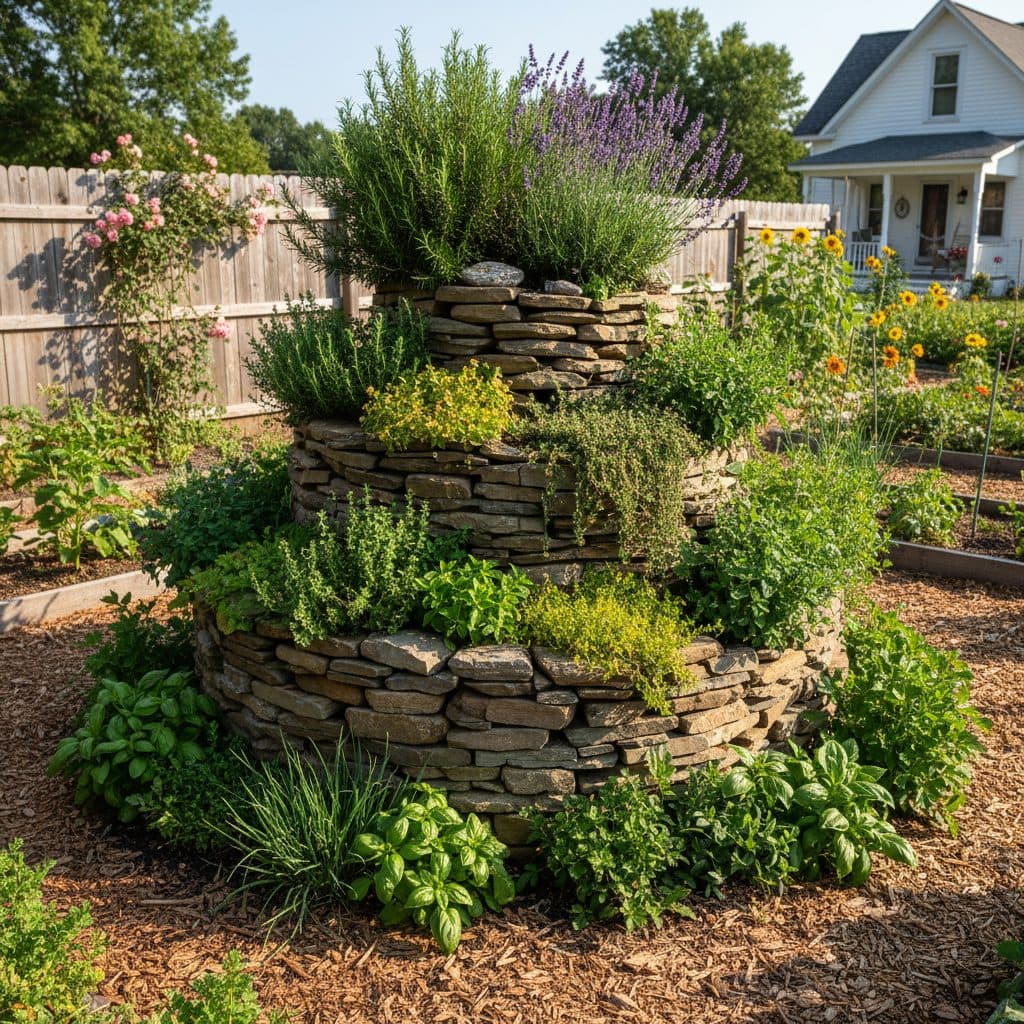
Key takeaways
- Herb spirals create up to four distinct microclimates, allowing diverse plant growth.
- They let you match watering to each zone instead of irrigating a whole flat bed uniformly.
- Using materials like urbanite diverts significant construction waste from landfills.
- Proper layering of soil and organic matter is essential for long-term plant health and water retention.
- Strategic plant placement based on sun and moisture needs maximizes herb yield.
- The thermal mass of the spiral can extend the growing season by several weeks.
Quick answer: An herb spiral is a vertical garden structure that maximizes growing space and creates diverse microclimates, allowing you to grow a variety of herbs while conserving water and extending the growing season. It can be built using readily available materials like stone, brick, or urbanite.
In central Texas, where summer temperatures regularly exceed 100 degrees Fahrenheit, efficient water use in gardening matters. Many growers in arid and semi-arid regions across the US are turning to permaculture principles to create productive spaces that thrive with less input. An herb spiral, a vertical garden structure, is one such design that maximizes growing space and creates diverse microclimates within a small footprint, often less than 10 feet in diameter.
This article will guide you through building a durable herb spiral using readily available materials like stone, brick, or urbanite. We will cover site selection, construction techniques, and planting strategies to ensure your spiral supports a wide array of herbs, from sun-loving rosemary to moisture-preferring mint. By following these steps, you can create a resilient and productive garden feature that conserves water and extends your growing season, and get more out of the same square footage than a single flat herb bed would.
Understanding the benefits of an herb spiral
The herb spiral is a prime example of permaculture design, concentrating a variety of growing conditions into a small area. This vertical structure allows you to cultivate a diverse range of herbs, each suited to a specific microclimate created by the spiral’s shape and orientation. For instance, a spiral can create up to four distinct microclimates, supporting plants that prefer dry, sunny conditions at the top, and those that thrive in moist, shaded environments at the base. This matters most in regions like Southern California, where the spiral’s gradient lets you water each zone to its own needs instead of irrigating a whole flat bed to satisfy its thirstiest plant.
The spiral’s mass also absorbs and radiates heat, taking the edge off early-spring cold at the top of the structure so you can set out warm-season herbs a little sooner. This thermal mass effect allows for earlier planting of warm-season herbs like basil and later harvests of cool-season varieties. The mixed planting in a spiral also supports more beneficial insects than a single-species bed, which helps keep pest outbreaks from building. This makes your garden more resilient and reduces the need for external inputs, in keeping with core permaculture design principles discussed at agripure.org/articles/permaculture-design.
The diverse growing environments
Beyond temperature and moisture, the varied heights and aspects of an herb spiral offer different light exposures. The south-facing slopes receive maximum sun, ideal for Mediterranean herbs, while north-facing or lower sections provide more shade for leafy greens or moisture-loving plants. This thoughtful arrangement means you can grow 10 to 15 different herb varieties in a space typically occupied by only three or four in a flat bed, significantly boosting your garden’s output per square foot.
- Microclimate creation: Supports diverse plant needs with up to four distinct zones.
- Water efficiency: Lets you water each zone to its own needs rather than the whole bed uniformly.
- Extended season: Stored heat in the walls softens early-spring cold at the top of the spiral.
- Biodiversity boost: Mixed planting supports more beneficial insects than a single-species bed.
Planning your spiral: site, size, and materials
Careful planning is the first step to a successful herb spiral. Choose a site that receives at least six hours of direct sunlight daily, ideally with a slight slope to aid drainage, though a flat site is also perfectly fine. The ideal diameter for an herb spiral is typically six to eight feet at its base, allowing for easy access to all plants without stepping into the bed. This size provides enough vertical rise, usually three to four feet, to create meaningful microclimates. Mark out your chosen diameter with a string and a stake, then clear the area of any weeds or turf, digging down six inches to create a stable base for your first layer of materials.
For materials, you have several durable options: natural stone, salvaged brick, or urbanite (broken concrete). Each offers excellent thermal mass and structural integrity. Using urbanite keeps broken concrete out of the waste stream and off a truck, which is why it is often free for the hauling. Aim to collect enough material to build a structure approximately three feet high and six to eight feet in diameter, which might require one to two tons of stone or brick, or a similar volume of urbanite pieces ranging from six to 18 inches in length.
Choosing your building material
Consider the aesthetic and availability of materials in your region. In New England, fieldstone is abundant and durable, while in the Midwest, reclaimed brick from old buildings might be more common. Urbanite is often free for the hauling from construction sites across many US cities. Regardless of your choice, ensure the pieces are relatively flat on at least one side to allow for stable stacking. You will also need a few cubic yards of good quality soil, compost, and sand for filling, which can weigh over 2,000 pounds per cubic yard.
- Site selection: Choose a spot with at least six hours of direct sun.
- Optimal size: Aim for a six to eight-foot base diameter.
- Material options: Stone, brick, or urbanite for thermal mass.
- Material quantity: Plan for one to two tons of building material.
Building the foundation and walls
Once your site is prepared, begin laying the foundation for your spiral. Start at the lowest point, usually the south-facing side, and arrange your largest, flattest pieces of stone, brick, or urbanite in a circular pattern. This first layer should be partially buried, approximately two to three inches deep, to provide stability. As you build upwards, follow a spiral path, gradually increasing the height towards the center. Each layer should overlap the one below it by at least one inch, creating a strong, interlocking structure. Ensure a slight inward slope, about one to two inches per foot of height, to help the walls resist outward pressure from the soil fill.
Dry stacking, without mortar, is common for herb spirals, allowing for flexibility and good drainage. For stability, aim for a wall thickness of at least six to eight inches at the base, tapering slightly as you go higher. The total height of your spiral should reach three to four feet at its apex. As you lay each course, backfill behind the wall with a mix of gravel and soil to provide immediate support and prevent collapse. This method is similar to building a small retaining wall, and the same cautions apply: a dry-stacked wall only six to eight inches thick holding back saturated soil can bulge or shed stone, especially where freeze-thaw works on it in zones 4 and 5. Check the wall each spring and reset any course that has moved.
Ensuring structural integrity
Pay close attention to gaps between your building materials. While some small gaps are fine for drainage and air circulation, large voids can compromise stability. Use smaller stones or broken pieces of brick to wedge into larger gaps, creating a tighter fit. A well-built spiral should feel solid and not wobble when pushed. You can also use a level every few courses to ensure your walls are rising evenly, maintaining a consistent slope and preventing leaning. For a six-foot diameter spiral, you might use 200 to 300 individual pieces of urbanite.
- Foundation stability: Bury the first layer two to three inches deep.
- Spiral path: Gradually increase height towards the center.
- Wall thickness: Maintain six to eight inches at the base.
- Dry stacking: Avoid mortar for flexibility and drainage.
Filling, planting, and initial care
With the structure complete, it is time to fill your herb spiral. Start with a base layer of coarse gravel or broken urbanite pieces, about six inches deep at the bottom of the spiral, for excellent drainage. Over this, add a layer of woody debris, such as small branches or wood chips, which will slowly decompose and provide long-term nutrients, similar to a hugelkultur bed. The bulk of your fill should be a rich soil mix: approximately 50% good quality topsoil, 30% compost, and 20% sand for improved drainage and aeration. Incorporating organic matter improves how much water the mix holds, which stretches the interval between waterings.
Planting should follow the microclimates you have created. At the very top, plant drought-tolerant, sun-loving herbs like rosemary, thyme, and oregano, which thrive in dry conditions. As you move down the spiral, place herbs that prefer moderate moisture and partial sun, such as sage, marjoram, and chives. At the base, where moisture naturally collects and shade is more prevalent, plant water-loving herbs like parsley and cilantro. Mint belongs here too, but only sunk in a pot: planted loose it will run through the whole structure, and you cannot pull runners out of a dry-stacked stone wall without taking the wall apart. Consider companion planting principles to improve growth and deter pests. After planting, water thoroughly to settle the soil, and monitor moisture levels with a soil moisture meter, especially during the first few weeks. A deep watering once every three to five days may be sufficient in many climates, and it uses less water overall than watering shallowly every day.
Ongoing maintenance for a productive spiral
Regular maintenance ensures your herb spiral remains productive. Top-dress with one to two inches of compost annually to replenish nutrients and improve soil structure. Prune herbs regularly to encourage bushy growth and prevent them from flowering prematurely, which can reduce flavor. In colder climates, like USDA zone 5, some tender perennials may need winter protection, such as a thick layer of mulch, to survive temperatures below 20 degrees Fahrenheit. Check for pests weekly and address any issues promptly to maintain plant health and vigor.
- Drainage layer: Start with six inches of gravel or urbanite.
- Soil mix: Use 50% topsoil, 30% compost, 20% sand.
- Plant placement: Match herbs to their preferred microclimates.
- Initial watering: Water deeply to settle soil and monitor with a meter.
Comparison of Herb Spiral Building Materials
Material | Cost (per ton) | Durability | Aesthetic | Availability |
|---|---|---|---|---|
Natural Stone | Varies by region; usually the priciest option | Excellent (100+ years) | Rustic, varied | Regional, often quarried |
Salvaged Brick | Varies by region; usually cheaper than quarried stone | Very Good (50-100 years) | Classic, uniform | Regional, from demolition sites |
Urbanite (Broken Concrete) | $0 – $50 (often free) | Good (50+ years) | Industrial, modern | Widespread, from construction sites |
Water Savings: Grouping herbs by water need means you irrigate the thirsty base often and the dry top rarely, instead of watering one flat bed to satisfy its thirstiest plant.
Waste Diversion: Building with urbanite keeps broken concrete out of the waste stream, which is why it is usually free for the hauling.
Frequently asked questions
What is the ideal size for an herb spiral?
The ideal base diameter for an herb spiral is typically six to eight feet. This size allows for comfortable access to all plants from the outside edge and provides enough vertical height, usually three to four feet, to create effective microclimates for diverse herbs.
How many different herbs can I grow in a spiral?
Due to the multiple microclimates created, an herb spiral can support a surprisingly large variety of plants. You can typically grow 10 to 15 different herb species in a single spiral, compared to perhaps three or four in a flat bed of similar footprint, maximizing your yield per square foot.
Can I use any type of stone or brick?
Yes, most types of stone, brick, or urbanite are suitable, as long as they are durable and can be stacked stably. Avoid materials that might leach harmful chemicals into the soil, such as treated wood. Using reclaimed materials like urbanite keeps usable rubble out of the waste stream.
How often do I need to water an herb spiral?
Watering frequency depends on your climate and plant choices. However, due to its design and the use of organic matter in the soil, an herb spiral generally requires less water than traditional beds. In many regions, deep watering once every three to five days may be sufficient, and it uses less water overall than watering shallowly every day.
Will an herb spiral work in a cold climate like USDA zone 4?
Yes, an herb spiral can work in colder climates. The thermal mass of the stone or brick walls holds daytime heat and releases it overnight, which softens early and late cold at the top of the spiral. For tender perennial herbs, adding a thick layer of mulch (six to eight inches) in winter can provide essential insulation against freezing temperatures below 20 degrees Fahrenheit.
What kind of soil mix is best for an herb spiral?
A rich, well-draining soil mix is best. A good blend is approximately 50% good quality topsoil, 30% high-quality compost, and 20% sand. This mix provides nutrients, retains moisture effectively, and ensures good drainage, which is essential for the varied needs of herbs in the spiral’s distinct zones.