Key takeaways
- Mandala gardens use circular beds and paths for efficient access and aesthetic appeal, so every bed is reachable without walking a row end to end.
- Proper site analysis, including sun exposure and water flow, is essential before laying out your circular garden beds.
- Integrating permaculture principles like plant guilds and zones into a mandala design maximizes biodiversity and productivity.
- Durable materials for bed construction include local timber, stone, or repurposed concrete, which typically last 10-15 years.
- A central access point, often a water source or seating area, anchors the design and improves garden workflow.
- Strategic plant placement in concentric circles supports companion planting and nutrient cycling and supporting garden health.
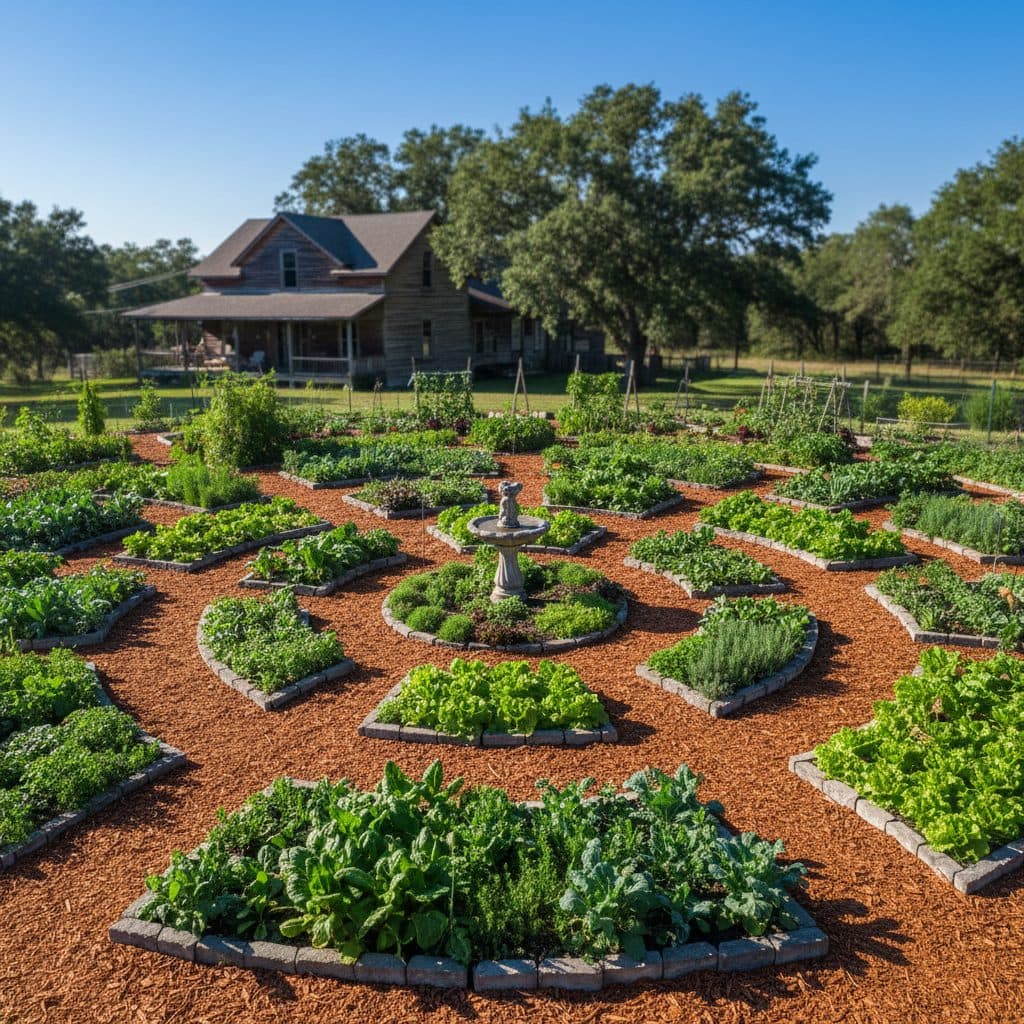
Quick answer: A mandala garden is a circular garden design with concentric beds and radiating paths around a central point. It maximizes planting density and accessibility and organizing space through permaculture principles.
In the high desert climate of Arizona, where water is a precious resource and efficient space utilization is key, growers are constantly seeking methods to maximize their yields. One such approach, gaining traction from California to the humid Southeast, is the mandala garden. This circular layout offers a practical solution for intensive planting and easy access, cutting the back-and-forth that long linear beds demand.
A mandala garden is a functional design rooted in permaculture principles that integrates food forests, plant guilds, and targeted water management. By arranging beds in concentric circles around a central point, gardeners can create a productive and beautiful space that supports a diverse range of crops, from annual vegetables like Pisum sativum (Garden Pea) to perennial herbs such as Salvia officinalis (Garden Sage).
Understanding the mandala garden concept
A mandala garden consists of circular or semi-circular beds arranged around a central point. This design isn’t new; historical records show similar layouts in ancient agricultural practices, often for spiritual or practical reasons. In a modern permaculture context, it’s about maximizing yield and accessibility in a compact footprint. For example, a 20-foot diameter mandala garden covers about 314 square feet in total, of which roughly 200 to 250 square feet ends up as bed once the central hub and the radiating paths are taken out.
Benefits of circular layouts for growers
The primary advantage of a circular layout is efficiency. Paths radiate from a central hub, ensuring that no plant is more than one or two steps from an access path. Because every bed is reachable from a radiating path, there is less back-and-forth than in long straight rows, which helps when you are managing a larger area. The rounded beds also prevent soil compaction from foot traffic, maintaining healthy soil structure for root development. Furthermore, the aesthetic appeal of a mandala garden can be significant, creating a visually pleasing and harmonious space that encourages more time spent in the garden [2]. The circular form also lends itself well to integrated pest management, as beneficial insects can easily move between diverse plant communities.
- Better accessibility: Central hub and radiating paths mean less walking.
- Increased planting density: Narrow paths and reachable beds mean more of the footprint is planted.
- Improved microclimates: Beds can be oriented to optimize sun exposure or provide shade.
- Reduced soil compaction: Clearly defined paths keep foot traffic off growing areas.
- Aesthetic appeal: Visually pleasing design can enhance garden enjoyment.
Planning your mandala garden layout
Before you dig, a thorough site analysis is essential, especially for a complex design like a mandala garden. Observe your chosen area across a full day, then check it again in at least one other season; a single day cannot show you how the sun angle and shade lines move through the year. A site receiving 6-8 hours of direct sunlight is ideal for most vegetables. Consider prevailing winds, water flow, and existing features like mature trees or structures. For example, a site in USDA Zone 8 with a slight slope might benefit from a central swale to capture rainwater, directing it to surrounding beds.
Designing for scale and function
The size of your mandala garden will depend on your available space and gardening goals. A common design starts with a central circle, typically 3-6 feet in diameter, which can house a water feature, a small seating area, or a tall, shade-providing plant. From this center, radiating paths, usually 18-24 inches wide, divide the garden into pie-shaped sections. These sections are then filled with concentric planting beds, often 3-4 feet wide, allowing easy reach from the paths. For a larger garden, say 30 feet across, you might incorporate two or three concentric rings of beds, each with its own specific planting scheme. Permaculture design principles emphasize observing your site before making any permanent changes, ensuring your layout works with the land, not against it [3].
- Measure sun exposure: Track direct sunlight for 6-8 hours daily.
- Assess water flow: Note drainage patterns and potential for rainwater harvesting.
- Consider wind patterns: Plan windbreaks if necessary, especially in exposed areas.
- Map existing features: Integrate or work around trees, fences, or buildings.
- Define central hub: Decide on a water feature, seating, or tall plant for the center.
Building your circular beds and paths
Once your design is finalized, the next step is construction. Mark out your circles and paths using stakes and string. For the beds, consider materials that are durable and locally available. Stone, repurposed concrete blocks, or rot-resistant timber like cedar or black locust can create long-lasting raised beds, often lasting 10-15 years or more. Beds should be at least 6-12 inches high to allow for good drainage and root development. In regions like the Pacific Northwest, where rainfall is abundant, ensuring proper drainage is essential.
Soil preparation and irrigation integration
Filling the beds with fertile soil is essential for plant health. A mix of roughly two parts native soil or topsoil to one part finished compost, with a smaller amount of well-aged manure, provides fertility without overloading the bed. Aim for a soil depth of at least 12 inches for most annual vegetables. For perennial food forest components, you might need 18-24 inches of rich soil. Integrating an efficient drip irrigation system is highly recommended, especially in drier climates or for busy growers. Drip lines deliver water directly to the root zone, minimizing evaporation and reducing water usage by 30-50% compared to overhead watering [6]. This approach is particularly effective in USDA Zone 9, where summer temperatures can exceed 100°F.
- Mark out layout: Use stakes and string to define circles and paths.
- Choose bed materials: Select durable options like stone, timber, or concrete blocks.
- Build bed walls: Aim for 6-12 inches in height for good drainage.
- Prepare soil mix: Use compost, manure, and native soil for fertility.
- Install irrigation: Integrate drip lines for efficient water delivery.
Planting for guilds and zones
The true power of a mandala garden in a permaculture system comes from its ability to integrate plant guilds and zones. Plant guilds are groups of plants that support each other, mimicking natural ecosystems. For example, a ‘three sisters’ guild of corn, beans, and squash can be planted in a section, with corn providing a stalk for beans to climb, beans fixing nitrogen, and squash shading the soil to suppress weeds and retain moisture. Intercropping like this can out-yield the same area planted to a single crop, though the size of the advantage depends heavily on spacing, variety and season.
Integrating food forest elements
Consider the central zone of your mandala garden as Zone 1, where you plant your most frequently visited and high-maintenance crops, like culinary herbs or salad greens. As you move outwards, you can transition to Zone 2 with annual vegetables, and then to Zone 3 with perennial shrubs and small fruit trees, creating a mini food forest. For instance, in USDA Zone 7, the outer rings could host blueberries, elderberries, or even dwarf fruit trees, providing a diverse and resilient harvest. The circular design naturally encourages this zonal approach, allowing for easy transitions between different levels of intensity and plant types [5].
- Start with guilds: Group compatible plants like the ‘three sisters’ for mutual benefit.
- Implement zones: Place high-maintenance plants closer to the center (Zone 1).
- Expand outwards: Move to less frequently visited plants in outer rings (Zones 2-3).
- Incorporate perennials: Plant fruit shrubs and trees in outer zones for long-term yields.
- Diversify species: Aim for a wide variety of plants to support ecosystem resilience.
Mandala Garden vs. Traditional Row Garden
Feature | Mandala Garden | Traditional Row Garden |
|---|---|---|
Access Efficiency | High (every bed reachable from a radiating path) | Moderate (linear paths, more walking) |
Space Utilization | High (intensive planting, roughly 200-250 sq ft of bed in a 20 ft circle) | Moderate (requires more linear space) |
Aesthetic Appeal | High (harmonious, visually pleasing) | Functional (can be less visually engaging) |
Permaculture Integration | Excellent (natural for guilds, zones) | Possible, but less intuitive |
Water Efficiency | High (easy drip irrigation integration, 30-50% savings) | Variable (can be less efficient with overhead watering) |
Yield Boost: Plant guilds can out-yield the same area under a single crop, with the margin depending on spacing, variety and season.
Water Savings: Implementing a drip irrigation system in your circular beds can reduce water consumption by 30-50%.
Frequently asked questions
What is the ideal size for a central hub in a mandala garden?
The ideal size for a central hub typically ranges from 3 to 6 feet in diameter. This allows enough space for a small seating area, a water feature, or a tall, focal plant, while still maintaining efficient access to the surrounding beds. For instance, a 4-foot diameter hub is common in many home garden designs.
How wide should the paths be in a mandala garden?
Paths in a mandala garden should generally be 18 to 24 inches wide. This width provides comfortable access for walking and kneeling to tend plants, and allows for the use of small garden tools like a hand trowel. Wider paths, up to 30 inches, might be considered if you plan to use a wheelbarrow frequently.
What materials are best for constructing the circular beds?
Durable, rot-resistant materials are best for constructing circular beds. Options include local stone, repurposed concrete blocks, or rot-resistant timbers like cedar, redwood, or black locust. These materials can ensure your beds last for 10-15 years or more, providing a stable structure for your soil.
Can a mandala garden work in a small backyard?
Yes, a mandala garden can be very effective in a small backyard. Its circular design maximizes planting area in a compact footprint, often providing more usable space than traditional linear beds. A 10-foot diameter mandala garden covers about 78 square feet in total and yields roughly 50 square feet of bed once the hub and paths are subtracted, which still suits an urban yard.
How do I integrate permaculture zones into a mandala garden?
Integrate permaculture zones by placing your most frequently visited plants, like herbs or salad greens, in the central beds (Zone 1). As you move outwards, plant annual vegetables (Zone 2), and then perennial shrubs or small fruit trees (Zone 3) in the outer rings. This zonal approach optimizes your effort and plant needs, making your garden more productive.
References
- Designing the company Arcadia (2017). Designing the company Arcadia.
- GARDEN PORTFOLIO (2012). GARDEN PORTFOLIO.
- A Garden for Life (2004). A Garden for Life.
- Chapter 15. Garden Buildings (2013). Chapter 15. Garden Buildings.
- Fundamentals of Garden Designing: A Colour Encyclopedia (2013). Fundamentals of Garden Designing: A Colour Encyclopedia.
- USDA Natural Resources Conservation Service (2024). USDA Natural Resources Conservation Service.