Key takeaways
- Recognize that fresh hugel beds, rich in carbon from wood, can cause significant nitrogen tie-up in their first year, impacting plant growth by up to 30%.
- Pre-treat wood by soaking it for several weeks or composting it for at least six months to reduce its immediate nitrogen demand.
- Incorporate high-nitrogen amendments like aged manure (at a 20:1 carbon-to-nitrogen ratio) or blood meal into the bed during construction.
- Plant nitrogen-fixing cover crops such as clover or peas in the initial season to naturally enrich the soil with up to 100 pounds of nitrogen per acre.
- Utilize passive irrigation methods like ollas to deliver water and soluble nutrients directly to plant roots, minimizing nutrient leaching.
- Monitor plant leaves for signs of nitrogen deficiency, such as yellowing, and be prepared to apply supplemental organic fertilizers as needed.
Quick answer: To prevent first-year nitrogen tie-up in fresh hugel beds, pre-treat wood, incorporate high-nitrogen amendments like aged manure, and plant nitrogen-fixing cover crops. These methods ensure sufficient nitrogen for robust plant growth and healthy yields.
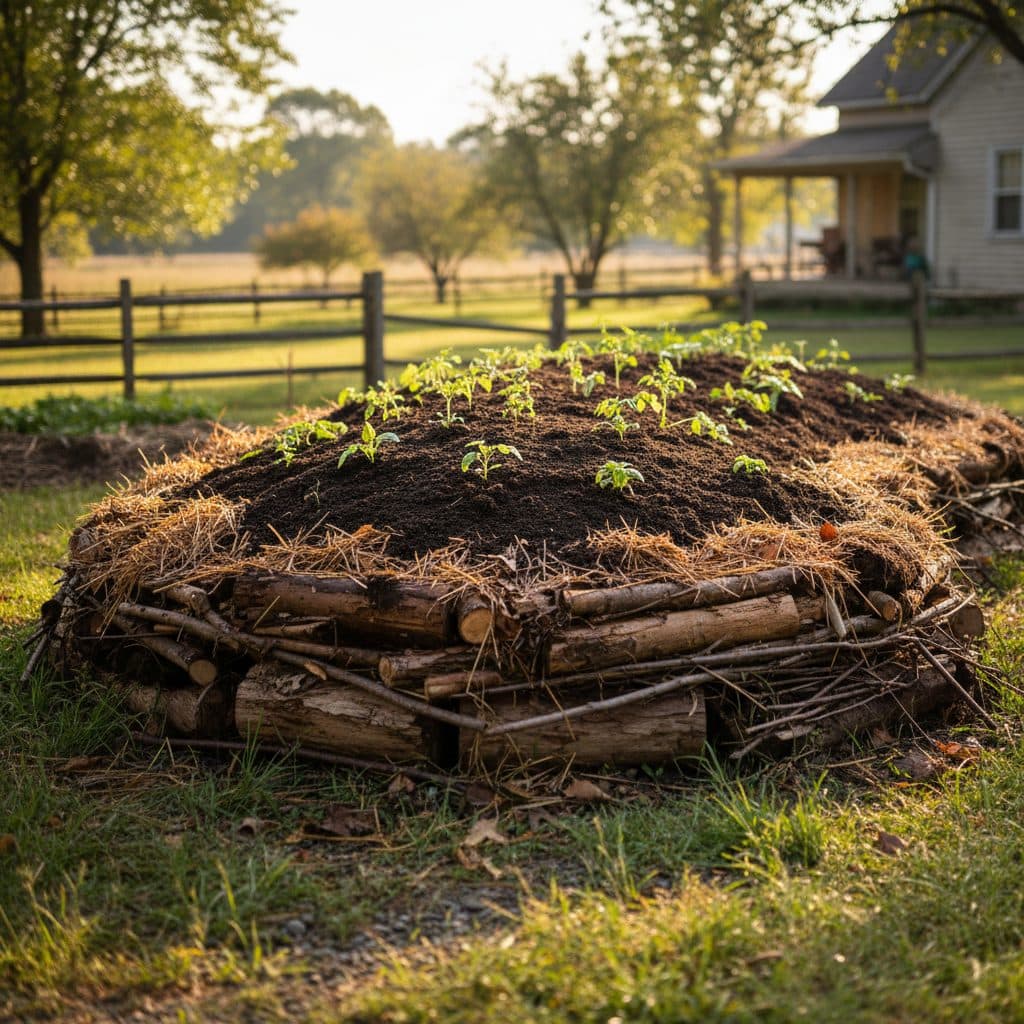
In many parts of the US, from the humid summers of USDA zone 7 in the Southeast to the arid landscapes of USDA zone 5 in the Mountain West, gardeners are turning to hugel beds for their water-retention and soil-building benefits. These raised mounds, built from decaying wood, brush, and organic matter, can dramatically reduce irrigation needs by 50% or more once established. However, a common challenge in the first year of a new hugel bed is nitrogen tie-up, a process where microorganisms consume available nitrogen to break down the carbon-rich wood, leaving insufficient nutrients for your newly planted crops.
This initial nitrogen deficit can stunt plant growth, leading to yellowing leaves and reduced yields, a frustration for any grower hoping for a bountiful harvest. Understanding this biological process and implementing strategic preparation and planting techniques can ensure your hugel bed thrives from its first season. We’ll explore practical steps, from pre-soaking wood to selecting nitrogen-fixing companions, ensuring your plants receive the 30 to 40 pounds of nitrogen per acre they need for robust development.
Understanding the nitrogen challenge in new hugel beds
When you build a hugel bed, you’re introducing a substantial amount of carbon-rich material, primarily wood, into the soil system. This wood, especially fresh logs, has a high carbon-to-nitrogen (C:N) ratio, often exceeding 100:1. Soil microorganisms, essential for decomposition, require nitrogen to break down this carbon. They will consume any available nitrogen in the surrounding soil, effectively ‘tying it up’ and making it unavailable for your plants. This process can significantly reduce the nitrogen available to first-year crops by 20% to 50%, leading to noticeable deficiencies.
The impact of nitrogen deficiency on plant health
The consequences of nitrogen tie-up are visible in your plants. You might observe stunted growth, with plants failing to reach their expected size or producing smaller leaves. A classic symptom is chlorosis, where older leaves turn pale green or yellow, particularly along the veins, because nitrogen is a mobile nutrient and the plant moves it to new growth. Reduced yields are also common, as plants cannot produce enough protein for fruit or seed development. For example, first-year corn crops planted after high-carbon residues can show a 15% to 30% yield reduction without proper nitrogen management [1].
- Pale green or yellowing leaves, especially older ones
- Slow or stunted overall plant growth
- Reduced fruit or vegetable production
- Thin, spindly stems
- Premature leaf drop in some species
Prepping for success: wood selection and initial amendments
Mitigating nitrogen tie-up begins before you even plant. The type of wood you use significantly impacts the initial nitrogen demand. Hardwoods like oak or maple decompose slower and tie up nitrogen for a longer period than softer woods like willow or poplar. Using partially decomposed wood, if available, is ideal as it has a lower C:N ratio. If using fresh wood, consider pre-soaking logs in water for several weeks or even months before building your bed. This process can help leach out some soluble carbons, reducing the immediate microbial demand for nitrogen by up to 10%.
Layering for nitrogen balance
A well-constructed hugel bed incorporates layers that balance carbon and nitrogen. After placing your wood base, add layers of high-nitrogen materials. Fresh grass clippings, green plant waste, and aged manure (ideally composted for at least six months) are excellent choices. Aim for a C:N ratio of around 20:1 to 30:1 for the overall bed material to ensure optimal decomposition and nutrient availability. For instance, a 6-inch layer of aged cow manure can provide 15 to 20 pounds of nitrogen per 1,000 square feet. This layering is a core principle in permaculture garden planning and supports long-term soil health.
- Partially decomposed wood (preferred)
- Aged animal manures (cow, chicken, horse)
- Fresh grass clippings (avoid herbicide-treated)
- Green plant waste (comfrey, nettles)
- Blood meal or feather meal (organic nitrogen boosters)
Strategic planting and initial nutrient boosts
Once your hugel bed is built, careful plant selection and initial feeding can make a substantial difference in the first year. Prioritize nitrogen-fixing plants for your initial crops. Legumes like beans, peas, clover, and vetch host bacteria in their root nodules that convert atmospheric nitrogen into a usable form for plants. Planting a cover crop of clover for a few months before your main crop can add 50 to 100 pounds of nitrogen per acre to the soil. This natural process directly counteracts the tie-up effect.
Targeted nutrient delivery with passive irrigation
For your main crops, consider a starter fertilizer rich in nitrogen, applied at planting. Organic options like blood meal (12-0-0 NPK) or fish emulsion (5-1-1 NPK) can provide an immediate boost. Apply these according to package directions, typically at a rate of one to two tablespoons per plant for granular forms. Efficient water delivery matters too, since water transports nutrients to the roots. Rainwater harvesting can provide a sustainable water source for these initial applications and helps keep moisture consistent for nutrient uptake. Pecan seedlings, for example, show improved first-year growth with nitrogen fertigation [1, 2].
- Beans (bush, pole, snap)
- Peas (shelling, snow, snap)
- Clover (red, white, crimson)
- Vetch (hairy, common)
- Lupines (some varieties are edible)
Long-term management and passive irrigation systems
While the first year demands significant attention to nitrogen, ongoing management ensures the hugel bed’s long-term productivity. As the wood decomposes, it gradually releases nutrients, eventually becoming a net supplier of nitrogen. However, in the interim, consistent organic fertilization is key. Consider liquid feeds like compost tea or worm casting leachate applied every two to four weeks during the growing season. A 1:10 dilution of fish emulsion can provide a quick nitrogen boost, delivering 5% nitrogen to plants.
Integrating ollas and wicking beds
Passive irrigation systems are particularly well-suited for hugel beds, enhancing both water efficiency and nutrient delivery. Ollas, unglazed clay pots buried in the soil, slowly release water directly to plant roots, reducing water usage by 50% to 70% compared to surface watering. You can also mix soluble organic fertilizers into the water within the olla for a slow, consistent feed. For larger beds, consider a wicking bed system, which uses a water reservoir at the bottom to provide continuous moisture and can be adapted to include nutrient solutions. This method ensures plants always have access to the 0.5 to 1 inch of water they need per week, especially in dry periods.
- Aged compost (top dressing)
- Worm castings (soil amendment)
- Fish emulsion (liquid feed)
- Blood meal (granular, slow-release)
- Alfalfa meal (granular, adds N and micronutrients)
Monitoring and troubleshooting nitrogen deficiencies
Even with careful planning, it’s important to remain vigilant and monitor your plants for signs of nitrogen deficiency throughout the first growing season. Regular observation of leaf color and growth rate is your primary diagnostic tool. If you notice the characteristic yellowing of older leaves, especially if new growth remains green but stunted, it’s a strong indicator of insufficient nitrogen. Soil tests, performed every one to two years, can also provide precise data on nutrient levels, including nitrogen, phosphorus, and potassium, for about $20 to $50 per test.
Corrective actions for low nitrogen
If deficiencies appear, prompt action can prevent significant yield loss. Apply a quick-release organic nitrogen source. Liquid fertilizers like fish emulsion (5-1-1 NPK) or a diluted urea solution can be absorbed rapidly by plant roots. For example, a foliar spray of diluted fish emulsion (one tablespoon per gallon of water) can provide a fast, temporary boost. For a more sustained release, top-dress with aged compost or blood meal around the base of affected plants. Remember that microbial activity slows in cooler temperatures (below 50°F), so nutrient release from organic matter will be slower during early spring or late fall plantings in USDA zone 4 or 5.
- Observe leaf color and growth weekly
- Perform a soil test if symptoms persist
- Check for pest infestations that mimic nutrient stress
- Review your watering schedule for consistency
- Adjust fertilizer applications based on plant response
Comparison of nitrogen sources for hugel beds
Nitrogen Source | C:N Ratio | Release Rate | Typical NPK |
|---|---|---|---|
Aged Manure | 10:1 – 20:1 | Medium-Slow | 0.5-0.5-0.5 |
Blood Meal | 3:1 – 6:1 | Medium-Fast | 12-0-0 |
Fish Emulsion | N/A (liquid) | Fast | 5-1-1 |
Alfalfa Meal | 10:1 – 15:1 | Slow | 2-1-2 |
Compost | 15:1 – 30:1 | Slow | 1-1-1 |
Wood C:N ratio: Fresh wood can have a carbon-to-nitrogen ratio exceeding 100:1, requiring significant microbial nitrogen for decomposition.
Nitrogen boost: Nitrogen-fixing cover crops like clover can add 50 to 100 pounds of nitrogen per acre in a single growing season.
Frequently asked questions
How long does nitrogen tie-up last in a hugel bed?
Nitrogen tie-up is most pronounced in the first year, but can continue to some extent for two to three years, depending on the wood type and climate. Softer woods decompose faster, reducing the tie-up period by up to 30% compared to hardwoods.
Can I use fresh wood in a hugel bed without problems?
Yes, but it requires more proactive nitrogen management. You’ll need to add significantly more high-nitrogen amendments, such as 6 to 12 inches of aged manure, and potentially apply liquid fertilizers more frequently in the first season to compensate for microbial activity.
What are the best plants for the first year of a hugel bed?
Nitrogen-fixing plants like beans, peas, and clover are excellent choices. Root vegetables such as carrots and radishes, which have lower nitrogen demands, can also perform well. Avoid heavy nitrogen feeders like corn or broccoli unless you’re providing substantial supplemental nitrogen, perhaps 40 pounds per acre.
How much compost should I add to a new hugel bed?
A top layer of 6 to 8 inches of well-aged compost, mixed with topsoil, is generally recommended. This provides an immediate nutrient source and a healthy environment for plant roots, reducing the initial impact of nitrogen tie-up by about 25%.
Are there any woods I should avoid for hugel beds?
Avoid woods that are known to be allelopathic, meaning they release chemicals that inhibit plant growth, such as black walnut. Also, avoid diseased wood or wood treated with chemical preservatives, as these can harm your garden and soil organisms, potentially reducing microbial activity by 50% or more.
References
- Nitrogen Management for First-Year Corn after Alfalfa (2012). Nitrogen Management for First-Year Corn after Alfalfa.
- Effect of Nitrogen Fertigation on First-year Pecan Seedling Growth (2007). Effect of Nitrogen Fertigation on First-year Pecan Seedling Growth.
- (130) Effects of Nitrogen Fertigation on First-year Pecan Seedling Growth (2006). (130) Effects of Nitrogen Fertigation on First-year Pecan Seedling Growth.
- Controls on Indoor Ammonia in New Canadian Homes during the First Year of Occupancy with Reduced Nitrogen Case Studies (2023). Controls on Indoor Ammonia in New Canadian Homes during the First Year of Occupancy with Reduced Nitrogen Case Studies.
- Controls on Indoor Ammonia in New Canadian Homes during the First Year of Occupancy with Reduced Nitrogen Case Studies (2023). Controls on Indoor Ammonia in New Canadian Homes during the First Year of Occupancy with Reduced Nitrogen Case Studies.
- USDA Natural Resources Conservation Service (2024). USDA Natural Resources Conservation Service.