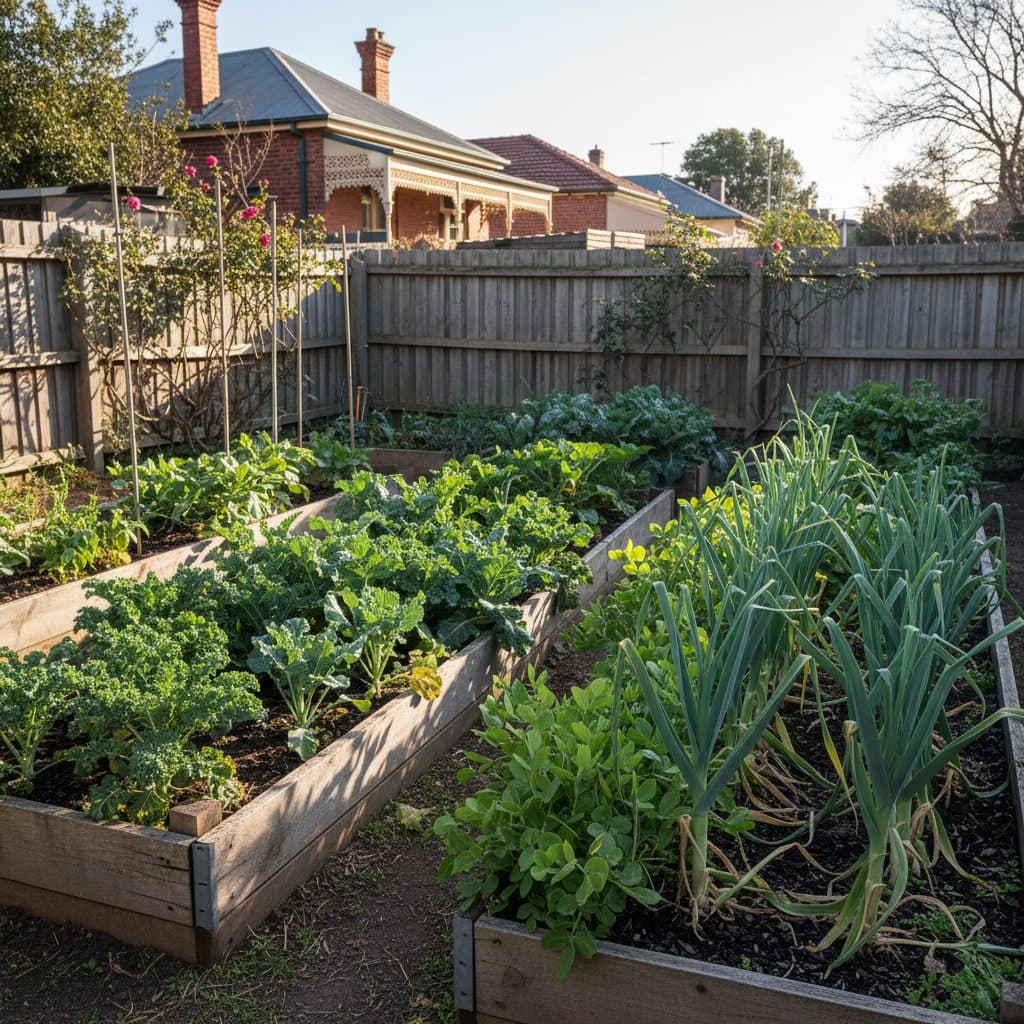
Key takeaways
- Melbourne's cool-temperate maritime climate experiences dramatic weather shifts, requiring distinct planting windows across the four Southern Hemisphere seasons.
- Plant warm-season crops like tomatoes, capsicum, and eggplants outdoors in early to mid-November (around Melbourne Cup Day) to avoid cold spring soil and late frosts.
- Autumn (March to May) is Melbourne's primary planting window for winter staples, including broccoli, cauliflower, kale, leeks, and garlic.
- Traditional garlic planting occurs in mid to late April, allowing cloves to develop deep root systems before cold winter soil sets in.
- Protect crops from extreme summer heatwaves (December to February) using 30% to 50% shade cloth, and secure beds against protected native possums with physical netting.
Quick answer: In Melbourne, plant warm-season vegetables (tomatoes, capsicums, zucchini, beans) outdoors in November once soil warms above 15°C. Plant cool-season crops (brassicas, leeks, spinach, carrots) in autumn between March and May, and sow broad beans, peas, and garlic in late autumn for harvest through winter and spring.
Gardening in Melbourne is famously defined by rapid weather changes. Situated on the shores of Port Phillip Bay, the city alternates between chilly Antarctic southerly fronts and scorching desert northerlies, giving rise to its reputation for experiencing four seasons in a single day.
Growing vegetables successfully in Melbourne requires matching sowing dates to local soil temperatures instead of relying on generic national gardening calendars. Outer suburbs in the Yarra Valley and Dandenong Ranges experience winter frosts as late as October, while inner-city bay suburbs enjoy milder, virtually frost-free coastal conditions.
By understanding the seasonal rhythms of the Southern Hemisphere calendar, you can keep your Melbourne veggie patch productive across every month of the year.
+-------------------------------------------------------------+
|              MELBOURNE SEASONAL PLANTING OVERVIEW           |
|                                                             |
|   SEASON         MONTHS         PRIMARY PLANTING FOCUS      |
|   ------         ------         ----------------------      |
|   Spring         Sept - Nov     Tomatoes, beans, corn, basil|
|   Summer         Dec - Feb      Heat crops, quick salads    |
|   Autumn         March - May    Brassicas, garlic, alliums  |
|   Winter         June - August  Broad beans, peas, greens   |
+-------------------------------------------------------------+
When should you plant tomatoes and warm-season crops in Melbourne?
One of the most common beginner mistakes in Melbourne is planting tomato and capsicum seedlings outdoors in September. While early spring days can feel pleasantly warm, Melbourne's soil remains cold (often below 12°C), and sudden October cold snaps can stunt or kill tender plants.
Local gardening lore recommends waiting until Melbourne Cup Day in early November before transplanting warm-season seedlings into open garden beds. By mid-November:
- Soil temperatures consistently exceed 15°C to 18°C, which triggers rapid root expansion.
- Night minima are usually mild enough (around 10°C or more) that cold-induced phosphorus lockup (the purple tinge on young tomato leaves) stops being a problem.
- The risk of late radiation frost in outer northern and eastern suburbs drops to near zero.
If you start your tomatoes, eggplants, capsicums, or chillies from seed indoors, sow them in punnets on a sunny windowsill or seedling heat mat in August or September. By November, you will have stocky, 15 to 20 cm tall transplants ready to harden off and plant out. For managing nighttime temperature drops during fruit set, review our troubleshooting guide on tomato ripening night temperature solutions.
+-------------------------------------------------------------+
|              WARM-SEASON TRANSPLANT SCHEDULE                |
|                                                             |
|   CROP            SEED SOWING           GARDEN TRANSPLANT   |
|   ----            -----------           -----------------   |
|   Tomatoes        August - September    Early - Mid November|
|   Capsicums       August - September    Mid - Late November |
|   Eggplants       August - September    Mid - Late November |
|   Zucchini        September - October   Late Oct - November |
|   Sweet Corn      October (direct seed) November - December |
|   French Beans    October (direct seed) November - January  |
+-------------------------------------------------------------+
What should you plant during Melbourne's autumn golden window?
Autumn (March to May) is the most productive planting season for Melbourne growers. The soil remains warm from summer, rainfall increases, and pest pressure from white cabbage butterflies and aphids begins to drop.
Brassicas (March to April)
Broccoli, cabbage, cauliflower, Brussels sprouts, kale, and kohlrabi must be planted in early autumn so they establish substantial leaf frames before winter daylight drops below ten hours. If you wait until June to plant brassicas, they will sit dormant in cold, damp soil until spring.
Alliums and root vegetables (April to May)
- Garlic: The traditional planting window across Victoria is mid to late April. Separate whole garlic bulbs into individual cloves and plant them point-upward 5 cm deep in well-drained, compost-rich soil.
- Leeks and onions: Transplant sturdy seedlings into deep trenches or holes in April for harvest throughout spring and early summer.
- Carrots and parsnips: Direct sow seeds into loose, stone-free soil in March and April. Autumn-sown carrots sweeten as cool temperatures convert starches into natural sugars.
For perennial vegetables that establish well in cool-temperate Victorian soils, see our guide on perennial vegetables in Australia.
+-------------------------------------------------------------+
|              AUTUMN PLANTING SELECTIONS (MARCH - MAY)       |
|                                                             |
|   CROP           PLANTING METHOD       HARVEST WINDOW       |
|   ----           ---------------       --------------       |
|   Broccoli       Seedlings (March-Apr) June to September    |
|   Garlic Cloves  Direct cloves (April) November to December |
|   Kale           Seedlings (March-May) Pick continuously    |
|   Carrots        Direct seed (Mar-Apr) Winter to early spring|
|   Silverbeet     Seedlings (Mar-May)   Year-round harvest   |
+-------------------------------------------------------------+
Which winter vegetables thrive through Melbourne's coldest months?
June, July, and August bring damp conditions, overcast days, and cold nights across Victoria. While plant growth slows down, several resilient crops thrive through the winter chill.
- Broad beans (Vicia faba): Sow large seeds directly into beds 5 cm deep from May through July. They tolerate heavy winter frosts, fix atmospheric nitrogen in the soil, and produce tender green pods from October through November.
- English spinach and Asian greens: True English spinach (Spinacia oleracea), pak choy, and tatsoi thrive in cool winter soil, producing lush, tender leaves without bolting.
- Sugar snap and snow peas: Sow climbing pea seeds along a north-facing trellis in May and June. Peas handle winter frosts easily and burst into prolific flowering as spring arrives.
- Silverbeet: Silverbeet is virtually indestructible in Melbourne, providing continuous cut-and-come-again leaves through winter freezes and summer heat alike.
+-------------------------------------------------------------+
|              WINTER VEGGIE BED ESSENTIALS                   |
|                                                             |
|   - Broad beans and climbing snow peas along trellises      |
|   - Overwintering garlic cloves beneath light straw mulch   |
|   - English spinach, mizuna, and rocket in open beds        |
|   - Standing leeks and kale ready for winter stews          |
+-------------------------------------------------------------+
How do you manage Melbourne's summer extremes and garden pests?
Between December and February Melbourne usually gets a run of days above 35°C, with occasional extremes above 40°C, driven by dry winds blowing from central Australia.
Managing extreme heatwaves
- Deploy shade cloth: Erect 30% to 50% white or green shade cloth over delicate leafy greens, capsicums, and fruiting tomatoes during hot weather. Pull the cloth over beds before 9:00 AM on forecast heatwave days. For comprehensive hot-weather strategies, consult our guide on summer vegetables in Australia.
- Water deeply in early morning: Give your veggie patch a deep, slow soak at the base between 5:00 AM and 7:30 AM. Avoid evening watering, which leaves foliage wet overnight and favours downy mildew, leaf spots and grey mould (botrytis).
- Mulch generously: Apply 7 to 10 cm of pea straw or sugar cane mulch to keep soil root zones cool.
Managing local wildlife
Melbourne gardens are home to brushtail and ringtail possums, which regularly strip tomato vines, young brassica seedlings, and fruit tree buds.
- Brushtail and ringtail possums are protected under Victoria's Wildlife Act. Trapping and relocation rules are set by DEECA and change; exclusion netting is always allowed; check current DEECA guidance before doing anything else.
- Protect crops using exclusion cages: build rigid timber or PVC frames clad in galvanized wire netting (12 mm mesh) that fully enclose garden beds.
To compare Melbourne's cool-temperate calendar with coastal warm-temperate conditions further north, read our Sydney vegetable planting guide.