Key takeaways
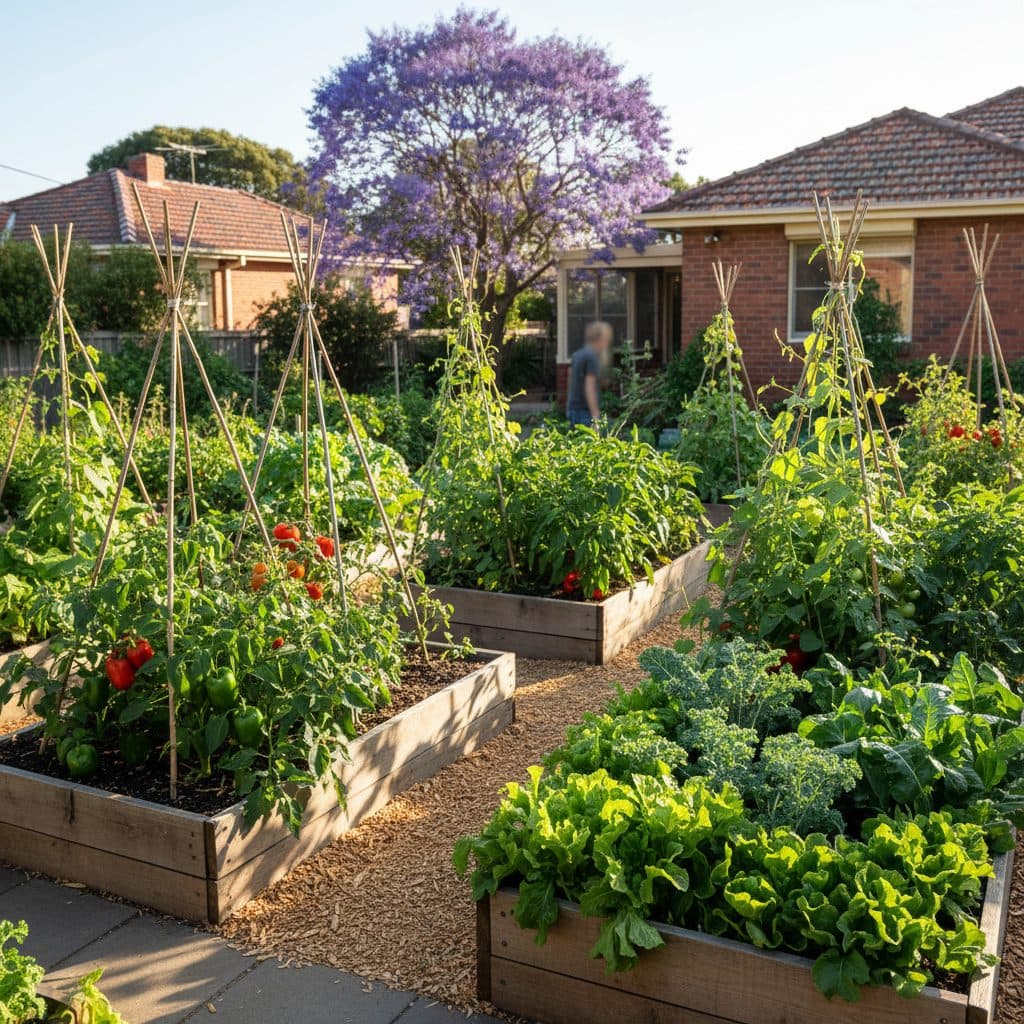
- Sydney's warm-temperate coastal climate allows continuous year-round vegetable production across the four Southern Hemisphere seasons.
- Coastal and eastern suburbs remain virtually frost-free, whereas Western Sydney (Penrith, Richmond, Camden) experiences winter frosts and intense 40°C+ summer heat.
- Spring (September to November) is the ideal window to plant warm-season staples including tomatoes, capsicums, zucchini, and climbing beans.
- Autumn (March to May) offers prime conditions for establishing winter brassicas, root vegetables, and planting garlic cloves in April and May.
- Cool winter months (June to August) provide the best conditions for growing bolt-sensitive coriander, English spinach, rocket, and broad beans.
Quick answer: In Sydney, plant warm-season vegetables (tomatoes, capsicums, eggplants, beans) outdoors in September and October as spring temperatures rise. Plant cool-season crops (broccoli, cabbage, leeks, carrots) in autumn from March to May, and grow leafy greens, garlic, and broad beans through the mild winter months.
With mild winters, warm springs, and humid summers, Sydney offers one of the most productive gardening climates in Australia. Unlike colder southern regions that endure deep winter freezes, Sydney allows gardeners to harvest fresh vegetables throughout the year.
However, Sydney's microclimates vary dramatically across the basin. Coastal suburbs from Manly to Cronulla enjoy mild, ocean-buffered temperatures with almost no frost. In contrast, Western Sydney experiences continental temperature swings, with winter morning frosts dipping below 0°C and scorching summer heatwaves frequently exceeding 42°C.
Understanding your local microclimate, matching crop choices to seasonal rainfall, and managing summer humidity supports reliable vegetable production throughout the year.
+-----------------------------------------------------------------+
|              SYDNEY BASIN CLIMATIC COMPARISON                   |
|                                                                 |
|   REGION            WINTER FROST RISK    SUMMER HEAT PROFILE    |
|   ------            -----------------    -------------------    |
|   Coastal / East    Virtually zero frost Mild-humid (28-32°C)   |
|   Inner West / NorthRare light frost     Warm-humid (30-35°C)   |
|   Western Suburbs   Frequent (0°C to -2) Severe heat (38-44°C)  |
+-----------------------------------------------------------------+
What should you plant in Sydney during spring (September to November)?
Spring in Sydney brings warming soil temperatures and longer daylight hours, making it the primary season for establishing warm-season annuals.
Early spring (September to October)
As soil temperatures rise above 16°C, plant seedlings of tomatoes, capsicums, chillies, and eggplants. While coastal gardeners can plant out in early September, Western Sydney growers should wait until late September or early October to avoid late cold snaps.
- Tomatoes: Indeterminate varieties (such as 'Grosse Lisse' or 'Sweet 100') produce heavy trusses when staked securely and pruned to one or two main stems.
- Cucurbits: Direct sow seeds of zucchini, cucumbers, and summer squash into mounds enriched with aged compost.
Late spring (November)
Direct sow warm-season climbing French beans, snake beans, sweet corn, and basil. Water newly planted seedlings deeply to help them establish strong root systems before summer heat arrives.
+-------------------------------------------------------------+
|              SPRING PLANTING SCHEDULE (SEPT - NOV)          |
|                                                             |
|   CROP            PLANTING METHOD       HARVEST WINDOW      |
|   ----            ---------------       --------------      |
|   Tomatoes        Seedlings (Sept-Oct)  December to March   |
|   Capsicums       Seedlings (Sept-Nov)  January to April    |
|   Zucchini        Direct seed (Oct-Nov) Dec to February     |
|   Climbing Beans  Direct seed (Oct-Nov) December to March   |
|   Sweet Corn      Direct seed (Nov)     February to March   |
+-------------------------------------------------------------+
For heat-tolerant varieties suited to late spring sowing, see summer vegetables in Australia.
How do you manage the Sydney veggie patch during summer (December to February)?
Sydney summers bring intense sunshine, high relative humidity, and afternoon coastal sea breezes interspersed with scorching westerly winds.
Heat-tolerant summer crops
Avoid starting delicate cool-season leafy greens in midsummer. Instead, plant species that relish heat:
- Okra and snake beans: Thrive in humid 30°C+ conditions and continue flowering when European crops stall.
- Sweet potato: Sprawls as an edible, weed-smothering living mulch that protects soil biology while yielding tubers in late autumn.
- Warrigal greens (Tetragonia tetragonioides): Native Australian perennial greens that produce succulent spinach-like leaves throughout the hottest weather. Explore more long-lived crops in our guide to perennial vegetables in Australia.
Summer bed protection
- Shade cloth: Protect fruiting tomatoes and capsicums with 30% to 50% white or green shade cloth during forecast 35°C+ heatwaves to prevent blossom drop and fruit sunscald.
- Mulch deeply: Spread 7 to 10 cm of organic sugar cane mulch or lucerne across all beds to keep root systems cool.
- Morning watering: Irrigate deeply at soil level between 6:00 AM and 8:00 AM. Watering in the evening leaves foliage wet overnight, encouraging downy mildew, anthracnose, and fungal leaf spots (powdery mildew prefers dry foliage and humid air). To feed active summer croppers safely, apply organic fertilisers for hot weather vegetables.
+-------------------------------------------------------------+
|              SUMMER MANAGEMENT STRATEGIES                   |
|                                                             |
|   - Suspend 30-50% shade cloth 40 cm above crop canopies    |
|   - Apply 8 cm sugar cane mulch over all bare soil          |
|   - Water exclusively at base via drip irrigation           |
|   - Secure exclusion netting against Queensland fruit fly   |
+-------------------------------------------------------------+
What crops thrive in Sydney's autumn (March to May)?
Autumn is widely considered the most comfortable and productive gardening season in Sydney. Soil remains warm, air temperatures moderate, and rainfall is generally reliable.
Autumn brassicas (March to April)
Start seedlings of broccoli, cabbage, cauliflower, kale, and Asian greens (pak choy, bok choy, gai lan). Getting seedlings into the ground in early autumn allows them to build strong leaf structures before shorter winter daylight slows growth.
Root crops and alliums (April to May)
- Garlic: Plant garlic cloves point-upward 5 cm deep in mid-April to late May. In Sydney's warm-temperate climate, Australian cultivars like 'Australian White', 'Italian Late', and 'Glenlarge' perform exceptionally well.
- Carrots and beetroot: Direct sow seeds into fine, loose soil in March and April for continuous winter harvests.
- Leeks and onions: Transplant leek seedlings into deep holes in April for spring harvesting.
+-----------------------------------------------------------------+
|              AUTUMN PLANTING CALENDAR (MARCH - MAY)             |
|                                                                 |
|   CROP           PLANTING TIMING       EXPECTED HARVEST         |
|   ----           ---------------       ----------------         |
|   Broccoli       Seedlings (March-Apr) June to September        |
|   Garlic Cloves  Direct cloves (Apr-May)November to December    |
|   Asian Greens   Direct/Plugs (Mar-May)4 to 6 weeks             |
|   Carrots        Direct seed (Mar-Apr) Winter through spring    |
|   Silverbeet     Seedlings (Mar-May)   Continuous pickings      |
+-----------------------------------------------------------------+
Which winter vegetables grow best in Sydney (June to August)?
Sydney's mild winter temperatures make it possible to grow crops that bolt to seed immediately during hot summer months.
- Coriander (Coriandrum sativum): While coriander bolts within days during Sydney summers, winter sowings produce huge, bushy, flavourful plants that can be cut repeatedly from July through October.
- Broad beans and peas: Sow climbing snow peas and broad bean seeds along trellises in May and June. Broad beans fix atmospheric nitrogen, conditioning the soil for upcoming spring crops.
- English spinach and rocket: True spinach (Spinacia oleracea) and peppery rocket thrive in cool winter soil, providing sweet, tender leaves without bitterness.
- Silverbeet: Silverbeet is exceptionally tough, producing crisp, glossy leaves through light western-suburb frosts and humid 38°C summer heatwaves.
+-------------------------------------------------------------+
|              WINTER VEGGIE BED FOCUS                        |
|                                                             |
|   - Abundant bolt-free coriander, rocket, and dill          |
|   - Climbing snow peas and sugar snaps along sunny fences   |
|   - Broad beans developing deep nitrogen-fixing root nodules|
|   - Hardy leeks and kale standing ready for fresh harvest   |
+-------------------------------------------------------------+
How do you manage local pests and wildlife in Sydney gardens?
Sydney gardeners share their urban spaces with active native wildlife and seasonal insect pests.
Queensland fruit fly (Bactrocera tryoni)
Queensland fruit fly (Qfly) is widespread across the Sydney basin, attacking tomatoes, capsicums, and stone fruit from late spring through autumn.
- Install fine exclusion netting (mesh size 1 mm or smaller) over entire garden beds or fruit clusters as soon as pollination concludes.
- Collect fallen, stung fruit daily and seal it in a clear plastic bag left in the sun for at least a week to solarise (or boil / deep-freeze it) before placing it in the general-waste red bin, avoiding the compost or council green bin.
Native wildlife protection
Brushtail and ringtail possums, flying foxes, and cockatoos frequently visit backyard veggie patches.
- Possums are protected native wildlife across New South Wales. Never harm, poison, or trap native animals without an official statutory licence from the National Parks and Wildlife Service.
- Protect crops with heavy-duty timber or PVC frames covered in galvanised wire netting (12 mm aperture) that enclose garden beds securely.
To compare Sydney's warm-temperate patterns with cool-climate gardening further south, read our Melbourne vegetable planting guide.