Key takeaways
- Overwatering during heatwaves starves roots of oxygen, leading to rapid plant decline.
- High soil temperatures combined with excess moisture create ideal conditions for root rot pathogens.
- Clay soils, common in parts of the Midwest and Southeast, exacerbate oxygen deprivation due to poor drainage.
- Monitoring soil moisture with a meter matters; aim for consistent moisture, not saturation, especially when temperatures exceed 90°F.
- Deep, infrequent watering encourages strong root systems, making plants more resilient to heat and drought.
- Selecting drought-tolerant plants suitable for your USDA zone significantly reduces watering stress.
Quick answer: Overwatering during a heatwave kills plants faster because it starves roots of oxygen, leading to root rot and impaired nutrient uptake. High soil temperatures exacerbate this by creating ideal conditions for pathogens and increasing plant stress.
In the scorching summer heat of a typical Arizona July, where temperatures can regularly hit 110°F, it is natural to want to give our thirsty plants a generous drink. Many US growers, from the humid Southeast to the arid Southwest, instinctively reach for the hose when their garden looks stressed during a heatwave. However, this well-meaning act of overwatering can often do more harm than good, sometimes killing plants faster than the drought itself. This paradox is a critical lesson for anyone aiming to grow resilient gardens in a changing climate.
Understanding the science behind root rot and oxygen starvation, especially when the soil itself is hot, helps keep your plants alive and thriving. A 2020 study on Arctic warming trends shows how quickly ecosystems can respond to temperature shifts [3], and our gardens are no different. By adjusting our watering habits and understanding soil dynamics, we can protect our plants, even when the thermometer climbs above 95°F for days on end.
The paradox: why more water can mean less life
When temperatures soar, like the 105°F recorded in California’s Central Valley last summer, plants lose water through their leaves at an accelerated rate. This transpiration cools the plant, but it also signals a need for more water from the roots. Our instinct is to provide that water, often in excess. However, this can be a fatal mistake for many species, particularly those not adapted to constantly wet conditions. The definition of overwatering itself implies an excess of water beyond what a plant needs for healthy growth [4].
The problem arises when soil pores, which are normally filled with a mix of water and air, become completely saturated with water. This displaces the vital oxygen that plant roots need to respire. Without oxygen, roots cannot perform their essential functions, such as absorbing water and nutrients, even if those resources are abundant in the soil. This can happen surprisingly quickly; a plant can show signs of distress within 24 to 48 hours of being waterlogged in hot soil, especially if soil temperatures are consistently above 85°F.
root respiration and heat stress
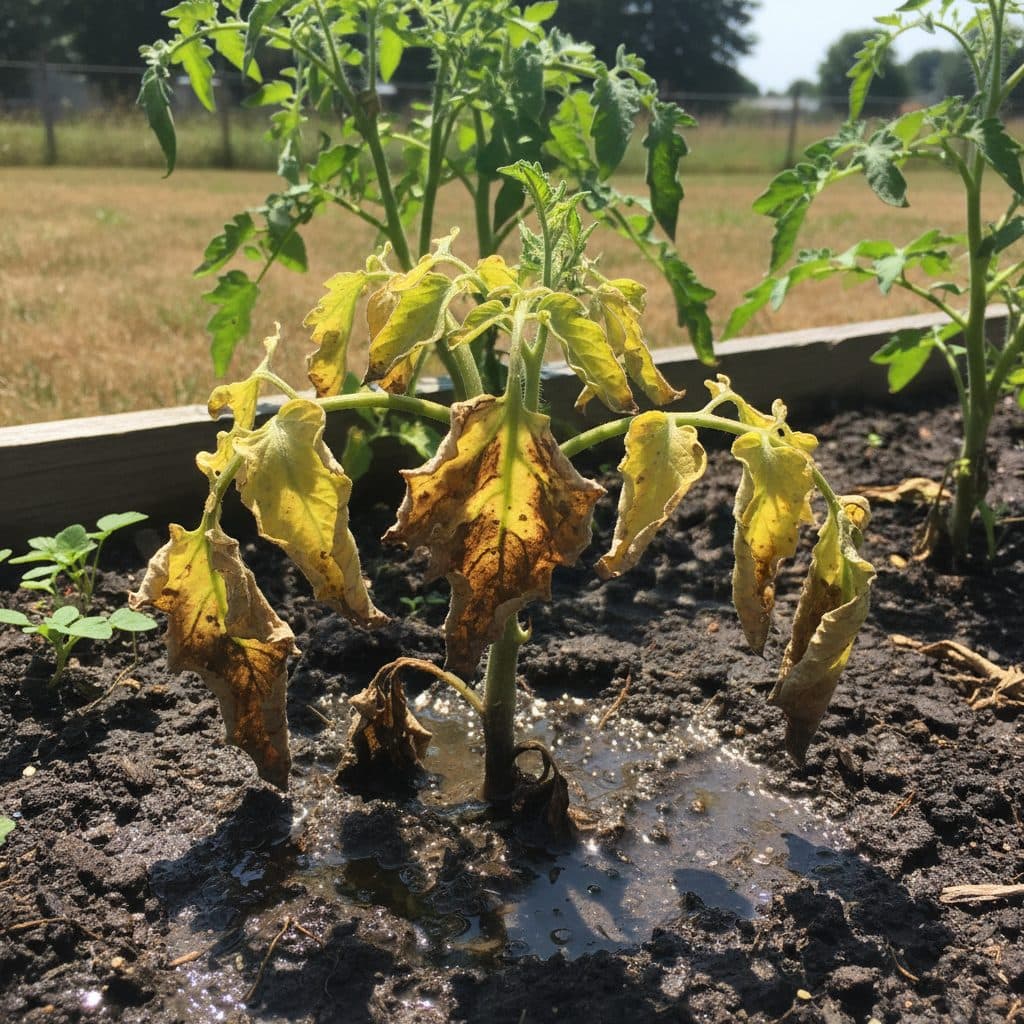
Plant roots are living organisms that require oxygen for cellular respiration, a process that generates energy for growth and nutrient uptake. During a heatwave, plants are already under significant stress, working harder to survive. If their roots are then deprived of oxygen due to overwatering, their ability to cope with heat stress is severely compromised. For instance, a tomato plant in a container with saturated soil at 90°F will struggle far more than one in well-drained soil at the same temperature. This leads to wilting, yellowing leaves, and eventually, plant collapse. The soil structure plays a significant role here; sandy soils drain faster, while a heavy clay soil, common in parts of the US Southeast, can hold excess water for days, creating a suffocating environment for roots.
- Roots need oxygen for energy production.
- Saturated soil displaces air, depriving roots of oxygen.
- High temperatures increase metabolic demand, making oxygen deprivation more critical.
- Lack of oxygen impairs water and nutrient absorption.
- Symptoms like wilting appear rapidly, often within one to two days.
Root rot: the silent killer in warm, wet soil
Root rot is a destructive condition caused by various soil-borne fungal and oomycete pathogens, such as Phytophthora and Pythium. These pathogens thrive in anaerobic (oxygen-deprived) and consistently wet conditions, especially when soil temperatures are elevated. For example, in a USDA zone 8 garden experiencing a week-long heatwave with daytime highs of 98°F and nightly lows of 75°F, constantly wet soil provides an ideal breeding ground for these organisms. The combination of heat and excessive moisture accelerates their lifecycle, allowing them to infect and destroy root systems with alarming speed.
Once infected, the roots turn soft, mushy, and brown or black, losing their ability to absorb water and nutrients. This is often mistaken for drought stress, leading growers to water even more, exacerbating the problem. A plant suffering from root rot might show wilting leaves despite ample soil moisture, a clear sign that its plumbing system is failing. In a study of marine heatwaves, coral reefs collapsed much faster than predicted due to rapid pathogen spread in warmer waters [5], a similar principle applies to plant roots in hot, waterlogged soil.
identifying root rot symptoms
Recognizing root rot early matters for plant survival. The symptoms often mimic those of underwatering, making diagnosis challenging for many growers. However, a key differentiator is the soil moisture level. If your plant is wilting but the soil feels consistently wet, root rot is a strong possibility. For instance, a pepper plant in a 5-gallon container might show yellowing lower leaves and stunted growth, even with daily watering, if its roots are rotting. Checking the root ball by gently lifting the plant can confirm suspicions; healthy roots are firm and white, while rotted roots are discolored and fragile. Consider using a 3-in-1 Soil pH, Moisture & Light Meter to accurately assess soil conditions before watering.
- Wilting, yellowing, or browning leaves despite wet soil.
- Stunted growth and overall decline in plant vigor.
- Soft, mushy, discolored roots (brown or black).
- Foul odor from the soil, indicating anaerobic decomposition.
- Rapid progression of symptoms, especially in hot weather above 80°F.
Soil structure and water retention: a critical link
The type of soil in your garden significantly influences how quickly overwatering leads to problems. Different soil textures have varying capacities for water retention and drainage. For instance, a sandy loam, prevalent in many parts of Florida, drains relatively quickly, often within a few hours after a heavy rain or irrigation. This rapid drainage allows air to return to the root zone, reducing the risk of oxygen starvation.
Conversely, heavy clay soils, which cover vast agricultural areas in states like Illinois and Alabama, have very fine particles that pack tightly together. This structure creates small pore spaces that retain water for extended periods, sometimes for several days after watering. When these soils are overwatered during a heatwave, the lack of drainage means roots can remain submerged in water, completely deprived of oxygen, for 48 hours or more. This is why understanding your soil type is paramount; a soil test can reveal its composition and water-holding capacity, often showing percentages of sand, silt, and clay, as detailed by the USDA Natural Resources Conservation Service [6].
improving drainage in heavy soils
For growers dealing with heavy clay soils, improving drainage is a long-term strategy that pays dividends in plant health, especially during periods of high heat and potential overwatering. Incorporating organic matter, such as compost or aged manure, can significantly improve soil structure. Aim to mix in 2 to 4 inches of organic material into the top 6 to 12 inches of soil. This creates larger pore spaces, allowing for better water infiltration and aeration. Raised beds are another excellent solution for areas with persistently poor drainage, providing a controlled environment with engineered soil mixes. For more insights on managing challenging soil types, explore our article on plants for clay soil that actually thrive.
- Sandy soils drain quickly, reducing waterlogging risk.
- Clay soils retain water for longer, increasing oxygen deprivation risk.
- Loamy soils offer a balance of drainage and water retention.
- Organic matter improves soil structure and aeration in heavy soils.
- Raised beds provide an immediate solution for poor drainage, offering 12-18 inches of improved soil depth.
Smart watering strategies for heatwaves
The key to successful watering during a heatwave, whether you are in a humid USDA zone 9 region like central Florida or a drier zone 6 area in Colorado, is to provide sufficient moisture without causing saturation. This means focusing on deep, infrequent watering rather than shallow, frequent sprinkles. When you water deeply, applying 1 to 2 inches of water, it encourages roots to grow deeper into the soil, making them more resilient to surface drying and temperature fluctuations. Shallow watering, on the other hand, promotes a shallow root system that is highly susceptible to heat stress and rapid dehydration.
Timing is also crucial. Watering in the early morning, between 5:00 AM and 8:00 AM, minimizes water loss due to evaporation, which can be as high as 30% during midday in temperatures above 90°F. This allows the plants to absorb the water before the heat of the day sets in. Avoid watering in the evening, especially in humid climates, as wet foliage overnight can promote fungal diseases. For container plants, which dry out faster, checking soil moisture daily is often necessary, but still aim for thorough saturation followed by allowing the top inch or two to dry out.
tools for precision watering
To avoid the pitfalls of overwatering, especially in a heatwave, investing in a soil moisture meter is highly recommended. These simple devices can accurately tell you the moisture level at root depth, taking the guesswork out of watering. A basic Soil Moisture Meter can provide readings from one to ten, with five often being the target for many plants. For a typical garden bed, check moisture at three to four different spots to get an average reading. This prevents you from watering a spot that is already adequately moist, which is particularly important for plants like okra, which prefer consistently warm, but not soggy, soil. Drip irrigation systems are another excellent option, delivering water directly to the root zone with up to 90% efficiency, minimizing waste and preventing runoff.
- Water deeply and infrequently to encourage deep root growth.
- Water in the early morning to reduce evaporation loss by up to 30%.
- Use a soil moisture meter to check moisture levels at root depth.
- Aim for consistent moisture, allowing the top 1-2 inches of soil to dry.
- Consider drip irrigation for efficient and targeted water delivery.
Choosing resilient plants for a changing climate
One of the most effective long-term strategies for gardening in regions prone to heatwaves and droughts, from the high desert of New Mexico to the humid plains of Oklahoma, is to select plants that are naturally adapted to these challenging conditions. Drought-tolerant plants have evolved various mechanisms to cope with limited water and high temperatures, such as deep root systems, waxy leaves, or succulent tissues that store water. For example, many native plants in USDA zones 7 and above, such as coneflowers (Echinacea purpurea) or lavender (Lavandula angustifolia), require significantly less supplemental irrigation once established, often thriving on just 0.5 inches of water per week.
Beyond drought tolerance, consider plants that can also withstand periods of intense heat. Some species, like certain varieties of basil or peppers, will simply stop producing or even die back when temperatures consistently exceed 95°F, regardless of watering. Others, such as native grasses or succulents like sedum, are far more resilient, continuing to grow even when the mercury climbs to 100°F or more. Researching plants native to your specific USDA zone and local climate will provide the best options for sustained success. Our article on drought tolerant plants: how to choose them by zone offers a comprehensive guide.
building a resilient garden ecosystem
Creating a diverse and resilient garden involves more than just individual plant choices; it’s about building a healthy soil ecosystem. Healthy soil, rich in organic matter, can hold more water and nutrients, and supports a healthy microbial community that aids plant health. Incorporating 1 to 2 inches of compost annually can increase the soil’s water-holding capacity by up to 20%. Mulching is another simple yet powerful technique. A 2- to 4-inch layer of organic mulch, such as wood chips or straw, helps retain soil moisture by reducing evaporation by 10-25% and moderates soil temperature, keeping roots cooler during heatwaves. This protective layer also suppresses weeds, which compete with your plants for precious water and nutrients, especially when water is scarce.
- Select plants native to your USDA zone for natural resilience.
- Prioritize plants with documented drought and heat tolerance.
- Incorporate organic matter to improve soil water retention by up to 20%.
- Apply 2-4 inches of mulch to reduce evaporation and regulate soil temperature.
- Choose diverse plant species to build a more stable garden ecosystem.
Overwatering vs. underwatering symptoms in a heatwave
Symptom | Overwatering (Heatwave) | Underwatering (Heatwave) |
|---|---|---|
Leaf appearance | Yellowing, soft, mushy, often with dark spots; leaves may drop from bottom up. | Wilting, crispy, dry, often browning at edges; leaves may curl or drop from top down. |
Soil condition | Consistently wet, possibly waterlogged, often with a foul odor; top 2-3 inches feel damp. | Dry, hard, cracked; top 2-3 inches feel bone dry. |
Root appearance | Soft, brown/black, mushy, easily pulled apart; often with a rotten smell. | Dry, brittle, shriveled, often light brown or white but not firm. |
Plant vigor | Stunted growth, overall decline, despite recent watering; plant looks ‘sick’. | Stunted growth, severe wilting, often recovers slowly after watering if caught early. |
Pest/Disease risk | High risk of fungal root rot, gnats, and other moisture-loving pests. | Increased susceptibility to spider mites and other drought-stress pests. |
Soil Oxygen: Healthy soil requires 20-30% air-filled pore space for optimal root respiration, which is lost when overwatered.
Heat Stress Threshold: Many common garden plants begin to show significant heat stress when ambient temperatures consistently exceed 90°F.
Water Loss: Up to 30% of irrigation water can be lost to evaporation when watering during the hottest part of the day, typically between 12 PM and 4 PM.
Frequently asked questions
Can plants recover from root rot caused by overwatering in a heatwave?
Recovery is possible, but not guaranteed. If caught early, within 24-48 hours of symptoms appearing, you can try to improve drainage and reduce watering. For severely affected plants, especially those with more than 50% of their root system damaged, recovery is unlikely.
How can I tell if my soil is draining poorly?
A simple test involves digging a 1-foot by 1-foot hole and filling it with water. If the water takes more than 4 hours to drain completely, your soil has poor drainage. In clay soils, drainage can be as slow as 0.25 inches per hour.
Is it better to underwater or overwater during a heatwave?
During a heatwave, it is generally safer to slightly underwater than to overwater. Plants can often recover from temporary wilting due to lack of water, but root rot from overwatering in hot soil can be fatal within days, especially if temperatures are above 85°F.
What is the ideal soil moisture reading for most plants during a heatwave?
Using a soil moisture meter, aim for a reading of 4-6 on a scale of 1-10 (where 1 is dry and 10 is saturated) at a depth of 4-6 inches for most established garden plants. This ensures consistent moisture without waterlogging the roots.
Does mulching help prevent overwatering issues?
Yes, mulching helps regulate soil temperature and moisture, reducing evaporation by 10-25%. While it doesn’t prevent overwatering, it creates a more stable soil environment, allowing for more consistent moisture levels and reducing the need for frequent watering, especially when temperatures exceed 90°F.
References
- Corruption Kills Some People Faster than Others (2025). Corruption Kills Some People Faster than Others.
- Corruption Kills Some People Faster than Others (2025). Corruption Kills Some People Faster than Others.
- Siberia heatwave: why the Arctic is warming so much faster than the rest of the world (2020). Siberia heatwave: why the Arctic is warming so much faster than the rest of the world.
- overwatering, n. (2023). overwatering, n..
- Massive marine heatwave caused Caribbean coral reefs to collapse much faster than predicted – new research (2026). Massive marine heatwave caused Caribbean coral reefs to collapse much faster than predicted – new research.
- USDA Natural Resources Conservation Service (2024). USDA Natural Resources Conservation Service.