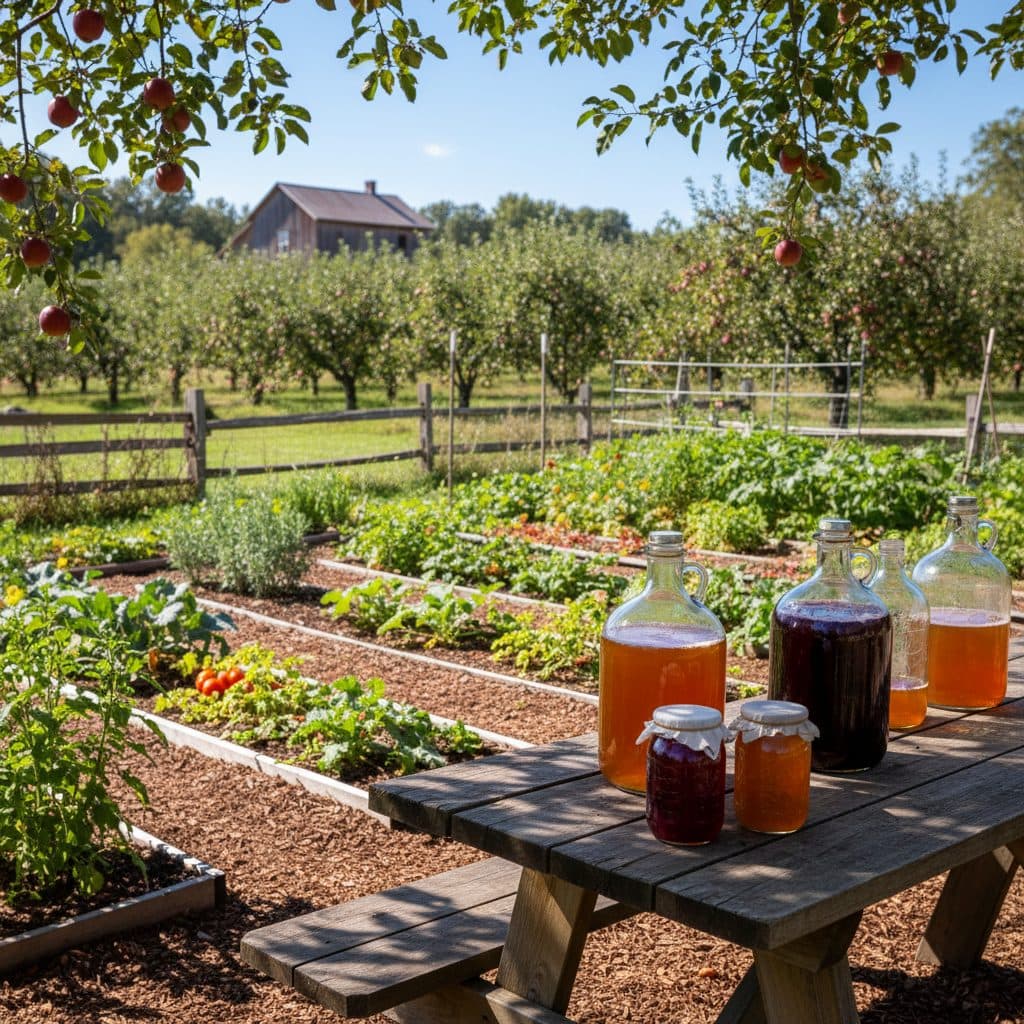
Key takeaways
- Homemade raw ACV costs as little as $2-5 per gallon in apples and sugar, well below the price of comparable store-bought raw ACV.
- Ripe, unsprayed apples—such as heirloom varieties or crabapples—make a high-quality vinegar, so aim for 5 pounds of apples per gallon.
- The ACV fermentation process typically involves two stages, totaling 4 to 10 weeks, at optimal temperatures between 60-80°F.
- When buying ACV, look for ‘unfiltered,’ ‘unpasteurized,’ and ‘with the mother’ on the label to ensure raw quality and beneficial compounds.
- Raw ACV is an excellent menstruum for extracting beneficial compounds from herbs like Garden Sage into tinctures and oxymels, often using a 1:5 herb to ACV ratio.
- Avoid ACV gummy products; they are not a substitute for liquid raw ACV in herbal preparations.
Quick answer: Making raw apple cider vinegar at home involves fermenting unsprayed apples, like heirloom varieties or crabapples, for 4 to 10 weeks at 60-80°F to create a potent base for herbal tinctures and oxymels.
In the Pacific Northwest, where apple orchards thrive, many home herbalists are turning to raw apple cider vinegar (ACV) as a foundational ingredient for their home apothecaries. This practice, rooted in centuries of tradition, offers a tangible connection to the plants and processes that support well-being. The growing interest in self-sufficiency and natural remedies across the US means more households are exploring everything from growing their own medicinal herbs to crafting their own fermented foods.
Whether you’re cultivating a small patch of Salvia officinalis (Garden Sage) in USDA zone 6 or harvesting wild crabapples in the Appalachian foothills, understanding how to source or make quality raw ACV is invaluable. This article will guide you through the process, from selecting the best apples to fermenting your own batch, so your herbal preparations are potent and effective. We’ll also cover how to identify high-quality commercial options, distinguishing them from less effective products like ACV gummies.
What is raw apple cider vinegar, and why use it?
Raw apple cider vinegar is an unfiltered, unpasteurized product that retains the ‘mother’—a complex culture of beneficial bacteria and enzymes. Unlike distilled white vinegar, which is primarily acetic acid, raw ACV offers a spectrum of compounds that make it useful for herbal preparations. Its pH typically ranges from 2.5 to 3.5, providing an acidic medium that effectively extracts a wide array of plant constituents, including minerals and certain alkaloids. In many US states, from Vermont to Oregon, home herbalists rely on raw ACV for its acidic properties, which can extract beneficial compounds from herbs. This differs significantly from distilled white vinegar, which lacks the complex enzymes and probiotics found in raw ACV. For example, a fire cider recipe often calls for a 1:1 ratio of chopped herbs to ACV by volume, for a strong extraction over 4 weeks.
the ‘mother’ and its importance
The ‘mother’ is a gelatinous, cellulose-based substance that forms during the fermentation process, indicating a living, active vinegar. It contains acetic acid bacteria, which are responsible for converting alcohol into acetic acid, and also carries beneficial probiotics. When using raw ACV for herbal tinctures or oxymels, the presence of the mother indicates its vitality and potential therapeutic value. Many commercial filtered vinegars remove the mother, along with other beneficial components, reducing their efficacy for herbal applications. A 32-ounce bottle of quality raw ACV typically costs between $5 and $15, making homemade an attractive alternative.
- Contains beneficial enzymes and probiotics.
- Effective solvent for extracting plant compounds.
- Adds complex flavor to herbal preparations.
- Traditionally taken as a digestive tonic.
- Indicates an unpasteurized, living product.
Choosing apples for homemade vinegar
For a good apple cider vinegar, the quality of your apples matters most. In regions like Michigan and New York, where apple cultivation is extensive, seeking out unsprayed or organic apples—heirloom varieties, modern ones like Honeycrisp or Fuji, or even wild crabapples—can yield superior results. These apples often contain higher sugar content and more natural yeasts, crucial for a vigorous fermentation. Aim for about 5 pounds of apples for every 1 gallon of finished vinegar you intend to make. A mix of sweet and tart apples gives a more balanced flavor in the finished vinegar.
sourcing unsprayed or organic apples
Using apples free from pesticides and herbicides is essential, as these chemicals can inhibit the beneficial bacteria and yeasts needed for fermentation. Farmers’ markets, local orchards, or even your own backyard (if you grow apples without sprays) are excellent sources. If you’re growing your own, a soil test through your state cooperative extension will tell you whether your apple trees need lime or other amendments. Even slightly bruised or fallen apples are suitable, as long as they are not moldy or rotten. The natural sugars in ripe apples are the primary food source for the yeasts that begin the fermentation, so selecting sweet, mature fruit is key to a successful batch.
- Unsprayed apples, heirloom or modern (e.g., Honeycrisp, Fuji).
- Wild crabapples for intense flavor.
- Organic or unsprayed apples are preferred.
- A mix of sweet and tart apples for balance.
- Avoid moldy or rotten fruit.
Step-by-step: making your own apple cider vinegar
This builds directly on choosing apples.
Making your own raw apple cider vinegar is a straightforward process, requiring patience and a few basic supplies. Begin by chopping 5 pounds of apples—cores and skins included—into 1-inch pieces. Place these into a clean 1-gallon glass jar. Cover the apples with filtered water, ensuring they are fully submerged by at least 1 inch, and add 1 tablespoon of organic cane sugar for every cup of water used to kickstart fermentation. This initial stage, the primary fermentation, should occur at room temperature, ideally between 60-80°F, for 2 to 4 weeks. During this time, yeasts convert the sugars into alcohol.
secondary fermentation and the ‘mother’
After the primary fermentation, strain the apple solids from the liquid using a cheesecloth. The liquid, now a hard cider, then undergoes secondary fermentation. Transfer it back to a clean jar, cover with cheesecloth, and allow it to sit for another 2 to 6 weeks at 60-80°F. During this stage, acetic acid bacteria convert the alcohol into acetic acid, forming the ‘mother’ culture. The entire process can take up to 10 weeks, but yields a superior product to many store-bought options. For those interested in other fermentation projects, the principles are similar to making homemade kefir or yogurt, requiring careful temperature control and patience.
- 1-gallon glass jar.
- Cheesecloth or breathable cover.
- Rubber band for securing cover.
- Strainer or fine mesh sieve.
- Large bowl for straining.
Selecting store-bought raw apple cider vinegar
Those step-by-step habits matter here as well.
If homemade isn’t an option, choose a high-quality store-bought raw apple cider vinegar. Always look for labels that explicitly state ‘unfiltered,’ ‘unpasteurized,’ and ‘with the mother.’ This ensures you’re getting the beneficial enzymes and bacteria that contribute to its efficacy in herbal preparations. A 32-ounce bottle of quality raw ACV typically costs between $5 and $15, depending on the brand and retailer in most US grocery stores. Be wary of products that list added sugars, artificial flavors, or excessive preservatives, as these can diminish the vinegar’s natural benefits.
avoiding misleading acv products
It’s also important to note the numerous ACV gummy products that gained popularity in recent years; many of these contain negligible amounts of actual ACV. These products often fail to deliver the benefits attributed to liquid raw ACV, despite marketing claims, and may contain significant amounts of added sugar. For genuine herbal benefits, the liquid, raw form of ACV is consistently recommended over processed alternatives. Understanding these distinctions helps you make informed choices for your home apothecary and other fermentation projects, such as those discussed in home dairy.
- ‘Unfiltered’ and ‘Unpasteurized’ on the label.
- Clearly states ‘with the mother’.
- No added sugars or artificial flavors.
- Dark glass bottle to protect from light.
- Reputable brand with transparent sourcing.
Integrating raw ACV into your home apothecary
Raw apple cider vinegar is a versatile solvent in the home apothecary, capable of extracting a wide range of plant compounds. One popular preparation is ‘fire cider,’ a pungent tonic made by infusing ACV with warming herbs like garlic, ginger, and horseradish for 4 to 6 weeks. For herbal tinctures, a common ratio is 1:5 (one part dried herb to five parts ACV by weight or volume), allowing for potent extraction over 2 to 4 weeks. Herbs such as Salvia officinalis (Garden Sage), readily grown in USDA zone 5-9, make excellent ACV tinctures for digestive support.
creating oxymels and other preparations
Oxymels, a blend of ACV and honey infused with herbs, offer a sweeter alternative, often used for respiratory support. A typical oxymel ratio might be 1:1:1 (herb:ACV:honey). These preparations harness ACV’s acidic properties to extract constituents that might not be soluble in alcohol or water alone. Preparations made with commercial 5% vinegar can be kept in a cool, dark place. Home-fermented vinegar has an unverified acid strength, so preparations made with it, especially anything containing garlic, onion, horseradish or other low-acid vegetables, should be refrigerated rather than held at room temperature.
- Fire cider for immune support.
- Herbal tinctures for various ailments.
- Oxymels for respiratory health.
- Hair rinses for scalp health.
- Facial toners for skin care.
Comparison of Homemade vs. Store-bought Raw Apple Cider Vinegar
Feature | Homemade Raw ACV | Store-bought Raw ACV |
|---|---|---|
Cost (per gallon) | ~$2-5 (apples + sugar) | $20-60 (based on 32 oz bottles) |
Quality Control | Full control over ingredients and fermentation process | Relies on brand reputation and explicit labeling |
Time Investment | 4-10 weeks fermentation, ~2 hours active prep | Minutes to purchase from a store |
Ingredient Sourcing | Can use local, unsprayed, or heirloom apples | Limited to commercially available options and brands |
“Mother” Presence | Guaranteed to develop naturally during fermentation | Must be explicitly stated on label; often filtered out |
Cost Savings: Making your own raw ACV can reduce costs by over 75% compared to buying organic store brands, with homemade batches costing as little as $2-5 per gallon.
Fermentation Time: The entire process for homemade raw ACV, including primary and secondary fermentation, typically spans 4 to 10 weeks at temperatures between 60-80°F.
Frequently asked questions
How much sugar do I add to homemade ACV?
You typically add 1 tablespoon of organic cane sugar for every cup of water used to cover the apples. This sugar is consumed by yeasts during the initial 2-4 week fermentation phase, converting into alcohol before turning into vinegar.
Can I use any type of apple for ACV?
While most apples will work, heirloom varieties, organic apples, or crabapples are preferred for their higher natural yeast content and robust flavor. Aim for about 5 pounds of apples per 1 gallon of finished vinegar for best results.
What is the ‘mother’ in apple cider vinegar?
The ‘mother’ is a cellulose-based culture of acetic acid bacteria that forms during the secondary fermentation of ACV. It’s a sign of raw, unpasteurized vinegar and contains beneficial enzymes and probiotics, developing over 2 to 6 weeks.
How long does homemade ACV last?
Properly made and stored homemade raw ACV can last for up to 2 years in a cool, dark pantry. Preparations made with commercial 5% vinegar keep well for a year or more; anything made with home-fermented vinegar, or containing garlic or other low-acid vegetables, belongs in the refrigerator.
Are ACV gummies effective for herbal benefits?
Many ACV gummy products contain minimal active ingredients. For reliable herbal benefits, liquid raw ACV is generally more effective and contains the full spectrum of beneficial compounds.
What temperature is best for ACV fermentation?
The optimal temperature range for apple cider vinegar fermentation is between 60-80°F (15-27°C). Temperatures outside this range can slow down or inhibit the fermentation process, potentially leading to mold or spoilage over the 4 to 10 week process.
References
- USDA Natural Resources Conservation Service (2024). USDA Natural Resources Conservation Service.