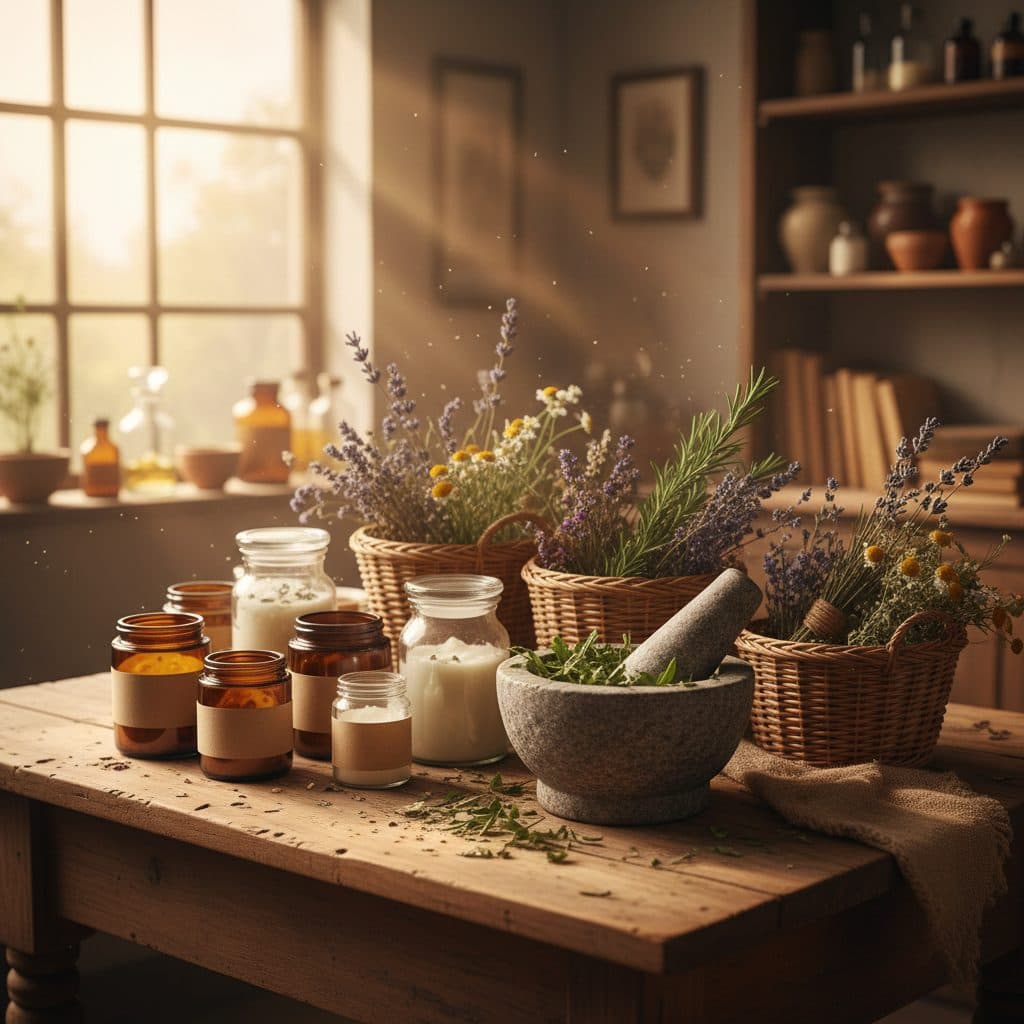
Key takeaways
- Properly dried herbs, with moisture content below 10%, are foundational for mold-free salves.
- Antioxidants like Vitamin E (at 0.5% concentration) and rosemary extract can significantly delay rancidity.
- Sanitize all equipment thoroughly, using 70% isopropyl alcohol, to eliminate microbial contamination.
- Store finished salves in dark, airtight containers in a cool, dry place, ideally below 68°F.
- Consider antioxidants such as vitamin E or rosemary extract, which slow the oils in a salve from going rancid.
- Regularly inspect salves for changes in color, texture, or odor, especially after six months of storage.
Quick answer: To extend salve shelf life and prevent mold, thoroughly dry herbs to below 10% moisture, sanitize equipment, use antioxidants like Vitamin E, and store salves in dark, airtight containers below 68°F. Natural bio-preservatives can also significantly help.
In the humid climate of the southeastern United States, where summer temperatures often exceed 90°F and relative humidity can hover above 80%, crafting homemade salves presents a unique challenge: maintaining their potency and preventing spoilage. Many growers, myself included, cherish the process of transforming garden-grown herbs into soothing balms. However, without careful attention to shelf life and mold prevention, a batch of calendula salve, intended to last six months, might show signs of spoilage in just two or three.
Understanding the science behind preservation helps keep your home apothecary products effective. Note that some traditional salve herbs carry their own limits regardless of shelf life: comfrey’s pyrrolizidine alkaloids are hepatotoxic and skin-absorbed, so comfrey preparations belong on intact skin only and never internally, and arnica is likewise for unbroken skin only and is toxic if swallowed. These are practical steps rooted in observation, meant to help your medicinal herb garden efforts last a full year or longer.
Understanding shelf life in homemade salves
The shelf life of a homemade salve is primarily determined by its ingredients and how it’s stored. Most salves are oil-based, meaning they are susceptible to rancidity, a process where fats oxidize and break down, often resulting in an unpleasant odor. This is distinct from mold growth, which requires water and typically manifests as fuzzy spots of green, black, or white. A typical oil-based salve, made with high-quality carrier oils like olive or almond, can last anywhere from six months to two years if stored correctly, but this duration can be halved if oils are old or exposed to light and heat.
Key factors influencing degradation
Several factors accelerate degradation. The presence of even a small amount of water, perhaps from insufficiently dried herbs or condensation, creates an environment ripe for mold. Light exposure, especially UV radiation, significantly speeds up oil rancidity. High temperatures, consistently above 70°F, also hasten chemical reactions that lead to spoilage. For example, a salve stored in a bathroom cabinet that routinely reaches 85°F will spoil much faster than one kept in a cool pantry at 60°F. The quality of your carrier oils also matters; fresh, cold-pressed oils have a longer inherent shelf life, often 18-24 months, compared to refined oils, which might last only 12 months.
- oil rancidity: characterized by a strong, off-putting smell.
- mold growth: visible fuzzy spots, often green or black.
- bacterial contamination: less common in oil-only salves, but possible with water.
- loss of potency: active herbal compounds degrade over time.
- texture changes: salves can become grainy or separate.
Choosing and preparing herbs for salves
The journey to a long-lasting salve begins in the garden. For instance, *Salvia officinalis*, or Garden Sage, is a robust herb in USDA zone 6, but its medicinal properties and shelf life in a salve depend heavily on how it’s harvested and dried. Any residual moisture in your herbs is an open invitation for mold. I aim for a moisture content below 10% for all dried herbs destined for oil infusions. This can be achieved by drying herbs slowly in a well-ventilated area, often taking one to two weeks, or using a dehydrator set to a low temperature, typically 95°F to 105°F, for 12-24 hours.
Drying and infusing techniques
After harvesting, clean your herbs gently without washing them, if possible, to avoid introducing more moisture. If washing is necessary, ensure they are completely dry before proceeding. For example, fresh calendula flowers, after a gentle rinse, might need 24-48 hours of air drying to shed surface water before being placed in a dehydrator. When infusing oils, the folk method of covering dried herbs with oil and letting them sit for four to six weeks in a sunny window is popular, but a warm infusion over low heat (100°F to 120°F) for two to four hours can be more controlled and reduce potential for microbial growth. Always ensure the herbs are fully submerged in oil to prevent any exposed plant material from molding. To judge whether herbs are dry enough, test them by hand: stems and leaves should snap cleanly rather than bend, and flowers should crumble between your fingers.
- harvest herbs on a dry day, after morning dew has evaporated.
- avoid washing herbs unless absolutely necessary.
- dry herbs thoroughly until they snap, not bend.
- use a dehydrator at 95°F for 12-24 hours for consistent drying.
- ensure herbs are fully submerged in oil during infusion.
Preservatives: natural and effective options
While some makers prefer no additives, incorporating certain natural antioxidants helps extend the useful life of your salves. They are less about preventing mold than about delaying the inevitable rancidity of the oils. Vitamin E oil (tocopherol) is a widely used antioxidant, effective at concentrations between 0.1% and 1% of the total oil weight. It works by scavenging free radicals that cause oxidation. For a 4-ounce (113-gram) batch of salve, this means adding about 0.1 to 1.1 grams of Vitamin E.
Enhancing stability with bio-preservatives
Another excellent option is rosemary extract (Rosmarinus officinalis leaf extract), which is also a powerful antioxidant. It’s typically used at concentrations of 0.2% to 0.5% and can be particularly effective when combined with Vitamin E, offering a synergistic effect that boosts overall stability. Always purchase food-grade or cosmetic-grade extracts to ensure purity and safety.
- vitamin E (tocopherol): 0.1% to 1% concentration, antioxidant.
- rosemary extract: 0.2% to 0.5% concentration, antioxidant.
- grapefruit seed extract: controversial, but some use it as an antimicrobial.
- essential oils: some, like tea tree or lavender, have mild antimicrobial properties, but primarily for scent.
- benzoin resin: a natural fixative with mild preservative qualities.
Preventing mold: best practices for making and storage
Mold prevention in salves is largely about careful hygiene and environmental control. Before you even begin, ensure all your equipment (bowls, spatulas, jars, and even your garden hand trowel if you’re using it for mixing) is thoroughly cleaned and sanitized. A simple wash with hot, soapy water followed by a rinse with 70% isopropyl alcohol is effective. This step removes most surface contamination before you start. Remember, mold spores are ubiquitous; they’re in the air, on surfaces, and can easily transfer to your product if you’re not careful.
Storage and packaging strategies
Once your salve is made, proper packaging and storage are paramount. Always opt for dark glass jars, such as amber or cobalt blue, which block a significant portion of UV light and slow oxidative rancidity. Air-tight lids are also crucial to prevent oxygen exposure. Store your finished salves in a cool, dark, and dry place. A pantry or a cool cupboard, consistently staying below 68°F, is ideal. Avoid storing salves in bathrooms or near windows where temperature fluctuations and light exposure are common. For instance, a salve stored in a kitchen cabinet that regularly reaches 75°F will degrade faster than one kept in a basement at 60°F.
- sanitize all tools and containers with 70% isopropyl alcohol.
- use only thoroughly dried herbs; moisture content below 10% is critical.
- pour hot salve into clean, warm jars, and leave the lids off until the salve has cooled completely — capping a warm jar traps steam that condenses under the lid.
- store salves in dark, airtight glass containers.
- keep salves in a cool, dark place, ideally below 68°F.
Quality control and troubleshooting
Even with the best practices, occasional issues can arise. Regularly checking your salves for signs of spoilage is an important quality control step. Look for changes in color (a dark green salve turning brown, for example) or texture, such as separation of oils or a grainy consistency. The most obvious sign of rancidity is a distinct, unpleasant odor, often described as crayon-like or metallic, which can appear after six to eight months in a poorly stored salve. Mold, on the other hand, is usually visible as fuzzy spots on the surface, often green, black, or white, and can appear within a few weeks if moisture is present.
Troubleshooting and batch management
If you notice any signs of spoilage, it’s best to discard the salve. While some might suggest scraping off mold, spores often penetrate deeper than visible, making the product unsafe. To minimize waste, consider making smaller batches, perhaps 2-ounce jars, that you can use up within three to six months. Labeling each batch with the creation date and key ingredients helps track its longevity. For example, a batch of lavender salve made on March 15th, 2024, should be checked regularly after September 15th, 2024. If you live in a particularly humid area, like coastal Florida (USDA zone 10), you might find that even with careful drying, herbs absorb ambient moisture, making smaller batches and more vigilant storage even more important. Some growers even store a portion of their salve in the refrigerator to extend its life by an additional three to six months, reducing the temperature to around 40°F.
- perform sensory checks: smell, sight, and texture.
- look for discoloration: browning or unusual color shifts.
- check for visible mold: fuzzy spots on the surface.
- note any off-odors: metallic, crayon-like, or sour smells.
- track batch dates: label jars with creation date and expected shelf life.
Shelf Life Comparison: Salve Types and Storage
Salve Type | Typical Shelf Life (Ideal Conditions) | Shelf Life (Suboptimal Conditions) |
|---|---|---|
Anhydrous (oil-only) Salve | 12-24 months | 6-12 months (e.g., exposed to light/heat) |
Salve with Water-Based Ingredients | 3-6 months (with preservative) | 1-2 months (without preservative) |
Salve with Antioxidants (e.g., Vit E) | 18-30 months | 9-18 months (e.g., inconsistent temperature) |
Salve with Fresh Herbs (not dried) | 1-3 weeks | Less than 1 week (high mold risk) |
moisture threshold: For dried herbs, maintaining a moisture content below 10% is critical to prevent mold, a standard often used for commercial herbal products.
temperature impact: Storing salves consistently below 68°F meaningfully slows the oxidation that makes oils go rancid, compared with a warm room.
Frequently asked questions
How long do homemade salves typically last?
Most homemade oil-based salves, when made with properly dried herbs and stored in ideal conditions, can last from 12 to 24 months. However, if water is present or storage conditions are suboptimal, this can reduce their shelf life to as little as 3 months.
What are the first signs of spoilage in a salve?
The first signs of spoilage often include a change in odor, such as a metallic or crayon-like smell indicating rancidity, or visible mold growth, which typically appears as fuzzy green or black spots on the surface within 2-3 weeks if moisture is present.
Can I use fresh herbs in my salves?
Using fresh herbs in salves is generally not recommended because their high water content (often over 70%) significantly increases the risk of mold and bacterial growth, drastically reducing the salve’s shelf life to just a few weeks. Always opt for thoroughly dried herbs for oil infusions.
What is the best way to store homemade salves?
The best way to store homemade salves is in dark, airtight glass jars, kept in a cool, dark, and dry place, such as a pantry or cupboard, where temperatures remain consistently below 68°F. This meaningfully slows the oxidation that makes oils go rancid.
Is Vitamin E necessary for salve preservation?
While not strictly necessary for preventing mold, Vitamin E (tocopherol) is highly recommended as an antioxidant to prevent the oils in your salve from going rancid. Adding it at a concentration of 0.5% of the total oil weight can extend the salve’s freshness by several months.
References
- Edible Fe2ZnO4 nanocomposite for extending shelf-life and preventing blue mold decay in apples (2024). Edible Fe2ZnO4 nanocomposite for extending shelf-life and preventing blue mold decay in apples.
- Enhancing Shelf-life and Quality of Tomatoes (Lycopersicum esculentum L.) Using UV-C Radiation and Natural Preservatives (2024). Enhancing Shelf-life and Quality of Tomatoes (Lycopersicum esculentum L.) Using UV-C Radiation and Natural Preservatives.
- Mold-free shelf-life extension of fresh rice noodles by synergistic effects of chitosan and common food preservatives (2021). Mold-free shelf-life extension of fresh rice noodles by synergistic effects of chitosan and common food preservatives.
- Optimising bread preservation: use of sourdough in combination with other clean label approaches for enhanced mould-free shelf life of bread (2025). Optimising bread preservation: use of sourdough in combination with other clean label approaches for enhanced mould-free shelf life of bread.
- USDA Natural Resources Conservation Service (2024). USDA Natural Resources Conservation Service.