Key takeaways
- Design swales with a gentle slope of 0.5% to 1% to ensure water movement and prevent stagnation.
- Implement properly sized overflow spillways, typically 6 to 12 inches wide, to safely divert excess water.
- Improve soil infiltration rates by amending heavy clay soils with 2 to 4 inches of organic matter.
- Select appropriate plants like Chinese Water Chestnut or Water Hyssop for swales to manage water and deter mosquitoes.
- Regularly inspect swales, especially after rainfall events exceeding one inch, to ensure water infiltrates within 24 to 48 hours.
- Consider integrating passive irrigation methods like ollas or wicking beds for efficient water delivery to plants.
Quick answer: To prevent mosquito breeding in swales, design them with a 0.5-1% slope for proper drainage, ensure water infiltrates within 24-48 hours, and install properly sized overflow spillways. Amend heavy clay soils with organic matter to improve infiltration and select appropriate water-managing plants.
a 100-foot long swale, 2 feet deep and 3 feet wide, can hold approximately 45 gallons of water per linear foot, totaling around 4,500 gallons.
However, an improperly built swale can quickly become a stagnant pool, creating an ideal breeding ground for mosquitoes, which can carry diseases like West Nile virus. Addressing overflow spillways and infiltration rates prevents water harvesting swales from turning into mosquito breeding sites.
Understanding swales: more than just a ditch
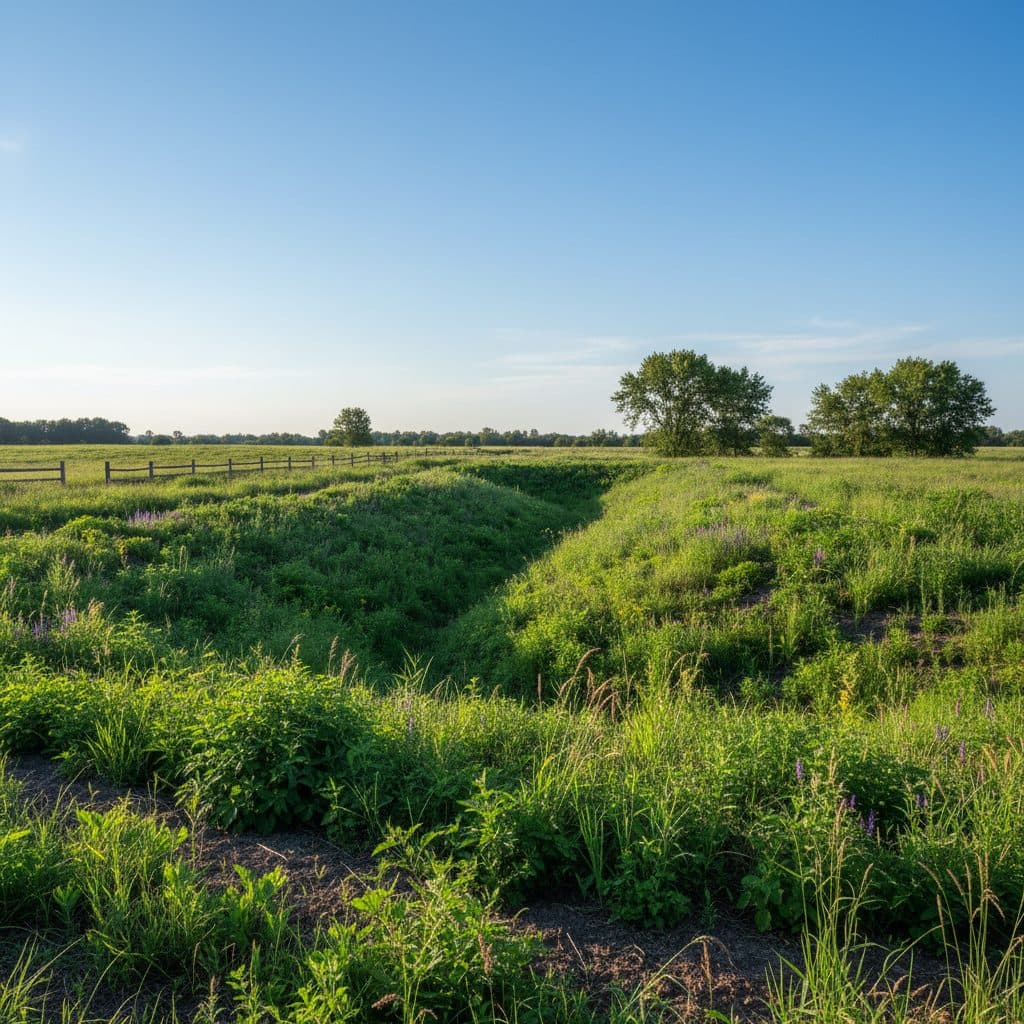
A swale is a shallow ditch or channel with a berm on the downhill side, designed to slow, spread, and sink rainwater into the landscape. Its primary function is to increase soil moisture content, support plant life, and reduce erosion. In regions like the Pacific Northwest, where annual rainfall can exceed 40 inches, swales are crucial for managing stormwater runoff. However, if water remains in the swale for more than 48 hours, it becomes a prime location for mosquito larvae to develop. Adult mosquitoes can emerge in as little as seven to ten days in warm conditions, making rapid infiltration a critical design parameter. The USDA Natural Resources Conservation Service (NRCS) provides guidelines for earthwork construction that detail proper grading and soil preparation [6].
The basic principles of swale function
For a swale to function correctly, it must have a slight, consistent slope, typically between 0.5% and 1%, to allow water to spread evenly along its length. The depth is usually one to two feet, with a width of three to five feet, depending on the watershed area and expected rainfall. The berm, built from the excavated soil, helps to hold water temporarily. Properly sized swales can capture 100% of rainfall from a small storm, but larger events require careful management. For example, a 1-inch rain event over a 1,000 square foot roof can generate over 600 gallons of water, which a well-designed swale must be able to absorb or safely divert. Understanding the soil type and infiltration rate is paramount, as sandy soils in USDA zone 9 might absorb water at 6 inches per hour, while heavy clay soils in USDA zone 6 might only absorb 0.1 inches per hour.
- Swales capture and infiltrate rainwater.
- They reduce stormwater runoff and erosion.
- Support plant growth by increasing soil moisture.
- Must drain within 48 hours to prevent mosquito breeding.
- Design should account for watershed size and rainfall intensity.
The function of overflow spillways
One of the most common mistakes in swale design is neglecting or improperly sizing the overflow spillway. Without a clear path for excess water to exit, a swale can become a permanent pond after heavy rains, especially in regions receiving over 50 inches of annual precipitation. This stagnant water creates an ideal habitat for mosquito larvae, which thrive in still, warm conditions. A study in Western Kenya demonstrated that even small, temporary water bodies can produce large mosquito populations when water remains stagnant [1]. The spillway ensures that once the swale’s capacity is reached, water is safely directed away, preventing prolonged saturation and potential erosion of the berm.
Designing an effective spillway
An effective overflow spillway should be located at the lowest point along the swale’s contour, opposite the main water inflow. It needs to be wider than the swale itself, often 6 to 12 inches wider, and constructed with a very gentle slope, typically less than 0.5%, to prevent erosion. For example, a swale designed to capture water from a 2,000 square foot area in USDA zone 7 might require a spillway 18 inches wide to handle a 2-inch rain event without damage. The spillway should be armored with rock, gravel, or densely planted with erosion-resistant grasses to withstand the force of flowing water. Correct spillway placement prevents localized flooding. Armoring the spillway helps maintain its integrity over many years of operation. Remember that learning from design mistakes, as highlighted in various fields, is a valuable part of improving any system [2].
- Locate spillway at the lowest point of the swale.
- Make it wider than the swale, e.g., 6 to 12 inches extra.
- Ensure a very gentle slope, under 0.5%, to prevent erosion.
- Armor with rock, gravel, or dense vegetation.
- Direct overflow to a safe, permeable area downhill.
Infiltration rates: preventing persistent puddles
Even with a well-designed spillway, a swale can become a mosquito haven if the soil’s infiltration rate is too slow. This often occurs in areas with heavy clay soils, common in states like Alabama or Georgia, where water can sit for days after a rain event. Soil compaction from construction or foot traffic further exacerbates this issue, reducing the soil’s ability to absorb water. The goal is for the swale to drain completely within 24 to 48 hours, preventing mosquito larvae from completing their life cycle. If water persists beyond this timeframe, it indicates a problem with the soil’s permeability that needs addressing. Improving soil health is a long-term strategy that pays dividends in water management and plant vigor.
Strategies for improving soil permeability
To enhance infiltration, start by deeply aerating the swale bottom, perhaps to a depth of 12 to 18 inches, using a broadfork or subsoiler. Then, incorporate significant amounts of organic matter, such as compost or wood chips, into the soil. Adding 2 to 4 inches of compost to the swale’s bottom and mixing it into the top 6 inches of soil can dramatically improve water absorption in heavy clay. For instance, in a 100 square foot swale, this would mean adding 17 to 34 cubic feet of compost. Regular soil amendments maintain steady infiltration over time. Consider using a soil test to understand your specific soil composition and guide your amendments. You can learn more about composting to generate your own high-quality organic matter. Deep ripping or subsoiling can break up compaction layers. Mulching the swale bottom with wood chips can also suppress weeds and slowly add organic material as it breaks down.
- Aerate compacted soil to a depth of 12-18 inches.
- Incorporate 2-4 inches of organic matter like compost.
- Plant deep-rooted vegetation to break up soil.
- Avoid heavy machinery or foot traffic in the swale bottom.
- Conduct percolation tests to monitor infiltration rates.
Strategic planting for water management and pest control
The right plant choices within and around your swale can significantly contribute to both water management and mosquito control. Plants can help absorb excess water, stabilize soil, and even deter mosquitoes. In USDA zone 7, for instance, a mix of water-tolerant and upland species can create a diverse and resilient ecosystem. Avoid planting species that create dense, low-lying foliage that traps moisture and provides sheltered breeding sites for mosquitoes. Instead, focus on plants that either quickly absorb water or have properties that naturally discourage pests. The goal is to create a dynamic system where water is a resource, not a stagnant problem.
Selecting appropriate vegetation for swales
For the bottom of your swale, consider water-tolerant species like Chinese Water Chestnut (Eleocharis dulcis) or Water Hyssop (Bacopa monnieri), which can thrive in moist conditions but don’t require standing water. These plants help absorb water and stabilize the soil. On the berm and surrounding areas, plant species known for their mosquito-repelling properties, such as Lemon Grass or Citronella, which can grow well in USDA zones 9 and warmer. A dense planting of deep-rooted grasses, like Vetiver grass, can also help break up compacted soil and increase infiltration rates by up to 30%. Selecting native, water-tolerant plants minimizes maintenance needs. Diverse plant communities can also attract beneficial insects that prey on mosquito larvae. For example, dragonflies, whose larvae live in water, are effective mosquito predators.
- Plant water-tolerant species in the swale bottom.
- Include mosquito-repelling plants on the berm.
- Use deep-rooted grasses to improve soil structure.
- Choose native species adapted to your local climate.
- Avoid plants that create dense, stagnant pockets of water.
Integrating passive irrigation: ollas and wicking beds
While swales manage broad water flows, integrating passive irrigation techniques like ollas and wicking beds can provide targeted, efficient water delivery to individual plants, particularly useful in drier climates or during extended dry spells. These methods reduce surface evaporation by up to 70% compared to overhead watering, minimizing the creation of surface puddles that could attract mosquitoes. In a garden in USDA zone 9, where summer temperatures often exceed 90°F, this targeted approach can save thousands of gallons of water annually and ensure plants receive consistent moisture without overwatering. These systems complement swales by providing a continuous, subsurface water source.
Ollas and wicking beds for efficient watering
Ollas are unglazed clay pots buried in the soil near plants, slowly releasing water through their porous walls directly to the root zone. A single olla holding one gallon of water can typically irrigate a 2-foot diameter area for several days, depending on soil type and plant needs. They are particularly effective for thirsty crops like tomatoes or squash. Wicking beds are raised garden beds with a sealed reservoir at the bottom, from which water is drawn upwards into the soil by capillary action. A typical 4×8 foot wicking bed can hold 30 to 50 gallons of water in its reservoir, providing consistent moisture for weeks. Both systems keep the soil surface dry, preventing mosquito breeding and reducing weed growth by up to 50%. This approach aligns with efficient water use, a principle supported by organizations like the USDA NRCS [6].
- Ollas deliver water directly to plant roots.
- Wicking beds use capillary action for consistent moisture.
- Both reduce surface evaporation significantly.
- They prevent surface puddles, deterring mosquitoes.
- Ideal for efficient water use in arid or dry conditions.
Maintenance practices for mosquito-free water harvesting
Those integrating passive irrigation habits matter here as well.
Even the best-designed swale requires ongoing maintenance to remain effective and mosquito-free. Neglecting regular checks, especially after significant rainfall events, can quickly turn a beneficial water harvesting system into a pest problem. In areas like Florida, where rainfall can be intense and frequent, a swale might need inspection several times a month during the rainy season. The goal is to ensure that water infiltrates within the critical 24 to 48-hour window. If water is consistently standing longer, it’s a clear sign that adjustments or interventions are needed. Regular maintenance is a small investment that protects your garden and your community from mosquito-borne illnesses.
Routine checks and problem solving
After any rainfall event exceeding one inch, inspect your swale to confirm that water is draining properly. Look for any areas where water is pooling persistently. If you find standing water after 48 hours, consider whether the spillway is blocked or if the soil’s infiltration rate has decreased. Remove any debris, such as leaves or sediment, that might be obstructing the spillway or the swale bottom. If soil compaction is the issue, re-aerate and add more organic matter, perhaps another 1 to 2 inches of compost. Regular inspection after rain is key to early detection of issues. Clearing debris from spillways ensures proper function. Re-amending soil helps maintain permeability. You can also explore solar water pumps for moving water efficiently in other parts of your property, further reducing stagnant water sources.
- Inspect swales within 48 hours after heavy rain.
- Clear any debris from spillways and swale bottoms.
- Re-aerate and add organic matter if infiltration slows.
- Monitor for signs of erosion on berms and spillways.
- Trim vegetation to prevent excessive shading and promote airflow.
Designing for success: planning your earthworks
These maintenance practices lessons apply to the steps below, too.
Effective water harvesting begins with careful planning and design. Before you dig, take the time to understand your site’s topography, soil type, and rainfall patterns. This foundational work can save you significant time and effort later, preventing common pitfalls that lead to mosquito breeding. For example, a site in USDA zone 6 with a 5% slope will require a different swale design than a flatter site in USDA zone 8. Mapping out the flow of water across your property, especially during a heavy rain event, is a critical first step. This planning phase identifies the best locations for swales, rain gardens, and other passive irrigation features so they function together.
Key considerations for earthwork design
Start by observing where water naturally flows and pools on your property during a heavy rain. Use a simple level or A-frame level to identify contour lines, which are the ideal paths for swales. Consider the size of the area you want to irrigate and the volume of water you expect to capture. For a 1-acre property, you might need several hundred linear feet of swales to manage all runoff. Integrate other water harvesting techniques, such as rainwater harvesting from rooftops, directing that water into your swales. Accurate site assessment is the bedrock of successful earthworks. Contour mapping guides optimal swale placement. Calculating water budget helps size your systems correctly. Remember that mistakes are a part of any learning process, and careful planning minimizes them [2].
- Conduct a thorough site assessment for topography and soil.
- Map water flow patterns during significant rainfall.
- Identify contour lines for optimal swale placement.
- Calculate the expected water volume to be managed.
- Plan for integration with other water harvesting systems.
Final thoughts on resilient water systems
Building resilient water harvesting systems, including well-designed swales, is a continuous learning process. The initial investment in careful planning, proper construction, and ongoing maintenance pays dividends in water conservation, soil health, and pest control. By understanding the critical roles of overflow spillways and soil infiltration rates, and by making informed plant choices, you can create a landscape that thrives without becoming a mosquito breeding ground. Remember that every gallon of water captured and infiltrated is a step towards a more sustainable and productive garden. For example, a single mature oak tree can absorb 150 gallons of water per day to help process stormwater.
Embracing a proactive approach
Embrace a proactive approach to your water harvesting efforts. Regularly observe your systems, make adjustments as needed, and don’t be afraid to learn from what doesn’t work as expected. The USDA NRCS offers valuable resources and local experts who can provide guidance tailored to your specific region and soil conditions, whether you’re in USDA zone 4 or 10 [6]. By focusing on these principles, you’re not just building a swale; you’re cultivating a healthier, more water-efficient environment that supports beneficial life while deterring pests. This commitment to thoughtful design and care ensures your earthworks remain a valuable asset for years to come, contributing positively to your local ecosystem.
- Prioritize careful planning and design.
- Ensure proper overflow and infiltration rates.
- Choose plants that support water management.
- Maintain systems regularly, especially after rain.
- Continuously learn and adapt your strategies.
Swale Design Considerations by Soil Type
Soil Type | Infiltration Rate (inches/hour) | Recommended Swale Depth (feet) | Organic Matter Amendment (inches) |
|---|---|---|---|
Sandy Loam | 2 to 6 | 1 to 1.5 | 1 to 2 |
Silty Clay Loam | 0.5 to 2 | 1.5 to 2 | 2 to 3 |
Heavy Clay | 0.1 to 0.5 | 2 to 2.5 | 3 to 4 |
Mosquito Cycle: Mosquito larvae can develop into adults in as little as seven to ten days in standing water, so swales must drain within 48 hours.
Water Savings: A 4×8 foot wicking bed can hold 30 to 50 gallons of water in its reservoir, providing consistent moisture for weeks while reducing surface evaporation by up to 70%.
Swale Capacity: A 100-foot long swale, 2 feet deep and 3 feet wide, can hold over 40,000 gallons of water, significantly impacting water management for a property.
Frequently asked questions
How quickly should water drain from a swale?
Water should drain completely from a swale within 24 to 48 hours after a rainfall event. This critical timeframe prevents mosquito larvae from completing their life cycle, which typically takes seven to ten days in warm conditions.
What is an overflow spillway and why is it important?
An overflow spillway is a designated, armored channel at the lowest point of a swale that allows excess water to safely exit once the swale’s capacity is reached. It prevents prolonged standing water and erosion, especially after heavy rains exceeding one inch.
How can I improve the infiltration rate of heavy clay soil in my swale?
To improve infiltration in heavy clay soil, deeply aerate the swale bottom to 12 to 18 inches and incorporate 2 to 4 inches of organic matter, such as compost, into the top 6 inches of soil. This helps break up compaction and increases permeability.
Are there specific plants that help deter mosquitoes in a swale?
Yes, planting mosquito-repelling species like Lemon Grass or Citronella on the berms can help. Within the swale, water-tolerant plants like Chinese Water Chestnut help absorb water, reducing stagnant areas, and promoting a healthy ecosystem that might attract mosquito predators.
What is the benefit of using ollas for irrigation?
Ollas are unglazed clay pots buried in the soil that slowly release water directly to plant roots, reducing surface evaporation by up to 70% compared to overhead watering. This method conserves water and keeps the soil surface dry, preventing mosquito breeding.
How often should I inspect my swale for standing water?
You should inspect your swale within 48 hours after any significant rainfall event, especially those exceeding one inch. Regular checks ensure that water is draining properly and that no persistent puddles are forming, which could become mosquito breeding sites.
References
- Optimizing a Gravid Mosquito Resting Box to Enhance Auto-dissemination of Larvicides under Semi-field Conditions in Western Kenya (2019). Optimizing a Gravid Mosquito Resting Box to Enhance Auto-dissemination of Larvicides under Semi-field Conditions in Western Kenya.
- Mistakes Are Your Capital (2026). Mistakes Are Your Capital.
- Swale, Sir Richard (1545?–1608) (2018). Swale, Sir Richard (1545?–1608).
- Mistakes Worth Making: How to Turn Sports Errors into Athletic Excellence (2004). Mistakes Worth Making: How to Turn Sports Errors into Athletic Excellence.
- Positive turn (2005). Positive turn.
- USDA Natural Resources Conservation Service (2024). USDA Natural Resources Conservation Service.