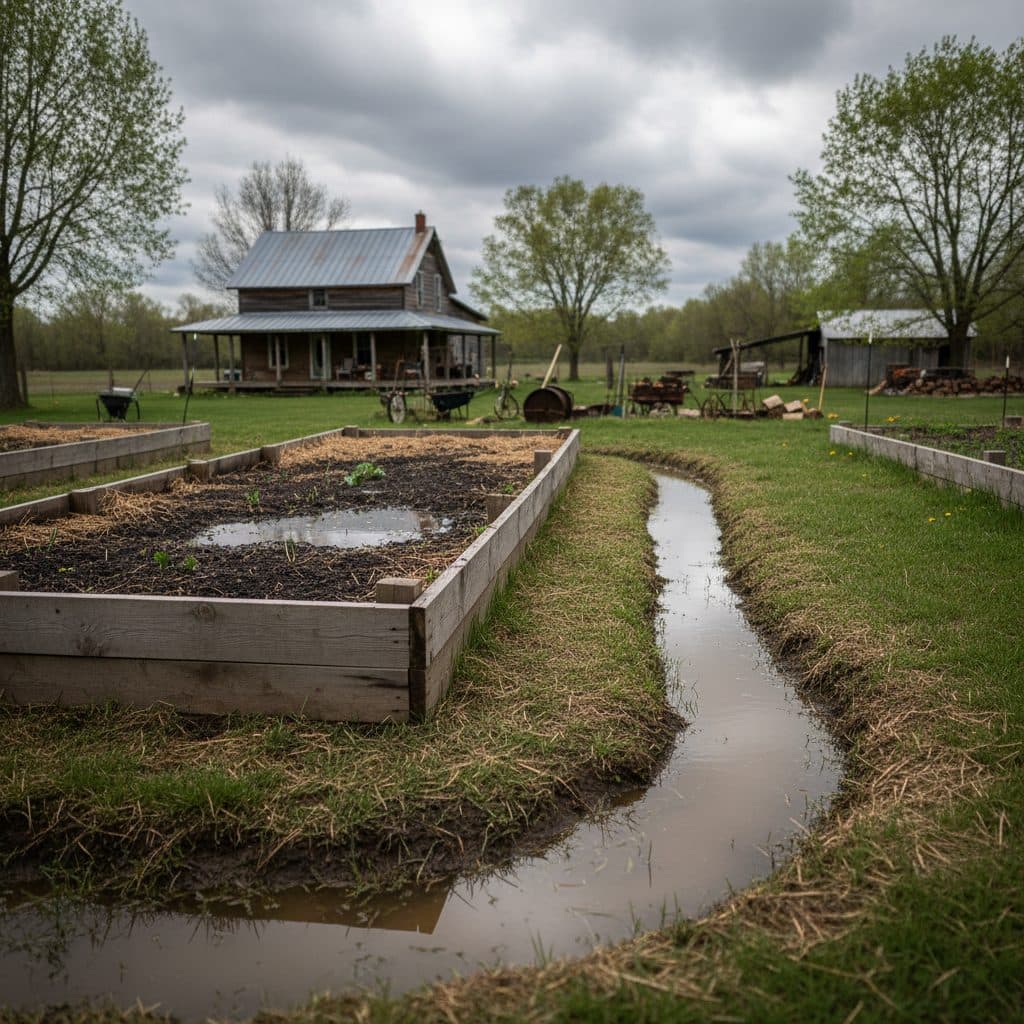
Key takeaways
- Incorporate organic matter like compost at 2-4 inches depth to improve clay soil structure, increasing drainage by up to 25%.
- Implement passive irrigation earthworks such as small swales or modified French drains to redirect excess surface water away from beds.
- Utilize ollas for targeted, subsurface irrigation, reducing water use by 50-70% compared to surface watering.
- Construct wicking beds to provide consistent moisture to plant roots while preventing waterlogging from heavy rainfall.
- Select plant species adapted to moist conditions, like Chinese Water Chestnut, to thrive in areas with persistent dampness.
- Regularly monitor soil moisture levels, especially after 1 inch of rainfall, to adjust irrigation strategies and prevent root damage.
Quick answer: To fix waterlogged raised beds and heavy clay without a full rebuild, incorporate organic matter like compost, implement passive irrigation earthworks, utilize ollas, and construct wicking beds. These methods improve drainage and soil health, preventing root damage.
In many parts of the US, particularly across the Midwest and parts of the Southeast, gardeners frequently contend with heavy clay soils and the challenges of waterlogged raised beds. Areas like central Illinois, with its rich but dense Mollisols, often see springtime rainfall exceeding 4 inches in a single week, turning productive garden spaces into soggy messes. A full rebuild of raised beds, involving the removal of hundreds of cubic feet of soil and replacement with expensive amendments, can be a daunting and costly undertaking, potentially costing thousands of dollars for a 100 square foot garden.
Fortunately, you don’t always need to tear everything down and start over. There are practical, less intensive strategies that can significantly improve drainage and soil health in existing raised beds and heavy clay plots. These methods focus on working with your current soil conditions, enhancing its natural properties, and managing water more effectively, often reducing water waste by 30% or more. Applying these techniques improves drainage in perpetually damp problem areas, even in regions receiving over 40 inches of annual precipitation.
Understanding the problem: heavy clay and standing water
Heavy clay soil, common in many US states like Ohio and Kentucky, contains at least 35% clay particles, which are small (less than 0.002 mm in diameter). These tiny particles pack together tightly, leaving minimal pore space for air and water movement. When a raised bed built on or filled with this type of soil experiences a heavy rain event, such as 2 inches in 24 hours, water can’t drain quickly. This leads to standing water, which deprives plant roots of oxygen, causing stress, disease, and eventually root rot, especially for sensitive crops like tomatoes or peppers.
Waterlogging also leaches essential nutrients from the soil. Nitrogen can be lost through denitrification in anaerobic conditions, reducing its availability by 50% or more in saturated soils. Before you consider drastic measures, it’s important to accurately assess your soil’s drainage. Dig a 12-inch deep, 12-inch wide hole in your raised bed, fill it with water, and observe how long it takes to drain. If the water stands for more than 4 hours, you have a significant drainage issue that needs addressing.
- Dig a 12-inch deep hole in the bed.
- Fill the hole completely with water.
- Record the time it takes for the water to drain.
- Refill the hole and record the drainage rate again.
- A drainage rate slower than 1 inch per hour indicates poor drainage.
Improving soil structure with organic amendments
The most effective long-term strategy for improving heavy clay soil in existing raised beds is to consistently incorporate organic matter. It is a gradual process that improves soil over one to three growing seasons. Adding 2 to 4 inches of high-quality compost, aged manure, or leaf mold to the top 6 inches of your raised bed annually can dramatically improve soil structure. Organic matter acts like a sponge, creating larger pore spaces for air and water, and binding clay particles into larger aggregates, which can increase drainage rates by 25% to 50% [1].
Putting it into practice
Beyond compost, consider planting cover crops in fallow beds during the off-season. Deep-rooted cover crops like daikon radish or tillage radish can penetrate dense clay layers up to 18 inches deep, creating natural channels for water and air. When these crops are terminated and incorporated into the soil, they add significant organic material, often 50-100 pounds per 100 square feet, further enhancing soil tilth. Even in metal raised garden beds, this practice is highly beneficial, preventing compaction and improving overall fertility.
Another promising amendment is biochar, a charcoal-like substance that can hold water and nutrients while improving soil aeration. Research from the USDA Natural Resources Conservation Service (NRCS) indicates that biochar, applied at a rate of 5-10% by volume to the top 6 inches of soil, can improve water infiltration rates by 10-30% in clay soils [1]. It provides stable carbon that persists in the soil for hundreds of years, offering long-term benefits.
- Add 2-4 inches of compost annually.
- Plant deep-rooted cover crops like daikon radish.
- Incorporate biochar at 5-10% by volume.
- Mulch beds with 2-3 inches of wood chips or straw.
- Avoid tilling wet clay soil, which causes compaction.
Passive irrigation earthworks and drainage solutions
Beyond amending the soil within the raised bed, consider how water moves across your entire garden space. Implementing small-scale passive irrigation earthworks can redirect excess surface water away from your beds, especially in areas like the Pacific Northwest that receive 60 inches or more of annual rainfall. A shallow swale (a slight depression on contour) can capture and slowly infiltrate runoff before it reaches your raised beds. For a typical backyard, a swale 6 inches deep and 18 inches wide, placed 5 feet uphill from your beds, can effectively manage up to 50 gallons of runoff from a 100 square foot area during a 1-inch rain event.
Putting it into practice
For more localized drainage within or immediately adjacent to raised beds, modified French drains can be effective. Instead of a deep trench, consider a shallow trench, 6-8 inches deep and 6 inches wide, filled with gravel at the base of the bed or along a problematic path. This can intercept subsurface flow and direct it away. Connecting this to a rainwater harvesting system, such as a rain barrel collecting water from a 1000 square foot roof, which can capture 620 gallons from a 1-inch rain, can turn a drainage problem into a water resource.
Another approach involves creating small, strategically placed basins or “rain gardens” adjacent to your raised beds. These shallow depressions, planted with water-tolerant native species, can absorb and filter runoff, preventing it from saturating your garden. The EPA’s “Soak Up the Rain” initiative promotes these structures, noting that a 100 square foot rain garden can absorb 30% more water than a conventional lawn [2]. This protects your raised beds and contributes to local stormwater management.
- Dig shallow swales 6 inches deep, 18 inches wide.
- Install modified French drains at bed bases.
- Create small rain gardens with native plants.
- Direct downspouts into rain barrels or cisterns.
- Grade paths and surrounding areas to slope away from beds.
Ollas and wicking beds for controlled moisture
Once you’ve improved drainage, managing moisture within the raised bed becomes important. Ollas (pronounced “oy-yahs”) are unglazed clay pots buried in the soil that slowly release water directly to plant roots through capillary action. This ancient irrigation technique, used for thousands of years, significantly reduces water loss from evaporation and runoff, often cutting water use by 50-70% compared to overhead watering [4]. A single 1-gallon olla can effectively irrigate a 2-3 foot diameter area for several days, depending on soil type and plant needs.
Putting it into practice
For raised beds, you can bury one-to-three ollas per 4×8 foot bed, spaced 2-3 feet apart, ensuring consistent moisture for thirsty plants like squash or cucumbers. They are particularly useful in regions with hot, dry summers, such as USDA zones 7-10 in the Southwest, where surface watering evaporates quickly. Ollas also encourage deeper root growth, making plants more resilient to drought periods, similar to the benefits of drip irrigation without electricity.
Wicking beds offer another powerful solution, especially for areas prone to heavy, intermittent rainfall. These self-watering systems create a reservoir of water at the bottom of the bed, from which moisture is drawn upwards into the soil by capillary action. This ensures plants always have access to water while preventing the root zone from becoming waterlogged. A typical wicking bed uses a 6-12 inch deep gravel or scoria layer as the reservoir, topped with a geotextile fabric and 12-18 inches of growing medium. They can reduce watering frequency by 80% or more after initial setup.
- Bury 1-gallon ollas 2-3 feet apart in beds.
- Fill ollas every 3-7 days, depending on conditions.
- Construct wicking beds with a 6-12 inch reservoir.
- Ensure overflow pipe is installed in wicking beds.
- Monitor soil moisture around ollas for optimal plant health.
Strategic plant choices and companion planting
Even with improved drainage and water management, some areas of a raised bed or garden might remain persistently damp, especially in low spots or after prolonged rainfall. In these specific zones, selecting plants that tolerate or even thrive in moist conditions can turn a challenge into an opportunity. For instance, in USDA zones 4-9, species like Chinese Water Chestnut or Water Chestnut can be cultivated in very wet areas, producing edible tubers or nuts. These plants are adapted to standing water and can even help to passively absorb excess moisture from the soil.
Consider planting moisture-loving herbs like Water Hyssop or mint in the dampest sections of your beds. While mint can be aggressive, containing it in a bottomless pot can prevent it from taking over, while still allowing its roots to access the moist soil. These plants tolerate wet soil and contribute to the utility of your garden.
For areas that are merely damp, rather than waterlogged, crops like kale, collards, and broccoli tend to be more forgiving than sensitive plants like carrots or beans. These brassicas can handle slightly wetter soil conditions, especially if the drainage improvements discussed earlier have been implemented to prevent actual standing water. By carefully observing your garden’s microclimates and moisture patterns, you can make informed planting decisions that lead to a more successful harvest, even with challenging clay soils.
- Plant Chinese Water Chestnut in persistently wet spots.
- Grow Water Hyssop or mint in damp areas.
- Choose brassicas like kale for moderately moist soil.
- Avoid sensitive crops like carrots in poorly drained zones.
- Observe moisture patterns to identify wettest areas.
Comparing methods for improving drainage in raised beds
Method | Primary benefit | Typical cost (per 100 sq ft) | Time to see results |
|---|---|---|---|
Adding organic matter | Improves soil structure & aeration | $50-$150 (compost) | 1-3 seasons |
Small swales/rain gardens | Redirects surface runoff | $20-$100 (materials) | Immediate (drainage), 1 season (plant growth) |
Ollas | Targeted, efficient irrigation | $30-$60 (3-5 ollas) | Immediate (water delivery) |
Wicking beds | Consistent moisture, prevents waterlogging | $150-$300 (materials) | Immediate (water management) |
Modified French drains | Intercepts subsurface flow | $100-$200 (gravel, pipe) | Immediate |
Soil Composition: Heavy clay soil contains at least 35% clay particles, which are less than 0.002 mm in diameter, severely limiting drainage.
Water Savings: Ollas can reduce irrigation water consumption by 50-70% compared to traditional surface watering methods.
Organic Boost: Adding 2-4 inches of compost annually can increase clay soil drainage rates by 25-50% over several seasons.
Frequently asked questions
How much organic matter should I add to my clay soil?
For significant improvement, aim to add 2 to 4 inches of high-quality compost or aged manure to the top 6 inches of your raised bed annually. This consistent application can increase drainage rates by 25% to 50% over one to three growing seasons.
Can I use ollas in freezing climates?
In climates where temperatures drop below 32°F, you should empty and remove ollas before the first hard freeze to prevent them from cracking due to ice expansion. Store them indoors until spring so they last for many years of use.
What is the ideal drainage rate for a raised garden bed?
An ideal drainage rate for a raised garden bed is between 1 and 3 inches per hour. If your soil drains slower than 1 inch per hour, it indicates poor drainage that needs improvement for healthy plant growth.
How often do wicking beds need to be refilled?
Wicking beds require refilling much less frequently than traditional beds, often only once every one to three weeks, depending on plant needs, weather, and bed size. A 4×8 foot wicking bed can hold 30-50 gallons of water, providing consistent moisture for extended periods.
Are there any plants that can help dry out waterlogged soil?
While no plant can magically dry out truly waterlogged soil, deep-rooted cover crops like daikon radish can help break up compaction and improve drainage channels up to 18 inches deep. In persistently damp areas, plants like Chinese Water Chestnut or Water Hyssop are adapted to moist conditions and can thrive where other plants struggle.
References
- USDA Natural Resources Conservation Service (2024). USDA Natural Resources Conservation Service.
- EPA — Soak Up the Rain (2024). EPA — Soak Up the Rain.
- SARE — Sustainable Agriculture Research & Education (2023). SARE — Sustainable Agriculture Research & Education.
- ATTRA / NCAT Sustainable Agriculture (2023). ATTRA / NCAT Sustainable Agriculture.
- USDA National Agroforestry Center (2023). USDA National Agroforestry Center.