Key takeaways
- Blossom-end rot is a physiological disorder, not a disease, affecting 20% or more of tomato crops.
- The primary cause is inconsistent water availability, which prevents calcium uptake by the plant.
- Maintaining consistent soil moisture, especially 1-2 inches per week, helps prevent it.
- Soil calcium deficiency is rare; focus on improving water management and root health.
- Mulching with 2-4 inches of organic material can reduce soil temperature by 10-15°F and conserve moisture.
- Regular soil testing every 2-3 years helps understand nutrient levels and pH balance.
Quick answer: Blossom-end rot in tomatoes is primarily prevented by maintaining consistent soil moisture, especially 1-2 inches per week, and mulching with organic material to conserve water and regulate soil temperature. Addressing inconsistent water availability matters most, since true soil calcium deficiency is rare.
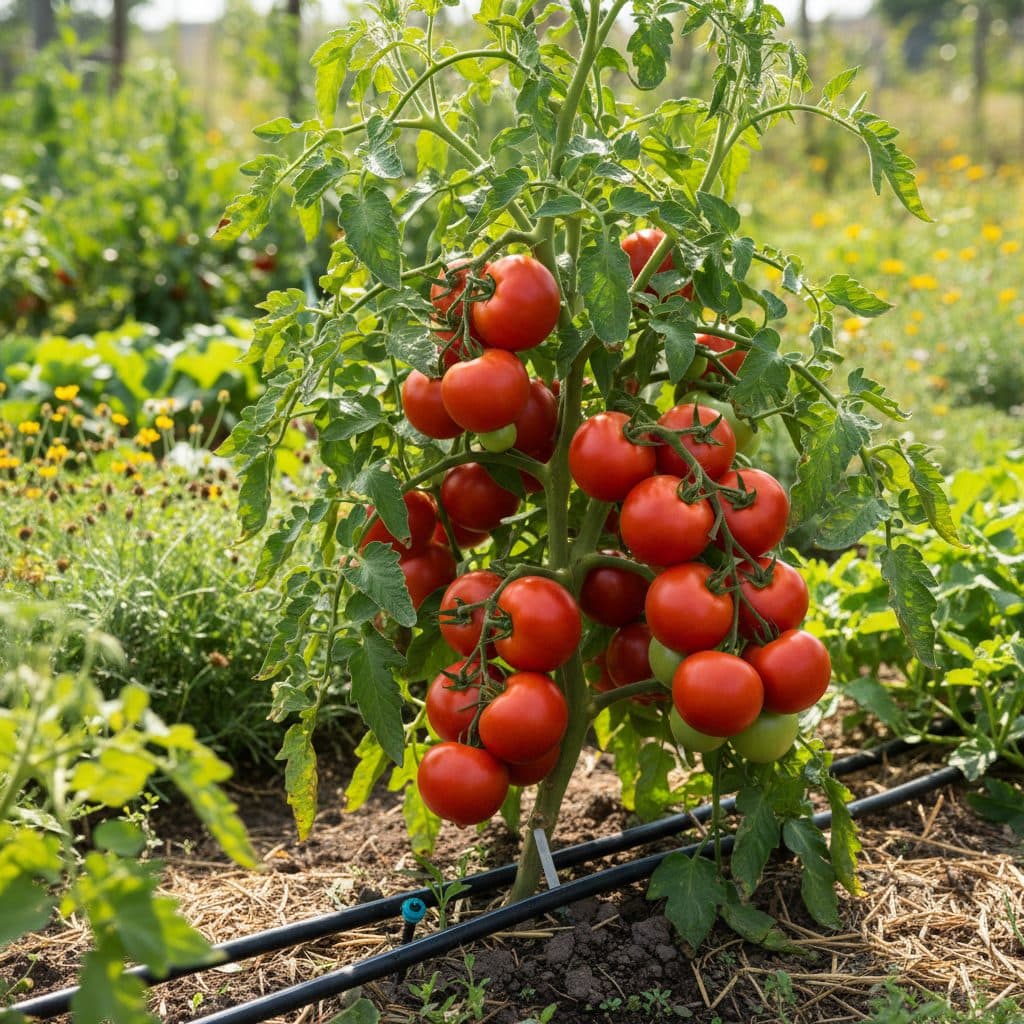
In the warm growing seasons across the US, from Florida’s zone 9b to California’s zone 9a, tomato plants (Solanum lycopersicum) are a staple for many home gardeners and commercial operations. These plants, which can produce 10-15 pounds of fruit per season from a single healthy vine, are often a highlight of summer harvests. Unfortunately, a common frustration for growers, potentially affecting 20% or more of a crop, is blossom-end rot (BER), a physiological disorder that ruins otherwise healthy fruit.
Blossom-end rot manifests as a dark, sunken spot on the bottom of the fruit, rendering it inedible. While it might appear to be a disease, BER is fundamentally a plant’s response to stress, primarily related to calcium transport within the plant and inconsistent water availability. Understanding the mechanisms behind this disorder, which can reduce marketable yields by 15-25% in affected fields, is the first step toward effective prevention and management.
what is blossom-end rot and why does it matter?
Blossom-end rot is a non-infectious disorder that impacts many fruiting vegetables, including tomatoes, peppers, squash, and watermelons. It typically appears when fruits are about one-third to one-half their final size, often within 3-4 weeks after fruit set. The initial symptom is a small, water-soaked spot on the blossom end of the fruit, which then enlarges, darkens to brown or black, and becomes sunken and leathery. In severe cases, secondary fungal or bacterial infections can colonize the damaged tissue, leading to complete fruit decay. In regions like the Midwest, where summer temperatures can regularly exceed 90°F, the incidence of BER can increase significantly, affecting up to 40% of early season fruit.
the impact on your harvest
While BER doesn’t kill the plant, it can drastically reduce the edible yield. A single plant might produce 10-15 tomatoes, but if 5-7 of them develop BER, your usable harvest is cut by 30-50%. This loss is particularly frustrating for growers in areas like the Central Valley of California, where tomatoes are a major cash crop, or for home gardeners in USDA zone 7 striving for a bountiful summer supply. The disorder is a clear signal that something in the plant’s environment or care routine needs adjustment, often related to the plant’s ability to move essential nutrients, especially calcium, to rapidly developing fruit tissue. This issue can cost commercial growers thousands of dollars per acre in lost revenue.
- Initial symptom: small, water-soaked spot on fruit’s blossom end.
- Progression: spot enlarges, darkens to brown/black, becomes sunken.
- Affected fruits: often one-third to one-half their final size.
- Yield reduction: can be 30-50% of a plant’s total fruit.
- Secondary infections: common in damaged tissue.
the calcium connection: more than just soil deficiency
Many growers initially suspect a lack of calcium in their soil when they see blossom-end rot. While calcium is indeed the nutrient involved, a true calcium deficiency in the soil is relatively rare in most US garden soils, which typically contain 0.5% to 1.5% calcium by weight. Soil tests often reveal adequate or even high levels of calcium. The real issue is usually the plant’s inability to transport sufficient calcium to the developing fruit. Calcium moves through the plant primarily with water, via the transpiration stream. If water uptake is inconsistent, calcium delivery to the fruit — which has a lower transpiration rate than leaves — is compromised. This can happen even when soil calcium levels are 1,000-2,000 ppm (parts per million).
why calcium transport matters
Calcium is critical for cell wall formation and stability in rapidly growing tissues. When calcium supply to the fruit is insufficient, cell walls at the blossom end collapse, leading to the characteristic sunken lesions. This problem is exacerbated by factors that interfere with water movement, such as rapid growth from excessive nitrogen fertilizer, which encourages leafy growth over fruit development, or extreme fluctuations in soil moisture. For instance, in a hot, dry period in a state like Texas, a tomato plant can transpire 1-2 gallons of water per day, making consistent water delivery essential. Adding a calcium supplement directly to the soil, like fermented soybean meal organic fertilizer, won’t help if the water transport mechanism is faulty.
- Soil calcium deficiency: generally uncommon in US soils.
- Calcium transport: moves with water via transpiration stream.
- Fruit transpiration: lower than leaves, making fruit susceptible.
- Cell wall formation: critical role of calcium in fruit development.
- Exacerbating factors: rapid growth, inconsistent water supply.
watering woes: the primary driver of blossom-end rot
Inconsistent soil moisture is by far the most common culprit behind blossom-end rot. Tomato plants need a steady supply of water, especially during flowering and fruit development. Fluctuations — periods of drought followed by heavy watering — stress the plant. During dry spells, the plant conserves water by reducing transpiration, which in turn reduces calcium delivery to the fruit. When water becomes abundant again, the plant often prioritizes new leaf growth over fruit development, further limiting calcium to the fruit. This pattern, particularly common in regions with unpredictable summer rainfall like the mid-Atlantic states, can lead to a 50% increase in BER incidence compared to consistently watered plants. Using a soil moisture meter can help monitor levels effectively.
how to manage soil moisture
Aim for deep, infrequent watering rather than shallow, frequent watering. This encourages deep root growth, making plants more resilient to short dry periods. A typical tomato plant in full production needs 1-2 inches of water per week, either from rainfall or irrigation. For a 100 square foot garden bed, this translates to about 60-120 gallons of water per week. Mulching with 2-4 inches of organic material like straw, shredded leaves, or wood chips can significantly help. Mulch conserves soil moisture by reducing evaporation by 30-50%, moderates soil temperature by 10-15°F, and suppresses weeds, all of which contribute to a more stable environment for root growth and nutrient uptake. The USDA Natural Resources Conservation Service (NRCS) recommends mulching as a key practice for soil health [1].
- Inconsistent moisture: primary cause of BER.
- Dry spells: reduce transpiration and calcium delivery.
- Heavy watering after drought: favors leaf growth over fruit.
- Deep, infrequent watering: promotes strong root systems.
- Mulching: conserves moisture, moderates temperature.
diagnosing the problem and immediate fixes
Proper diagnosis of blossom-end rot is straightforward due to its distinct symptoms. The key is to distinguish it from fungal diseases or insect damage, which typically affect other parts of the fruit or plant. Once you’ve confirmed BER, immediate steps can be taken to mitigate further damage. First, ensure your plants are receiving sufficient water. For a typical garden bed in USDA zone 6, this means providing 1-1.5 inches of water two to three times a week during dry periods. Consider installing a drip irrigation system or using a soaker hose, which delivers water slowly and directly to the root zone, minimizing evaporation and ensuring deep penetration. A garden PE irrigation hose can be very effective for this.
adjusting nutrient management
While soil calcium deficiency is rare, excessive nitrogen can contribute to BER by promoting lush foliage at the expense of fruit development and root growth. If you’ve recently applied a high-nitrogen fertilizer (e.g., a 20-10-10 blend), consider switching to a more balanced or phosphorus/potassium-rich fertilizer (e.g., 5-10-10) during fruiting. Avoid over-fertilizing, especially with quick-release synthetic fertilizers. For organic growers, a balanced approach with compost and aged manures, applied at a rate of 1-2 inches annually, generally provides a steady nutrient supply without causing imbalances. The ATTRA / NCAT Sustainable Agriculture program emphasizes balanced nutrient management for plant health [4].
- Distinct symptoms: dark, sunken spot on fruit’s blossom end.
- Watering schedule: 1-1.5 inches two to three times per week.
- Irrigation methods: drip systems or soaker hoses for efficiency.
- Nitrogen balance: avoid excessive nitrogen during fruiting.
- Fertilizer type: switch to balanced or P/K-rich blends.
long-term prevention and soil health
Preventing blossom-end rot long-term involves establishing a healthy growing environment from the start. This begins with soil preparation. Conduct a soil test every 2-3 years to understand your soil’s pH and nutrient profile. Most vegetables, including tomatoes, thrive in a soil pH between 6.0 and 6.8. If your soil pH is too low (acidic), add agricultural lime; if too high (alkaline), add elemental sulfur. These adjustments should be made well in advance of planting, ideally 3-6 months prior, to allow time for the changes to take effect. Healthy soil, rich in organic matter, improves water retention by 10-20% and provides a steady supply of nutrients, reducing plant stress.
building resilient plants
Planting resilient varieties can also help. Some tomato varieties are more susceptible to BER than others; for example, Roma and other paste tomatoes, with their rapid growth, are often more prone. Choose varieties known for BER resistance, especially if you’ve had issues in previous seasons. Proper spacing between plants, typically 2-3 feet apart, ensures good air circulation and reduces competition for water and nutrients. Finally, avoid planting tomatoes too early in the season when soil temperatures are below 60°F, as cold soil can inhibit root function and calcium uptake. The Sustainable Agriculture Research & Education (SARE) program advocates for these holistic soil health practices [3].
- Soil testing: every 2-3 years for pH and nutrients.
- pH adjustment: lime for acidic, sulfur for alkaline soil.
- Organic matter: improves water retention by 10-20%.
- Variety selection: choose BER-resistant tomato types.
- Proper spacing: 2-3 feet between plants for air and resources.
Impact of Watering Consistency on Tomato Health
Factor | Consistent Watering (1-2 in/week) | Inconsistent Watering (Fluctuating) |
|---|---|---|
Blossom-End Rot Incidence | Less than 5% | 20-50% or more |
Calcium Uptake | Steady and sufficient | Intermittent and insufficient |
Root Development | Deep and extensive (6-12 in) | Shallow and stressed (2-4 in) |
Fruit Quality | High, firm, uniform | Poor, soft, damaged |
Overall Plant Vigor | Robust, productive | Stunted, susceptible to stress |
Water Volume: Tomato plants require 1-2 inches of water per week during fruit development, translating to 60-120 gallons for a 100 square foot garden.
Mulch Benefits: A 2-4 inch layer of organic mulch can reduce soil moisture evaporation by 30-50% and lower soil temperatures by 10-15°F.
Frequently asked questions
Can I eat tomatoes affected by blossom-end rot?
While the affected part of the tomato is unappetizing and should be cut away, the unaffected portion of the fruit is generally safe to eat. However, fruits with severe BER are often small and may have a poor flavor, making them less desirable for consumption. It’s best to remove severely affected fruits to redirect the plant’s energy.
Will adding calcium to the soil fix blossom-end rot?
Adding calcium to the soil is rarely the solution, as most US soils already contain sufficient calcium, often 1,000-2,000 ppm. The problem is typically calcium transport within the plant due to inconsistent watering. Focus on consistent moisture and good soil health rather than just adding more calcium, which may not be absorbed.
What’s the ideal watering schedule for preventing BER?
The ideal watering schedule involves providing 1-2 inches of water per week, delivered deeply and consistently. This might mean watering two to three times a week, ensuring the soil is moist 6-8 inches deep. Using a drip irrigation system can help maintain this consistency, reducing BER incidence by 70% or more.
Are some tomato varieties more susceptible to BER?
Yes, some tomato varieties are more prone to blossom-end rot. Rapidly growing, elongated varieties like Roma, San Marzano, and other paste tomatoes often show higher susceptibility due to their quick fruit development. Selecting more resistant varieties can reduce your BER issues by 20-30%.
Does cold soil contribute to blossom-end rot?
Yes, planting tomatoes in cold soil, typically below 60°F, can inhibit root function and calcium uptake, making plants more susceptible to BER. It’s best to wait until soil temperatures are consistently above this threshold to ensure optimal root health and nutrient absorption for the first 4-6 weeks of growth.
References
- USDA Natural Resources Conservation Service (2024). USDA Natural Resources Conservation Service.
- EPA — Soak Up the Rain (2024). EPA — Soak Up the Rain.
- SARE — Sustainable Agriculture Research & Education (2023). SARE — Sustainable Agriculture Research & Education.
- ATTRA / NCAT Sustainable Agriculture (2023). ATTRA / NCAT Sustainable Agriculture.
- USDA National Agroforestry Center (2023). USDA National Agroforestry Center.