Key takeaways
- Ensure proper pollination by hand-shaking plants or encouraging natural pollinators, especially in high humidity or low wind conditions.
- Balance soil nutrients, prioritizing phosphorus and potassium for fruiting, and avoid excessive nitrogen which promotes leafy growth over fruit development.
- Monitor and manage environmental factors like temperature (ideally 65–85°F), consistent watering (1-2 inches per week), and adequate sunlight (six to eight hours daily).
- Identify specific stressors, such as high heat above 90°F or cold snaps below 55°F, which can cause flower drop and prevent fruit set.
- Implement an integrated approach, combining soil amendments, watering strategies, and pest management to support a healthy fruiting cycle.
Quick answer: Tomato plants flower but don’t fruit due to factors like poor pollination, nutrient imbalances (especially excess nitrogen), and environmental stressors such as extreme temperatures or inconsistent watering. Addressing these issues can significantly improve fruit set and yield.
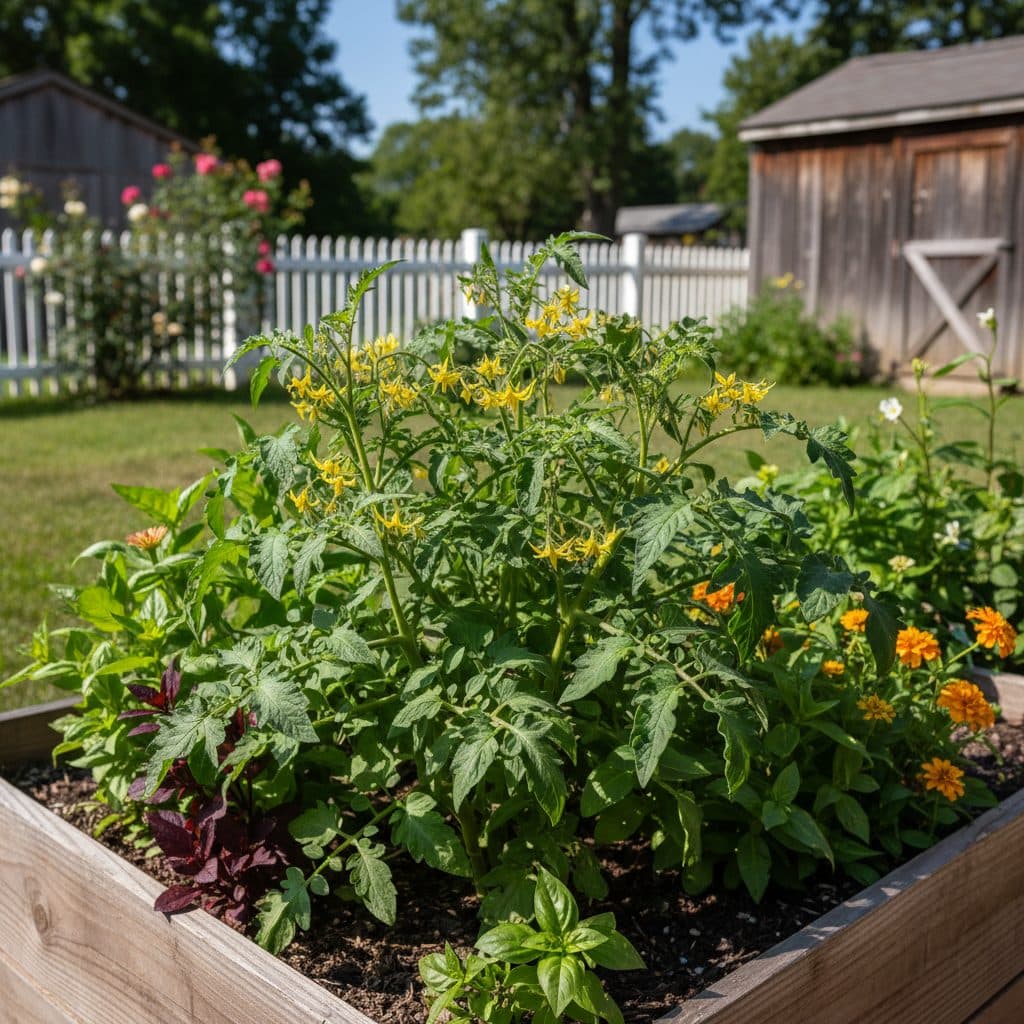
Many home gardeners in places like North Carolina’s Piedmont region, USDA zone 7, or even cooler zones like 5 and 6 across the Midwest, face a frustrating problem: their tomato plants are loaded with bright yellow flowers, but those flowers never develop into fruit. This common issue can lead to significant yield losses, sometimes reducing expected harvests by 30% to 50% in a single season. Understanding why your tomato plants are flowering but not fruiting is the first step toward a bountiful harvest.
Several factors can cause it, and each one has a practical fix. From the microscopic dance of pollen grains to the balance of soil nutrients, many factors influence a tomato plant’s ability to set fruit. We’ll explore the primary culprits behind this problem, offering practical, field-tested advice to help you turn those beautiful blossoms into juicy, ripe tomatoes in your garden, whether it’s a small patch or a larger cultivation area.
Tomato’s reproductive cycle: from flower to fruit
A tomato plant’s journey from a tiny seed to a fruit-bearing vine is a complex process, with the flowering stage being a critical transition. Most tomato varieties, like ‘Early Girl’ or ‘Better Boy’, begin flowering about 35 to 50 days after transplanting, depending on the cultivar and growing conditions. These flowers, typically yellow and about one inch in diameter, contain both male and female reproductive parts, making them self-fertile. This means a single flower can produce fruit without needing pollen from another plant, but it still requires successful pollen transfer from the anther to the stigma within that same flower.
the delicate process of fruit set
For a flower to become a fruit, its pollen must be viable and effectively transferred. Once pollinated, fertilization occurs, and the ovary at the base of the flower begins to swell, eventually developing into a tomato. If this process fails, the flower will simply drop off the plant, often within two to three days of opening. This can be a sign of unsuccessful pollination, nutrient imbalances, or environmental stress. Research on `Early Girl` tomato plants, for instance, has shown that factors like antitranspirant application and specific fertilization regimes significantly impact flowering and fruiting success [2]. A healthy plant in optimal conditions can produce dozens of fruits, with some indeterminate varieties yielding over 20 pounds per plant in a single growing season.
- Inspect flowers for any signs of physical damage or discoloration.
- Note the number of flowers that open versus those that drop off.
- Observe the presence of small, green developing fruits behind the petals.
- Track the average daily temperature and humidity levels in your garden.
Pollination: the missing link for fruit set
Even though tomato flowers are self-fertile, they still need some help for successful pollination. The pollen grains must physically move from the anthers to the stigma. In outdoor settings, this is typically facilitated by wind, which shakes the flowers, or by insects like bumblebees, which vibrate the flowers (a process called buzz pollination). If your garden experiences low wind conditions or a lack of natural pollinators, fruit set can be significantly reduced. For example, in a sheltered raised bed in USDA zone 5, a lack of air movement can prevent up to 40% of flowers from setting fruit.
boosting pollination in your garden
High humidity, often above 70%, can also cause pollen to become sticky and less viable, hindering its release and transfer. Similarly, extremely dry conditions can desiccate pollen. If you suspect poor pollination, consider hand-pollinating your plants. This involves gently shaking the plant or tapping each flower cluster daily, ideally between 10 AM and 2 PM, when pollen is most active. For indoor growing environments, such as a reflective indoor grow tent, a small fan set on a low setting can simulate wind, improving pollen distribution. Planting tomato companion plants known to attract beneficial insects can also increase pollinator activity in your garden, potentially boosting fruit set by 15% to 20%.
- Gently tap flower clusters or shake the plant daily during peak pollen viability.
- Use a small, soft brush to transfer pollen from anther to stigma on individual flowers.
- Introduce a fan for air circulation in enclosed growing spaces, running it for 15-30 minutes twice a day.
- Plant flowers like marigolds or borage nearby to attract native bees.
Nutrient balance: feeding for fruit, not just foliage
The right balance of nutrients matters for tomato fruit production. While nitrogen (N) is essential for leafy growth, an excess of nitrogen can lead to lush, green plants with plenty of foliage but few flowers or fruits. This is a common issue when gardeners use general-purpose fertilizers high in nitrogen, like a 10-5-5 blend, throughout the fruiting stage. For optimal fruit set, tomatoes require higher levels of phosphorus (P) and potassium (K) once flowering begins. A balanced fertilizer with a ratio like 5-10-10 or 5-10-5 is often recommended for fruiting plants, particularly after the first fruit set, to support continuous production.
soil amendments for fruiting success
Soil pH also plays a significant role in nutrient availability. Tomatoes thrive in slightly acidic to neutral soil, with a pH range of 6.0 to 6.8. If your soil pH is outside this range, certain nutrients, even if present, may be unavailable to the plant. For instance, in alkaline soils above pH 7.0, iron and manganese can become deficient, impacting plant health. Consider using organic amendments like fermented soybean meal, which provides a slow-release source of nitrogen, phosphorus, and potassium, promoting steady growth without over-fertilization. A soil test, available through your local extension office for around $15 to $25, can provide precise recommendations for your specific garden in regions like the Pacific Northwest or the Great Plains.
- Conduct a soil test every two to three years to assess nutrient levels and pH.
- Apply fertilizers with lower nitrogen and higher phosphorus/potassium once flowers appear.
- Incorporate compost or well-rotted manure to improve soil structure and nutrient retention.
- Consider micronutrient supplements if a soil test indicates deficiencies in boron or calcium.
Environmental stress: temperature, water, and light
Environmental conditions play a significant role in a tomato plant’s ability to set fruit. Tomatoes are sensitive to temperature extremes. Ideal temperatures for fruit set range from 65°F to 85°F. When daytime temperatures consistently exceed 90°F, or nighttime temperatures remain above 75°F, pollen can become sterile or non-viable, leading to flower drop. Conversely, temperatures below 55°F can also inhibit pollen development and fertilization. This is a common challenge in regions like Arizona’s low desert or during early spring in New England, where temperature swings are dramatic.
managing water and light for fruit production
Water stress—both too much and too little—can also cause flowers to drop. Tomatoes require consistent moisture, typically 1 to 2 inches of water per week, especially during flowering and fruiting. Irregular watering can lead to blossom end rot and reduced fruit set. For example, a sudden drought in July in USDA zone 8 can cause 25% of flowers to abort. Adequate sunlight, at least six to eight hours of direct sun daily, is also vital for photosynthesis, which provides the energy for fruit development. Plants receiving less than six hours of sun may produce fewer flowers and struggle to set fruit, often yielding 50% less than those in full sun. Consider using shade cloth during intense summer heat to protect plants from temperatures above 90°F and reduce water evaporation by up to 30%.
- Provide consistent watering, aiming for deep, infrequent irrigation rather than shallow, frequent sprinkles.
- Use mulch (2-4 inches deep) to retain soil moisture and regulate soil temperature.
- Install shade cloth over plants if temperatures are consistently above 90°F for several days.
- Ensure plants receive a minimum of six hours of direct sunlight each day.
Beyond the basics: integrated approaches for better yields
Addressing the common issues of pollination, nutrients, and environmental stress often resolves the problem of flowering without fruiting. However, sometimes other factors contribute to reduced yields. For instance, certain pests, like whiteflies or aphids, can stress the plant, diverting energy away from fruit production. While they may not directly cause flower drop, a heavily infested plant might have reduced vigor. Similarly, diseases like early blight, if severe, can weaken the plant, impacting its overall ability to sustain fruit development. An integrated approach considers the entire health of the plant and its growing environment.
holistic plant health for consistent fruiting
Regular observation of your plants can reveal early signs of stress or issues. Check the undersides of leaves for pests, look for discolored foliage that might indicate nutrient deficiencies, and monitor soil moisture levels daily during dry spells. Rotating crops annually, especially in smaller garden plots, can also help prevent the buildup of soil-borne diseases and pests, potentially improving yields by 10% to 20% over successive seasons. For gardeners in USDA zone 9, where growing seasons are long, maintaining plant health throughout the entire cycle is paramount. Remember that healthy soil is the foundation for healthy plants; enriching your soil with organic matter improves its water retention and nutrient-holding capacity, benefiting your tomatoes for years to come. For more on this, explore resources on organic gardening fertilizer.
- Inspect plants weekly for signs of pests or diseases, especially on new growth and flower clusters.
- Practice crop rotation to break pest and disease cycles in the soil.
- Use companion planting strategies to deter pests and attract beneficial insects.
- Ensure proper air circulation around plants to reduce fungal disease pressure.
Common Causes of Tomato Flower Drop and Their Solutions
Cause | Symptoms | Recommended Fix |
|---|---|---|
Poor Pollination | Flowers open but never form fruit; no small green tomatoes visible. | Hand-pollinate by shaking plants daily between 10 AM and 2 PM. |
High Temperatures | Flowers shrivel and drop, especially when daytime temps exceed 90°F or nighttime temps stay above 75°F. | Provide shade cloth during peak heat; ensure adequate watering. |
Low Temperatures | Flowers fail to develop or drop when temperatures consistently fall below 55°F. | Protect plants with row covers or move containers indoors during cold snaps. |
Excess Nitrogen | Lush, dark green foliage with few flowers or fruits. | Switch to a fertilizer with lower nitrogen and higher phosphorus/potassium (e.g., 5-10-10). |
Water Stress | Flowers drop, leaves may wilt, or blossom end rot appears on developing fruits. | Maintain consistent soil moisture, providing 1-2 inches of water per week. |
Temperature Sensitivity: Tomato pollen becomes sterile when temperatures exceed 90°F or drop below 55°F, often leading to a 30% reduction in fruit set.
Nutrient Balance: An NPK ratio of 5-10-10 is often ideal for fruiting tomatoes, compared to a 10-5-5 ratio which promotes excessive leafy growth.
Pollination Needs: Even self-fertile tomato flowers benefit from physical agitation (wind or hand-shaking) to ensure pollen transfer, especially in humidity above 70%.
Frequently asked questions
Why are my tomato flowers falling off without producing fruit?
Tomato flowers often fall off due to environmental stress, such as temperatures consistently above 90°F or below 55°F, or inconsistent watering. Poor pollination and nutrient imbalances, especially too much nitrogen, can also contribute to flower drop, reducing yields by up to 40%.
How can I improve pollination for my tomato plants?
To improve pollination, gently shake your tomato plants daily or tap flower clusters, ideally between 10 AM and 2 PM, to help release pollen. In enclosed spaces, a small fan can simulate wind. Planting pollinator-attracting flowers nearby can also increase fruit set by 15%.
What nutrients do tomatoes need for fruiting?
For optimal fruiting, tomatoes require higher levels of phosphorus and potassium, with a lower amount of nitrogen. A fertilizer with an NPK ratio like 5-10-10 is often recommended once flowering begins, in contrast to the 10-5-5 ratio used for vegetative growth.
Can too much water cause tomato flowers to drop?
Yes, both too much and too little water can cause tomato flowers to drop. Tomatoes need consistent moisture, typically 1 to 2 inches of water per week. Overwatering can suffocate roots, while underwatering causes stress, both leading to flower abortion and reduced fruit by 25%.
What is the ideal temperature range for tomato fruit set?
The ideal temperature range for tomato fruit set is between 65°F and 85°F. Outside this range, particularly above 90°F or below 55°F, pollen can become sterile or inactive, significantly hindering the plant’s ability to produce fruit.
How much sunlight do tomato plants need to fruit?
Tomato plants need at least six to eight hours of direct sunlight daily to produce abundant fruit. Inadequate sunlight can lead to fewer flowers and a reduced fruit set, often resulting in 50% less yield compared to plants in full sun.
References
- Figure 2: Fluctuation of flowering and fruiting of
<i>Cordia boissieri</i>
plants and rainfall. (2023). [Figure 2: Fluctuation of flowering and fruiting of
<i>Cordia boissieri</i>
plants and rainfall.](https://doi.org/10.7717/peerj.2033/fig-2). - Effect of Antitranspirant and Fertilization on Flowering, Fruiting, and Biomass Production in `Early Girl’ Tomato Plants (1998). Effect of Antitranspirant and Fertilization on Flowering, Fruiting, and Biomass Production in `Early Girl’ Tomato Plants.
- Altered photosynthesis, flowering, and fruiting in transgenic tomato plants that have an increased capacity for sucrose synthesis (1995). Altered photosynthesis, flowering, and fruiting in transgenic tomato plants that have an increased capacity for sucrose synthesis.
- Effect of nitrogen application on enhancing high-temperature stress tolerance of tomato plants during the flowering and fruiting stage (2023). Effect of nitrogen application on enhancing high-temperature stress tolerance of tomato plants during the flowering and fruiting stage.
- The impact of climate change on the flowering and fruiting phenology of Arctic plants in Nunavut, Canada (2023). The impact of climate change on the flowering and fruiting phenology of Arctic plants in Nunavut, Canada.
- USDA Natural Resources Conservation Service (2024). USDA Natural Resources Conservation Service.