Key takeaways
- Clay soil in the Southeast presents unique challenges for gardening, including poor drainage and compaction, but also offers high nutrient retention.
- Groundcovers reduce weed growth by blocking sunlight and competing for resources, significantly cutting down on manual weeding.
- For sunny areas, consider plants like Creeping Phlox or Sedum ‘Autumn Joy’, which tolerate full sun and dry periods once established.
- Shady spots benefit from groundcovers such as Liriope muscari or Ajuga reptans, offering dense foliage and colorful blooms.
- Proper soil preparation, including amending with 2 to 4 inches of organic matter, is critical for successful establishment in clay soil.
- Select plants based on USDA hardiness zones (6 to 9 in the Southeast) and specific site conditions to ensure long-term success.
Quick answer: Weed-smothering groundcovers for clay soil in the Southeast US include Creeping Phlox, Sedum ‘Autumn Joy’, Liriope muscari, and Ajuga reptans. These plants reduce weed growth by blocking sunlight and competing for resources, while also improving soil health.
Gardening in the Southeast US, especially with its prevalent clay soils, often feels like an uphill battle against weeds. From the Piedmont region of North Carolina down to the coastal plains of Georgia, many gardeners contend with heavy, slow-draining soil that can make plant establishment tricky. In Alabama, for instance, clay soils are common, retaining moisture but often compacting, which creates difficult conditions for many plants and a prime environment for persistent weeds to take hold.
However, there’s a practical solution that can drastically reduce weeding time and improve soil health: weed-smothering groundcovers. These plants form a dense mat over the soil, actively outcompeting unwanted vegetation for light, water, and nutrients. Research shows that effective groundcover systems can achieve weed smothering efficiencies ranging from 30% to over 70% [0, 1].
Understanding clay soil and weed competition in the southeast
Clay soil is a common feature across much of the US Southeast, from the fertile river bottoms of Mississippi to the rolling hills of Tennessee. This soil type is characterized by very fine particles, typically less than 0.002 mm in diameter, which pack together tightly [6]. While clay soil is rich in nutrients and holds water well, often retaining more moisture than sandy soils, it frequently struggles with poor drainage and compaction, especially after the heavy rains common in the region, which can exceed 50 inches annually in some areas. This density can make it difficult for desirable plants to establish deep root systems, yet many weeds, particularly tap-rooted varieties or aggressive grasses like crabgrass and Bermuda grass, seem to thrive in these conditions, often germinating within seven to 14 days after a rainfall event.
Why groundcovers are effective weed suppressors
Groundcovers are a strategic choice for weed control because they create a living mulch that directly competes with weeds. Unlike synthetic weed barriers, groundcovers improve soil structure over time by adding organic matter and promoting beneficial microbial activity, which can increase soil aeration. Studies have shown that intercropping systems, which mimic the dense cover of groundcovers, can reduce weed dry weight by up to 80% [3], with some systems achieving weed smothering efficiencies of 30% to 70% [0, 1]. That plant competition cuts the need for manual weeding and chemical herbicides. For clay, choose vigorous species that spread well and handle both waterlogged soil after a storm and dry surface conditions. For more on improving clay soil, see our guide on plants for clay soil that actually thrive.
- Groundcovers suppress weeds by blocking sunlight, preventing germination of weed seeds.
- They compete directly for soil moisture and nutrients, absorbing available resources, starving out unwanted plants.
- A dense canopy helps regulate soil temperature, reducing extreme fluctuations.
- Their root systems help to aerate and improve the structure of heavy clay soils over time, increasing porosity.
- Some groundcovers release allelopathic compounds that naturally inhibit weed growth
Top groundcovers for sunny clay spots in the southeast
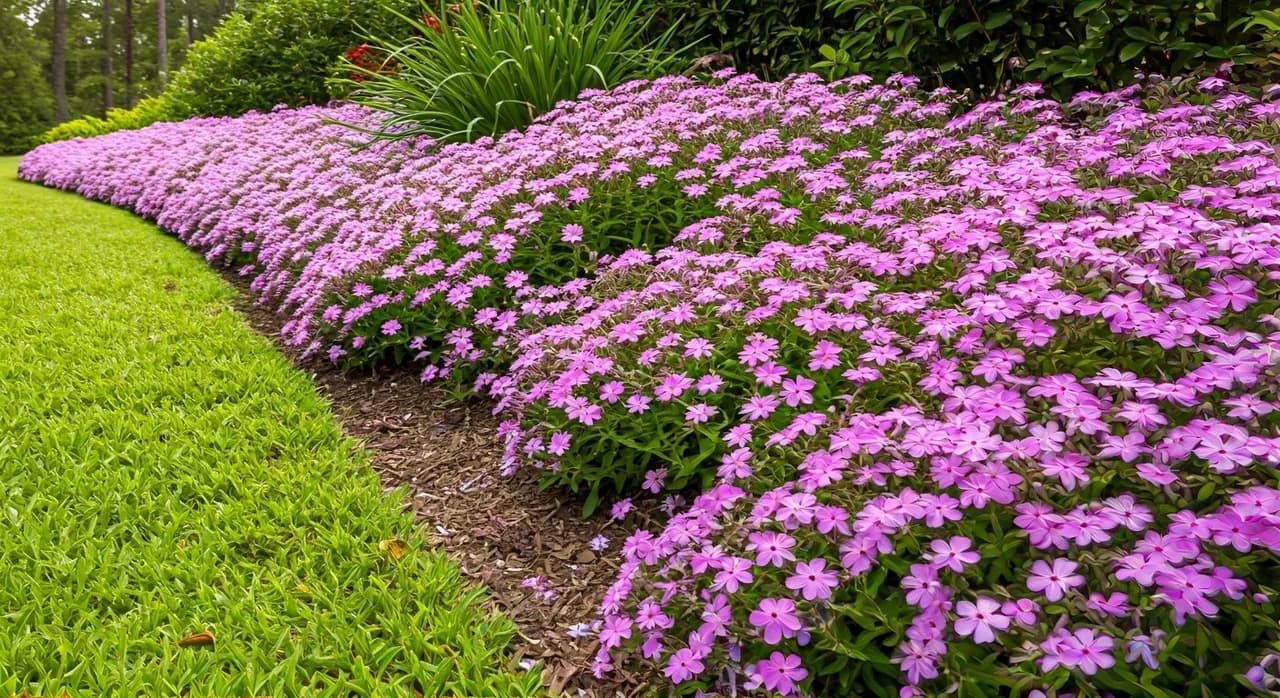
For areas receiving six or more hours of direct sunlight daily, selecting the right groundcover matters for both weed suppression and appearance. In USDA zones 7 to 9, which cover much of the Southeast, several sturdy options thrive in clay. Creeping Phlox (Phlox subulata) is an excellent choice, forming a dense mat typically 4 to 6 inches tall and spreading up to 2 feet wide within two to three years. It bursts with pink, purple, or white flowers in early to mid-spring, effectively smothering weeds during its active growth period. Cultivars like ‘Emerald Blue’ or ‘Scarlet Flame’ offer reliable performance. Another reliable option is various species of Sedum, particularly taller varieties like ‘Autumn Joy’ which can reach 18 to 24 inches in height and spread 2 feet, providing substantial cover. These succulents are drought-tolerant once established, requiring minimal water beyond natural rainfall, often less than one inch per week, and can reduce irrigation needs.
Hardy, sun-loving selections
Liriope (Liriope muscari or spicata), commonly known as lilyturf, is a workhorse for tough conditions. It tolerates full sun to partial shade and forms thick clumps 10 to 18 inches tall, effectively preventing weed intrusion. While L. spicata can be aggressive, spreading rapidly by rhizomes, L. muscari is clumping and a better choice for contained areas, expanding steadily. For a lower-growing option, Thyme* (Thymus serpyllum*) forms a fragrant, dense carpet just 2 to 4 inches high, ideal for pathways or between stepping stones. It thrives in well-drained clay, especially if amended with some grit, and can cover an area in two seasons. Remember that even drought-tolerant plants benefit from consistent moisture during establishment; a soil moisture meter can help you gauge when to water so the top 2-3 inches of soil remain moist. These plants are generally deer resistant, a plus in many suburban and rural areas of the Southeast where deer populations are high.
- Creeping Phlox (Phlox subulata) offers healthy spring blooms and a tight mat, growing 4-6 inches tall and spreading 1-2 feet.
- Sedum varieties, like ‘Autumn Joy’, provide substantial cover up to 24 inches high and are very drought-tolerant, reducing water needs by 30%.
- Liriope (Liriope muscari) forms dense, grass-like clumps 10-18 inches tall, excellent for borders and tolerates a wide pH range from 5.5 to 7.0.
- Creeping Thyme (Thymus serpyllum) creates a fragrant, low-growing carpet, typically 2-4 inches high, and is foot-traffic tolerant.
- Carolina Jessamine (Gelsemium sempervirens) is a native vine that can be used as a sprawling groundcover, reaching 10-20 feet, and provides bright yellow flowers in late winter to early spring. All parts of this plant are highly toxic if ingested and it should not be planted where livestock or children have access.
Effective groundcovers for shady clay areas
Shady areas with clay soil, common under the canopy of mature oak or pine trees in states like Georgia or South Carolina, present a different set of challenges. Here, plants need to tolerate reduced light, often less than four hours of direct sun, and sometimes drier conditions due to tree root competition, which can deplete soil moisture. Ajuga (Ajuga reptans), also known as bugleweed, is a standout performer. It forms a dense, low mat, typically 4 to 8 inches tall, with attractive foliage that comes in various shades of green, bronze, or purple. It spreads readily by stolons, often covering an area within one to two seasons, quickly filling in bare spots and outcompeting weeds. Its spikes of blue or purple flowers in spring add an extra layer of interest. Another excellent choice is Mondo Grass (Ophiopogon japonicus), which resembles a finer-textured liriope and forms dense clumps 4 to 12 inches high. It’s particularly effective in USDA zones 6 to 9 and maintains its evergreen foliage year-round.
Shade-tolerant, weed-smothering options
For larger areas, Vinca minor, or periwinkle, is a classic choice, though care should be taken to contain its spread as it can be aggressive, spreading rapidly by rooting stems. It forms a trailing mat 6 to 12 inches tall with glossy green leaves and blue flowers in spring. It thrives in partial to full shade and tolerates a wide range of soil conditions, including clay, once established. While some groundcovers like English Ivy (Hedera helix) are very effective at smothering weeds, they are often considered invasive in the Southeast and can climb trees, causing damage to structures and natural habitats within 50 feet. It’s generally best to avoid them in favor of native or well-behaved alternatives. When planting in shade, especially near trees, consider enriching the soil with a slow-release organic fertilizer, like Fermented Soybean Meal Organic Fertilizer, applied as directed, to give your groundcovers a competitive edge against established tree roots.
- Ajuga (Ajuga reptans) forms a dense, colorful mat 4-8 inches tall, spreading rapidly in shade and tolerating foot traffic.
- Mondo Grass (Ophiopogon japonicus) provides fine-textured, evergreen cover 4-12 inches high, and is very low maintenance, requiring minimal pruning.
- Vinca minor (periwinkle) is a vigorous spreader, reaching 6-12 inches tall, with attractive blue flowers, but needs monitoring to prevent overgrowth.
- Sweet Woodruff (Galium odoratum) creates a delicate, fragrant carpet 6-12 inches high in moist shade, and is deer resistant.
- Foamflower (Tiarella cordifolia) is a native option for partial to full shade, growing 8-12 inches tall with attractive foliage and delicate white flower spikes in spring.
Planting and establishment strategies for clay soil
Successfully establishing groundcovers in clay soil requires more than just digging a hole. In the Southeast, where clay often has a pH between 5.5 and 6.5, proper soil preparation is paramount. Before planting, conduct a soil test to understand its composition and nutrient levels. If your soil is particularly dense, consider incorporating 2 to 4 inches of organic matter, such as compost or aged pine bark, into the top 6 to 12 inches of soil. This improves drainage and aeration, making it easier for roots to penetrate. For example, a 100 square foot area would require 16 to 32 cubic feet of compost to achieve a 2-4 inch layer. This initial effort can reduce long-term weed control significantly in the first year alone by creating a more hospitable environment for your desired plants and discouraging weed seeds.
Initial care and ongoing maintenance
Space groundcover transplants slightly closer than their mature spread so they knit together fast. A plant that spreads 12 inches fills in within one to two seasons when set 8 to 10 inches apart. Water thoroughly after planting, aiming for at least one inch of water per week during the first growing season, which typically lasts eight to 12 weeks. Consistent moisture is critical for root establishment, especially in clay, which can dry out on the surface despite holding water deeper down. Mulching with one to 2 inches of pine straw or shredded leaves around new plants can help retain moisture, suppress early weeds, and moderate soil temperature. Avoid thick layers of mulch directly against plant stems to prevent rot. While groundcovers significantly reduce weed pressure, some initial weeding will still be necessary. Hand-pulling young weeds is effective, and for persistent issues, consider natural weed killers that actually work, applied carefully to avoid harming your new groundcovers. Research in 1987 showed that lack of weed control significantly reduced hardwood growth on clay soil by up to 50% over 16 years [5].
- Amend heavy clay soil with 2-4 inches of organic matter before planting to improve drainage and reduce compaction.
- Space plants according to their mature spread, often 6-12 inches apart for quick coverage within 1-2 seasons.
- Water new plantings consistently, providing at least one inch of water per week for the first 8-12 weeks after planting.
- Apply a thin layer (1-2 inches) of organic mulch to conserve moisture and deter weeds.
- Monitor for weeds and hand-pull them promptly, especially those taller than 3 inches, to prevent them from outcompeting young groundcovers.
comparison of popular weed-smothering groundcovers for the southeast
plant name | sun exposure | height | spread | usda zones | clay tolerance |
|---|---|---|---|---|---|
creeping phlox | full sun | 4-6 in | 1-2 ft | 3-9 | good (well-drained) |
sedum ‘autumn joy’ | full sun | 18-24 in | 1-2 ft | 3-9 | excellent |
liriope muscari | sun to part shade | 10-18 in | 1-2 ft | 6-10 | excellent |
ajuga reptans | part to full shade | 4-8 in | 1-2 ft | 4-9 | excellent |
mondo grass | part to full shade | 4-12 in | 6-12 in | 6-9 | excellent |
vinca minor | part to full shade | 6-12 in | 2-4 ft+ | 4-9 | good (aggressive) |
weed reduction: Properly established groundcovers can reduce weed growth by 30% to over 70% in various systems [0, 1].
soil improvement: Incorporating 2 to 4 inches of organic matter into clay soil can improve drainage and improve root penetration.
water savings: Mature groundcover plantings can reduce the need for supplemental irrigation by up to 30% compared to bare soil.
References
- Weed smothering in jute with green gram intercropping (2016).
- Weed smothering efficiency and cotton equivalent productivity of Bt cotton based intercropping systems (2021).
- The Smothering Effect of Dolichos lablab L. (1967).
- Soybean (1991).
- Planted Hardwood Development on Clay Soil Without Weed Control Through 16 Years (1987).
- USDA Natural Resources Conservation Service (2024).