Key takeaways
- January is peak midsummer in Australia, demanding heat-tolerant crop selection and active sun protection across all regions.
- Temperate and cool climate zones can sow fast-maturing bush beans, zucchini, sweetcorn, and start seeds of autumn brassicas in a cool, shaded microclimate.
- Tropical zones in the middle of the wet season focus on wet-season staples grown on raised mounds or ridges for drainage (such as sweet potato, cassava, snake beans, and taro).
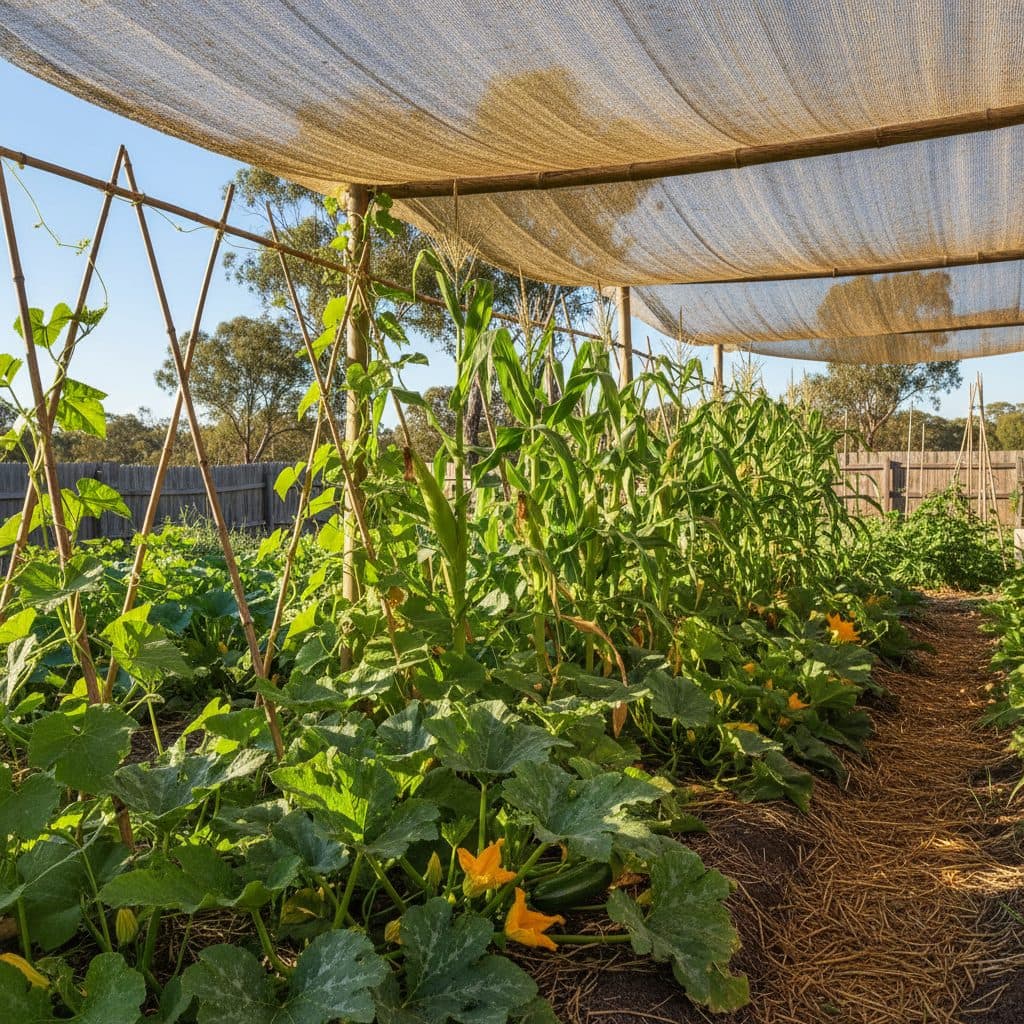
- Applying a thick 5 to 10 cm layer of organic straw mulch reduces soil evaporation and shields delicate root zones from extreme surface heat.
- Erecting 30 to 50 percent shade cloth over sensitive crops reduces blossom drop, leaf scorch, and sunscald during intense heatwaves.
Quick answer: Knowing what to plant in January Australia requires selecting fast-maturing, heat-resilient crops suited to midsummer conditions. In temperate and subtropical zones, plant bush beans, sweetcorn, zucchini, cucumber, and basil, while starting autumn brassica seeds in cool, sheltered shade or indoors under lights. In tropical northern regions, the monsoon wet season favours wet-season staples like sweet potatoes and cassava on raised ridges, snake beans, taro, and tropical greens.
January brings intense midsummer heat, long daylight hours, and drying winds across the southern states, alongside heavy monsoonal downpours in the north. Understanding what to plant in january australia ensures that your veggie patch continues to produce nutritious food through the hottest weeks of the summer calendar.
While scorching afternoon temperatures present challenges for cool-season crops, many warm-climate vegetables thrive in January soil temperatures between 22°C and 28°C. Rapid germination allows fast-maturing crops to establish quickly and deliver abundant harvests before the cooler weather of autumn arrives in March and April.
Success in the January garden depends equally on planting choices and protective microclimate management. By combining heat-adapted cultivars with thick organic mulches, automated drip irrigation, and temporary shade netting, Australian growers can keep their edible beds flourishing throughout midsummer.
Australian climate zones for January planting
Australia experiences diverse weather patterns during midsummer, requiring customized planting strategies for each major climatic region:
+-------------------------------------------------------------------+
|               JANUARY CLIMATE ZONES IN AUSTRALIA                  |
|                                                                   |
|  TROPICAL (Far North QLD, NT, Kimberley)                          |
|  - Monsoon wet season, 28°C to 35°C, high humidity & downpours    |
|  - Sweet potato, snake beans, kangkong*, cassava, taro            |
|                                                                   |
|  SUBTROPICAL (SE QLD, Northern NSW)                               |
|  - Humid 26°C to 32°C days, afternoon summer storms               |
|  - Bush beans, sweetcorn, zucchini, basil, cucumber, capsicum     |
|                                                                   |
|  TEMPERATE (Sydney, Melbourne, Adelaide, Perth)                   |
|  - Hot dry days (25°C to 38°C+), drying winds, heatwaves          |
|  - Dwarf beans, zucchini, carrots under shade, autumn brassica    |
|                                                                   |
|  COOL / COLD (Canberra, Tasmania, Victorian Tablelands)           |
|  - Warm days (22°C to 30°C), cool nights, short summer window     |
|  - Bush beans, beetroot, leeks, broccoli seeds, silverbeet        |
+-------------------------------------------------------------------+- Tropical (Darwin, Cairns, Broome): Torrential monsoonal rains and high humidity dominate January. Sowing traditional European vegetables is unfeasible; plant wet-season staples grown on raised mounds or ridges for drainage, such as snake beans, cassava, and sweet potatoes (taro thrives in wet ground). Keep spring-planted ginger mulched and well watered through the wet. Biosecurity & food safety: Kangkong (Ipomoea aquatica) is restricted or prohibited in some states—check your state biosecurity rules first. Raw cassava leaves and tubers contain cyanogenic glucosides and require thorough cooking or boiling before human consumption; never feed raw foliage to livestock.
- Subtropical (Brisbane, Gold Coast, Coffs Harbour): Warm, humid conditions with regular summer storms. Sow quick successions of bush beans, sweetcorn, zucchini, and heat-tolerant climbing cucumbers.
- Temperate (Sydney, Adelaide, Perth, inland Victoria): Prolonged periods of intense sunlight and periodic 35°C to 40°C heatwaves. Direct sow fast-maturing warm crops, and begin autumn brassica seed trays under sheltered shade. Reviewing our guide on what to plant in december australia helps track the progression of your summer plantings.
- Cool and Cold (Canberra, Hobart, Ballarat, Southern Tablelands): Warm summer days with cool evening temperatures. Sow dwarf French beans, beetroot, carrots, spring onions, and late summer squash.
Heat-tolerant summer vegetables to plant in January
Midsummer planting requires crops with fast maturity cycles that can handle high soil temperatures.
French bush beans (dwarf green beans)
Bush beans are one of the most reliable vegetables to sow in January. Climbing beans generally start cropping around 65 to 80 days, while compact bush beans produce tender pods in 50 to 60 days from sowing. Push seeds 3 cm deep directly into warm garden soil, spacing plants 15 cm apart. Water the furrow thoroughly at planting time, then withhold heavy watering until seedlings emerge to prevent seeds from rotting in hot, saturated soil.
Zucchini and summer squash
Zucchini seeds germinate in as little as three to five days in January soil. Sow two or three seeds in small mounds enriched with aged compost, thinning to the strongest single plant once true leaves develop. Water at the base rather than over the leaves, since wet foliage favours downy mildew and leaf spot, and keep soil moisture even to reduce blossom end rot. Powdery mildew still turns up in warm, dry spells—manage it with wide spacing, good airflow and by removing the worst leaves.
Sweetcorn (fast-maturing cultivars)
Early January is the final sowing window for sweetcorn across temperate and subtropical Australia. Plant corn in dense rectangular blocks of at least sixteen plants rather than a single long row; this compact arrangement ensures wind blows pollen from male tassels at the top of the plant directly onto female silk strands below.
Root crops: carrots and beetroot
Direct sow beetroot and carrot seeds in light, friable soil. In hot temperate zones, summer sun can dry out delicate carrot seedbeds within hours, preventing germination. Keep the top 2 cm of soil consistently damp by covering newly sown rows until the first seedlings appear—often two to three weeks for carrots—then removing the cover immediately.
Herbs and leafy greens for midsummer heat
Standard cool-season greens like English spinach and coriander bolt to seed prematurely in January heat. Switch to heat-resilient alternatives that thrive in high temperatures.
+-------------------------------------------------------------+
|             HEAT-TOLERANT GREENS & HERBS                    |
|                                                             |
|  SUMMER ALTERNATIVE          REPLACES                       |
|  ---------------------------------------------------------  |
|  Silverbeet & Rainbow Chard  English Spinach                |
|  Warrigal Greens (Native)    Cooked Spinach                 |
|  Sweet Basil & Thai Basil    Tender Spring Herbs            |
|  Ceylon Spinach (Malabar)    Salad Greens                   |
|  Kangkong (Water Spinach)    Asian Stir-Fry Greens          |
+-------------------------------------------------------------+- Silverbeet: Silverbeet is exceptionally resilient in summer when given regular water and a light mulch layer. Harvest outer leaves regularly to stimulate fresh, tender central growth.
- Sweet basil and Thai basil: Basil thrives in hot January weather. Pinch out flowering tips weekly to keep plants bushy and productive until late autumn.
- Warrigal greens (Tetragonia tetragonioides): This hardy Australian native ground cover thrives in full sun and dry conditions. Always blanch leaves in boiling water for two minutes before eating to remove natural oxalates.
Starting autumn seedlings in the summer shade
January is when the autumn and winter garden actually starts in temperate and cool regions. Long-season brassicas—including Brussels sprouts, heading cabbage, cauliflower, and purple sprouting broccoli—require eight to twelve weeks of vegetative growth before winter chills slow their development.
- Set up a shaded nursery: Place seed punnets in a cool, sheltered microclimate (such as a shaded shade house, under a pergola, or indoors under lights where temperatures stay below 28°C to prevent thermodormancy and seedling heat scorch).
- Use sterile seed-raising mix: Fill seedling trays with premium seed-raising mix, which holds moisture without becoming soggy.
- Maintain consistent moisture: Water trays twice daily with a fine mist nozzle to prevent tender seedlings from drying out in hot afternoon breezes.
- Harden off gradually: Once seedlings have three to four true leaves, move them into morning sun for a week before transplanting into garden beds in February or March.
When transplanting young seedlings into hot ground, following proven techniques for watering transplants in summer heat ensures root shock is kept to a minimum.
Midsummer water management and sun protection
Extreme January heatwaves exceeding 35°C can cause severe moisture stress, leaf scorching, and blossom drop on fruiting crops.
Strategic irrigation practices
Water your veggie patch deeply in the early morning before 8:00 AM. Morning watering lets moisture soak deep into the root zone before ambient air temperatures rise, which cuts evaporation. Drip irrigation tubes placed beneath organic mulch deliver water straight to the soil, keeping foliage dry and reducing the leaf diseases that need leaf wetness to establish.
Mulching and shade cloth installation
Apply a clean 5 to 10 cm blanket of sugarcane mulch, pea straw, or lucerne over all exposed garden soil. Mulch keeps the soil markedly cooler than bare earth, protecting delicate feeder roots.
+-------------------------------------------------------------+
|               SHADE NETTING DEPLOYMENT GUIDE                |
|                                                             |
|  DENSITY: 30% to 50% white or green knitted shade cloth     |
|  HEIGHT: Suspend 30-50 cm above crop canopy on poly hoops   |
|  ORIENTATION: Angle toward western afternoon sun            |
|  AIRFLOW: Leave sides open to prevent heat entrapment       |
+-------------------------------------------------------------+
Erect temporary shade structures over sensitive crops like capsicums, tomatoes, and newly sown beds during forecast heatwaves. Suspend 30 to 50 percent shade cloth above plant canopies using flexible poly hoops or timber stakes, ensuring sides remain open for cooling cross-ventilation. For orchard care, applying methods from our guides on protecting fruit trees in heatwaves and shade netting for fruit trees protects young trunks and developing fruit from sunscald.
By choosing heat-hardy crops and protecting your garden microclimate, your Australian summer garden will stay productive through midsummer. At agripure, reliable horticultural advice helps you grow fresh food with confidence in every Australian climate.